REVIEW — The Fallen Idol (1948)

This week, circumstances have allowed me to offer you something of a cultural dyad. For years now, British film critics have fetishised British film to the point where the term has become almost meaningless. For some, it means simply British accents and British names on the credits of Hollywood Blockbusters. For others, it means a truly national cinema that speaks to the concerns of the British people in terms that are uniquely theirs. As someone who has grown increasingly pessimistic about the Hollywood machine’s capacity to generate decent films, I favour the latter solution but even I wonder what a mature and deep-rooted British cinema might look like. Would it be Hollywood-lite in the same way as BBC dramas have come to feel like childish and over-eager attempts to appeal to American audiences? Or would it be something much darker and unpleasant? An expression of the fascistic desires and xenophobic tendencies that coarse through the British political bloodstream?

French cinema might be a good form to emulate but French cinema has very noticeably struggled with the urge to be Hollywood-lite and the urge to continue producing respectable grown-up films about middle-class people experiencing some sort of crisis. Don’t get me wrong… I love French populist cinema almost as much as I love films about middle-class French people experiencing crises but I also realise that neither of these models represents the realities of modern France. Another alternative would be to look back to a time when Britain actually had a film industry that was both mature and authentic, which is where this week’s offerings come in.

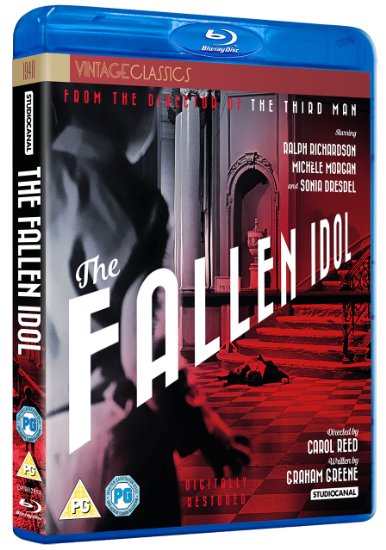
This week’s first review demonstrates quite how sophisticated post-War British cinema could be. As my review for FilmJuice argues, Carol Reed’s The Fallen Idol is an attempt to engage with how children see the world and how their vision of the world is liable to be distorted by grown-ups with vested interests in particular truths. Set amidst the marble palaces of Knightsbridge, the film is about a diplomat’s son who has been left alone with his father’s butler and house-keeper:

At first, Reed forces us to see this reluctant family unit through the eyes of the child meaning that Mrs. Baines comes across as an evil step-mother while Mr. Baines seems like an ideal father. However, as the film progresses and we are allowed to learn a little more about the secondary characters, it becomes clear that the couple’s behaviour towards the child is being driven in part by grown-up problems that Philippe is not equipped to understand. In reality, Mrs. Baines is not so much an ogre as a desperately unhappy woman who is trapped in a loveless marriage to a man who cannot stop lying.

As the narrative unfolds, Philippe’s attempts to protect the interests of his surrogate father are undermined by his own failure to understand either the adult world or what it is that he is actually seeing. The tension between what Philippe believes, what he wants others to believe and what is actually true blossoms into full-grown horror when Philippe mistakenly comes to believe that Mr. Baines has murdered his wife. Interrogated by the police and still desperate to defend his hero, the little boy spins lie after lie and winds up making things a lot worse than they ever needed to be.


FI2


The Fallen Idol took me completely be surprise as it seems to be engaged in a very similar exercise to that pursued by Charles Laughton in his classic The Night of The Hunter. However, while Laughton re-constructed the children’s vision of ‘reality’ as filtered through fairy tales, Reed allows the various interpretations of reality to co-exist and sit atop a ‘reality’ that is accessible to the audience but not the characters. This idea of conflicting ‘realities’ battling for dominance is also picked up in the form of characters speaking either figuratively or literally in different languages meaning that even relatively coherent conversations can be engines of disagreement and confusion. The Fallen Idol is a film in which people are forever talking despite being unable to understand each other.


Suffragette (2015) – Britain’s Radical Soul

It is often said that Britain’s revolution happened too early to make much of a difference. Rather than waiting for the emergence of liberalism (like France and America) or socialism (like Russia and China), Britain deposed an absolute monarch and handed the country to a bourgeois tyrant who opposed universal suffrage on the grounds that it posed a threat to private property. Though somewhat more democratic today than under Cromwell, British political progress has always been constrained by the understanding that radical politics are somehow profoundly un-British. Sure… people take to the streets from time to time but ask the wrong question or allow injustice to anger you for even a second and that very human emotional response will be used against you like a cudgel, or indeed a truncheon.

The British establishment has never been squeamish about using violence to subdue domestic radicals, but it does recognise that some groups are harder to put down than others. Race and religion are still used as a justification for violent repression (as they were in Ireland and in the aftermath of 9/11) but when the radicals start looking a little bit too white and middle-class, the tactics generally shift to smears and mockery. Central to this undertaking has been the re-invention of the British radical as stock comic character.


The vision of British radicals as comically inept hypocrites informed the 1970s sitcom Citizen Smith. Written by the same man who created Only Fools and Horses, Citizen Smith’s Walter ‘Wolfie’ Smith uses Marxist posturing to conceal the fact that he is little more than an oafish petty criminal content to sponge off of his girlfriend’s family.


A similar set of ideas is evident in Disney’s Mary Poppins, in which the Character of Mrs. Banks returns home from a Suffragette rally singing about being a soldier. The scene is played for laughs and the implication is that Mrs. Banks is not only an inattentive mother who can’t be bothered to raise her own children but also an upper middle-class hypocrite who plays the radical before returning home to an army of maids, cooks, and nannies paid for by a wealthy husband.

It bothers me that Mrs. Banks is one of the most enduring depictions of a Suffragette in popular culture.

It bothers me that the fight for women’s suffrage was ever deemed a subject worthy of mockery.

It bothers me that Britain’s radical tendencies have been systematically scorned and buried by self-serving cultural elites.

It bothers me that the history of Britain has been re-written but I am delighted that some films are beginning to challenge the idea that Britain lacks a radical spark. Poised somewhere between the transcendentalism of Steve McQueen’s Hunger and the humanism of Chris Morris’ Four Lions, Sarah Gavron’s Suffragette is an exploration of what it would take to turn a normal working-class mum into a revolutionary. Suffragette is a film marked by the stirring of Britain’s radical soul.


Continue reading →

Catch Me Daddy (2014) — #NotYourChumChum

I have long suspected that there is a great book to be written about the spread of existentialism throughout European film and literature. Born of middle-class alienation from 19th Century spirituality, existentialism was a requiem for lost faith and a roar of disgust at the less-than-flattering lighting conditions left by the departure of the divine light. God is Dead, O God… This Sucks.

As time passed, the post-religiosity of existentialism was shuffled into the background as the movement came to focus upon the psychological hardships of a life without meaning. Existentialism’s obsession with the grim futility of everyday life caught the imagination of people returning from war and so Raskolnikov trying to make sense of his own actions in Crime and Punishment and Meursault refusing to defend himself at trial in The Stranger came to seem like beautiful expressions of what it meant to be human.

Having long enjoyed a close relationship with mainstream literature, existentialism spread to film and when critics from the Cahiers du Cinema transitioned from seeing existential themes in the work of others to replicating those themes in their own work, they went straight to feelings of anger and despair at a world that refused to abide by human expectations.

Cruelty and nihilism are everywhere in the films of the French New Wave and when art house cinema began to become its own thing, the canon was formed of films like Au Hazard Balthazar, Mouchette and Le Beau Serge… films in which women suffer while men brood.

Looking back at the post-War years, I cannot help but wonder whether existentialism’s appeal might not have had something to do with either its flight from responsibility or its lack of psychological precision. Think about it… existentialism is a philosophy that takes in the cruelty, pointlessness and arbitrariness of life and proscribes only directionless and unresolvable angst. Do not examine your role in making the world a worse place or consider why you feel the way you do, just shrug your shoulders and light up another cigarette as your actions count for nothing in a world that was born plain bad. Existentialism is a philosophy designed by emotionally stunted men and its popular success owes a lot to the fact that an entire generation of men came home from World War II and pointedly refused to deal with the trauma of what they had seen and done. Existentialism legitimises the refusal to deal with your own shit and that dead-eyed passivity was decanted into countless noir thrillers and stories in which lovely young women are destroyed by the world while men stand around looking glum.

Very much a part of the European art house tradition, Daniel Wolfe’s debut film Catch Me Daddy is a beautifully shot and relentlessly nihilistic film in which yet another young woman is destroyed by the cruelty of the world. Filled with dead-eyed tough guys muttering into mobile phones whilst staring into the middle-distance, it trots through every post-existential cliché in the European art house canon before arriving at a climax that shows just enough self-awareness to highlight the thoughtlessness of the preceding 90 minutes.


Continue reading →

Greek Pete (2009) — British Rituals of Displacement and Avoidance

Andrew Haigh’s debut film Greek Pete is neither particularly novel nor particular striking. Set in the world of London’s gay escort scene, the film is a scripted drama inspired by the lives of its non-professional actors and shot in a pseudo-documentary style. In other words, it’s a hybrid piece similar to Jersey Shore and The Only Way is Essex albeit with somewhat less theatricality and spray-on tan.

Having watched Greek Pete, I almost decided not to write about it but it occurs to me that while the film’s themes and characters are never quite as interesting as they needed to be, the film actually reveals quite a lot about Haigh’s interests, methods, and the quintessentially British way in which he approaches drama. This makes Greek Pete almost a textbook example of an immature work that is only of historical interest given the quality of the work that would follow it.

Continue reading →

45 Years (2015) — Forever Tainted

Andrew Haigh’s Weekend is about as good a film as Britain has managed to produce fifteen years into the twenty-first century. Set in a London of run-down flats and bleak nights out, it follows a pair of men as they talk their way from a one night stand to the brink of something more meaningful. A powerful response to the growing factionalism of the online world, Weekend’s characters have radically different attitudes towards society and sexuality and yet they still manage to sense something of value in each other. Despite being a very talky film, Weekend is all about those moments of silence in which emotional energies shift and life is made anew. Haigh’s ability to capture what happens in the intimate spaces surrounding conversation is what made Weekend great and what has made 45 Years one of the great unexpected cinematic successes of the summer (despite being released on VOD at the same time and being largely ignored by multiplexes).

Continue reading →

The Day I Will Never Forget (2002) — The Battle for Woman

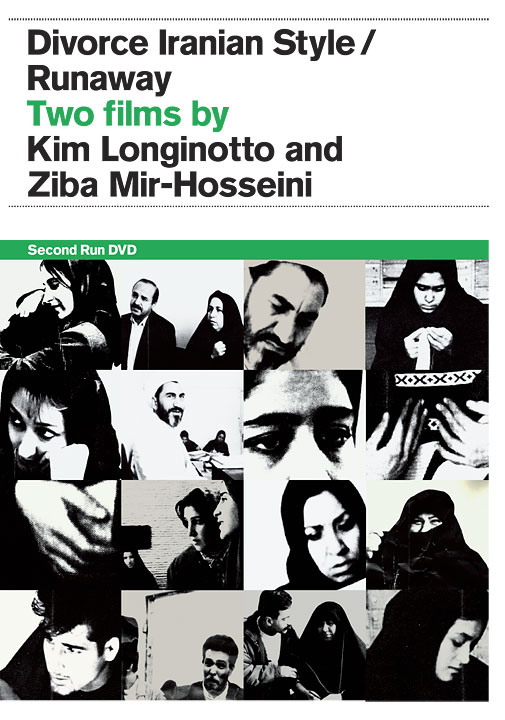
Kim Longinotto is a documentarian whose time has finally come. Since the mid-1970s, Longinotto has been taking her cameras to corners of the world where women battle to survive cultures that are fundamentally hostile to their interests. Intersectional long before the term had been coined let alone entered the cultural mainstream; Kim Longinotto’s films explore the plight of women with a sensitivity to sexuality, race, class and culture that is never anything less thought-provoking. Though unabashedly moral, Longinotto’s films are never moralising… they forego easy villains and reductive narratives, focusing instead upon trying to understand the views of local women and placing those views within a broader cultural context. For example, Longinotto’s Divorce Iranian Style and Runaway depict Iran as a country where every deck is stacked against women but the women who feature in the films all seem to be aware of the hands they have been dealt and play them as well as they possibly can whilst continuing to obey the rules. Conversely, Longinotto’s Shinjuku Boys and Gaea Girls depict the men of Japan as absentee landlords and women as bold experimentalists who relentlessly push at the limits of conventional gender roles in order to find a place they can be themselves. More confrontational and optimistic than either set of films, Sisters in Law travels to Cameroon where a small group of female judicial activists use commonly un-enforced laws to put pressure on traditional practices and raise awareness about the treatment of women and children. Focused on the Somali community living in Kenya, The Day I Will Never Forget takes a long, hard look at the practice of female circumcision and asks it works, what it means, why it continues to be practiced, and why that practice might eventually come to an end.

The film opens with what could almost be called a best-case scenario. A young Somali woman prepares for her marriage as the local Somali community bustle around her; we see the wedding dress being fitted, we see the application of henna to her skin, we see her hair being made up. Then we are transported to the Somali equivalent of a hen night where the young woman’s friends and female relatives dance and sing in front of a groom who is manifestly trying his best not to be intimidated. One woman sings that Somali woman are always mistreated by their men and the point of the exercise becomes clear: Mess with one of us, and you will regret it. The Day I Will Never Forget is about that bond of community… for good and ill.


Continue reading →

Sisters in Law (2005) – Part of the Solution, Not Part of the Problem

Kim Longinotto and Florence Ayisi’s documentary Sisters in Law is best understood in terms of its relationship with Longinotto’s earlier films Divorce Iranian Style and Runaway. Divorce Iranian Style put Longinotto’s camera into an Iranian family court where Women tried to use their country’s sexist legal infrastructure to protect them from their abusive and manipulative husbands. Eye-opening in its depiction of Iranian female agency and moving in its uncompromising commitment to women’s stories, Divorce Italian Style is a powerful film made even more powerful by Runaway, a film about what happens when the system fails and women are forced to flee their family homes. Formally very similar to Divorce Iranian Style, Sisters in Law finds the British documentarian Kim Longinotto filming various legal proceedings in the Cameroonian town of Kumba where it has been seventeen long years since the last conviction for spousal abuse.

Continue reading →

The Images of Mr. Turner

I do not have very much to say about Mike Leigh’s Mr. Turner other than to urge you all to seek it out.

Despite the fact that Leigh’s Topsy Turvy remains one of my favourite films, I had been put off going to see Mr. Turner by a series of trailers that made it look like the kind of sighing, nostalgic, worthy poison that is normally reserved for Sunday evening television. You know the kind of thing I’m talking about… conservative propaganda masquerading as ‘prestige drama’ and forced down the gullet of a population struggling to remain conscious after a weekend’s concerted hyper-consumption. British landscapes with the motorways dutifully cropped. British stately homes that are open to the public but only by appointment and on the understanding that HMRC won’t look too closely at the VAT receipts on the upkeep bills.

In truth, I shouldn’t have worried as Mr. Turner is just as strategically disrespectful as Topsy Turvy. In fact, the film’s methods and politics are so close to those of Topsy Turvy that one could almost talk of the films as a series united by a desire to re-claim, re-invent and re-humanise icons of Britain’s cultural past. I won’t hold my breath for a similar film about Agatha Christie or M.R. James but a boy can certainly dream.

The writing and acting that went into Mr. Turner are, naturally, sublime but I think particular credit needs to be given to the film’s cinematographer Dick Pope who has littered an otherwise very actor-centric film with some of the most arresting images to come out of British cinema in recent history. Though not as expressionistic as the work of Turner, you still have to marvel at Pope’s composition:


Continue reading →

Runaway (2001) — Where are the Wolfhounds?

Kim Longinotto and Ziba Mir-Hosseini’s documentary Runaway is best viewed as a companion piece to their 1998 collaboration Divorce Iranian Style. Fusing the intense humanism of cinéma vérité with the analytical powers of feminist anthropology, Divorce Iranian Style is a fundamentally optimistic film about a group of women who use the unfair and oppressive structures of Iranian divorce law to improve their lives. I call Runaway a ‘companion piece’ to Divorce Iranian Style as while the earlier film is all about working inside the system to improve your lot, Runaway is all about what happens when the system fails and women are forced to flee for the sake of their own security.

Like all of Kim Longinotto’s work, Runaway provides a fascinating and genuinely moving portrait of a group of women who are trying to protect themselves from the failings of their society. In this case, the failing that women are forced to contend with is a vision of gendered sexuality that is as old as the hills and twice as tricky to erode.


Continue reading →

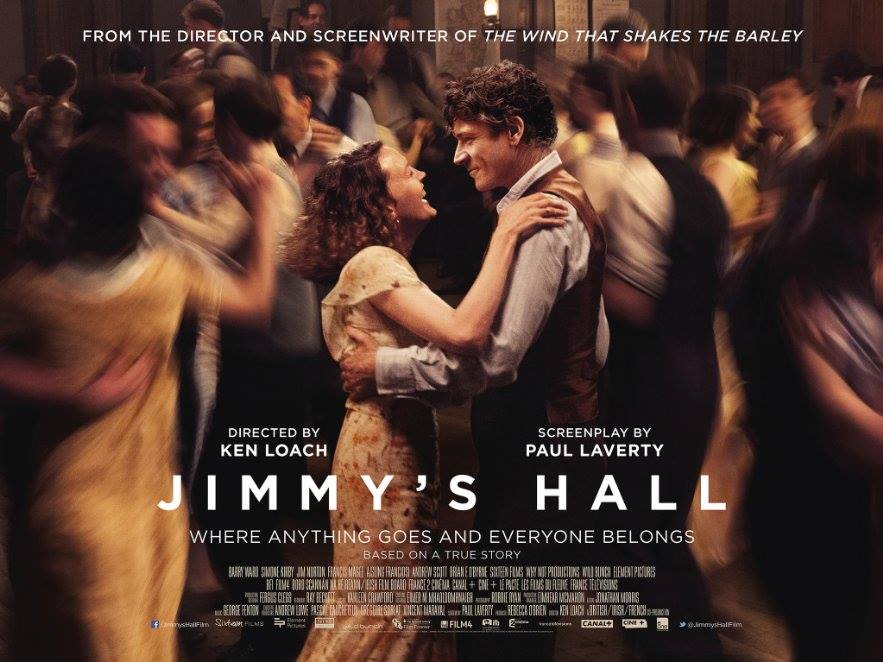
Jimmy’s Hall (2014) — Don’t Call Me ‘Fascist’… Yeh little Bollocks!

Just as a certain kind of middle-class Israeli filmmaker is prone to using Palestinians as set-dressing in stories about their own sense of guilt, a certain kind of middle-class British filmmaker is prone to using Irish history as a means of talking about socialism without having to deal with the fact that the British working-classes have spent the last few decades moving further and further to the right. I suppose the allure is born of envy: When the Irish people won their independence they beat many of the interests and institutions that continue to hold sway over British political life. Much like Scotland voting-in a left-wing party and looking to free itself from the festering right-wing cesspit that is the palace of Westminster, it’s difficult not to be envious of the Irish War of independence and ask ‘Can we come too?’

The thing that keeps drawing me back to the work of Ken Loach is his willingness to accept that left-wing politics is a difficult path. Too many so-called left-wing filmmakers are content to either limit themselves to critiques of right-wing thought or turn the revolution into some sort of aspirational fantasy like Aragorn taking over Gondor at the end of Lord of the Rings. However, this is not to say that Loach is some sort of miserabilist, it’s just that many of his films recognise both the potential of left-wing politics to change lives for the better and the potential of right-wing politics to shut that potential down the second it becomes a nuisance. Loach’s intense ambivalence about the realities of revolution are beautifully expressed in both Land and Freedom and The Wind that Shakes the Barley, both films about revolutions that ended badly only to live on in the minds of younger people. Mooted as Loach’s last ever film, Jimmy’s Hall revisits these themes in a far more mundane and seemingly a-political setting.

Continue reading →