A Farewell to Arms: Midnight Eye

I recently spent several thousand words complaining about how 21st Century film journalism has allowed itself to become little more than an unpaid cog in the Hollywood marketing machine but there will always be exceptions to the rule. For as long as I have been reading about world cinema on the internet, I have been aware of the brilliance that is the website Midnight Eye.

For over fifteen years old, Midnight Eye has set the gold standard for online film criticism. Devoted where others were fickle, serious where others were glib and passionate where others were opportunistic, Midnight Eye has showcased the new and the old in Japanese film and now its journey has come to an end as its operators Tom Mes, Jasper Sharpe and Martin Mes have decided to stop updating and get on with their lives.

As readers will have come to expect, their parting message is as insightful as it is despairing about the nature of contemporary Japanese cinema:

There is still quite a bit of guts and artistic vision on the no-budget end, but that side suffers from a lack of outlook – for the vast majority of young indie filmmakers there is nowhere to grow after they make their first self-financed feature, even if they had their film shown at festivals abroad and picked up a few awards along the way. Self-financing a movie is an exhausting process that you are not terribly likely to repeat (unless you are Shinya Tsukamoto and it’s in your DNA). They can’t go professional either, because there is simply no room for them in the industry: since the collapse of the video and DVD market medium-budget productions have to all intents and purposes vanished, while the production committees of the high-budget films prefer to hire someone of whom they can be sure, which means either a TV director familiar to the network that has a stake in the production or an experienced hand like Takashi Miike or Yukihiko Tsutsumi who already has a track record making hits.

Things go in waves (or in circles), so surely these recent developments in Japanese film (and hopefully those in politics too) will eventually be replaced by other trends. That an increasing number of directors are looking to make films overseas is both a sad consequence of the current situation and an opportunity to redefine our views of what constitutes a “Japanese film”. But the current situation and the films it engenders do not exactly fill us at Midnight Eye with the enthusiasm we need to keep this website running when so many other important things require attention.

The closure of Midnight Eye has left me wondering whether cultural scenes might not just wind up getting the critical press they deserve. How can we expect film journalists and critics to be brave and pioneering when the creators they write about seem content to chase the last big hit?

I have long been an admirer of Midnight Eye and will profoundly regret their closure… great works should not end in a chorus of indifference.

The Images of Mr. Turner

I do not have very much to say about Mike Leigh’s Mr. Turner other than to urge you all to seek it out.

Despite the fact that Leigh’s Topsy Turvy remains one of my favourite films, I had been put off going to see Mr. Turner by a series of trailers that made it look like the kind of sighing, nostalgic, worthy poison that is normally reserved for Sunday evening television. You know the kind of thing I’m talking about… conservative propaganda masquerading as ‘prestige drama’ and forced down the gullet of a population struggling to remain conscious after a weekend’s concerted hyper-consumption. British landscapes with the motorways dutifully cropped. British stately homes that are open to the public but only by appointment and on the understanding that HMRC won’t look too closely at the VAT receipts on the upkeep bills.

In truth, I shouldn’t have worried as Mr. Turner is just as strategically disrespectful as Topsy Turvy. In fact, the film’s methods and politics are so close to those of Topsy Turvy that one could almost talk of the films as a series united by a desire to re-claim, re-invent and re-humanise icons of Britain’s cultural past. I won’t hold my breath for a similar film about Agatha Christie or M.R. James but a boy can certainly dream.

The writing and acting that went into Mr. Turner are, naturally, sublime but I think particular credit needs to be given to the film’s cinematographer Dick Pope who has littered an otherwise very actor-centric film with some of the most arresting images to come out of British cinema in recent history. Though not as expressionistic as the work of Turner, you still have to marvel at Pope’s composition:


Continue reading →

Last Night by James Salter: “My Lord You”

Mistah Salter – He dead. The New York Times has an interesting obituary that paints Salter as a man plagued by the twin demons of ambition and bitter resentment over the failure to transmute critical acclaim into popular success. While the piece does stop well short of being a hatchet job, it is definitely in the business of burying rather than praising its subject. Having said that, it does quote a lovely line from Reynolds Price who described Salter’s work thusly:

“In its peculiar compound of lucid surface and dark interior, it’s as nearly perfect as any American fiction I know.”

Salter’s death reminded me of my need to return to this series of posts but it also reminded me of why this project began to run out of steam in the first place: I didn’t particularly enjoy “My Lord You” the first time I read through it. In fact, it was only after re-reading the story three times that I came to realise the precision and power that lies hidden behind its rather distracting use of metaphorical imagery.

Back in October 2014, I began a constellation of posts that tried to articulate the reasons for my reluctance to engage with the field of genre short fiction. While the bulk of the constellation went into describing the genre short fiction scene as an engine for acquiring and redistributing social capital rather than generating interesting stories, the root of my problem was that I simply did not like the stories that said engine was bringing to the attention of the wider genre community. As I said in my piece “Short Fiction and the Feels”:

In each of these stories, the genre elements sit somewhere between the metaphorical and the literal; aspects of a fictional world that seem to mirror the contours of real emotional lives whilst leaving the world unchanged and the metaphor unresolved and shrouded with the kind of ambiguity that renders precision anathema. As a genre reader, I am frustrated by the authors’ lack of interest in exploring how these genre elements might transform their fictional worlds. As a literary reader I am left perplexed by the decision to abandon realism in favour of a quasi-metaphorical language that makes the characters’ emotional lives seem more rather than less opaque.

Re-visiting these opinions more recently, I did begin to wonder whether my problem might not have been rooted in an aversion to fantasy literature. To me, fantasy always feels a bit like cheating because it allows the author to embed the logic of their stories in the fabric of their fictional worlds. There’s a fine line between using fiction as a means of engaging with the world from a particular viewpoint and constructing a fantasy in which all of the writer’s beliefs and prejudices are somehow magically true. Producing fiction in which the world actively rises up to meet the oncoming force of your narrative has always struck me as way too much of the latter.

Of course… traditional science fiction pulls this type of shit all the time and the boundaries between traditions have long been under pressure from a professional class with an interest in creating a single integrated marketplace for science fiction, fantasy and horror. As unpopular and deliberately narrow as it may seem, my vision of science fiction of a world-facing literary tradition in which authors are held accountable for their departures from reality, even when it is only on the level of scientific inaccuracy.

When I accused the quasi-metaphorical of falling somewhere between the demands of genre and the demands of traditional literature, I meant that many of these stories seemed completely unaccountable. Even allowing space for radical formal experimentation, literary fiction must ultimately resolve as some form of statement about the world or human nature and the same is true of the genre fiction that I want to read (although SF’s historical abrogation of the mimetic impulse allows for a considerably broader idea as to what constitutes resolution). My feeling about the quasi-metaphorical is that while many of these stories carry a very real and carefully-engineered affective payload, the artifice that goes into many of these stories also serves to distance them from the world and obscure many of the crunchier details in which the wheels of fictional conceit might be expected to meet the road of reality.

Though not a piece of genre writing, Salter’s “My Lord You” resembles the quasi-metaphorical in so far as it is a story built around a single metaphor that appears to have been designed with the intention of capturing a very specific feeling. However, unlike many of the quasi-metaphorical stories I touched on in my earlier pieces, Salter uses his metaphorical device as a means of uncovering all sorts of crunchy ideas about the nature of relationships and human sexuality.

Continue reading →

Runaway (2001) — Where are the Wolfhounds?

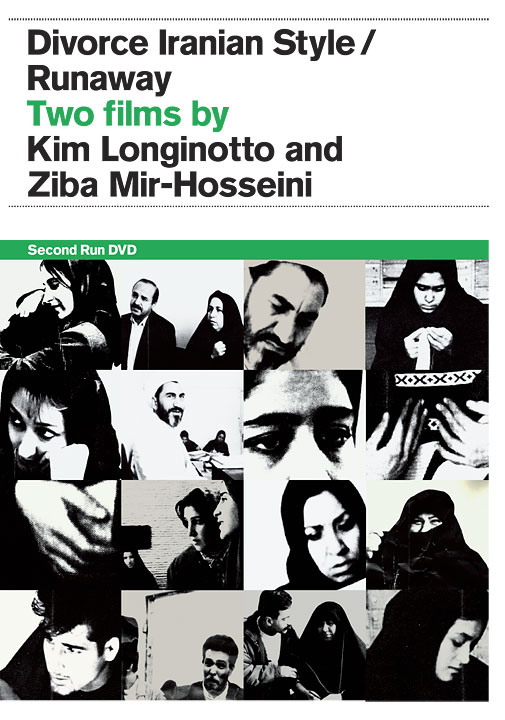
Kim Longinotto and Ziba Mir-Hosseini’s documentary Runaway is best viewed as a companion piece to their 1998 collaboration Divorce Iranian Style. Fusing the intense humanism of cinéma vérité with the analytical powers of feminist anthropology, Divorce Iranian Style is a fundamentally optimistic film about a group of women who use the unfair and oppressive structures of Iranian divorce law to improve their lives. I call Runaway a ‘companion piece’ to Divorce Iranian Style as while the earlier film is all about working inside the system to improve your lot, Runaway is all about what happens when the system fails and women are forced to flee for the sake of their own security.

Like all of Kim Longinotto’s work, Runaway provides a fascinating and genuinely moving portrait of a group of women who are trying to protect themselves from the failings of their society. In this case, the failing that women are forced to contend with is a vision of gendered sexuality that is as old as the hills and twice as tricky to erode.


Continue reading →

How Film Writing Works in the 21st Century

Step 1: Come up with an angle from which to promote the film and ensure that said angle features prominently in all pre-release promotional materials including fan-oriented press releases and interviews with talent.

For example, suggest that Guardians of the Galaxy is very similar to the original Star Wars as a way to (i) cross-promote two franchises that are owned by the same multinational corporation, (ii) get-over any (Green Lantern-inspired) resistance the target audience might have to a space-based action movie by comparing Guardians of the Galaxy to a film they already know, and (iii) give the adult audience an excuse to infantilise themselves and set aside their cynicism by inviting them to approach Guardians of the Galaxy in the same way as they approached Star Wars as children.


Continue reading →

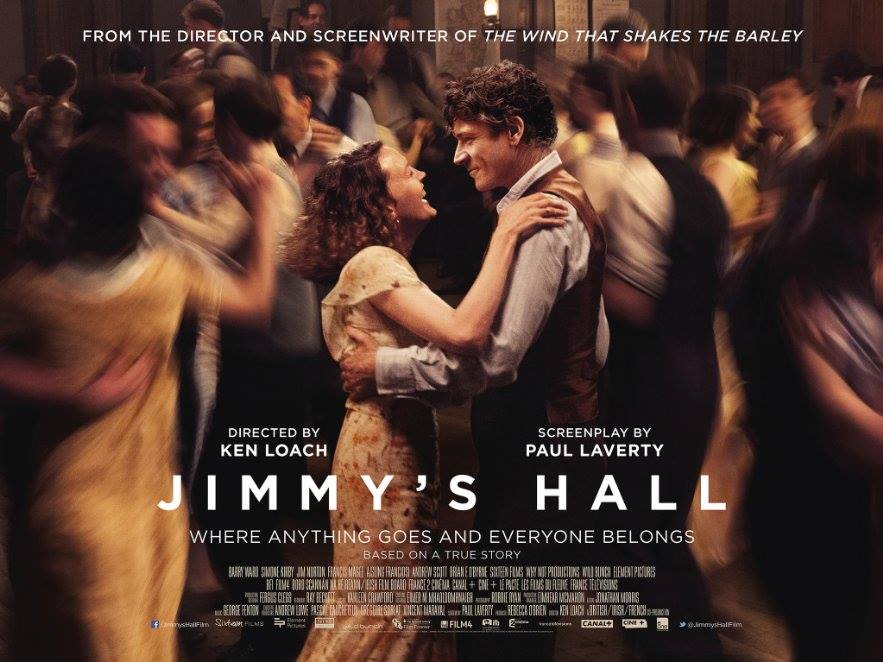
Jimmy’s Hall (2014) — Don’t Call Me ‘Fascist’… Yeh little Bollocks!

Just as a certain kind of middle-class Israeli filmmaker is prone to using Palestinians as set-dressing in stories about their own sense of guilt, a certain kind of middle-class British filmmaker is prone to using Irish history as a means of talking about socialism without having to deal with the fact that the British working-classes have spent the last few decades moving further and further to the right. I suppose the allure is born of envy: When the Irish people won their independence they beat many of the interests and institutions that continue to hold sway over British political life. Much like Scotland voting-in a left-wing party and looking to free itself from the festering right-wing cesspit that is the palace of Westminster, it’s difficult not to be envious of the Irish War of independence and ask ‘Can we come too?’

The thing that keeps drawing me back to the work of Ken Loach is his willingness to accept that left-wing politics is a difficult path. Too many so-called left-wing filmmakers are content to either limit themselves to critiques of right-wing thought or turn the revolution into some sort of aspirational fantasy like Aragorn taking over Gondor at the end of Lord of the Rings. However, this is not to say that Loach is some sort of miserabilist, it’s just that many of his films recognise both the potential of left-wing politics to change lives for the better and the potential of right-wing politics to shut that potential down the second it becomes a nuisance. Loach’s intense ambivalence about the realities of revolution are beautifully expressed in both Land and Freedom and The Wind that Shakes the Barley, both films about revolutions that ended badly only to live on in the minds of younger people. Mooted as Loach’s last ever film, Jimmy’s Hall revisits these themes in a far more mundane and seemingly a-political setting.

Continue reading →

Divorce Iranian Style (1998) — Some Semblance of Order in the Court

The title of Kim Longinotto’s documentary Divorce Iranian Style appears to be a tip of the hat to Pietro Germi’s Divorce Italian Style, an award-winning comedy from a time when being in a language other than English was no barrier to success at the Oscars. Germi’s film concerns an Italian nobleman who, despite having fallen out of love with his wife, is unable to get a divorce under the Italian legal system. Desperate for a way out, he concocts a plan to manipulate his wife into having an affair so that he can burst in on the lovers, kill his wife and then escape with a slap on the wrist after claiming that it was a crime of passion. While the outcome of the nobleman’s scheming is neither here nor there, the film suggests that people will always find a way to liberate themselves from an un-loved spouse… even when the legal system makes divorce a practical impossibility.

Longinotto’s Divorce Iranian Style is shot almost entirely inside one of Teheran’s family courts where Islamic judges known as Qadi preside over divorce proceedings that heavily favour the husband and the institution of marriage. However, despite the presence of horrendous structural inequalities, Longinotto’s subjects fight for their emancipation using any and all tactics at their disposal.

Continue reading →

Last Night by James Salter: “Eyes of the Stars”

It is hard not to read this story as an invitation to compare-and-contrast its female characters. Like “Comet”, “Eyes of the Stars” opens with a vivisection of its primary protagonist:

She was short with short legs and her body had lost its shape. It began at her neck and continued down, and her arms were like a cook’s. In her sixties Teddy had looked the same for a decade and would probably go on looking the same, where was not that much to change. She had pouches under her eyes and a chin, slightly receding when she was a girl, that was lost now in several others, but she was dressed neatly and people liked her.

There’s a surprising amount of cruelty and laziness about this description. Teddy’s obesity is characterised as a loss of shape and begins at her neck in a way that invites us to think of her pretty face, which is always the first thing people try to compliment in fat women. Drenched in vinegar, such compliments invariably take the form “…but you have such a pretty face!” as though obesity were a body’s act of betrayal against an innocent and undeserving face. Equally uncomfortable is Salter’s decision to append the description with the rejoinder that “she was dressed neatly and people liked her” so as to assure us that Teddy is not one of those slovenly fat people who are deserving of our unreasoning hatred. The mention of the cook’s arms also gives this passage an edge of snobbery as though Teddy’s weight made her look like a member of the working class.

Uncharitably viewed, this is Salter weaving a character from raw social prejudice. Charitably viewed, this is a deliberate act of cruelty designed to make us think of Teddy as someone who has long been the victim of other people’s unkindness. When I refer to Teddy as the story’s primary protagonist, what I mean is that she is the character with whom we are meant to sympathise. She is the ‘goodie’ for want of a better word.


Continue reading →

REVIEW — Drone (2014)

FilmJuice have my review of Tonje Hessen Shei’s Drone, a shortish documentary about the use of drones in the American War on Terror.

As a long-time science fiction fan who once studied war in an academic setting, I must admit that I find the rise of drone warfare to be an endlessly fascinating subject. Much of what we think of as the modern nation state has been shaped not only by the waging of war but also by the administrative requirements associated with the on-going maintenance of a sizeable security apparatus. Now… imagine what governments might become if that security apparatus were to be entirely automated. Suddenly, there would be no need for a standing military aside from a (largely administrative) officer class and a few special forces types for unusual situations. Given that most Western politicians have abandoned the idea of administering their own country’s infrastructures and economies, would they cling on to the idea of national military forces or would they simply cut a cheque to a military contractor who promised to deliver victory for significantly less than their competition? Given that Western governments have abandoned most administrative duties beyond throwing people in jail and waging wars, would there really be a need for national governments if standing armies became a thing of the past? If a government doesn’t provide healthcare, run schools, repair roads or fight wars then what’s the point of having one at all? Drones aren’t just another piece of military tech, they’re the thin end of the wedge we call tomorrow.  Many academics have realised the significance of this technology and thrown themselves into the study of drones, Tonje Hessen Shei’s Drone is a film that tries to join that conversation but winds up trying to cover way too much ground in way too little space:

Schei’s greatest sin is the failure to corral her ideas and feelings into a single coherent train of thought. Rather than presenting us with arguments or linking up data-points in a manner that encourages further reflection, Schei moves almost at random from complex analysis to footage of angry Peshawaris and then onto footage that could just as easily have been defence industry PR as images culled from the latest generation of video games. The frustrating thing about this documentary is that while it says many interesting things about an absolutely fascinating subject, it feels less like a sustained piece of cinematic argument than a load of raw documentary footage cut together at random.

Drone is a documentary that touches on a number of really interesting questions but rather than looking into the question of why the Pakistani airforce don’t shoot down American drones or how America’s criminally loose definitions of ‘terrorist’ came to form the basis of a rolling campaign of mechanised murder, the film merely touches base with a number of different issues before moving on to the next idea. The weirdest thing about Shei’s decision to cover a lot of ground in so little depth is the fact that the film is only a little over an hour long. Even an extra 20 minutes would have made the difference between ‘incoherent mess’ and ‘structured trains of thought’. Frustrating stuff really.

REVIEW — The Strange Case of Dr. Jekyll and Miss Osbourne (1981)

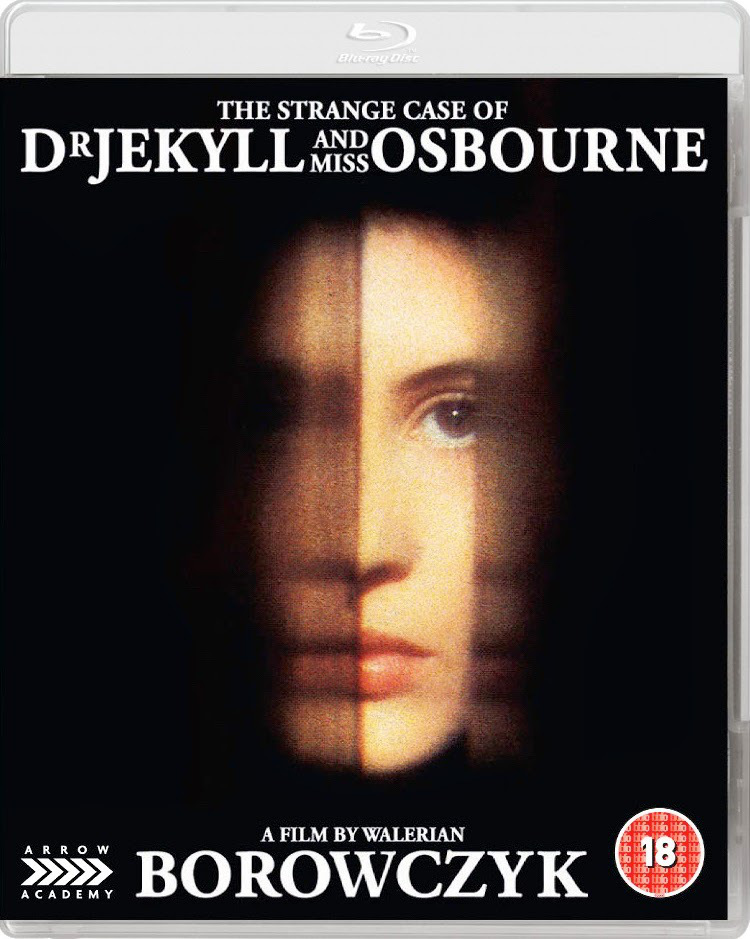
FilmJuice have my review of Walerian Borowczyk’s The Strange Case of Dr. Jekyll and Miss Osbourne, also known as Blood of Doctor Jekyll, Docteur Jekyll et les Femmes and (somewhat generically) Bloodlust. Borowczyk is a director who has grown on me considerably since I reviewed a collection of his films back in September 2014. While I must admit that Borowczyk’s obsession with the transgressive and emancipatory nature of sex leaves me rather cold, I am still drawn to his work by virtue of its sheer uniqueness. These days, art house film is all too often a narrow and generic exercise in pandering to middle-class mores using an ever-shrinking collection of tools inherited from the Golden Age of European art house film. Reminiscent of Pasolini and Von Trier in his more expansive moments, Borowczyk’s work is strange, arresting and completely mental in a way that few contemporary directors even bother trying to emulate.

Less singular but more accessible than Blanche (Borowczyk’s best film), I describe The Strange Case of Dr. Jekyll and Miss Osbourne as:

Gloriously amoral and more than slightly bonkers, this is a film in which parents, society, art, science, and God are all brought low before the terrifying power of the orgasm.

As the title suggests, the film is a re-working of Robert Louis Stevenson’s The Strange Case of Dr. Jekyll and Mr. Hyde that focuses on the journey undertaken by Jekyll’s fiancee Fanny Osbourne (named for Stevenson’s real-life partner). Borowczyk views Stevenson’s novella as a meditation on Victorian sexuality and the tendency of certain men to keep their vices private even from their own wives. In the world of the Borowczyk’s film, Jekyll is a repressed Victorian scientist who assumes the Hyde persona in order to satisfy a variety of transgressive urges which, if known, would completely undermine Jekyll’s social standing. The film finds Jekyll trapped between his two personae as he struggles to choose between a life of violent debauchery as Hyde and a life of privilege and power as Jekyll. Psychologically unstable, Jekyll moves back and forth between the two personae until his fiancee works out what is going on and solves his dilemma by choosing to take the potion herself and join her husband in a state of complete indifference to bourgeois morality.

Arrow films scanned the film themselves (working from an original negative with the help of Borowczyk’s original cinematographer) and it looks fantastic. Also wonderful is Michael Brooke’s discussion of the film in which he talks about seeing it for the first time in one of London’s long-lost and much-missed flea-pit cinemas. I found this discussion particularly evocative as while I grew up in London and got into film at quite a young age, those types of cinemas had completely disappeared by the time I was old enough to visit them. In fact, by the time I started visiting the West End on my own, the ‘re-development’ of Soho and Tottenham Court Road were already well under way and thinking about a Leicester Square filled with cinemas showing soft-core porn and horror is very much like thinking of some mad parallel universe… only with less airships and more films about Swedish au pairs.

I remember once reading a story about someone going to see Stalker in a cinema near Victoria station. The film started but the person sharing the story kept on being distracted by loud slurping noises coming from the row behind him. Hoping to tell whoever it was to pipe down, they turned around in their seat only to find themselves face-to-face with a man who was eating a plum whilst tossing off the bloke sitting next to him. Funny how our patterns of media consumption change… nowadays they bloke with the plum would probably be watching Avengers.