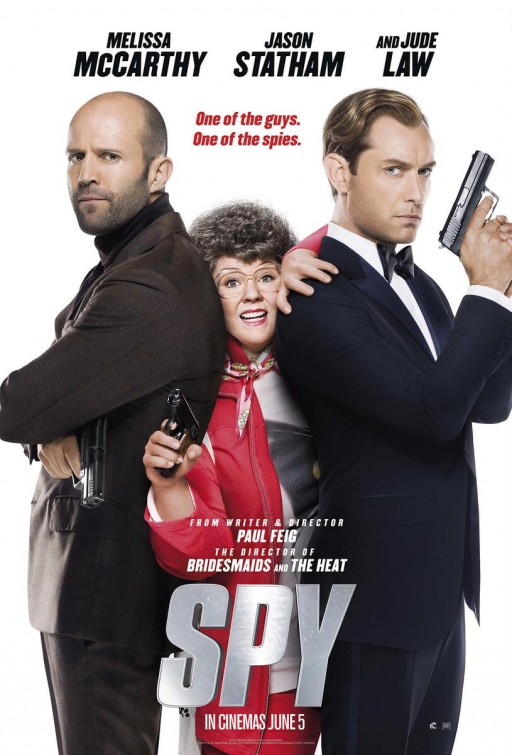
Spy (2015) — Wanting to Fuck Someone Does Not Mean that they are Good at their Job

People have been making spy film parodies for almost as long as they have been making spy films. As early as 1951, Paramount cast Bob Hope in My Favourite Spy as both a sophisticated international spy and the bumbling stand-up comedian who happened to resemble him. Right from the start, this cinematic formula proved so incredibly successful that it began to have an influence on the source material and so many conventional spy films and TV series of the 1960s went out of their way to incorporate the kinds of sight gags and deconstructive energies that had once been used to mock the genre from the outside. Indeed, the only tangible difference between The Man from U.N.C.L.E. and Get Smart is that Don Adams seemed to realise that his character was a self-important fool while Robert Vaughn did not. By the 1980s, the conventional spy film was so far beyond parody that Roger Moore was allowed to turn James Bond into the straight middle-aged equivalent of high camp while films such as Spies Like Us and True Lies functioned as both conventional action films and satirical comedies without even a trace of tonal dissonance.

The public’s growing inability to tell the difference between films about spies and films taking the piss out of spies also served to deprive espionage satires of their political edge. Despite realising that it was impossible to satirise a genre that had progressed beyond parody some twenty-five years previously, many filmmakers went down the path of producing broader and broader satires of a genre that no longer existed as anything other than a comic punching bag for hacks like Mike Myers or the Jason Friedberg and Aaron Seltzer partnership that would eventually wind up creating such cinematic monstrosities as Scary Movie and Meet the Spartans.

Though it is hard to think of a more degraded cinematic genre, the spy movie parody has nonetheless managed to produce a number of truly classic and devastatingly pointed films: Often imitated but rarely understood, Yves Robert’s The Tall Blond Man with One Black Shoe depicts the intelligence services as a bunch of self-important and unaccountable bureaucrats who spend all their time chasing their own tails in an effort to commandeer more power and funding from a political class that lacks the courage to recognise their pointlessness. Equally brutal is Michel Hazanavicius’ OSS 117: Cairo, Nest of Spies, which depicts the French secret service as a bunch of racist thugs who use the trappings of state power to legitimise a playboy lifestyle that takes them from one sun-drenched swimming pool to another as women and members of marginalised groups look on in anger and disgust. Though Paul Feig’s Spy does not approach the savagery of either of these two films, it is an action/comedy that does action very well and a comedy with real satirical bite. Ostensibly a satire of Bourne-era spy films, Spy is best understood as an exploration of the Halo Effect and the idea that physically attractive people are anything other than a bunch of incompetent narcissists benefiting from society’s libidinous good will.

 

Continue reading →

Sisters in Law (2005) – Part of the Solution, Not Part of the Problem

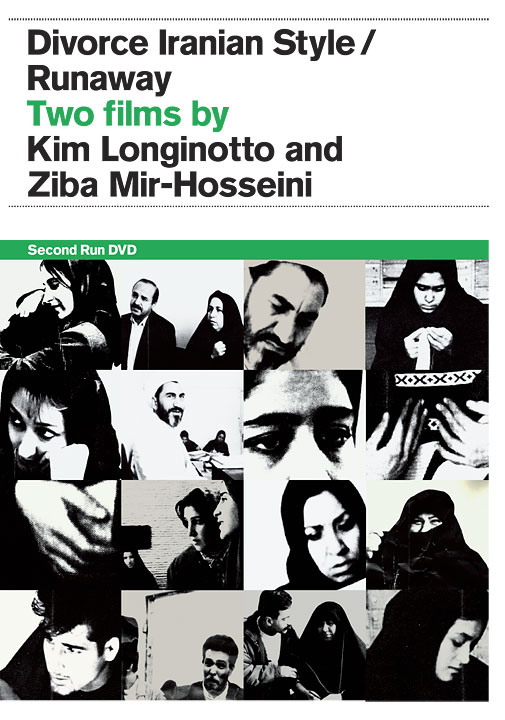
Kim Longinotto and Florence Ayisi’s documentary Sisters in Law is best understood in terms of its relationship with Longinotto’s earlier films Divorce Iranian Style and Runaway. Divorce Iranian Style put Longinotto’s camera into an Iranian family court where Women tried to use their country’s sexist legal infrastructure to protect them from their abusive and manipulative husbands. Eye-opening in its depiction of Iranian female agency and moving in its uncompromising commitment to women’s stories, Divorce Italian Style is a powerful film made even more powerful by Runaway, a film about what happens when the system fails and women are forced to flee their family homes. Formally very similar to Divorce Iranian Style, Sisters in Law finds the British documentarian Kim Longinotto filming various legal proceedings in the Cameroonian town of Kumba where it has been seventeen long years since the last conviction for spousal abuse.

Continue reading →

Runaway (2001) — Where are the Wolfhounds?

Kim Longinotto and Ziba Mir-Hosseini’s documentary Runaway is best viewed as a companion piece to their 1998 collaboration Divorce Iranian Style. Fusing the intense humanism of cinéma vérité with the analytical powers of feminist anthropology, Divorce Iranian Style is a fundamentally optimistic film about a group of women who use the unfair and oppressive structures of Iranian divorce law to improve their lives. I call Runaway a ‘companion piece’ to Divorce Iranian Style as while the earlier film is all about working inside the system to improve your lot, Runaway is all about what happens when the system fails and women are forced to flee for the sake of their own security.

Like all of Kim Longinotto’s work, Runaway provides a fascinating and genuinely moving portrait of a group of women who are trying to protect themselves from the failings of their society. In this case, the failing that women are forced to contend with is a vision of gendered sexuality that is as old as the hills and twice as tricky to erode.


Continue reading →

Divorce Iranian Style (1998) — Some Semblance of Order in the Court

The title of Kim Longinotto’s documentary Divorce Iranian Style appears to be a tip of the hat to Pietro Germi’s Divorce Italian Style, an award-winning comedy from a time when being in a language other than English was no barrier to success at the Oscars. Germi’s film concerns an Italian nobleman who, despite having fallen out of love with his wife, is unable to get a divorce under the Italian legal system. Desperate for a way out, he concocts a plan to manipulate his wife into having an affair so that he can burst in on the lovers, kill his wife and then escape with a slap on the wrist after claiming that it was a crime of passion. While the outcome of the nobleman’s scheming is neither here nor there, the film suggests that people will always find a way to liberate themselves from an un-loved spouse… even when the legal system makes divorce a practical impossibility.

Longinotto’s Divorce Iranian Style is shot almost entirely inside one of Teheran’s family courts where Islamic judges known as Qadi preside over divorce proceedings that heavily favour the husband and the institution of marriage. However, despite the presence of horrendous structural inequalities, Longinotto’s subjects fight for their emancipation using any and all tactics at their disposal.

Continue reading →

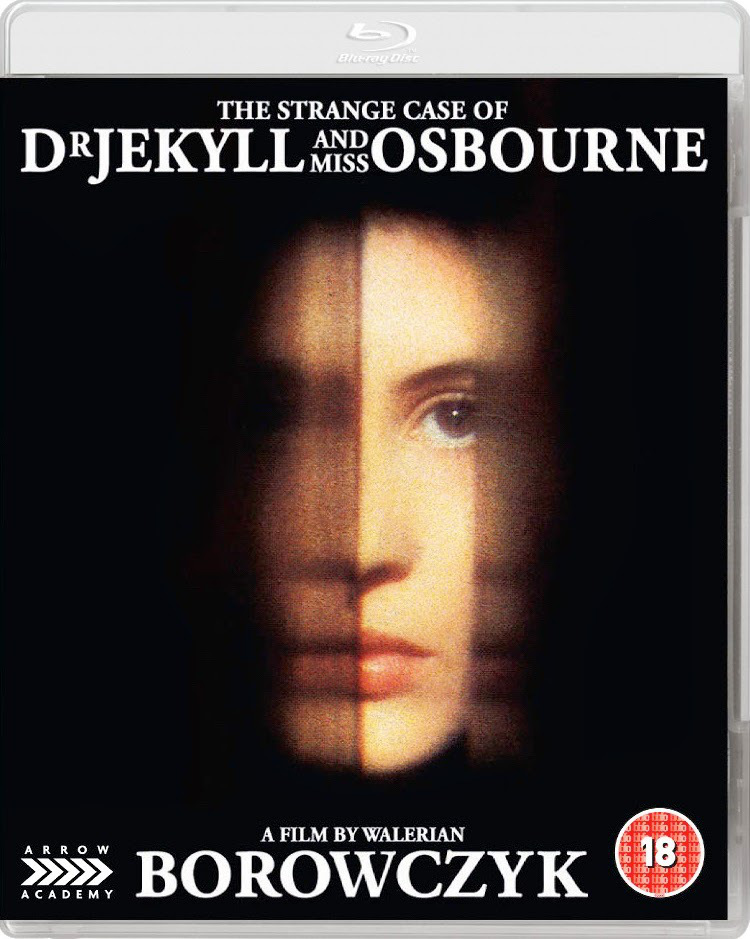
REVIEW — The Strange Case of Dr. Jekyll and Miss Osbourne (1981)

FilmJuice have my review of Walerian Borowczyk’s The Strange Case of Dr. Jekyll and Miss Osbourne, also known as Blood of Doctor Jekyll, Docteur Jekyll et les Femmes and (somewhat generically) Bloodlust. Borowczyk is a director who has grown on me considerably since I reviewed a collection of his films back in September 2014. While I must admit that Borowczyk’s obsession with the transgressive and emancipatory nature of sex leaves me rather cold, I am still drawn to his work by virtue of its sheer uniqueness. These days, art house film is all too often a narrow and generic exercise in pandering to middle-class mores using an ever-shrinking collection of tools inherited from the Golden Age of European art house film. Reminiscent of Pasolini and Von Trier in his more expansive moments, Borowczyk’s work is strange, arresting and completely mental in a way that few contemporary directors even bother trying to emulate.

Less singular but more accessible than Blanche (Borowczyk’s best film), I describe The Strange Case of Dr. Jekyll and Miss Osbourne as:

Gloriously amoral and more than slightly bonkers, this is a film in which parents, society, art, science, and God are all brought low before the terrifying power of the orgasm.

As the title suggests, the film is a re-working of Robert Louis Stevenson’s The Strange Case of Dr. Jekyll and Mr. Hyde that focuses on the journey undertaken by Jekyll’s fiancee Fanny Osbourne (named for Stevenson’s real-life partner). Borowczyk views Stevenson’s novella as a meditation on Victorian sexuality and the tendency of certain men to keep their vices private even from their own wives. In the world of the Borowczyk’s film, Jekyll is a repressed Victorian scientist who assumes the Hyde persona in order to satisfy a variety of transgressive urges which, if known, would completely undermine Jekyll’s social standing. The film finds Jekyll trapped between his two personae as he struggles to choose between a life of violent debauchery as Hyde and a life of privilege and power as Jekyll. Psychologically unstable, Jekyll moves back and forth between the two personae until his fiancee works out what is going on and solves his dilemma by choosing to take the potion herself and join her husband in a state of complete indifference to bourgeois morality.

Arrow films scanned the film themselves (working from an original negative with the help of Borowczyk’s original cinematographer) and it looks fantastic. Also wonderful is Michael Brooke’s discussion of the film in which he talks about seeing it for the first time in one of London’s long-lost and much-missed flea-pit cinemas. I found this discussion particularly evocative as while I grew up in London and got into film at quite a young age, those types of cinemas had completely disappeared by the time I was old enough to visit them. In fact, by the time I started visiting the West End on my own, the ‘re-development’ of Soho and Tottenham Court Road were already well under way and thinking about a Leicester Square filled with cinemas showing soft-core porn and horror is very much like thinking of some mad parallel universe… only with less airships and more films about Swedish au pairs.

I remember once reading a story about someone going to see Stalker in a cinema near Victoria station. The film started but the person sharing the story kept on being distracted by loud slurping noises coming from the row behind him. Hoping to tell whoever it was to pipe down, they turned around in their seat only to find themselves face-to-face with a man who was eating a plum whilst tossing off the bloke sitting next to him. Funny how our patterns of media consumption change… nowadays they bloke with the plum would probably be watching Avengers.


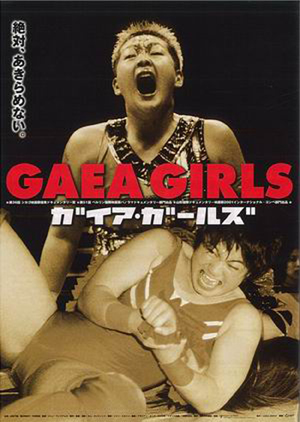
Gaea Girls (2000) — Those Aren’t Real Tears

Back in the early 1980s, Chigusa Nagayo and Lioness Asuka formed a professional wrestling tag-team known as The Crush Girls. Part of the second generation of Japanese professional wrestlers, the Crush Girls proved so impossibly popular that they changed the face of professional women’s wrestling and raised the bar for female wrestlers all over the world. Despite their immense popularity, the Crush Girls split up in 1989 when they reached the then-mandatory retirement age of 27. Six years later, Chigusa Nagayo came out of retirement to found Gaea Japan, an entirely new wrestling promotion in which she would also play out a long-standing grudge with her one-time partner Lioness Asuka. Kim Longinotto and Jano Williams’ Gaea Girls is a documentary filmed in and around the training facilities of Gaea Japan that looks at how aspiring female wrestlers cope not only with the traditionally male-dominated world of professional wrestling but also with Chigusa Nagayo’s ideas about parenting.

Continue reading →

Shinjuku Boys (1995) — Even When Words Fail

The Austrian philosopher Ludwig Wittgenstein once wrote that “The limits of my language mean the limits of my world”. What Wittgenstein actually meant remains a subject of philosophical debate but we can read his comment as a reflection upon the two-way relationship between our perception of the world and the ways in which we talk about it.

Intuitively, facts should always take precedence over language and whenever we encounter a fact that does not fit with our use of language, we should simply update our vocabulary to better reflect the facts on the ground. While there are certainly institutions and groups who try to educate people about ‘correct’ language use, the meaning of a word is always determined by the way it is most commonly used by a given population. What this means in practice is that while experts may be forever inventing language that is a better fit with current thinking about a particular phenomenon, having those new terms filter down into general usage is subject to the same structural biases as any other attempt at changing the way that people think.

The problem with the rigidity of our spoken language is that the vernacular often contains concepts and assumptions that are not only out of date but actively harmful. For example, if we define masculinity in terms of having a penis then someone who identifies as male despite not having a penis must simply be wrong about their gender. While there was a time when our culture was quite happy to make this type of judgement, our understanding of gender has now evolved to the point where terms like ‘male’ and ‘female’ are becoming increasingly hard to pin down.

The language of gender and sexuality has evolved with almost unprecedented speed over the last few decades and new conceptual iterations seems to generate more and more political heat as words are fought over by people with different needs and ideas. If the limits of our shared language mean the limits of our world then the battle to control the conceptual underpinnings of our language is also the battle to control our world.

Directed by Kim Longinotto and Jano Williams, Shinjuku Boys is a documentary about a group of people who were assigned female at birth but identify more closely with the male gender than the female. Made all the way back in 1995, I am sure that many of the terms used in this documentary are horrendously outdated but while Shinjuku Boys may struggle with its pronouns, it does show how people will continue to perform and negotiate their genders even when words fails them.


Continue reading →

REVIEW — Dreamcatcher (2015)

FilmJuice have my review of Kim Longinotto’s thoroughly excellent documentary Dreamcatcher.

As I say in my review, Kim Longinotto is one of the most criminally under-appreciated documentarians that Britain has ever produced. Her latest film follows the exploits of Brenda Myers-Powell, a former sex-worker who has set up an organisation designed to help people leave the sex trade. The activities of Dreamcatcher Foundation include handing out condoms on street corners and helping people to find beds in drug treatment programmes but also to reach out to people in schools and prisons who are at risk of falling into prostitution.

Aside from being incredibly moving and a really amazing documentary about the lives of America’s urban poor, Dreamcatcher does two really interesting and important things:

Firstly, it takes its cues from Brenda and talks about sex-work as a form of addiction. Brenda’s methods are not those of the politician, religious leader, or social worker but those of the recovering addict who talks about their experiences and encourages others to do the same:

Brenda’s attitude seems to be that she ‘was’ all of the women she encounters and so she can speak to them and help them to do whatever it is that they need to do in order to survive and live free. Brenda’s capacity for understanding is captured in a series of amazing interviews where she will ask a teenage girl or a sex worker whether they have done something and, despite the other person’s denial, she will talk about how it is okay to do what you need to do in order to survive. The power of these scenes lie in the facial expressions of the people Brenda talks to as while they are used to lying through their teeth to parents and authority figures, they cannot lie to Brenda because she knows exactly what they are going through. The most moving scene in the film is undoubtedly the moment in which Brenda gets a bunch of teenaged girls to talk openly about their histories of sexual violence for what seems to have been the first time ever. Longinotti captures not only the moment but also the sense of relief that comes from sharing and knowing that they are not alone.

I think there is probably an important book to be written about the language of addiction and how it has spread beyond the traditional confines of drink and drugs to encompass activities including sex and sex-work as well as food. Scarcely a month goes by without someone writing an article for the Guardian about the addictive nature of processed sugar and junk food.


Secondly, Dreamcatcher does for prostitution what The Wire did for the drugs trade. In other words, just as The Wire showed the drugs trade to be an amazingly complex social phenomenon whose tendrils had worked not only into local politics but also the school system, Dreamcatcher suggests that prostitution has its roots firmly embedded in the American family:

All the women in this film have stories about how they were abused as a child and how this abuse got them used to relationships with older men who would exploit their sexuality in increasingly aggressive and brutal ways. One of Brenda’s helpers is a former pimp named Homer and he explains how childhood abuse served to normalise not only under-age sex and the exchange of sex for money but also the use of violence to keep women under control. This vision of the sex trade as a system of exploitation is made particularly clear when Brenda talks to a young woman who grew up in California and got her start in the sex trade at the age of eight when she was picking up money and taking it back to the pimps.

The extent to which prostitution has perverted these women’s relationships is made particularly clear in a scene where a sex-worker takes a call from her baby’s father. Initially, the call seems a bit weird as she keeps calling him ‘baby-daddy’ but it then becomes clear that while the man is certainly her child’s father, he is also her pimp and so the role of ‘baby-daddy’ is reconfigured by the sex trade to include the sexual exploitation of women. This pattern plays itself out again and again throughout the film as women are never put onto the street by ‘pimps’ or ’employers’, it is always lovers and family members.


I simply cannot recommend this film enough, it’s an absolutely fantastic documentary that touches on many of the themes and ideas visited in David James’ The Interrupters and Werner Herzog’s Into the Abyss but I think it actually manages to do much better than either of those films. This is a great film and a great jumping-on point for anyone interested in discovering the work of one of Britain’s greatest living documentarians. Even the Q&A included on the DVD is amazing!

Summer Hours (2008) — On the Meanings of Stuff

Earlier this week, I wrote a piece in which I commented upon the extent to which our impressions of films are coloured by a lifetime’s worth of experiences. While all critical responses may be anchored in a shared humanity, there is no such thing as a clean or dispassionate read and what you think of a text is likely to be as much a product of your bullshit as it is of the inherent qualities of the text itself.

I wrote that piece and immediately sat down to watch Summer Hours by Olivier Assayas, a film that so closely matches my own personal experiences that it is at times quite uncanny.

A number of years ago, my mother died leaving quite a complicated estate. While I had been serving as my mother’s carer for a number of years, her death put me in a situation where I was legally involved with my much older half-siblings. While these siblings had always been a presence in my life, they had all left home by the time I was about 10 and their subsequent visits became increasingly sporadic and tense as my mother’s emotional stability declined. By the time I was legally manacled to them by my mother’s estate, I was effectively a complete stranger who had been parachuted into their existing group dynamic. While the stress of the situation meant that we all found a way to more-or-less cooperate, it rapidly became quite clear that my siblings and I had very different attitudes towards my mother’s possessions.

As someone who had been in the firing line of my mother’s emotional instability for my entire life, I viewed my mother’s things as a burden in need of lifting… I wanted to be rid of the stuff because I wanted to be rid of my mother and every item that went out the door brought a tangible sense of relief. Though my siblings expressed a number of different attitudes towards my mother’s stuff, one prevailing attitude seemed to be that the stuff was almost sacred in that it allowed one of my siblings in particular to reconnect with his (seemingly far more pleasant) childhood without the person my mother became getting in the way and spoiling his feelings of nostalgia. To this day, I could not tell you which of these two attitudes was the more ‘sane’ or ‘rational’ but we not only saw the objects in very different lights, we were also using them as props in what turned out to be very different psychodramas, which is precisely the theme of Summer Hours.


Continue reading →

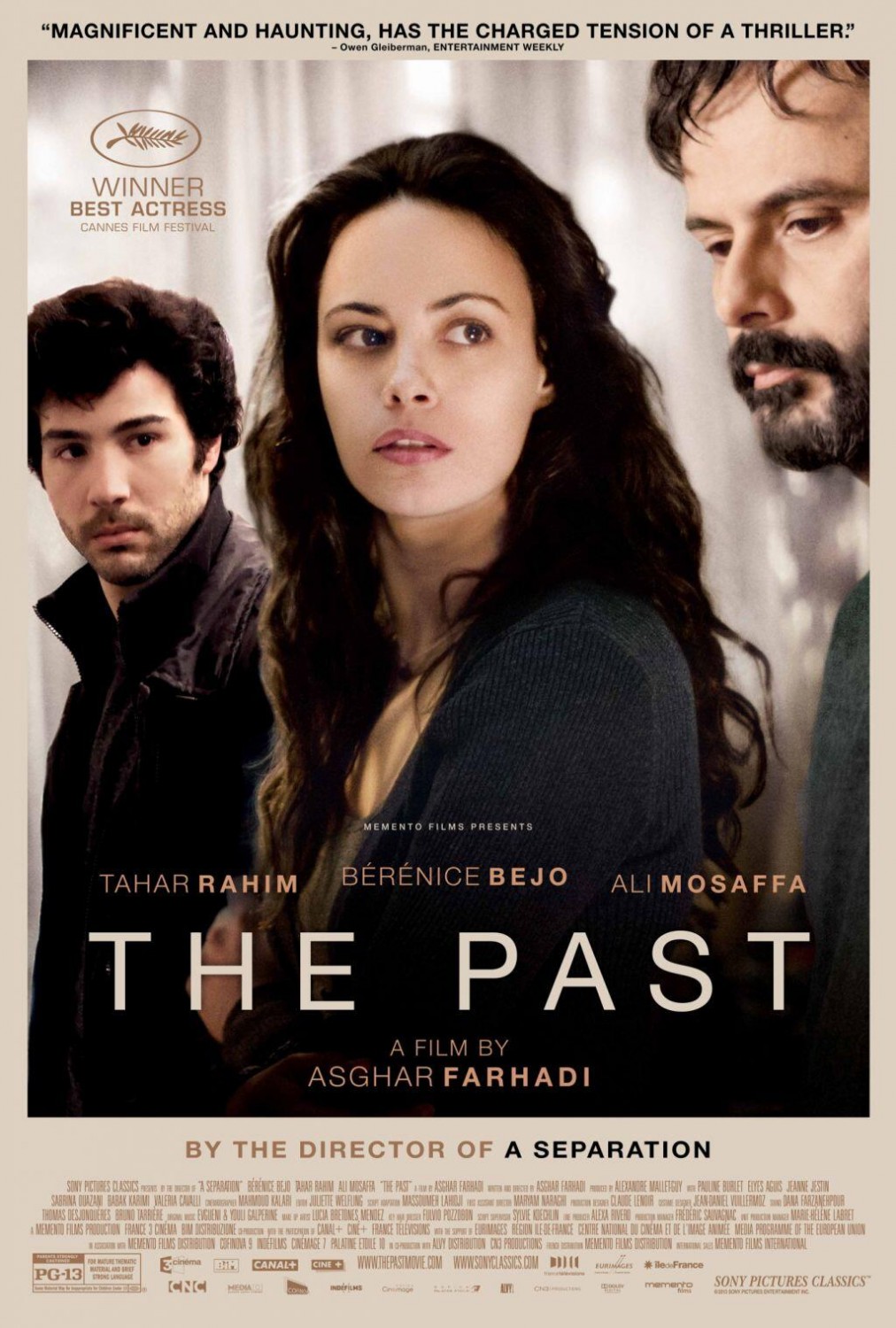
The Past (2013) – No… You Can’t Have Fantasy Dad

The films of Asghar Farhadi form an interesting counterpoint to the films of Joanna Hogg, which I wrote about last week. While both directors are fascinated by the way that group dynamics can impact upon our emotional lives, Hogg’s career has seen her transition from the emotional opacity of formalism to the conceptual opacity of surrealism while Farhadi’s relentless pursuit of emotional truth frequently has him brushing up against melodrama as he did with the magnificent Oscar-winning family drama A Separation.

There can be no greater validation of cinematic art than two directors approaching the same subject matter in radically different ways and yet somehow managing to produce works that feel as natural as they are satisfying. It is easy (and exciting) to imagine Joanna Hogg dancing round the question of who was responsible for the miscarriage in A Separation while Asghar Farhadi would arrive on Archipelago’s Scilly isles and refuse to let go until everyone came clean about what it was that was making them unhappy.

There’s a wonderful moment in the British situation comedy Peep Show when the emotionally constipated Mark Corrigan is confronted by a sister who wants to discuss their traumatic childhood prompting Mark to lament that the people who want to talk always seem to win. Asghar Farhadi’s latest film The Past is sympathetic to both sides of Mark’s observation: Yes… the people wanting to talk usually get their way and No… this isn’t always for the best.

Continue reading →