REVIEW — Les Combattants (2014)

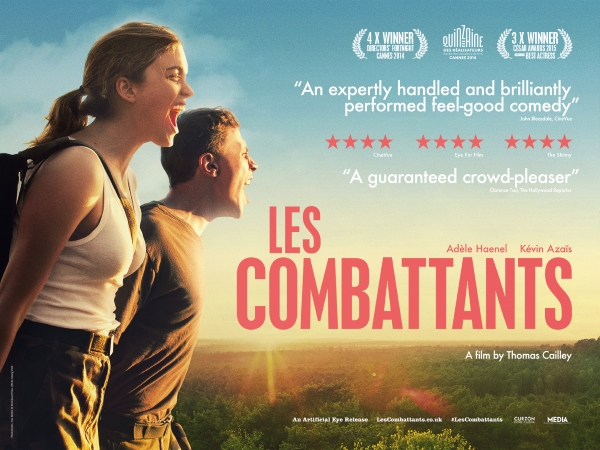
FilmJuice have my review of Thomas Cailley’s hugely engaging teen drama Les Combattants (a.k.a. Love at First Fight). Having received a standing ovation at Cannes, Cailley’s debut film went on to secure nine nominations and three wins at the French equivalent of the Oscars. Celebrated by French critics as nothing less than the future of French cinema, Les Combattants limped onto Anglo-American screens where it was marketed and reviewed as a romantic comedy (hence the stupid English-language title). Given that it is short on jokes and long on the kind of evocative, hands-off storytelling that is common in European drama and absent from the history of romantic comedy, the film received middling reviews from critics who seemed more interested in engaging with the press release than the nature of the film itself. According to Gary Goldstein at the LA Times:

There’s a better movie floating around the edges of the French import “Love at First Fight” than first-time feature director Thomas Cailley has allowed to surface. Though it’s billed as a romantic comedy, this quirky tale takes too many narrative U-turns that seem to dodge the genre’s more traditional (read: satisfying) tropes and dynamics.

There’s misprision and then there’s critical laziness. This is an example of the latter as Les Combattants is actually a fantastic meditation on Young Adult fiction and contemporary gender roles. You just need to make a bit of an effort in order to see it.

Les Combattants is built around two young adult protagonists: Kévin Azaïs‘ Arnaud whose lack of ambition and focus in no way seems to prevent his integration into a French society that is always pleased to see him. Everywhere he goes, Arnaud is offered jobs and opportunities for advancement despite the fact that the French economy is evidently still in tatters. Adèle Haenel plays Mathilde, a fiercely intelligent and incredibly driven young woman whose every attempt to secure an education or job is met with dismissive scorn. The fact that Arnaud’s white male privilege protects him from economic deprivation means that he is far better disposed to people and society than Mathilde, who spends the entire film having doors slammed in her face:

When Mathilde joins Arnaud’s family for dinner, the conversation naturally turns to the lack of jobs for young people and we see how the inequalities in French society have nurtured two very different reactions to the economic crisis: Embittered and unappreciated, Mathilde reaches the conclusion that society has nothing to offer her and so sets about preparing for its imminent demise; Pampered and protected, Arnaud has the luxury to consider a number of different career paths and so admits that he has never really thought about the collapse of Western civilisation.

Arnaud slowly falls in love with Mathilde and so decides to join her at a boot camp designed to help young adults preparing to join a parachute regiment. While Arnaud’s easy charm and happiness going with the flow mean that he fits right into a military environment, Mathilde solitary nature and intense disposition mean that the army falls out of love with Mathilde almost as quickly as Mathilde loses interest in the army. Eventually, things get so bad that Arnaud decides to abandon his shot at a military career and simply wanders off into the wilderness with Mathilde in tow.

As I explain in my review, I think that Cailley was wrong to have Arnaud discover his agency at the end of the film. I think that having Arnaud lead the pair out of danger undermines Mathilde’s character and turns Les Combattants from a film about a couple into a film about a young man. This misstep aside, I think this film has a lot of interesting things to say about gender. Particularly when you realise the similarities between Haenel’s intense survivalist Mathilde and the intensely self-reliant young women who feature in books like Suzanne Collins’ The Hunger Games, Veronica Roth’s Divergent series, and Kristin Cashore’s Graceling.

Les Combattants suggests that women have it considerably harder than men in the current economic climate. What makes Cailley’s analysis interesting is the suggestion that these inequalities might well have a knock-on effect of how the different genders perceive society. For example, Mathilde has grown intensely self-reliant because she no longer trusts society whereas Arnaud is happy to trust society and go with the flow because his experience is of people and institutions falling over themselves to offer him jobs and opportunities for advancement. The film’s ending strikes a false note because allowing Arnaud to save the day sends the message that Arnaud’s vision of society is somehow correct whereas Mathilde’s is paranoid and self-destructive. I disagree… I think Mathilde’s wariness is a rational response to an irrational world and I can’t help but wonder whether the immense popularity of YA among women might not be a direct response to their unequal treatment at the hands of society.

Interesting stuff aside, Les Combattants is one of the better looking films I have reviewed recently, so I thought I would share a few screen grabs:


Continue reading →

Killer of Sheep (1978) — The Neorealist Equivalent of Conan’s Hat

One of the most enduring creation myths to emerge from late-20th Century popular culture is that of Los Angeles as a city built on bones. Robert Towne and Roman Polanski’s Chinatown tells of an incestuous white man who engineers water shortages in order to force poor farmers off their land and build new homes for middle-class families. Set a number of years later, James Ellroy’s LA Quartet provides Capital with an even more corrupt figurehead in the person of Dudley Smith, an OSS spymaster turned anti-Communist and White supremacist who uses his institutional power as chief of detectives to corner the local drugs trade in an effort to keep the city’s non-White population under control and away from the classy White neighbourhoods that Chinatown’s Noah Cross famously described as “the future”.

While American popular culture is often willing to recognise the racial character of the oppressive forces it seeks to catalogue, its viewpoint is invariably that of the White liberal onlooker rather than that of the explicitly oppressed. This is particularly evident in Robert Zemeckis’ Who Framed Roger Rabbit, a polymorphously problematic remake of Chinatown where California’s marginalised population is represented by a ghetto filled with a diverse population of cartoon characters who eke out a living on the margins of Hollywood and eagerly distance themselves from a villainous Judge Doom who acquired considerable power and money by passing himself off as a respectable White man. The film ends with the ‘toons bickering about whether Doom was actually a duck, a dog or a mouse because obviously no White man would ever stoop so low as to use institutional power to brutalise and immiserate the poor and dispossessed. Even Chinatown’s most famous line resonates with the privilege of being born White in a White supremacist state; Jake may be able to ‘forget it’ because it is Chinatown but the actual residents of Chinatown are forced to live with ‘it’ every day of their lives.

As Thom Andersen suggests in his peerless video essay Los Angeles Plays Itself, the American film industry has long proven reluctant to engage with the city of Los Angeles on its own terms and turn the camera over to the real victims of its emerging creation myth. Charles Burnett’s Killer of Sheep is one of only a few films to consider what it means to live in the town of Noah Cross and Dudley Smith.


Continue reading →

REVIEW — Stalag 17 (1953)

FilmJuice have my review of Billy Wilder’s misleading P.O.W. comedy Stalag 17. I say “misleading” as while the film was initially marketed as a tribute to America’s brave prisoners of war, the film’s depiction of life in a World War II prison camp is actually far from flattering.

Originally a hugely-successful Broadway play, Stalag 17 revolves around a group of American POWs who are trying to escape the camp. Using all of their initiative and sneakiness, the men dig tunnels, fashion civilian clothes and scout for weaknesses in German security only to wind up delivering their escapees into the waiting arms of German machine-gun fire. Shocked but reticent to engage in any form of concerted self-criticism, the group’s frustrations wind up being unleashed on William Holden’s Sefton, a cynical individualist who would rather profit from the group’s desires than aid in their fulfilment. What makes this film “misleading” is the fact that, rather than conforming to genre expectations and producing a film all about a bunch of POWs coming together to outwit the Germans, Wilder has produced a film that portrays American POWs as boorish, overbearing idiots. In fact, Sefton’s rugged individualist is quite obviously intended to be the film’s point-of-view character:

Stalag 17 is not exactly the easiest film to get into. In fact, the film is almost completely unwatchable for most of its opening hour. The problem is that the film ostensibly plays lip service to the idea of the Good War by presenting many of the POWs as happy-go-lucky scamps. Stalag 17 is often described as an iconic film as it was one of the first films about the Second World War to present the Germans as figures of fun rather than menace. Just as this vision of the Nazis as effeminate, strutting nincompoops would later inform British comedies like ‘Allo ‘Allo, the idea that prisoners of war could pull off elaborate schemes under the noses of their German captors would later inspire 168 episodes of the American sitcom Hogan’s Heroes. What makes the film very nearly unwatchable is the fact that virtually all of its jokes are embarrassingly unfunny: First we have the incessant torrent of anti-German comments that are really little more than crude xenophobic sniping dressed up as banter. Then we have about a dozen different jokes involving an over-weight man falling over and finally we have a scene in which hundreds of well-fed American POWs scream and gesture lewdly at a bunch of terrified female prisoners. This type of humour might well have passed muster amidst the jingoism and sexism of 1950s America but it actually makes the POWs come across as a bunch of boorish idiots… and therein lays the point.

My review places Stalag 17 in the broader context of Wilder’s career and his tendency to view American society in very cynical terms but it also occurs to me that films like Stalag 17 could very well mark the point at which war-time solidarity left the American cultural bloodstream, taking any and all faith in collective action with it. Sefton’s rugged individualism provides the film with its moral centre precisely because America was entering an age where it became the individual’s moral duty to look to their own advancement whilst questioning any and all conceptions of the public good that were not grounded in material largesse.


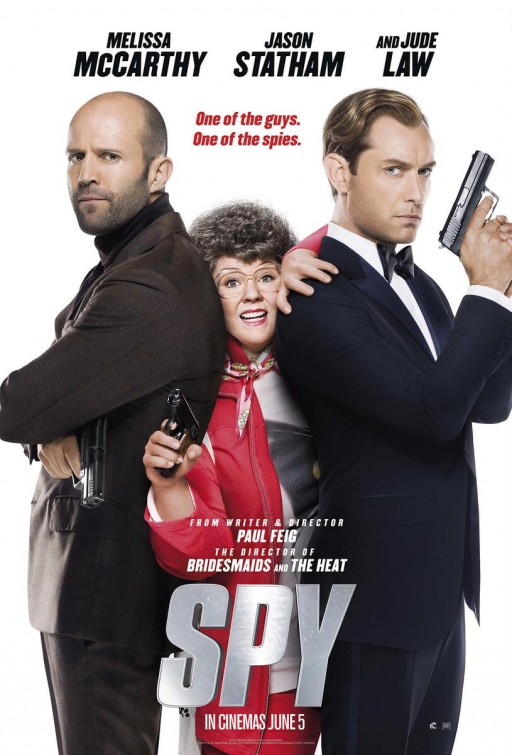
Spy (2015) — Wanting to Fuck Someone Does Not Mean that they are Good at their Job

People have been making spy film parodies for almost as long as they have been making spy films. As early as 1951, Paramount cast Bob Hope in My Favourite Spy as both a sophisticated international spy and the bumbling stand-up comedian who happened to resemble him. Right from the start, this cinematic formula proved so incredibly successful that it began to have an influence on the source material and so many conventional spy films and TV series of the 1960s went out of their way to incorporate the kinds of sight gags and deconstructive energies that had once been used to mock the genre from the outside. Indeed, the only tangible difference between The Man from U.N.C.L.E. and Get Smart is that Don Adams seemed to realise that his character was a self-important fool while Robert Vaughn did not. By the 1980s, the conventional spy film was so far beyond parody that Roger Moore was allowed to turn James Bond into the straight middle-aged equivalent of high camp while films such as Spies Like Us and True Lies functioned as both conventional action films and satirical comedies without even a trace of tonal dissonance.

The public’s growing inability to tell the difference between films about spies and films taking the piss out of spies also served to deprive espionage satires of their political edge. Despite realising that it was impossible to satirise a genre that had progressed beyond parody some twenty-five years previously, many filmmakers went down the path of producing broader and broader satires of a genre that no longer existed as anything other than a comic punching bag for hacks like Mike Myers or the Jason Friedberg and Aaron Seltzer partnership that would eventually wind up creating such cinematic monstrosities as Scary Movie and Meet the Spartans.

Though it is hard to think of a more degraded cinematic genre, the spy movie parody has nonetheless managed to produce a number of truly classic and devastatingly pointed films: Often imitated but rarely understood, Yves Robert’s The Tall Blond Man with One Black Shoe depicts the intelligence services as a bunch of self-important and unaccountable bureaucrats who spend all their time chasing their own tails in an effort to commandeer more power and funding from a political class that lacks the courage to recognise their pointlessness. Equally brutal is Michel Hazanavicius’ OSS 117: Cairo, Nest of Spies, which depicts the French secret service as a bunch of racist thugs who use the trappings of state power to legitimise a playboy lifestyle that takes them from one sun-drenched swimming pool to another as women and members of marginalised groups look on in anger and disgust. Though Paul Feig’s Spy does not approach the savagery of either of these two films, it is an action/comedy that does action very well and a comedy with real satirical bite. Ostensibly a satire of Bourne-era spy films, Spy is best understood as an exploration of the Halo Effect and the idea that physically attractive people are anything other than a bunch of incompetent narcissists benefiting from society’s libidinous good will.


Continue reading →

REVIEW — 3 Women (1977)

FilmJuice have my review of Robert Altman’s arthouse drama 3 Women. Set in a small desert town, the film tells of a teenage girl who arrives in town and attaches herself to a slightly older woman with a similar background. Initially, the teenage girl behave likes little more than an enraptured child, hanging on the older woman’s every word as she spins lies and revels in her narrow consumerist ideas about the good life. This relationship lasts until the young woman’s naivete and the older woman’s dishonesty run afoul each other resulting in one of them being hospitalise, at which point the film gets weird:

3 Women is divided into three increasingly-short sections that are topped and tailed by these beautifully composed surrealist interludes that linger in the mind and imbue the film with a distinctly dreamlike quality. When Milly and Pinky’s first relationship falls to pieces, a dream sequence triggers a re-ordering of their friendship and a transfer of personality traits: Once childlike and naïve, Pinky now emerges as manipulative and sexually confident while the deluded and selfish Milly is replaced by a more nurturing and principled figure who tries to look after Pinky only to wind up apologising for her failings until their unhealthy relationship intersects with another woman.

The elevator pitch for this film could easily be: A Feminist Lost Highway as the exchange of personality traits and the radical reworkings of reality are very similar to those deployed by Lynch. The film was evidently quite poorly reviewed at the time and Altman himself admitted that he wasn’t entirely clear what message he was trying to get across but I was reminded quite a lot of the work of Joanna Russ in so far as the film builds towards a future without men and many of the weirder shifts are triggered by a need to find a new way to co-exist with men who are either distracted and indifferent or crude stereotypical representations of a masculinity so toxic that it borders on the absurd.

I remembered Robert Altman chiefly from the grown-up satires he produced towards the end of his career, but while The Player, Short Cuts and Pret-a-Porter always struck me as very similar to Altman’s breakthrough film MASH, they did absolutely nothing to endear him to me. 3 Women has completely changed my opinion of Robert Altman and while I suspect that it’s probably not worth my while investigating the rest of his back catalogue in search of films like 3 Women, I do now wonder to what extent I was simply not ready for his sensibility.


REVIEW — A Pigeon Sat on a Branch Reflecting Upon Existence (2014)

FilmJuice have my review of Roy Andersson’s deadpan existentialist comedy A Pigeon Sat on a Branch Reflecting Upon Existence.

I must admit that this film caught me completely by surprise.  Prior to this review, I was only really familiar with Andersson’s first film, the wonderfully moving teenage love story entitled — aptly enough — A Swedish Love Story. Having now seen a couple more of his films and read a few interviews, I now realise that A Swedish Love Story is completely unrepresentative of the talent that emerged after a long depression-linked hiatus. Andersson may have gone to work in advertising as a successful maker of sentimental films but he returned as a bleakly existentialist comic who produces what can only be described as the cinematic equivalent of Chris Morris’s Jam.

A Pigeon Sat on a Branch Reflecting Upon Existence takes place in a darkly surreal version of the Swedish city of Gothenburg where the futility of everyday life is periodically interrupted by eruptions of surrealist energy that allow the residents fleeting moments of happiness or sadness before returning them to their anhedonic stupor:

Characters flirt outrageously in one scene only to wind up being unceremoniously dumped in the background of another while complete strangers lambast each other for having the temerity to suggest that a Wednesday might feel like a Thursday. The only things that seem to keep the utterly defeated population from outright madness are moments when the past unexpectedly erupts into the present and sends Napoleonic armies marching through the streets while bawdy barkeeps sing about exchanging drinks for kisses while their patrons cheer them on.

The release of this film coincides with the release of a box set including not only A Pigeon and A Swedish Love Story but also Songs from the Second Floor and You, The Living. I recommend it to anyone capable of finding humour in the pointlessness of existence.


Sisters in Law (2005) – Part of the Solution, Not Part of the Problem

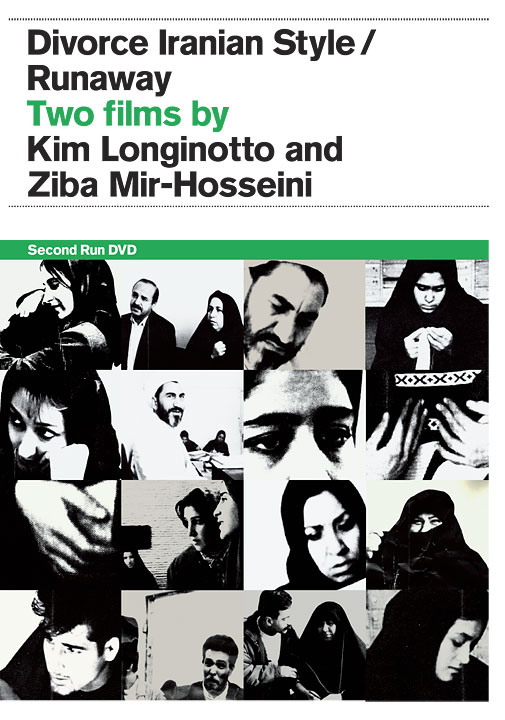
Kim Longinotto and Florence Ayisi’s documentary Sisters in Law is best understood in terms of its relationship with Longinotto’s earlier films Divorce Iranian Style and Runaway. Divorce Iranian Style put Longinotto’s camera into an Iranian family court where Women tried to use their country’s sexist legal infrastructure to protect them from their abusive and manipulative husbands. Eye-opening in its depiction of Iranian female agency and moving in its uncompromising commitment to women’s stories, Divorce Italian Style is a powerful film made even more powerful by Runaway, a film about what happens when the system fails and women are forced to flee their family homes. Formally very similar to Divorce Iranian Style, Sisters in Law finds the British documentarian Kim Longinotto filming various legal proceedings in the Cameroonian town of Kumba where it has been seventeen long years since the last conviction for spousal abuse.

Continue reading →

A Farewell to Arms: Midnight Eye

I recently spent several thousand words complaining about how 21st Century film journalism has allowed itself to become little more than an unpaid cog in the Hollywood marketing machine but there will always be exceptions to the rule. For as long as I have been reading about world cinema on the internet, I have been aware of the brilliance that is the website Midnight Eye.

For over fifteen years old, Midnight Eye has set the gold standard for online film criticism. Devoted where others were fickle, serious where others were glib and passionate where others were opportunistic, Midnight Eye has showcased the new and the old in Japanese film and now its journey has come to an end as its operators Tom Mes, Jasper Sharpe and Martin Mes have decided to stop updating and get on with their lives.

As readers will have come to expect, their parting message is as insightful as it is despairing about the nature of contemporary Japanese cinema:

There is still quite a bit of guts and artistic vision on the no-budget end, but that side suffers from a lack of outlook – for the vast majority of young indie filmmakers there is nowhere to grow after they make their first self-financed feature, even if they had their film shown at festivals abroad and picked up a few awards along the way. Self-financing a movie is an exhausting process that you are not terribly likely to repeat (unless you are Shinya Tsukamoto and it’s in your DNA). They can’t go professional either, because there is simply no room for them in the industry: since the collapse of the video and DVD market medium-budget productions have to all intents and purposes vanished, while the production committees of the high-budget films prefer to hire someone of whom they can be sure, which means either a TV director familiar to the network that has a stake in the production or an experienced hand like Takashi Miike or Yukihiko Tsutsumi who already has a track record making hits.

Things go in waves (or in circles), so surely these recent developments in Japanese film (and hopefully those in politics too) will eventually be replaced by other trends. That an increasing number of directors are looking to make films overseas is both a sad consequence of the current situation and an opportunity to redefine our views of what constitutes a “Japanese film”. But the current situation and the films it engenders do not exactly fill us at Midnight Eye with the enthusiasm we need to keep this website running when so many other important things require attention.

The closure of Midnight Eye has left me wondering whether cultural scenes might not just wind up getting the critical press they deserve. How can we expect film journalists and critics to be brave and pioneering when the creators they write about seem content to chase the last big hit?

I have long been an admirer of Midnight Eye and will profoundly regret their closure… great works should not end in a chorus of indifference.

The Images of Mr. Turner

I do not have very much to say about Mike Leigh’s Mr. Turner other than to urge you all to seek it out.

Despite the fact that Leigh’s Topsy Turvy remains one of my favourite films, I had been put off going to see Mr. Turner by a series of trailers that made it look like the kind of sighing, nostalgic, worthy poison that is normally reserved for Sunday evening television. You know the kind of thing I’m talking about… conservative propaganda masquerading as ‘prestige drama’ and forced down the gullet of a population struggling to remain conscious after a weekend’s concerted hyper-consumption. British landscapes with the motorways dutifully cropped. British stately homes that are open to the public but only by appointment and on the understanding that HMRC won’t look too closely at the VAT receipts on the upkeep bills.

In truth, I shouldn’t have worried as Mr. Turner is just as strategically disrespectful as Topsy Turvy. In fact, the film’s methods and politics are so close to those of Topsy Turvy that one could almost talk of the films as a series united by a desire to re-claim, re-invent and re-humanise icons of Britain’s cultural past. I won’t hold my breath for a similar film about Agatha Christie or M.R. James but a boy can certainly dream.

The writing and acting that went into Mr. Turner are, naturally, sublime but I think particular credit needs to be given to the film’s cinematographer Dick Pope who has littered an otherwise very actor-centric film with some of the most arresting images to come out of British cinema in recent history. Though not as expressionistic as the work of Turner, you still have to marvel at Pope’s composition:


Continue reading →

Runaway (2001) — Where are the Wolfhounds?

Kim Longinotto and Ziba Mir-Hosseini’s documentary Runaway is best viewed as a companion piece to their 1998 collaboration Divorce Iranian Style. Fusing the intense humanism of cinéma vérité with the analytical powers of feminist anthropology, Divorce Iranian Style is a fundamentally optimistic film about a group of women who use the unfair and oppressive structures of Iranian divorce law to improve their lives. I call Runaway a ‘companion piece’ to Divorce Iranian Style as while the earlier film is all about working inside the system to improve your lot, Runaway is all about what happens when the system fails and women are forced to flee for the sake of their own security.

Like all of Kim Longinotto’s work, Runaway provides a fascinating and genuinely moving portrait of a group of women who are trying to protect themselves from the failings of their society. In this case, the failing that women are forced to contend with is a vision of gendered sexuality that is as old as the hills and twice as tricky to erode.


Continue reading →