REVIEW — Gemma Bovery (2014)

FilmJuice have my review of Anne Fontaine’s Gemma Bovery, an adaptation of that Posy Simmonds strip that ran in the Guardian a few years ago… Gustave Flaubert’s Madame Bovary given a modern make-over and transported to a village in Normandy where an English couple have just moved in. But the cleverness of the source material extends way beyond its modern setting.

As I say in my review:

Simmonds’Gemma Bovery was an attempt to address the maleness of Flaubert’s gaze by drawing the audience’s attention to the way that men see women, the way that men read novels, and the way that these two processes can often feed into each other. Anne Fontaine’s French adaptation of a British comic connects admirably with the source material’s literary criticism but struggles to understand the substantive issues surrounding the ways in which straight men look at women.

This is a film about a French baker who becomes obsessed with the idea that an English woman named Gemma Bovery is in the process of reliving the plot of Flaubert’s novel. What works is the way that Fontaine keeps Gemma at arm’s length and encourages us to speculate as to what is going through her head. What does not work is that Fontaine seems surprisingly reluctant to acknowledge Gemma’s existence as anything other than a sex object. As I explain in my review, there are scenes intended to stress the fact that Gemma works damn hard to maintain a sexy public persona and that said work involves hours spent working out, denying herself food, and generally being profoundly unsexy.

This was a real wasted opportunity as it seems to make the exact same mistake as David Fincher’s adaptation of Gone Girl in that the female character delivers a speech about how she can finally be herself after years of being the ‘cool girl’ only for the film to suggest that the character had no ‘real self’ beyond a desire to mould herself to male expectations and use those expectations to manipulate and consume men.

Both films acknowledge the ‘cool girl’ phenomenon and the extent to which women are forced to perform not just their femininity and sexuality, but also their earthy authenticity for the sake of men. However, it is one thing to acknowledge this phenomenon and quite another to critique it and Fontaine proves just as unwilling to critique the performance of femininity as Fincher.

Last Year at Marienbad (1961) –Submitting to Another’s Interpretation

As I remarked in the introduction to my recent piece about Hiroshima Mon Amour, Last Year at Marienbad is one of a handful of works comprising the peak of the sensibility or movement known as European art house film. Great works may have followed in its wake, some may even continue to be made, but few films have managed to equal (let alone outstrip) Marienbad when it comes to sheer inventive panache. This was a film that did not so much bend the rules of cinematic story-telling as shatter them into a thousand beautiful pieces.

There are many critical paths into Marienbad, but the one I would like to focus on today involves the colliding sensibilities of the film’s writer and director:

The film’s director – Alain Resnais – may have begun his cinematic career as an actor but his reputation was built on the back of a documentary exploring the extent of France’s collaboration with the German war machine during World War II. Night and Fog served to confront the myth that the French people had spent the entirety of World War II actively resisting the German occupation. Far from spending their evenings blowing up ammunition dumps, many French people welcomed German occupation and their welcome even extended as far as helping the Nazis to exterminate France’s Jewish population. The myth of the citizen-resistance fighter was not only put about by French political elites eager to evade answering questions about their own wartime activities, it was also embraced by a French population wracked by feelings of guilt and shame. While themes of remembrance and forgetting may have gone on to dominate the rest of Resnais’ cinematic career, that career began with an examination of how memories can be manipulated by those with a vested interest in particular truths.

The film’s writer – Alain Robbe-Grillet – differed from most writers in so far as he trained as an agronomist with a particular interest in diseases of the banana. As someone whose perhaps more scientific than humanistic, Robbe-Grillet’s writing was famously devoid of humanity. Even when his work did feature conventional characters and narratives, the prose would invariably be affectless and profoundly wedded to the surface of objects. For example, consider the opening to his classic experimental short story “The Secret Room”:


The first thing to be seen is a red stain, of a deep, dark, shiny red, with almost black shadows. It is in the form of an irregular rosette, sharply outlined, extending in several directions in wide outflows of unequal length, dividing and dwindling afterward into single sinuous streaks. The whole stands out against a smooth, pale surface, round in shape, at once dull and pearly, a hemisphere joined by gentle curves to an expanse of the same pale color—white darkened by the shadowy quality of the place: a dungeon, a sunken room, or a cathedral—glowing with a diffused brilliance in the semidarkness.


There are two further things to say about this quotation: The first is that, despite appearing to be written in an objective or photo-realistic style, neither the room nor its contents ever existed. The room is a complete fiction that has been introduced into your head by the simple act of reading the above passage. The second thing to say about this quotation is that the red stain is blood dripping from the breast of a woman who has been murdered. Indeed, while Robbe-Grillet never killed or maimed anyone, his fantasy life is said to have revolved around the torture of young women. These fantasies would often inspire real actions undertaken as part of a long-term sadomasochistic relationship with another consenting adult. I mention this not to posthumously kink-shame Robbe-Grillet, but rather to position him as someone who would have been quite comfortable distinguishing between non-consensual sex and the performance of non-consent as part of an activity to which everyone involved would have willingly consented.

Last Year at Marienbad is a film about memory but also about consent and the extent to which our memories and actions can be shaped by other people.

Continue reading →

REVIEW –Hiroshima Mon Amour (1959)

FilmJuice have my review of Alain Resnais’ iconic art house drama Hiroshima Mon Amour. Historical distance tends to result in cultural moments losing a lot of their nuance. For example, when we look back at British punk, we often struggle to see beyond the Sex Pistols and even when we do manage to escape the event horizon of their fame, we tend to only see bands like Crass and X-Ray Spex. I have a theory that when the books are closed on post-War European cinema and its contemporary art house rump, people will agree that the cultural moment peaked with Hiroshima Mon Amour, Last Year at Marienbad and L’Avventura. Sure… great films came before and after (I’ve reviewed quite a few of them) but even fifty years later, European art house film struggles to be anywhere near as beautiful, shocking, and thought-provoking as those three films. Indeed, one of my recurring moans is that many of the directors working in contemporary European art house film are little more than tribute acts grinding through gestures and ideas introduced over half a century ago.

And yet, who can blame generations of film school graduates when those gestures and ideas contain so much power?

Hiroshima Mon Amour was Resnais’ first feature-length film and the road to directing narrative features was paved with short, confrontational documentaries including Night and Fog, his damning examination of French involvement in the Holocaust. As might be expected of a feted documentarian, Resnais’ first feature begins with a series of documentary gestures in which a woman describes visiting a museum about the bombing of Hiroshima while her Japanese lover repeatedly asserts that she saw nothing at Hiroshima. The steel in his voice and the intimation of trauma it suggests set the tone for a film about memory, emotion, and the urgent need to forget:

Were someone to make Hiroshima Mon Amour today, people would say that it was a film about trauma; the trauma inflicted upon the Japanese people by the American use of nuclear weapons and the trauma of being used as a scapegoat for the years your home town lived happily under German rule. Rather than differentiating between the wartime experiences of winners and losers, soldiers and civilians, Renais links the experiences of a Japanese soldier to the experiences of a French teenager and explores the effects of trauma upon memory and, by extension, the self. Though Renais would likely not have thought of his film in terms of modern ideas about psychological trauma, he intuitively understands the ways in which trauma can distance you from people who do not share your experiences. He also understands how traumatic events can demand a form of active and self-protective forgetfulness whereby the traumatised create new stories to tell about themselves. For example, the architect is only able to function because he chooses not to talk about the destruction of his home and family. When his lover tries to start a conversation about Hiroshima, his only response is to shut her down… “You saw nothing of Hiroshima”. Conversely, the actress is only able to function because she chooses not to fall in love so deeply as to be transported back to that day when she was shaved and thrown into a basement. She recognises the need to confront these feelings and move on with her life and yet she cannot… “You destroy me. You’re so good for me”.

I’ve long suspected that my tastes are turning more and more towards the abstract. I’ve spent so long thinking about books and films that I genuinely struggle with the carefully curated experiences offered by works with strong narratives and the need to lock audiences into a single unambiguous narrative. All too often, these works feel like theme park rides only without the excitement. Like many films influenced by the experimentalism of French modernism, Hiroshima Mon Amour turns its nose up at the tricks and traps of western story-telling and encourages us to think by providing us with a stream of unanswered questions and evocative images. Hiroshima Mon Amour is one of those films that perfectly suits my current needs and tastes… it is my bag, baby.

REVIEW – Beyond the Valley of the Dolls (1970)

FilmJuice have my review of Arrow’s re-release of Russ Meyer’s Beyond the Valley of the Dolls. The film revolves around a group of female rock musicians who decide to leave home and try their luck on the LA music scene. What they find is a scene replete with sex and drugs where fame is just as likely an outcome as death. Initially wowed by the glamour and raw sexuality of their new friends and hangers on, the band lose sight of the music and each other before re-discovering themselves and asserting their basic moral character. In other words… it’s the cinematic version of Josie and the Pussycats only without the tunes and satirical edge:

The problem with Russ Meyer’s Beyond the Valley of the Dolls is that while Meyer had been working in Hollywood for a few years, neither he nor his screen-writer the film critic Roger Ebert had any idea as to what LA’s sinister underbelly was actually like. Meyer was 48 when Beyond the Valley of the Dolls was released and so the image of Hollywood he wound up ‘satirising’ was one with little or no basis in reality. Beyond the Valley of the Dolls is not so much humorous as embarrassing in that characters wander around spouting 60s-inspired gibberish like “don’t bogart that joint” and “I’d love to strap you on”. It’s funny enough the first few times but the well is shallow and Ebert’s script keeps digging long after the audience is being served refreshing glasses of dirt. Moving beyond the thin attempts at satire are juvenile attempts at transgression that usually boil down to footage of enormous bouncing breasts and moments of gay panic.

Some critics describe Beyond the Valley of the Dolls as a satire of the LA scene but the satire rarely rises above the level achieved by Rowan and Martin’s Laugh In, which I assume provided the bulk of Ebert and Meyer’s ‘research’ into 60s counter-culture.

Meyer is a director who reminds me a lot of Roger Corman in so far as his fame seems to be a reflection of financial realities rather than genuine authorial vision. Both directors arrived on the scene after the collapse of the studio system and TV’s wholesale annexation of cinema audiences. Corman and Meyer made money and brought in younger audiences by filling cinema screens with sex and violence and so have come to be hailed as pioneers but the directors of the American New Wave did much the same and yet produced art rather than the grubby, stupid and lacklustre nonsense that we have come to associate with Corman and Meyer. As I say in my review, Meyer deserves credit for developing a vision that was uniquely his own but there really are much better Meyer films than Beyond the Valley of the Dolls. This film is unfunny, unsexy, unexciting and egregiously reactionary. Ugh.


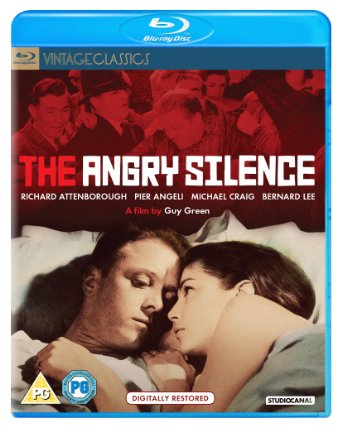
REVIEW — The Angry Silence (1960)

I often wonder how much attention I should play to politics in the evaluative elements of my reviewing. As someone who is normally quite cynically detached from the culture that surrounds me, I am –to borrow a turn of phrase from Peter Mandelson and thereby prove a point — intensely relaxed about the consumption of right-wing culture.

I can watch Triumph of the Will and The Birth of a Nation just as easily as I watch Saturday Night and Sunday Morning. I can watch and appreciate these films because I take them all  to be well-realised expressions of particular world-views. The fact that I have more personal sympathy for the politics of Saturday Night and Sunday Morning might encourage me to return to that film slightly more often and hold it in slightly higher regard but ugly politics are no impediment to the creation of beautiful films. At least in principle…

There are times when right-wing culture annoys me and those times are usually when the film is quite obviously tapping into existing trends in right-wing propaganda in order to connect with an audience. My go-to example for this type of thing is Ciaran Foy’s The Citadel, a low-budget horror film that draws on a variety of racist and classist stereotypes in its efforts to depict modern-day council estates as madness-flecked sink holes filled with feral dog-children who would just as soon rape you as smear faeces on your front door. This type of shit bothers me because these are notions that are still ‘live’ and still doing damage to the people who live and work on those council estates. Fascism and racism are still very real social problems but I feel that cultural politics have shifted far enough that it is easy to gain some distance from films about Nazis and Klansmen. This may be a reflection of my white privilege, but it is also how culture works… time and distance make it a lot easier to be objective.

An excellent example of this process at work is my review of Guy Green’s workplace drama The Angry Silence, which has now gone live on FilmJuice.

The film is set in a period of British history where capitalism had not yet been completely unbound. The story revolves around a factory-worker who is forced to choose between financial security and group loyalty when a communist agitator manipulates his local union into a series of wildcat strikes:

It is at this point that the film’s right-wing politics begin to manifest themselves as Curtis is positioned as a righteous individual standing up to both the inhuman collectivism of the working class and the selfishness of ruling elites who inexplicably single him out as a ‘lone wolf’ and general trouble maker. What makes the film right-wing is the way that it paints the working class as a collection of cowards, sheep and thugs. Easily manipulated by what would appear to be Soviet spies, they strike out of vanity and blind conformity rather than as a means of securing fairer wages or safer working conditions. The Angry Silence is not set in our world but in a parallel universe where capitalists increase wages, workers remove their own safety rails and still people turn out on strike. The situation explored in The Angry Silence is as much of a paranoid right-wing fantasy as the ticking terrorist time bomb that invariably serves to justify the use of torture… no wonder this film was universally praised by the right-wing press.

The Angry Silence is a piece of right-wing propaganda that aped the kitchen sink realism and working-class focus of the British New Wave at a time when those themes, methods and politics still had an audience. It’s not just that the film’s politics are wrong and harmful, it’s that the producers Richard Attenborough, Bryan Forbes, and Jack Rix took a set of tools devised to help set people free and used them to construct an argument in favour of the blasted neoliberal hellscape in which we are now collectively entombed. The Angry Silence is a well-made film in the same way as Triumph of the Will and The Birth of a Nation are well-made films in that it articulates its right-wing worldview with real panache in a film that is well-constructed, well-written and very well-performed.

The Angry Silence is a well-made piece of right-wing propaganda and the only reason I am able to enjoy it is because the argument the film participates in about the merits of collective action and group solidarity have now been lost. I can understand why the right-wing press praised this film and I can understand why the (then) predominantly left-wing film culture absolutely hated it. I hate what this film represents and yet I have enough distance from the argument that I am able to appreciate the skill with which its clauses and conclusions are laid out. Yet another good film in service of an ugly argument.

Colin Barrett’s Young Skins: “Kindly Forget My Existence”

As I reach the finish line, I’m moved to consider whether or not Colin Barrett’s Young Skins is actually a decent collection of short stories. As I’ve mentioned before, Barrett’s name often features in articles devoted to the emergence of a new wave of Irish writers and I think the Glanbeigh stuff justifies his inclusion in those types of curatorial pieces… but only just.

“The Clancy Kid” and “Bait” are hip to gender politics and come with enough ugliness, sensuality and kinetic weirdness to ensure that they linger first in the eye and then in the mind. However, as compelling as the collection’s opening stories may be, nothing else quite manages to reach their levels of either cleverness or artistry.

Presenting Young Skins as a story cycle set in the fictional town of Glanbeigh was a great idea as it encourages us to view the collection’s weaker stories in a flattering light cast by its opening triumphs. However, while Barrett does connect the stories at the level of both place and character, he struggles to find deeper connections and so fails to achieve either stylistic consistency or thematic focus resulting in a collection that rapidly loses its shape despite the diminishing returns offered by the pretence of inter-connectedness. Once you realise that Barrett is never going to build on the achievements of those opening stories, you are left with the frustrating and the merely passable.

Young Skins’ final story “Kindly Forget My Existence” is an excellent case in point as while it would appear to be set in the same place as “The Clancy Kid” and “Bait” it is actually an entirely generic piece of literary writing that could have been written by almost anyone and published almost anywhere.


Continue reading →

Colin Barrett’s Young Skins: “Diamonds”

If “Calm with Horses” was all about Barrett relaxing into the long-distance gait of the novelist then this story is all about the explosive energy of the short fiction sprinter. Even less concerned with narrative and sustained characterisation than the collection’s opening stories, “Diamonds” demonstrates the raw power of Barrett’s prose as well as the strategic weaknesses of his methods.

The story begins with a display of pyrotechnics:

The midland skies were huge, drenched in pearlescent light and stacked with enormous chrome confections of cloud, their wrinkled undersides greyly streaked and mottled, brimming with whatever rain is before it becomes rain. Each time I came to and checked the carriage window the same cow seemed to be eyeing me from the same sodden, tobacco-brown field.

Little more than a shot across the reader’s bow, we move on to discover a protagonist who is all out of luck and all out of options. Rock bottom is rising up to meet him and the only way out was a return to source… to Glanbeigh!

Continue reading →

Colin Barrett’s Young Skins: “Calm With Horses”

At 74-pages in length “Calm with Horses” is not only the longest work in the collection by some considerable margin. It is also the only work that might be described as a novella rather than a conventional short story and this format change may account for why the stylistic fireworks that characterise both “The Clancy Kid” and “The Moon” feel less present.

So what does a Colin Barrett story look like when it isn’t waxing rhapsodic about fierce women and drink-cudgelled men? It looks exactly what I hoped it would look like: An intense and character-focused story that takes place in those few precious millimetres where the wheel of crime fiction hits the road of literature. Ragged, patchy and perhaps overly reliant upon the literary ellipsis, “Calm with Horses” is by no means a finished product but it bodes well for what Barrett might be able to accomplish once he starts producing novels.


Continue reading →

REVIEW — The Raging Moon (1971)

Some films fail at the level of script, others fail at the level of pacing or subject matter. Bryan Forbes’ The Raging Moon is interesting in so far as it fails at the level of casting.

Based on a novel by Peter Marshall and manifestly inspired by the author’s life, the film tells of an unpleasant but vital young man who inexplicably loses the use of his legs. Abandoned by a family who simply cannot cope with the idea of a disabled son, the character plunges into depression just as he begins life in a Church-run home for disabled people. This protagonist’s depression lingers until he becomes friends with an attractive middle-class girl who effectively gives him something to live for. No longer depressed and now capable of imagining a future without the use of his legs, the young man emerges as a fully-formed adult with a promising literary career.

As I explain in my review for FilmJuice, the problem with Forbes’ adaptation of The Raging Moon is that while the story was originally designed to be a bildungsroman in which a young man has to lose the use of his legs before gaining the use of his mind, the film focuses not upon the protagonist’s journey but upon the under-written romance that marks the point at which the character comes properly of age:

Simply stated, the romance between Bruce and Jill feels under-written, poorly paced and completely unbelievable. Having spent a quarter of an hour establishing that Bruce is depressed and alienated from the people around him, the film transforms him into a love-struck puppy within fifteen seconds of noticing Jill across a crowded room. Given that Jill simply did not exist as a character prior to that scene, Bruce’s attraction and mood change seem completely out of character. Shockingly under-written given the detail lavished upon both Bruce’s relationship with his brother and Jill’s relationship with her former fiancé, the bond between Jill and Bruce feels more like a cynical contrivance than something genuinely character driven. Indeed, a romance featuring Malcolm McDowell and Nanette Newman was always going to be an easier sell than a film about a horrible young man who loses the use of his legs but gains the ability to think and feel like a normal human being.

Rather than casting someone who could play a petulant boy as he turns into a man, Forbes cast Malcolm McDowell… postboy for adolescent angst and justified rebellion. This casting decision alone practically forces us to mis-read McDowell’s character and view him as a rebel rather than the immature and lonely figure that Peter Marshall quite obviously intended.

Also problematic was the decision to cast Nanette Newman in the role of Jill. In 1971, Nanette Newman was not only a proper film star but also Bryan Forbes wife meaning that the character of Jill could not help but expand beyond the limited role accorded it in both the script and the novel. Had Marshall and Forbes decided to rework the story to provide Jill with more back-story and interiority then the romance between the two characters might have worked. Instead, we have a romance that rests on an underdeveloped and unengaging relationship.

It took me a while to work out quite how negative I wanted to be in this review. The problem is that while the film was s0ld as a romance and fails according to that particular yardstick, there’s a really interesting (if somewhat prosaic) drama trying to get out from beneath the director’s terrible casting and adaptation decisions.

Rather than viewing The Raging Moon as an under-cooked romance, we would be better off viewing it as a social drama looking at the lives of disabled people in the late 1960s. For example, the film does an excellent job of noting how families would distance themselves from disabled children in an effort to remain untainted by the stigma of disability. The film also suggests that this stigma informed the policy of locking disabled people away in homes and resulted in people experiencing real horror and disgust at the idea of disabled people having relationships with each other.

Raging Moon deserves full credit for daring to show a tender love affair between two people in wheelchairs but that type of romance is poorly served by a script set up to support a completely different type of story.


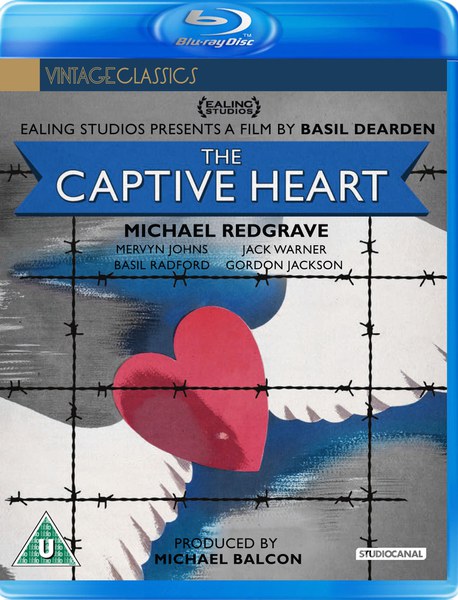
REVIEW — The Captive Heart (1946)

Earlier this week, I wondered what a fully mature and authentic British film industry might actually look like. For inspiration, I looked to the British cinema of the 1940s and found both good and evil.

One side of the dyad is represented by Carol Reed’s The Fallen Idol, an immensely thought-provoking film about how children see the world and how that vision is subject to distortion by more-or-less well-intentioned adults.However, while the mature and authentic British film industry of the 1940s was capable of producing complex and challenging films like The Fallen Idol, it was also capable of producing films so wedded to the political establishment that hindsight reveals them to be almost indistinguishable from propaganda.

However, while it may be comforting to believe that a mature British film industry would happily churn out films of similar quality to The Fallen Idol, an authentic British film industry would almost certainly give voice to conservative and reactionary feelings that are just as much a part of the British cultural landscape as the desire to ask awkward questions and consider the perspectives of the powerless. While The Fallen Idol may embody everything I’d like to see from a mature British cinema, the opposite side of the dyad would be represented by  Basil Dearden’s The Captive Heart, an elegantly-structured and intelligently scripted film that just so happens to feel like the clarion call of a new British imperialism.

The film opens with footage of injured British soldiers marching through the French and German countrysides. These are the remnants of the British Expeditionary Force and they are destined to spend the rest of the War in a German POW camp. The film introduces us to a variety of different characters, provides them with back stories and then allows us to watch as the men come to terms with both their new situation and the demands placed upon them by their connections back home. As I say in my review, the effect is very reminiscent of the so-called Cosy Catastrophes that dominated British science-fiction in the aftermath of World War II:

Back in 1973, the British author and critic Brian Aldiss argued that British writers like John Wyndham had a nasty habit of depicting the end of the world as a cosy catastrophe in which survival demanded little in the way of hardship, sacrifice or philosophical re-orientation. The classic example of this style of science fiction story is Wyndham’s The Day of the Triffids in that, after escaping a London full of man-eating plants, the protagonists settle into a Sussex mansion where tea is drunk, cake is made, and the class system endures. Though somewhat unfair to Wyndham, it is easy to see how the generation that survived World War II might have come to imagine the end of the world in terms of rose gardens turned into veg patches rather than rape, cannibalism and disease. To this day, popular British representations of World War II are far more likely to dwell on ration books and period kitchens than the experiences of men who spent their formative years dodging bullets and climbing over corpses.

The idea that ‘Englishness’ will endure the collapse of civilisation is absolutely central to The Captive Heart. Aside from the fact that all of the various sub-plots involve British people doing British things in a POW camp until they can get back to Britain and continue being British, the film’s primary plot-line involves a man falling in love with Englishness as he falls in love with an English woman:

(Michael) Redgrave’s Czech officer is something of an interstitial figure as his growing love for Mitchell’s widow is skilfully interwoven with a growing love for the English born of their many kindnesses. There’s even a montage of people playing cricket as a voice-over talks about fruit trees coming into bloom in the back garden. The reason The Captive Heart was released so soon after the end of World War II is that Ealing Studios began making it before the war had even ended. This means not only that the film was made without being touched by the realities of war but also that it was made with very little idea as to how England (or indeed Britain) might fit into a post-War Europe. Unsurprisingly, the film resonates with a distinctly imperial mind-set in that English values are shown to be not only eternal and immutable but also exportable to Eastern Europe where tales of English decency and sacrifice would doubtless fill the squares with people desperate to try their hand at cricket. Seen in this light, Michael Redgrave isn’t so much seduced into English as colonised by it.

If I am blurring the line between Englishness and Britishness then it is because the film makes exactly this mistake. Much like Laurence Olivier’s wartime Henry V, Englishness is parlayed into Britishness through the use of loyal Welsh and Scottish subalterns who hint at a broader conception of Britishness only to doff their caps to the English upper-classes.

The Captive Heart is a deeply conservative film and that conservatism is manifest in its abject failure to imagine a future that was not identical to the twenty-years between World War I and World War II. The Captive Heart cannot imagine a world in which Britain isn’t a global player or where Englishness is neither admired nor emulated. Nowadays, people often use the acronym “TINA” to refer to our failure to imagine a world other than that provided by neoliberalism but I think works like The Captive Heart and Day of the Triffids are examples of an older version of TINA whereby people simply could not imagine a world without cricket, empire and an all-encompassing class-system.