Under the Skin (2013) – Infected by Each Other

Jonathan Glazer’s third film Under The Skin is something of a puzzle. Loosely based on a novel by Michel Faber, the film concerns itself with an alien who poses as a human woman (Scarlett Johansson) in order to lure single men to a strange alien space. Once trapped in the space, the men are absorbed by a black liquid that keeps them alive until the time comes for their flesh and organs to be harvested. However, the more time the alien spends in the company of humans, the more she is forced to refine her seduction techniques and this process of refinement seems to alienate her from her function.

Most (positive) reviews of the film praise Glazer’s visual panache and speculate that the film is concerned with human empathy and the process of becoming human. While I don’t disagree with this assessment, I do think it short-changes what is a very clever and unsettling film. The truth is that Glazer does not give his audience very much to work with when it comes to working out what the film is about and therein lies the point that the film is trying to get across.

Continue reading →

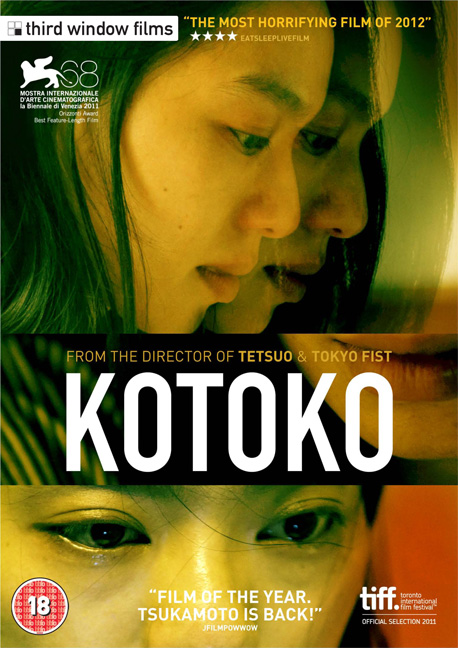
Kotoko (2011) – Track the Emotions, Not the World

Back in 1986, Shinya Tsukamoto began producing short experimental films with science fictional themes. One of these films entitled “A Phantom of Regular Size” featured a man living in a dystopian Tokyo being pursued, infected and ultimately transformed by a cybernetic spirit of the age, a woman in dark glasses and immaculate tailoring who could have stepped right out of The Matrix almost a generation later.

Phantom went on to form the backbone to a series of feature films that brought Tsukamoto to the attention of a global audience. Tetsuo: The Iron Man, Tetsuo II: The Body Hammer, and Tetsuo: The Bullet Man are all attempts to communicate what it felt like to be a member of the Japanese middle-classes at the end of a period of unprecedented economic growth that had completely transformed Japanese society in the space of a generation. These films portray the Japanese as a people worn down by the technologically sophisticated society that they themselves constructed. The opening scenes of Phantom are of a man in a subway convulsing with anguish as trains roar past like the blades on an enormous mincing machine. Every passage shaves away another ounce of humanity until there is nothing left but a host for technological infrastructure, as though the machine that had robbed the Japanese of their humanity was now putting them to work debasing and infecting the people around them. The early Tetsuo films not only diagnosed the sickness that was the late-20th Century Japanese experience, they also articulated what that sickness felt like by using imagery inspired by science fiction and horror.

Tsukamoto’s Kotoko feels a lot like a companion piece to the early Tetsuo films but rather than grappling with feelings of rage and alienation brought on by the experience of living under capitalism, Kotoko is all about articulating what it feels like to be a mentally ill single mother.

Continue reading →

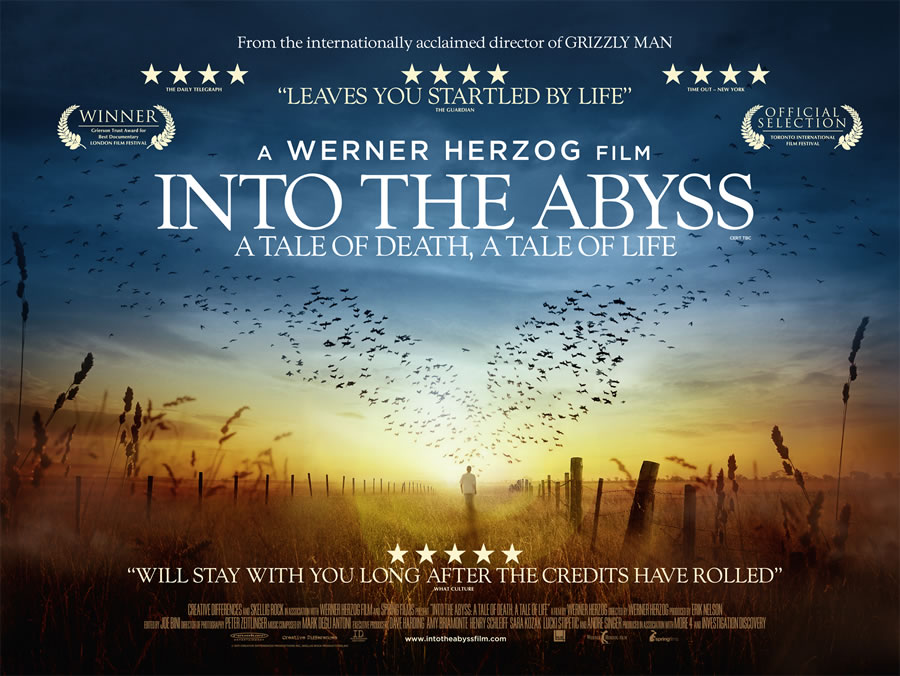
Into the Abyss (2011) – The Traumafare State

When has Werner Herzog ever made a film that couldn’t be summarised as a journey into the abyss? Early feature films such as Even Dwarfs Started Small and Aguirre, the Wrath of God seem to revel in the existential savagery of the world while more recent documentaries such as Grizzly Man and Happy People: A Year in the Taiga serve as reminders that the world has little time for the collection of bourgeois conceits that we dare to call a civilisation. The question is never whether Herzog will turn his film into a meditation on the savagery of the world, but which tone he will select as a means of approaching it:

Sometimes (as with Encounters at the End of the World and The Bad Lieutenant: Port of Call New Orleans) he is a whimsical fantasist who recognises that silliness is the only possible response to a world so cold and drenched with blood.

Sometimes (as with Fitzcarraldo and Little Dieter Needs to Fly) Herzog is a humanist who marvels at our human capacity to overcome the savage injustices of life.

Sometimes (as with Nosferatu the Vampyre and Aguirre) he is filled with bitterness and cynicism by nature’s ability to dissolve humanity’s finest dreams.

If becoming a cinematic auteur requires a director to develop a recognisable sensibility and carry it with them from project to project then Werner Herzog must be considered one of the most prolific and versatile auteurs in cinematic history. Regardless of whether he is producing documentaries or feature-length narrative films, Herzog is one of the brightest jewels in the crown of world cinema but he is also starting to get on.

Back in the early 2000s, a string of moderately successful films provided the veteran director with a level of visibility that had long since been denied him. Thrust into the spotlight and transformed into a celebrity, Herzog made the most of it by adopting the engagingly self-parodic persona of an austere German filmmaker who muses on the savagery of the world with his tongue planted squarely in his cheek. Long-time fans would not have been surprised by this development as Herzog has always had a fondness for deadpan satire and self-mythologising (the documentary My Best Fiend is at least as full of made up crap about Herzog as it is of stuff about Klaus Kinski). The problem with this moment of visibility is that while it evidently made it much easier for Herzog to secure funding on his next project, it also encouraged him to remain Herzog the whimsical fantasist who undercut his meditations on death and destruction with talk of depressed penguins and mutated crocodiles. Given that Herzog was now reaching 70 and more visible than ever, I was concerned that the whimsical Herzog might become a permanent fixture. Would the bitter and humane Herzogs ever return or would it be nothing but dancing souls and iguanas on the coffee table until the end? Clearly, I needn’t have worried as Into the Abyss is a documentary that shows us an entirely new Werner: Herzog the humane socialist.

Continue reading →

REVIEW – Before the Winter Chill (2013)

One of the first films I reviewed when I started this blog was Philippe Claudel’s debut I Have Loved You So Long, a beautifully made but cynically constructed film that skilfully leads you up the garden path before taunting you for having the temerity to set foot in someone’s garden. Like many of the works I value most, I adore and hate I Have Loved You So Long in almost equal measure: I adore it because I admire its courageous choice of subject matter (a woman who murdered her own child) and the skill with which Claudel guides us into a very specific emotional state.  I hate it because Claudel would rather get one over on his audience than use his skill to set them free with a fresh idea or perspective. I have reviewed hundreds of films in the years since I first saw I Have Loved You So Long and yet Claudel’s betrayal has always stayed with me… I am not an academic critic and I do not approach the culture I write about through a fixed ideology but one thing I believe is that great works encourage the audience to make their own choices and their own interpretations.

Given that I have something of a history with Claudel’s films, I jumped at the chance to write about his latest work Before the Winter Chill for FilmJuice.

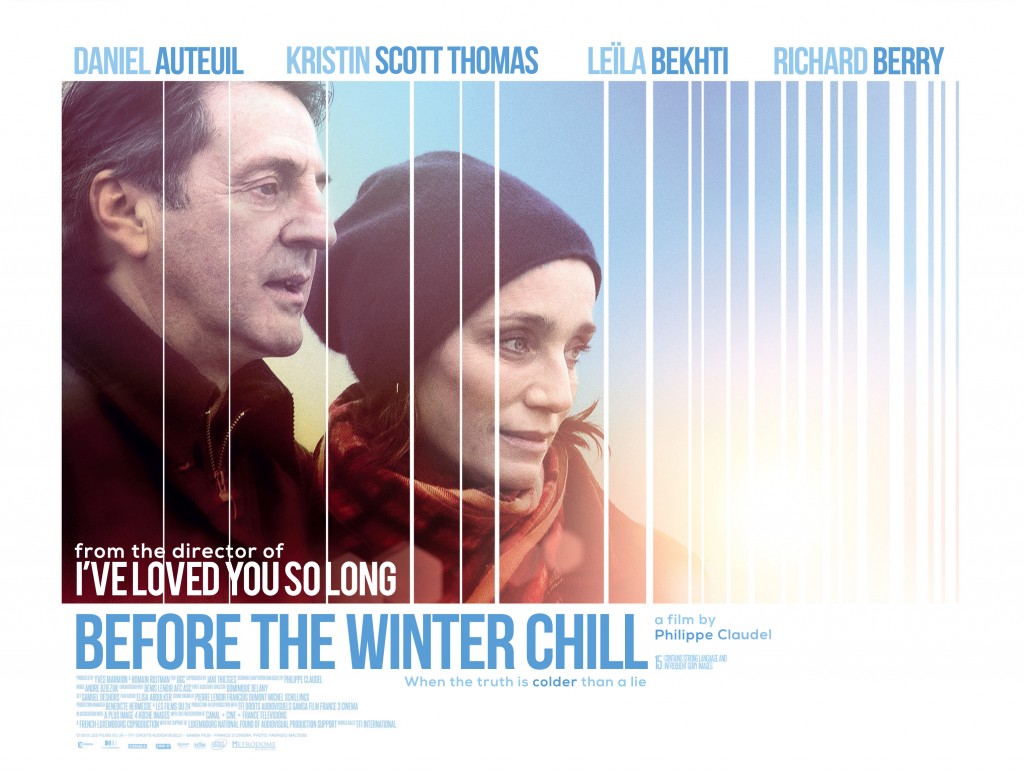
Before the Winter Chill is one of those incredibly grown-up films that French cinema keeps quietly churning out while the English-speaking world gorges itself on films aimed at children. Set in contemporary France, the film revolves around an aging neurosurgeon (Daniel Auteuil) who has drifted through life without asking himself too many questions. As I explain in my review, the film is filled with pastoral images in which only his wife Lucie (Kristin Scott Thomas) is seen to be working. Indeed, the gap between the surgeon’s indolence and his wife’s incessant toil provides the pastoral setting (a vast modernist house with floor-to-ceiling windows that make the garden feel like part of the house) with its own emotional counter-force. Even as the film bends over backwards to establish the surgeon as an intelligent and sensitive man, it is abundantly clear that something has to give… there is too much unhappiness in every sour comment and petulant gaze. The shock to the system comes in the form of an attractive young woman who seems to be either in love with the surgeon, stalking him or quite possibly both. However, the film keeps the young woman’s motivations at arm’s length and encourages us to stretch our empathic muscles:

The film’s central mystery is a beautiful art student named Lou who seems to be very taken with Paul. Forced to assume Paul’s viewpoint, the audience is asked to keep guessing about Lou’s motivations; in one scene she is a young woman attracted to an older married man, then she is a stalker, next she is gravely disturbed and in need of help. All of these versions of Lou seem to exist in Paul’s head at the same time and his need to ‘solve’ the puzzle of Lou encourages him to spend time with her in a way that only serves to enrage his family and expose the tensions between them. While the film may begin by asking us to identify with Paul and ask why everyone is so grumpy, the film ends by asking us to identify with Lucie and ask: Why didn’t he put that much effort into making sense of the people who love him? Why did he open up to a peculiar stranger but keep everyone else at arm’s distance? How could he ask so much and give so little?

I have quite a strong critical read on this film but, unusually for me, I feel no great desire to share it with the world. As I explain in my review, Before the Winter Chill is one of those films that encourages speculation without providing sufficient clues as to why the various characters act in the way they do. People who are averse to spoilers want to preserve the sanctity of the plot, what concerns me is that by presenting you with a strong read, I would be denying you the pleasure of resolving the film’s ambiguities in your own unique way.

Part of what makes this film so satisfying is that it shows quite how far Claudel has developed as an artist. I Have Loved You So Long was an incredibly impressive debut but it was also intensely controlling as Claudel beat his audience over the head with very specific sets of emotions. Before the Winter Chill is no less skillfully made, Claudel’s use of music, acting and cinematography continue are still absolutely masterful. The difference is that today’s Claudel is comfortable with ambiguity and the audience’s right to resolve that ambiguity in a manner that works for them.

REVIEW – Camera Obscura: The Walerian Borowczyk Collection (2014)

This week saw the release of Arrow Films’ Camera Obscura; a magnificent box set exploring the early work of Polish director Walerian Borowczyk. As someone who already owns quite a few luxurious box sets devoted to art house film directors, you would think that I’d be immune to the packaging-foo of independent DVD publishers but Camera Obscura has taken me completely by surprise. Aside from an impressively thick booklet, the box set contains five beautifully restored feature-length films as well as Boro’s early short films and a suite of documentaries about both him and his work. To say that Camera Obscura is comprehensive would be an understatement, FilmJuice have my reviews of:

FilmJuice’s editorial format required me to break the box set down into five separate films, which is something of a pity as Camera Obscura does an absolutely amazing job of capturing Borowsczyk’s development as an artist. The key to this process of evolution are the short films included on the same disc as The Theatre of Mr. and Mrs. Kabal.   Continue reading →

World’s End (2013) – Fuck Geek Culture for Making Me a Millionaire

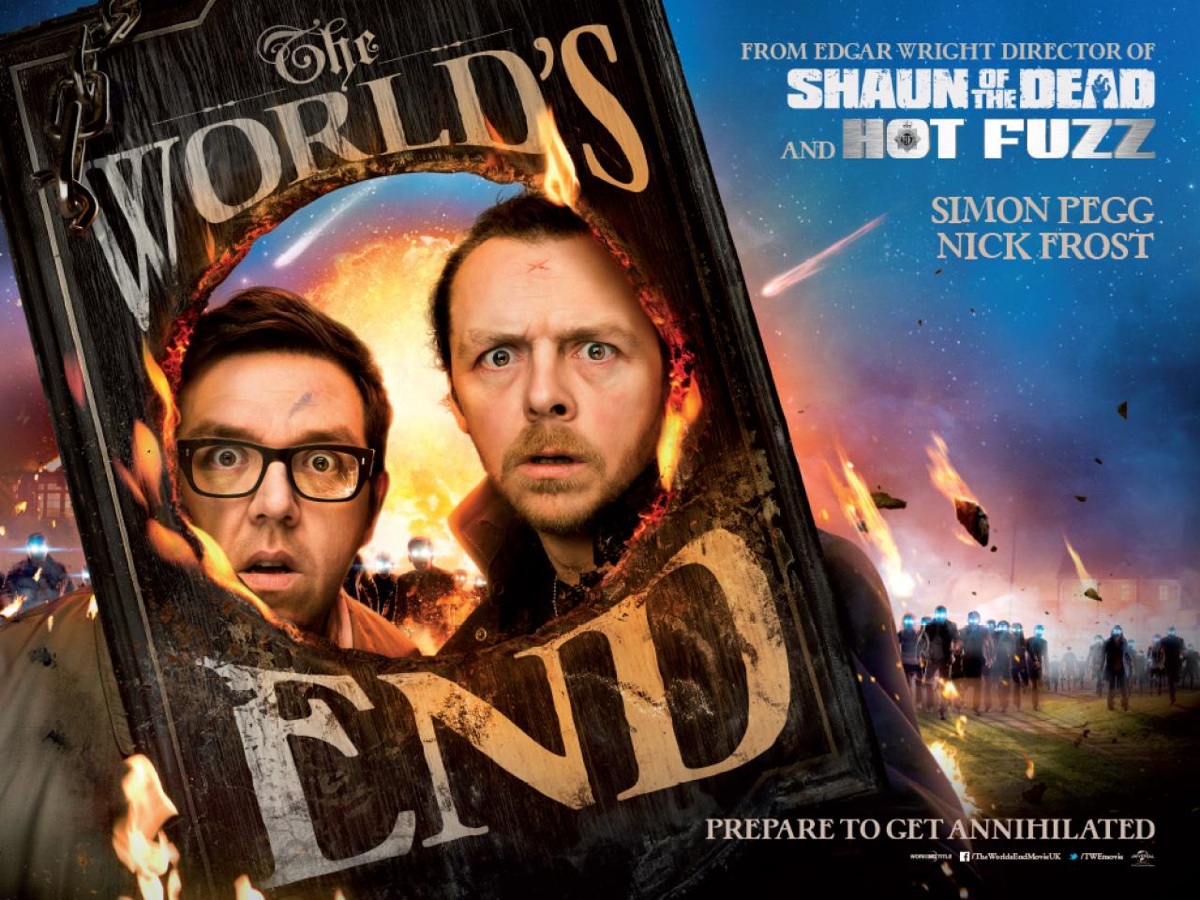
The World’s End may be a shit film but at least it is full of bitterness and self-recrimination. The roots of that bitterness reach all the way back to the late 1990s when the writers of The World’s End first found success with a sitcom named Spaced.

This may be hard to believe but geek culture really wasn’t really that much of a thing before the late 90s. Sure… people enjoyed the films, books, comics and games that continue to provide geeks with a sense of common ground but mainstream culture rarely acknowledged that people (other than sports fans) were beginning to define themselves through their love of popular culture. Postmodernism was popularised throughout the 1990s but what drove that popularisation was not so much the death of cultural meta-narratives as the frisson of parental approval that came with every suggestion that a creator loved the same shitty pop culture as the rest of us. We often speak of constructing identities in terms of self-expression and self-acceptance but what really drives the adoption of a particular label is the recognition of others, particularly people in positions of authority. Simply stated, geek culture was not much of a thing until the late 1990s because advertisers and cultural creators rarely pandered directly to geeks and so rarely legitimised their identities.

Things began to change is the late 1990s when marketers noticed how devotion to a particular cultural product acted very much like devotion to a particular set of cultural values. Way back in ye olde black and whitey times, advertisers realised that if you associated a particular brand of pipe tobacco with values of manliness and respectability then people who valued manliness and respectability were more likely to buy the pipe tobacco. The success of films like Kevin Smith’s Clerks and Quentin Tarantino’s Pulp Fiction demonstrated that this transferral of affection also worked with popular culture; if a film makes a reference to some aspect of popular culture then the people emotionally invested in that aspect of popular culture are more likely to seek out and enjoy that film even if the subject of the film is entirely unrelated to the subject of the obsession. First broadcast in 1999, Spaced ruthlessly exploited these quirks in human psychology by dignifying geeks with their own slice of comedic social realism.


Continue reading →

REVIEW – The Informant (2013)

After something of a break, FilmJuice have my review of Julien LeClercq’s The Informant (a.k.a. Gibraltar), from which I expected a lot but received surprisingly little.

Written by the same person as the excellent A Prophet and the epic Mesrine, The Informant concerns itself with a Frenchman living on Gibraltar who gets sucked into a world of smuggling and espionage in which everyone lies, everyone betrays and most of the smart people have protection from at least one set of customs officials. Unlike many recent films about the world of espionage, The Informant doesn’t perpetuate the now ubiquitous  Thatcherite saw that state power is necessarily evil and corrupt, instead it takes a much more credible tack, which is to suggest that people in the intelligence service are ambitious, incompetent and under so much pressure to deliver results that they invariably cut corners that impact upon people’s lives. Indeed, The Informant is actually based upon the real life story of a Frenchman named Marc Flevet who served as an informant for the French customs only to wind up rotting in Canadian and Spanish jails when French customs decided to disavow his existence for fear of political and diplomatic scandal. The fact that the film is based upon a real life story of government intrigue and ethical shabbiness should have made it a natural companion piece to Mathieu Kassovitz’s excellent Rebellion (a.k.a. L’Ordre et La Morale), which described the politically-motivated slaughter of New Caledonian activists by a French government desperate to look tough in the run up to elections. However, despite the fact that The Informant had the potential to be a proper espionage thriller with a potent political message, Leclerq’s film comes across as little more than an under-written drama:


This plot synopsis makes the film sound significantly more interesting than it actually is. The principle problem is one of emphasis: Had Leclerq rather than allowing the needs of his story to dictate mood and pacing, Leclerq takes his cues from the human drama meaning that a film all about international smuggling and corrupt official seems quiet and plodding rather than tense and dynamic. Leclerq lavishes time and attention on his actors who explore their characters to the full only to realise that there’s not really enough human drama in the script to support nearly two hours of film.


This rather reminded me of Kieran Darcy-Smith’s surprisingly well-received Australian drama Wish You Were Here, which made the identical mistake of taking a script structured like a thriller and using it to make a film whose pacing and emphasis were more consistent with that of a traditional drama. Thinking about it a bit more, I wounder whether this trend might not have something to do with the critical success of works like Top of the Lake and Polisse, which take their cues from TV in that they occupy the space traditionally associated with detective stories but deploy the narrative tools of TV drama. The key difference between The Informant and Top of the Lake is that while both slow the pacing and focus on the characters, Top of the Lake’s characters are substantial enough to support that level of attention while those of the The Informant are now. This also explains why I gave up on the universally-popular Breaking Bad; I enjoyed the early seasons that focused on the plot of a science teacher learning to become a drug dealer but at some point in the third season, a decision was made to slow down the pace and focus on the characters despite the fact that the characters were really not interesting enough to support hour-after-hour of detailed examination.

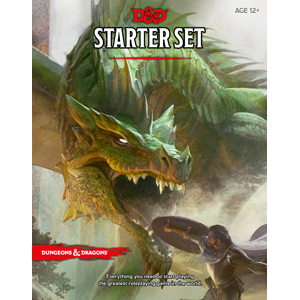
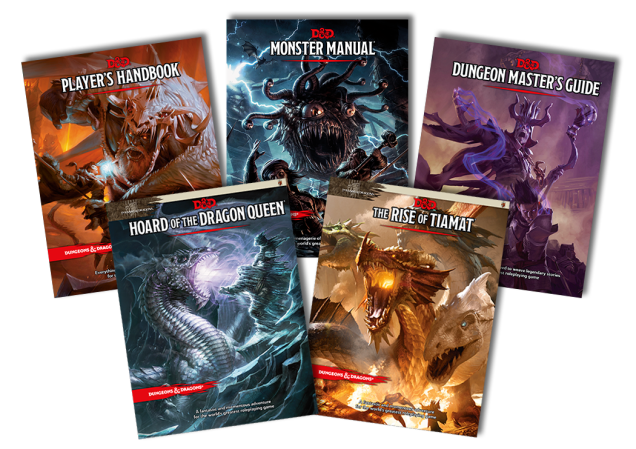
Dungeons & Dragons Starter Set – A Much Needed Fresh Start?

Seeing as a number of people have asked me for my first impressions of the new D&D Starter Set, I thought it might be fun to write up my thoughts in a little more detail than Twitter allows. In short, the Starter Set is both a brilliant introduction to a new set of rules and a fantastic opportunity to re-launch Dungeons & Dragons both as a brand and a hobby. However, while the Dungeons & Dragons Starter Set is a breath of fresh air, it is nowhere near enough to fill the lungs of someone who is already half-drowned.


The Weight of History

I first started playing tabletop RPGs not long after the release of the Second Edition of Advanced Dungeons and Dragons. AD&D2 was really nothing more than the original 1977 D&D rules with a load of extra sub-systems bolted onto them. An excellent example of the design philosophy underpinning D&D at the time was the way that different editions handled skills:

  • D&D featured no skills beyond fighting, spellcasting and a few abilities with their own discrete sets of mechanics like picking locks or noticing the gradient of a slope.
  • AD&D1 kept all of these discrete mechanics and introduced the concept of secondary skills but provided little in the way of mechanical support for those additional skills.
  • AD&D2 kept the discrete mechanics and introduced new rules that served to flesh out the secondary skill system. Despite presenting the rule changes as a more integrated system that encompassed languages, weapons and non-combat skills, the proficiencies were really nothing more than a tidy way of allowing players to choose and then keep track of their areas of expertise and the ever-expanding network of sub-systems that governed them.

If the name and design principles underpinning AD&D2 make it sound cluttered to the point of complete inaccessibility, then you would be completely right. It was nearly 25 years before someone thought to take D&D back to first principles and one can only assume that this reluctance to mess with the rules was derived from an unspoken assumption that the audience for D&D was the same as it had always been. If you assume that the only people buying AD&D2 are the people who already own AD&D1 then it doesn’t really matter that rules changes mean additional sub-systems… it’s not as though anyone has to learn all the rules from scratch! Similarly, if you assume that the only people interested in playing D&D are the people already playing it then every rule change runs the risk of alienating the people who have been playing the same campaign for 20 years. Do these designers not realise how difficult it is to port a 75th level Paladin Demigod from one edition to another?

The collapse of TSR and purchase of D&D by Wizards of the Coast inspired a long-overdue re-examination of the rules but while the game’s third edition replaced AD&D2’s warren of sub-systems with the integrated d20-based mechanics, the iteration of the d20 rules that became 3E was still an incredibly insular piece of game design. The reason for this creative introversion is that 3E was developed during a time when D&D was under intense pressure from games that tried to put RPGs on a slightly different footing.

The original D&D rules are a model of simplicity; After presenting its readers with the revolutionary notion that they could play a game entirely in their own heads, the box set provided just enough mechanical support to make those imaginary worlds seem concrete. However, because the rules were originally drawn up as the basis for a war game that focused upon individual characters rather than units and because the game wound up being marketed at boys, D&D came to be seen as a game primarily concerned with tactical combat, a myth that the publishers of D&D were only too happy to support through an endless barrage of publications pandering to the tactician’s need for more monsters, more traps, more encounters and more magical bling. As this ‘canonical’ vision of how to play D&D slowly emerged, gamers interested in other aspects of roleplaying such as playing roles and solving mysteries began to drift away towards games that emphasised their vision of what gaming was all about. As is so often the case in small sub-cultures, the desire for legitimacy and visibility inspired hyperbole that in turn provoked social schisms.

The more some gamers sought to distance themselves from traditional D&D, the more people interested in tactical play came to revel in a form of tactical fundamentalism in which non-tactical aspects of play received little or no support in published materials. It was during the years spanning the move from ADD2 to 3E that White Wolf Games reached out to fresh audiences with the promise that their games would not be about killing things. Despite this injection of new blood into the hobby and the manifest truth that hundreds of gamers had moved away from D&D, the game’s publishers listened to the tactical fundamentalists and turned their back on people less interested in tactical play.

 

DD1

Despite being built around a core mechanic that could support almost any form of tabletop play, 3E featured a set of combat and movement rules that encouraged the use of miniatures as part of a highly tactical playing style. The tactical nature of in-game combat exerted a pressure on every aspect of the game as the need to make the right tactical decisions in combat encouraged players to think more strategically about their character design, which in turn created a huge market for gaming materials aimed more at players than at the Dungeon Masters who had traditionally been responsible for buying most of the books.

Nowadays, people frequently refer to the d20/3E years as something of a gold rush in which the market for RPG books expanded massively and unpredictably heralding the rise of new companies and the collapse of older ones. However, as many books as 3E managed to shift, the gold rush was not fuelled by the arrival of new players but by the more effective exploitation of existing markets. 3E saw existing players spending more and lapsed players returning to the fold either by ‘getting the band back together’ or by engaging in a weird kind of vicarious RPG experience in which they would hang out on RPG forums and buy lots of RPG materials without ever actually sitting down to play. 3E made a lot of companies a lot of money but it did almost nothing to grow a hobby that was already showing serious signs of institutional neglect.

Unlike most geeky hobbies, tabletop gaming expects you to spend time in the same room as other people. In fact, in order to get the most out of an RPG campaign, you regularly need to spend long periods of time in the same room as the same group of people who are all doing exactly the same thing as you… and who has time for that in this day and age? Nowhere is the toxic nature of capitalism more evident than in the changing face of work: A generation ago, a family could support itself with only one person working a regular 9-5 job but the waves of economic collapse that have swept around the world since the 1970s mean that everyone now works increasingly long hours with increasingly unpredictable schedules. Ever happy to exploit, the companies that helped to shatter the traditional work/life balance now peddle their wares as rewards and escapes from the demands of the unreasonable workplace that they themselves created. The upshot of this capitalist push-me-pull-you is that people now regularly return home in a state of physical and spiritual exhaustion that lends itself more readily to medicinal applications of booze and shit TV than to arguing with your friends and doing maths. Some of the main beneficiaries of our increasingly horrid work/life balances are massively multiplayer online RPGs such as Blizzard’s World of Warcraft, a game inspired by tabletop RPGs that removes the need to prepare adventures, do maths or meet up with people in real life. Given how successful MMORPGs have become, it is hardly surprising that the next iteration of D&D would use MMORPGs as a point of aesthetic departure.

Dungeons & Dragons 4th Edition remains the most radical reworking of the rules to date. While the designers drew inspiration from the 3E rules and retained a lot of the iconography of previous editions, the game is best understood as an attempt to create a board game based upon principles of MMORPG design. Unlike 3E, which provided a flexible skill system that wound up focussing on tactical engagements, 4E was built with nothing but tactical engagements in mind resulting in characters almost entirely defined by lists of powers. Despite making some gratifying inroads into the MMORPG market thanks to the widely publicised (and presumably expensive) support of Penny Arcade, interest in D&D4 plateaued when people suddenly realised that it was nothing more than a regular MMORPG with added maths and travel times.

Dungeons & Dragons has long been paralysed by the weight of its own history. Early editions simply assumed that anyone wishing to play was already playing and when that toxic attitude finally receded it was replaced by the equally problematic assumption that anyone wanting to play D&D would want to play it in the exact same manner as the brand’s core audience. This weird cultural ego-centrism will be instantly familiar to anyone who expressed an interest in science fiction only to have Robert A. Heinlein’s Rocketship Galileo thrust into their disappointed paws. Sure… the Heinlein juveniles served as a gateway drug for a lot of young readers but should we really assume that young readers today will respond to the same things as young readers in the 1940s? This is not the 1970s and not everyone is a socially inept teenaged boy, why do the owners of D&D continue to ignore thousands of potential customers? Simple: Cowardice and short sightedness.


Continue reading →

REVIEW – We Are The Best! (2013)

FilmJuice have my review of Lukas Moodysson’s thoroughly wonderful We Are The Best! Set in 1980s Sweden, the film is a densely-written and realised drama about a group of diffident teenaged girls who spin their feelings of alienation and abandonment into friendship and punk rock. Based on a graphic novel by Coco Moodysson, We Are The Best! is one of those films that renews your trust in the fundamental precepts of world cinema:

The most striking thing about this film is its astonishing density. Not content with providing his audience with a whistle-stop tour of the 1980s punk scene and producing three exquisitely drawn characters, Moodysson unpacks his characters’ motivations and uses them to critique a society that sees little of value in teenaged girls. The film is littered with beautifully quiet scenes in which the girls come up against sexist attitudes and it is in these moments that we are reminded of the central aesthetic principle underlying world cinema: The depth and breadth of human experience is not exhausted by stories about heroic tough guys and mildly depressed middle-class people, so why should cinema limit itself to those types of stories?

Re-watching the film and considering my reaction to it, I was struck by the difference between the vision of Scandinavia presented in this film and the vision of Scandinavia that is presented in the so-called Nordic Noir TV series that are currently proving popular with the British chattering classes. One of the reasons why these TV series are proving so popular is that austerity has pushed British political culture further and further towards the nightmarish individualism of American political culture and the social democracies of Northern Europe are increasingly becoming totemic symbols of what can be achieved when social institutions remain under popular control. Who wouldn’t want to live in a place filled with beautiful people, minimalist interior design and supremely competent police that drive vintage Porsches and wear cooky jumpers? In fact, going by the TV series, Scandinavia is a place entirely devoid of fat or brown people! Despite believing that the state is a more effective and humane means of government than the market, I welcome any film and TV series that critiques the creation of a racially-problematic dreamworld.

We Are The Best! is set in a sports-obsessed Swedish suburb similar to that of Tomas Alfredson’s peerless gothic romance Let The Right One In. In both films, the parents are supremely liberal and the state provides housing and schooling that ensures that no child need ever feel the sting of hunger or the lash of want. 1980s Sweden should have been a paradise on Earth but society’s largesse came an inevitable price tag: Silence. The children in these films are showered with well-meaning attention but a refusal to follow the script and enjoy society’s riches means that they are forced to the margins and denied a vocabulary with which to express their discontent. This is neither Africa nor America… this is socialist Sweden and what could a bunch of middle-class kids possibly have to complain about? While the protagonist of Let The Right One wound up expressing his alienation through an unusual relationship with an intersexual vampire, the protagonists of We Are The Best! reach for a lexicon that is at once more mundane and more universally accessible: Punk rock.

REVIEW – Thunderbolt and Lightfoot (1974)

FilmJuice have my review of Michael Cimino’s Thunderbolt and Lightfoot starring Clint Eastwood and Jeff Bridges.

No director has enjoyed a more artfully ballistic rise and fall than Michael Cimino. A film school graduate who cut his teeth on Madison Avenue before working as a screenwriter, Cimino’s first directorial pitch meeting was for an adaptation of Ayn Rand’s The Fountainhead, a bloated and self-righteous fantasia in which a ruggedly individualistic architect struggles against the ignorance of lesser humans in the pursuit of his vision. Knocked back amidst fears that the production would result in the construction of a real-life skyscraper, Cimino demurred and assumed the role of the company man… an auteur but one who could give the studios what they wanted. His first film was Thunderbolt and Lightfoot, an amiable Clint Eastwood caper picture that borrows extensively from the New Hollywood bag of tricks without ever really understanding why those tricks were used in the first place.

Hugely successful, the film earned Cimino just enough rope to produce a film as bloated and self-righteous as The Deer Hunter. The Deer Hunter is a complex film that does a number of things very well and a number of things incredibly poorly but while the film’s ability to voice then-prevalent American attitudes to the Vietnam War was enough to win it a lorry load of Oscars at the time, its connection to a now abandoned cultural moment no longer inspires forgiveness in the face of its racism, fascism and self-indulgent running time.

The money and awards garnered by The Deer Hunter convinced the suits to give Michael Cimino a free-reign on his next film and Cimino responded to this increased responsibility by producing a film so expensive and so relentlessly terrible that it destroyed a Hollywood studio that had been founded by Charlie Chaplin, Mary Pickford, Douglas Fairbanks Jr. and D.W. Griffith. This failure not only ensured that Cimino would spend the rest of his career as a third-string director, it also inspired the studios to re-assert themselves and put an end to the creating freedoms that had brought about the last Golden Age of American film.

Watching Thunderbolt and Lightfoot I was struck by how easy it is to blame Heaven’s Gate and Cimino for a problem with much deeper roots:

An approach to filmmaking that began by capturing the ambiguities of the public mind and encouraging people to think for themselves had ossified into a set of tropes and techniques that could be applied to even the slightest of traditional films. The sad truth about New Hollywood is that once the initial creative energy was spent, the movement struggled to renew itself and so grew decadent. Michael Cimino’s Thunderbolt and Lightfoot is what happens when decadent self-indulgence and pastiche get mistaken for art.

Out this week and as forgettable as any film produced by mid-70s Hollywood.