The Austrian philosopher Ludwig Wittgenstein once wrote that “The limits of my language mean the limits of my world”. What Wittgenstein actually meant remains a subject of philosophical debate but we can read his comment as a reflection upon the two-way relationship between our perception of the world and the ways in which we talk about it.
Intuitively, facts should always take precedence over language and whenever we encounter a fact that does not fit with our use of language, we should simply update our vocabulary to better reflect the facts on the ground. While there are certainly institutions and groups who try to educate people about ‘correct’ language use, the meaning of a word is always determined by the way it is most commonly used by a given population. What this means in practice is that while experts may be forever inventing language that is a better fit with current thinking about a particular phenomenon, having those new terms filter down into general usage is subject to the same structural biases as any other attempt at changing the way that people think.
The problem with the rigidity of our spoken language is that the vernacular often contains concepts and assumptions that are not only out of date but actively harmful. For example, if we define masculinity in terms of having a penis then someone who identifies as male despite not having a penis must simply be wrong about their gender. While there was a time when our culture was quite happy to make this type of judgement, our understanding of gender has now evolved to the point where terms like ‘male’ and ‘female’ are becoming increasingly hard to pin down.
The language of gender and sexuality has evolved with almost unprecedented speed over the last few decades and new conceptual iterations seems to generate more and more political heat as words are fought over by people with different needs and ideas. If the limits of our shared language mean the limits of our world then the battle to control the conceptual underpinnings of our language is also the battle to control our world.
Directed by Kim Longinotto and Jano Williams, Shinjuku Boys is a documentary about a group of people who were assigned female at birth but identify more closely with the male gender than the female. Made all the way back in 1995, I am sure that many of the terms used in this documentary are horrendously outdated but while Shinjuku Boys may struggle with its pronouns, it does show how people will continue to perform and negotiate their genders even when words fails them.
FilmJuice have my review of Kim Longinotto’s thoroughly excellent documentary Dreamcatcher.
As I say in my review, Kim Longinotto is one of the most criminally under-appreciated documentarians that Britain has ever produced. Her latest film follows the exploits of Brenda Myers-Powell, a former sex-worker who has set up an organisation designed to help people leave the sex trade. The activities of Dreamcatcher Foundation include handing out condoms on street corners and helping people to find beds in drug treatment programmes but also to reach out to people in schools and prisons who are at risk of falling into prostitution.
Aside from being incredibly moving and a really amazing documentary about the lives of America’s urban poor, Dreamcatcher does two really interesting and important things:
Firstly, it takes its cues from Brenda and talks about sex-work as a form of addiction. Brenda’s methods are not those of the politician, religious leader, or social worker but those of the recovering addict who talks about their experiences and encourages others to do the same:
Brenda’s attitude seems to be that she ‘was’ all of the women she encounters and so she can speak to them and help them to do whatever it is that they need to do in order to survive and live free. Brenda’s capacity for understanding is captured in a series of amazing interviews where she will ask a teenage girl or a sex worker whether they have done something and, despite the other person’s denial, she will talk about how it is okay to do what you need to do in order to survive. The power of these scenes lie in the facial expressions of the people Brenda talks to as while they are used to lying through their teeth to parents and authority figures, they cannot lie to Brenda because she knows exactly what they are going through. The most moving scene in the film is undoubtedly the moment in which Brenda gets a bunch of teenaged girls to talk openly about their histories of sexual violence for what seems to have been the first time ever. Longinotti captures not only the moment but also the sense of relief that comes from sharing and knowing that they are not alone.
I think there is probably an important book to be written about the language of addiction and how it has spread beyond the traditional confines of drink and drugs to encompass activities including sex and sex-work as well as food. Scarcely a month goes by without someone writing an article for the Guardian about the addictive nature of processed sugar and junk food.
Secondly,Dreamcatcher does for prostitution what The Wire did for the drugs trade. In other words, just as The Wire showed the drugs trade to be an amazingly complex social phenomenon whose tendrils had worked not only into local politics but also the school system, Dreamcatcher suggests that prostitution has its roots firmly embedded in the American family:
All the women in this film have stories about how they were abused as a child and how this abuse got them used to relationships with older men who would exploit their sexuality in increasingly aggressive and brutal ways. One of Brenda’s helpers is a former pimp named Homer and he explains how childhood abuse served to normalise not only under-age sex and the exchange of sex for money but also the use of violence to keep women under control. This vision of the sex trade as a system of exploitation is made particularly clear when Brenda talks to a young woman who grew up in California and got her start in the sex trade at the age of eight when she was picking up money and taking it back to the pimps.
The extent to which prostitution has perverted these women’s relationships is made particularly clear in a scene where a sex-worker takes a call from her baby’s father. Initially, the call seems a bit weird as she keeps calling him ‘baby-daddy’ but it then becomes clear that while the man is certainly her child’s father, he is also her pimp and so the role of ‘baby-daddy’ is reconfigured by the sex trade to include the sexual exploitation of women. This pattern plays itself out again and again throughout the film as women are never put onto the street by ‘pimps’ or ’employers’, it is always lovers and family members.
I simply cannot recommend this film enough, it’s an absolutely fantastic documentary that touches on many of the themes and ideas visited in David James’ The Interrupters and Werner Herzog’s Into the Abyss but I think it actually manages to do much better than either of those films. This is a great film and a great jumping-on point for anyone interested in discovering the work of one of Britain’s greatest living documentarians. Even the Q&A included on the DVD is amazing!
FilmJuice have my review of Diemo Kemmesies’ almost silent film Silent Youth.
It would have been easy for Silent Youth to come across as either a dry technical exercise or an incomplete proof of concept; Little more than seventy minutes-long, the film is best understood as an exploration of how a romance might evolve in the absence of spoken cues. However, while that description may invoke memories of weird experimental works like Ingmar Bergman’s The Silence, Diemo Kammesies’ first film is actually a really quite affective and effective love story involving two young men who are too terrified to speak about what they feel, let alone who they are.
Silent Youth is a beautifully shot film that positively revels in its long silences. However, despite shifting from one pregnant pause to another, the film never feels repetitive as each of the silences reflects a different mood and another stage in the boys’ burgeoning relationship. Sometimes the silence is framed with sunlight and uncut grass in a way that evokes warmth and lust, other times the silence finds Kirill leaning back into a darkened corner as a means of capturing a momentary panic over the decision to have sex with a man. Despite this being his first feature film, Diemo Kemmesies’ direction is subtle but assured and the performances he coaxes from his actors are nothing short of mesmerising.
My review points out that Silent Youth can be seen as an art house film that makes use of storytelling techniques developed in the era of silent film but — on a more visceral level — this is a film about living in the shadow of homophobic violence and finding a way to reveal your feelings to another person without getting your head kicked in. Kemmesies establishes this fear of homophobic violence quite early on when Marlo’s love interest talks about being stripped naked and beaten up during a visit to Russia but while that fear is never again alluded to, it does explain why Marlo’s lover is definitely the more cautious of the two.
The fact that I didn’t initially pick up on this subtext says something about the lightness of Kemmesies’ touch but it also says quite a lot about yours truly: I can completely understand being reluctant to express one’s interest in another person for fear of being rejected and spoiling a potentially rewarding friendship but fear of being physically attacked either for expressing an interest or rejecting one is definitely outside of my lived experience. I guess this would be one of those ‘check your privilege’ moments then…
Earlier this week, I wrote a piece in which I commented upon the extent to which our impressions of films are coloured by a lifetime’s worth of experiences. While all critical responses may be anchored in a shared humanity, there is no such thing as a clean or dispassionate read and what you think of a text is likely to be as much a product of your bullshit as it is of the inherent qualities of the text itself.
I wrote that piece and immediately sat down to watch Summer Hours by Olivier Assayas, a film that so closely matches my own personal experiences that it is at times quite uncanny.
A number of years ago, my mother died leaving quite a complicated estate. While I had been serving as my mother’s carer for a number of years, her death put me in a situation where I was legally involved with my much older half-siblings. While these siblings had always been a presence in my life, they had all left home by the time I was about 10 and their subsequent visits became increasingly sporadic and tense as my mother’s emotional stability declined. By the time I was legally manacled to them by my mother’s estate, I was effectively a complete stranger who had been parachuted into their existing group dynamic. While the stress of the situation meant that we all found a way to more-or-less cooperate, it rapidly became quite clear that my siblings and I had very different attitudes towards my mother’s possessions.
As someone who had been in the firing line of my mother’s emotional instability for my entire life, I viewed my mother’s things as a burden in need of lifting… I wanted to be rid of the stuff because I wanted to be rid of my mother and every item that went out the door brought a tangible sense of relief. Though my siblings expressed a number of different attitudes towards my mother’s stuff, one prevailing attitude seemed to be that the stuff was almost sacred in that it allowed one of my siblings in particular to reconnect with his (seemingly far more pleasant) childhood without the person my mother became getting in the way and spoiling his feelings of nostalgia. To this day, I could not tell you which of these two attitudes was the more ‘sane’ or ‘rational’ but we not only saw the objects in very different lights, we were also using them as props in what turned out to be very different psychodramas, which is precisely the theme of Summer Hours.
We would like to believe that our critical faculties are impartial and that our impressions of the media we consume are a direct result of its inherent quality. We would like to believe that we can sense aesthetic excellence in the same way as we smell burning or taste strawberries but the truth is a good deal more complex. While our culture and neurological make-up certainly train us to expect certain aesthetic benchmarks, much of our reaction comes not from the text but the stuff around it.
At a very basic physiological level, it is quite hard to enjoy a 3D film when you arrive at the cinema with a head-ache only to discover that the cinema’s sound-system is malfunctioning along with its air-conditioning. As we progress past childhood, we learn to make allowances for things likely to affect our moods but it is still incredibly easy to sit through a bad screening of a film and conclude that the film itself is to blame. Conversely, go to see a stupid movie with a bunch of friends who respond to every beat with gales of laughter and you are just as likely to praise the film for that evening’s entertainment as you are your friends.
At a more psychological level, we seldom enter a cinema without baggage. We carry with us a lifetime’s worth of ideas and learned emotional responses that cannot help but influence how we respond to depictions of fictional events. Indeed, the very concept of a Trigger Warning assumes that exposure to images and situations will produce similar emotional responses regardless of whether those situations are real or fictional. We often talk about children becoming ‘desensitised’ to media portrayals of violence and a normal suite of emotional reactions does include the capacity to distinguish between real and fictional contexts but lines are often blurry, slopes are often slippery and the emotions we choose to police are largely a question of cultural norms and individual tastes. For example, while we may learn to endure the unpleasant imagery of horror films in the same way as we learn to endure the sting of spicy food, we are not generally in the habit of distancing ourselves from the emotional payload of comedies or conventional dramas. In fact, some of our most enjoyable artistic experiences happen when an author whose experiences resemble our own manages to connect to the emotional baggage we carry around with us by virtue of being human. Some art is well made, and some just happens to speak directly to us.
It is hardly controversial to suggest that our emotional reaction to a work of art is likely to be coloured by factors external to the text but the same could also be said of more complex critical judgements and the formation of our own interpretations. An excellent (fictional) example of this process can be found in an early episode of The Sopranos when Tony visits his therapist only to accuse her of deliberately planting a picture of a rotting tree. Of course, there is nothing in the painting that would lead us to conclude that the tree is rotten and so we are invited to conclude that it is Tony’s emotional baggage that is encouraging him to ‘see’ a generic painting as somehow inherently bleak. The bleed between our own personal experiences and our interpretation of texts is one of the reasons why I see criticism as a creative rather than a reactive form but the process of interpretation can be ‘gamed’ or deliberately influenced.
The great French director Claude Chabrol began his career as a film critic and so stepped behind the camera with an excellent idea of how critics formed judgements about the films they reviewed. This insight encouraged Chabrol to ‘embellish’ the text of his film by including references to other books and works of art. As Chabrol would later admit, these references were rarely thought-through but Chabrol realised that if he allowed the camera to linger on the cover of a book then some bright critic would invariably take the bait, assume a link between the two texts, and produce a more involved (and flattering) interpretation of his film. This anecdote may paint Chabrol as something of a rogue, but priming audiences for particular interpretations is now absolutely central to the PR process and Hollywood blockbusters will often contain under-developed references to important events (such as 9/11 in the case of J.J. Abrams’ Cloverfield, the Occupy movement in the case of Nolan’s The Dark Knight Rises and Afghanistan in the case of Favreau’s Iron Man) in an effort to create the illusion of thematic depth.
Where you stand on these types of interpretative games will, in part, be a function on where you stand on issues such as a the Death of the Author and whether you see works as the sole responsibility of an auteur or something that artist and audience create together as part of a symbiotic relationship. Personally, I tend to shuffle back and forth between the two extremes but I generally think that if a director and a film are to be credited with a particular set of ideas then considerable effort needs to go into developing those ideas within the text of the film. This brings us to Andrey Zvyagintsev’s Leviathan, a Golden Globe-winning Russian film whose title contains almost the entirety of its thematic substance.
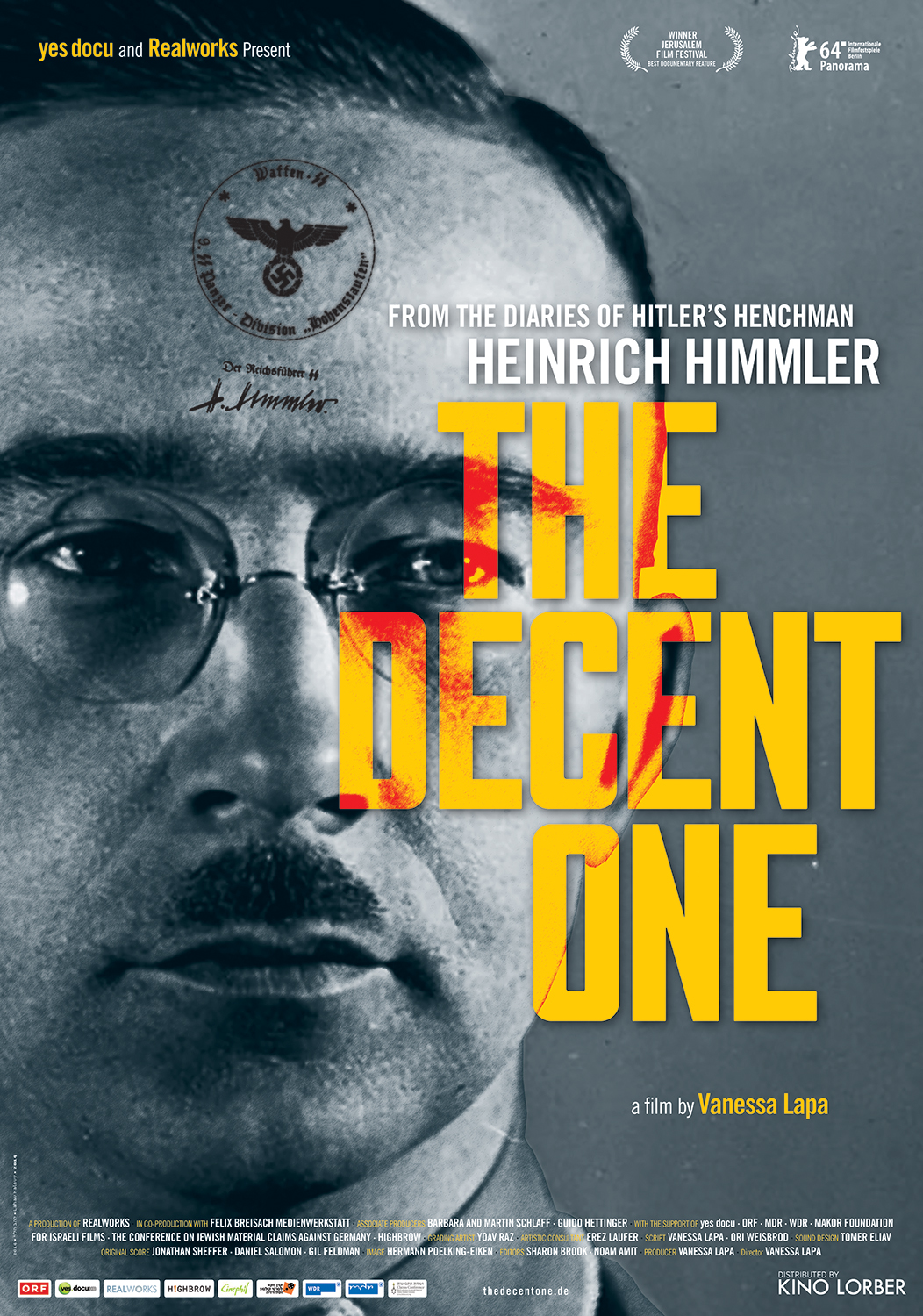
FilmJuice have my review of Vanessa Lapa’s documentary about Heinrich Himmler, The Decent One.
The Decent One draws on some private correspondence that was uncovered in Himmler’s house at the end of the war and sold into private hands by light-fingered American soldiers. Following the scandal surrounding the so-called Hitler diaries, the documents never made that much of a splash and were never made public until Lapa’s parents decided to buy them for her so that she could make a documentary about them. The result is a rather frustrating experience as while the film does give some fascinating glimpses into what life must have been like for the friends and family of prominent Nazis, Lapa chooses to focus most of her attentions on Himmler rather than the people around him.
This evidently put Lapa in something of a sticky situation as how do you produce a biographical documentary about a prominent Nazi without inviting unflattering comparisons to Hannah Arendt’s Eichmann in Jerusalem or more psycho-sociological writing such as Adorno’s The Authoritarian Personality. Lapa tries to overcome this problem by unearthing scandalous biographical details such as Himmler’s penchant for sadomasochistic sex and his habitual drug use but the methods she uses to present these so-called biographical details are so manipulative that you can’t help but raise a sceptical eyebrow:
Lapa makes a great show of putting the documents in the foreground of the film and many shots of Himmler’s angular hand-writing give the impression that the documents are being allowed to speak for themselves. However, take a step back from the images of Himmler’s correspondence and you start to realise that Lapa’s editorialising is so aggressive that it smacks of desperation and frequently borders on the outright manipulative. For example, one of the earliest exchanges of letters between Himmler and his future wife finds Himmler referring to himself as a ‘naughty man’ for spending too much time away from his fiancé, to which the woman playfully responds that she will exact a terrible revenge for his absence. Now… in the context of hundreds of personal letters, this exchange would probably come across as the slightly awkward flirtations of a sexually active couple but Lapa isolates these sentence fragments and instructs her voice actors to deliver readings that encourage the audience to conclude that the future Mr. and Mrs. Himmler has a relationship that was a bit kinky if not actually sadomasochistic. Also suspect is the way that Lapa juxtaposes a document relating to stomach problems caused by prolonged opium use with Himmler’s passing assertion that he had experienced a touch of constipation while on the Eastern front. Again, when seen in the context of an on-going personal correspondence, such an admission might come across as little more than a comment on Himmler’s health but Lapa frames the information in a manner that encourages us to infer that Himmler was a habitual drug user. Aside from being dubious historical practice, such manipulative sensationalism only serves to highlight the extent to which Lapa struggles to find anything new to say about Himmler that hasn’t been said before: There are no private doubts to be found here, only the belief that he was doing the right thing and that history would prove him right.
Surveying some of the film’s other reviews, I notice that I am not the only one to dislike the heavy-handedness of Lapa’s editorialising. Setting aside the fact that films like Shoah set the tone for Holocaust documentaries by allowing people to speak for themselves, I am also struck by the fact that there is now a very fine line between a serious documentary about the Nazis and the type of sensationalist trash you get on cable TV. Massage the primary sources a bit too much and your careful documentary turns into Hitler’s Henchmen by way of Secret Weapons of the Luftwaffe.
FilmJuice have my review of the Australian short film collection The Turning, based on Tim Winton’s short fiction collection of the same name.
Short films as undeniably a good thing: Their reduced run time means that they are not only cheaper to make, they’re also less thematically demanding in that it is easier to come up with an interesting idea that will sustain a ten minute short film than it is to come up with an idea that will support a 90-minute feature film. The fact that short films are considerably shorter than feature films also means that they are a lot cheaper to make and so ambitious filmmakers can experiment with short films in a way that they simply cannot do at feature lengths. The problem with short films is that they are incredibly difficult to sell… indeed, no stable market for short films exists outside of a Horror genre that has somehow managed to maintain its fondness for anthology formats. The Turning is an attempt to rekindle the market for art house short film by getting 18 different directors to make short films based on stories taken from an award-winning short fiction collection in which some of the stories share characters, themes and recurring motifs. As I point out in my review, the idea of using the motifs in a short fiction collection to bind together a set of short film does not really work as:
while Winton’s short stories connect using recurring characters, themes, and motifs, the production’s failure to create a sense of visual continuity means that almost none of the recurring motifs or re-used characters survive the transition from book to film. What this leaves is a series of short films that only inter-connect in so far as they often share a fascination with regret or alcoholism, and frankly those types of themes pop up so often in art house film that they seem accidental.
In fairness, I can see why the producers chose the path they did as making the connections in Winton’s fiction work on film would have required not only the imposition of particular actors for particular parts but also a shared visual palette that would have seriously hampered the vision of the individual directors. This reminded me quite a bit of the Marvel Cinematic Universe as creating a sense of visual continuity between the films has robbed individual directors not only of the power to cast for themselves but also to shape the look of their own films. In the case of the MCU, the need for visual continuity has resulted in films that look depressingly similar but, in the case of The Turning, the lack of visual continuity means that a curated collection of short films comes across as almost completely unconnected. Swings and roundabouts I guess…
Another thing that really struck home when watching The Turning was quite how male-gazey the films directed by men turned out to be compared to those directed by women. One of the recurring saws of this blog is that art house film has ossified around a set of visual shortcuts that contain sexist assumptions but seeing similar characters and themes tackled by both men and women really drives home the extent to which female directors are more willing to question those shortcuts than their male counterparts. Having said that, the single most objectifying film in the entire collection is directed by a woman so it’s evidently not just men who fail to unpack their own cinematic vocabularies.
FilmJuice have my review of Wong Kar-wai’s The Grandmaster, an art house kung fu film based on the life of Bruce Lee’s trainer Ip Man.
I think I like the idea of kung fu films a lot more than I like actual kung fu films… In my early teens, I worked my way through much of Jackie Chan’s back catalogue but I have always struggled with films that did not recreate that particular style. Well… I say ‘style’ when what I actually mean is ‘competence level’ as being able to direct extended scenes of hand-to-hand combat requires a constellation of skills that surprisingly few directors manage to acquire. Every Frame A Painting has a truly excellent video about Chan’s directorial style but what has always drawn me to Chan’s direction are his clarity and his spatial awareness. Chan is first and foremost a performer and he directs in a way that emphasises the grace and skill of the performer rather than trying to compensate for it in post production as has become the norm in Hollywood where it is always much easier to add a bit of CGI or do a bit of extra editing than it is to keep re-shooting the scene in the hope of getting it just right. While action films are generally considered a lot less ‘worthy’ than the films I tend to write about on this blog, a good action director will have just as much skill, vision and sensitivity as the most celebrated Cannes winners. Hollywood may have created a generation of action directors whose logistical expertise outweighs their technical competence but that is a failing of the contemporary Hollywood machine… not the action genre.
I was intrigued to see The Grandmaster as Wong Kar-wai is undoubtedly one of the most highly skilled visual directors in world cinema. David Thomson’s Biographical Dictionary of Film dismisses Wong’s films as cold but this is the result of focusing on the actors rather than everything that Wong chooses to put on the screen. When I think of Wong Kar-wai’s films I think of characters whose muted emotional tones are radically and deliberately at odds with the colourful complexity of the worlds they inhabit. Wong’s foregrounds are always cold, still and immaculately controlled but his backgrounds are rich and almost overwhelmingly evocative. Somewhat unsurprisingly, this means that Wong is an absolute natural when it comes to shooting kung fu as his characters are the cold, controlled centre to a world that is filled with beauty and movement:
Like many of Wong Kar-Wai’s films, The Grandmaster sets up a tension between the stillness of the characters and the churning chaos of the world that surrounds them. Unable or unwilling to acknowledge their own feelings, Wong’s characters feel deliberately out of place as every set and every shot hints at the passions they keep chained up inside them. While the tension between Ip’s physical mastery and emotional backwardness is beautifully realised thanks to a cast and crew at the absolute peak of their respective games, you cannot help but feel a bit frustrated by the shallowness of Wong’s character study. Ip was a fascinating man who lived at a fascinating time and while action directors like Winston Yip and Herman Yau have been content to present the man as little more than a generic action hero, Wong breaks with this tradition only to strip his subject back to the equally simplistic lines of a generic romantic lead who struggles with feelings that would not overly bother a teenager.
In hindsight, this is almost certainly unfair to the romance genre as I suspect most characters in romance novels have a good deal more emotional complexity than Wong’s Ip and Gong. As I point out in the review, this cut of the film is significantly shorter than the version that was released in China and I suspect that much of the film’s connective tissue was left on the cutting room floor by Western distributors with one eye on the action market. This perhaps is the problematic legacy of Crouching Tiger, Hidden Dragon as you can also see it in the Western release of John Woo’s Red Cliff: The Chinese action genre is desperate to grow up and to use bigger budgets and action sequences to draw big audiences to weighty themes but the West has little time or interest in 3 hour action epics that contain 2 hours of mood-setting and characterisation. Not for the first time, our debased palette seems to have prevented us from sampling the dishes served by cultures that have not followed the same reductive cinematic path.
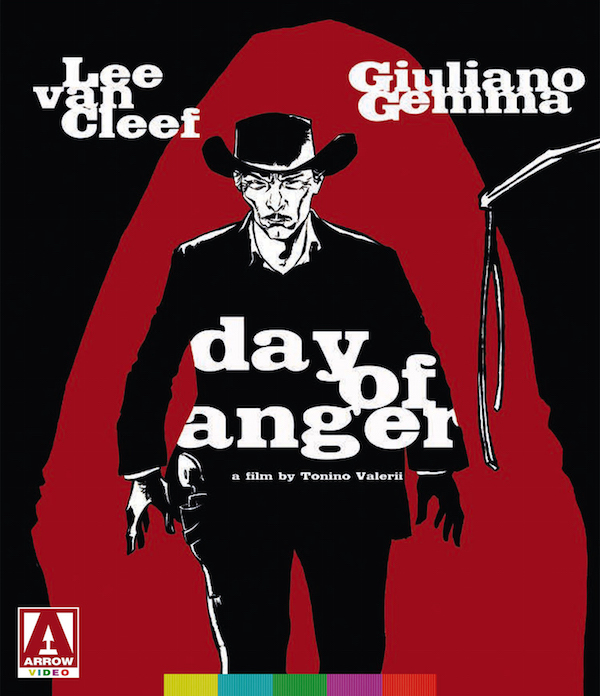
FilmJuice have my review of Tonino Valerii’s awesome spaghetti western Day of Anger, also known as Gunlaw and I Giorni Dell’Ira.
The film is set in a prosperous frontier town where the ‘fatherless’ child of one of the local sex workers makes a living emptying chamber pots whilst being systematically beaten and demeaned by the men of the town. However, this situation comes to a sudden end when Lee Van Cleef’s ageing desperado rides into town and decides to take the young man under his wing. As the old gunfighter hatches a plot to take over the town, the young man becomes quite an accomplished gunfighter… so accomplished that he eventually becomes the only man who could possibly take down the old gunfighter. However, the young man’s loyalty towards the old man is compromised when another old man steps in and starts filling his head with paranoid thoughts:
For much of the film, Van Cleef plays Talby as something of an antihero; a man whose violent and manipulative actions are somehow humanised not only by the villainy of his victims but also by the praise he lavishes on Scott. Talby winds up being more of a father to Scott than any of the vicious hypocrites who might actually be his father but the more of an adult Scott becomes, the more he starts to question Talby’s apparent viciousness. Why would a man so cold go out of his way to raise a son when he could just as easily hire a bunch of goons to do his bidding? One potential answer surfaces in a fantastic scene in which Murph explains how older gun-slingers sometimes take an apprentice in an attempt to compensate for their slowing reflexes. However, as Murph points out, there comes a time when the reputation of the henchman begins to surpass that of the master and that is when the father inevitably begins to question the loyalty of the son.
As I explain in my review, the film is often thought of as an ‘Oedipal’ text about a son who is forced to kill his father before he can become an adult. However, a less Freudian reading suggests that Day of Anger might actually be more interested in the practicalities of parenting than in the father’s role as a symbol. Indeed, the film’s final act hinges upon the fact that Van Cleef’s character is so distracted by his awesome plotting and scheming that another man was able to sneak in and raise the son to hate the father.
Upon reflection, it now occurs to me that there is something distinctly Christlike about the figure of Scott Mary in so far as he is the fatherless ‘son of man’ who is forced to suffer for the sins of the community he inhabits. Scott Mary does eventually turn against his morally questionable father but only after the father was distracted and Scott Mary was attacked echoing the themes of abandonment found in Psalm 22’s cries of My God, My God, Why Have You Forsaken Me? In fact, one could almost imagine Day of Anger as an alternative vision of the crucifixion in which Jesus pulls himself off the cross, kills God and positions himself on the throne of Heaven but that might be pushing this interpretation a little bit too far in the direction of awesome.
Another thing that occurred to me while watching Day of Anger is how influential Eastwood’s Unforgiven has been on the Western genre. Indeed, most of the spaghetti westerns were violent to the point of nihilism but their visuals were invariably sunny and colourful. By contrast virtually all of the most notable American Westerns of recent years have taken their cues from Unforgiven and portrayed the old west as a cold, muddy place that was full of ugly farting men and drug-addled sex-workers. Even Tarantino’s Django Unchained paid lip service to that aesthetic in its early scenes before going on to recreate the carnivalesque melange of blood and sunshine that you find in many of the old Italian Westerns. As someone who really quite likes Westerns, I find the genre’s lack of visual innovation really quite frustrating as the Western seems to have emerged as yet another victim of grimdark’s stanglehold on the American psyche. Day of Anger is actually a really interesting counterpoint to the rise of the grimdark aesthetic as while the film is so bright and colourful that you could film an upbeat Western-themes musical using the same sets and costumes, the themes of the film are actually much darker and messed up than anything that has emerged from the later years of the post-revisionist Western.
FilmJuice have my review of Norman Jewison’s iconic 1970s science fiction film Rollerball, which has just been re-released on Blu-ray. When my editor at FilmJuice approached me to write about Rollerball I was initially a bit reluctant… I first saw Rollerball at the age of six because I was named for the film’s protagonist and my mother couldn’t be bothered to provide me with boundaries. In fact, I actually saw Rollerball a number of years before I first saw Star Wars and I remember being puzzled by the latter’s lack of blood. Where was the scene in which Luke wrenched off a Storm-trooper’s helmet and punched him in the back of the head with a spiked glove? I watched Rollerball so frequently as a child that I wound up committing huge sections of the film to memory at least a decade before acquiring the emotional and conceptual apparatus to understand what the film was actually about. I was reluctant to take this reviewing gig as I have never before written about Rollerball and was a bit concerned that the suck fairy might have gotten to it… Thankfully, while the film turns out to be something of a thematic mess, it more than stands up to critical scrutiny:
The 1970s was a time when science fiction was enjoying a moment of rare literary respectability. The collapse of the pulp magazines had forced the genre’s writers to shift closer to the literary mainstream and the institutions comprising that mainstream had rewarded this cultural obeisance with a market for short fiction that spilled from the pages of glossy magazines and out into the Hollywood hills. Perhaps sensing that science fiction was a genre on the up, [director Norman] Jewison secured the rights to a short story that had appeared in the pages of Esquire magazine and hired the author William Harrison to provide him with a screenplay. Despite Jewison having no experience directing action and Harrison having never before written for film, the pair managed to produce one of the most bewildering and influential works of 1970s science fiction.
The reason I call the film bewildering is that while the action sequences remain viscerally potent and brilliantly conceived, the quiet stuff surrounding them turns out to be more than a little bit confused. The problem is that while the film is based on a short story, Harrison’s story is all about how the unexamined life is not worth living. In the story “Roller Ball Murder”, Jonathan E is an exquisite physical specimen who has been raised to the peak of physical fitness and celebrated for his athletic prowess. However, as time passes and the game becomes more violent, Jonathan begins to wonder whether there might not just be a little bit more to life than victory, accolades, drugs and sex. Doubting his vocation, the big lump tries to educate himself about history and philosophy only to realise that the government has destroyed all the books. Now… while the director of Fiddler on the Roof would have had his pick of new projects, it is unlikely that even 1970s Hollywood would have helped to fund a science fiction sports film about the lack of spiritual sustenance to be had from a hedonistic lifestyle. As a result, Harrison and Jewison ditched the story’s Platonic theme in favour of well… a number of different themes:
Inexperienced as a screen-writer and forced to come up with a new motivation for his character, Harrison threw everything but the kitchen sink at his script in an effort to provide Jonathan with a set of motives that were both primal enough to be relatable and high-minded enough to give the film thematic heft. This resulted in a protagonist whose act of rebellion feels so hopelessly over-determined as to be effectively meaningless: Apparently Jonathan E is angry with the people who broke up his marriage, and looking to avenge the death of his friend, and start a rebellion, and embody the kind of radical individualism that is supposed to pose an existential threat to corporate governance.
Rollerball is a hugely influential film that inspired not only Suzanne Collins’ The Hunger Games but also the flood of YA dystopias that followed in its wake. At first glance, this influence is rather shallow as both Rollerball and The Hunger Games are set in dystopian futures where governments use bloodsports to keep their oppressed populations in line. However, look beyond the surface tropes and you will notice that both Rollerball and The Hunger Games are in the business of presenting small acts of athletic disobedience as the birth of revolutionary subjectivities that pose an existential threat to their respective societies:
Jonathan E doesn’t want to retire, this forces his government to change the rules of the game and marks him as a threat.
Katniss Everdeen would rather not kill her fellow tribune, this forces her government to change the rules of the game and marks her as a threat.
In order to make this act of thematic inflation stick, both Rollerball and The Hunger Games blur the boundaries between the political and the personal to produce a weird thematic mess that is both a literal description of an athlete who becomes a political rebel and a weirdly metaphorical treatment of both individualism and the similarities between becoming an adult and acquiring political agency. The big difference between Rollerball and The Hunger Games is that while Rollerball ends with that moment of individualistic awakening, The Hunger Games goes on for several more books and films exploring the athlete’s political career.
Another way in which Rollerball influenced The Hunger Games is that while both films rush to adopt revolutionary postures, their critiques of despotism are both completely toothless.
Despite pre-empting the idea of corporate rule that featured so prominently in Sidney Lumet and Paddy Cayefsky’s Network, Rollerball really struggles to imagine what corporate rule might look like and how it might be undone. Consider the memorable speech from Network in which Ned Beatty proclaims that “the world is a business”:
It is easy to imagine Rollerball as a film set in the post-national future that Ned Beatty describes but rather than a vast homeostatic system in which unfettered capital flows from one side of the world to another, Rollerball has a set of neatly-ordered monopolies in which the corporations no longer even bother to compete. In fact, the film even goes so far as to suggest that money is no longer an issue as there is no poverty or talk of wages and Jonathan gets his luxuries with the help of something called a ‘privilege card’. Also deeply weird is the idea that the game of Rollerball was designed to highlight the futility of individual effort and that Jonathan E’s rugged individualism poses some sort of threat to corporate hegemony.
The truth is that while Rollerball may present itself as an anti-corporate film, the system it critiques is actually much closer to Communism with its planned economy, institutional monopolies and rule by elusive grey-faced men. Rugged individualism will always pose a threat to the vision of Communism that existed in American minds for much of the Cold War but as everything from the Premier League to the NBA will tell you; when the people love an athlete and the athlete breaks the law, corporations will always look the other way.
Revisiting Rollerball as a critic did not exactly undermine my childhood love of the film but it did suggest that I wasn’t really missing very much when I failed to connect with the quiet talky bits. Those action sequences are amazing and the film continues to look great but when it comes to political critique, the film is much closer to The Hunger Games than it is to Network or the paranoid Hollywood cinema of the 1970s.





 Ruthless Culture