REVIEW – Weekend (2011)

FilmJuice have my review of Andrew Haigh’s relationship drama Weekend.

The film tells the story of two gay men who meet in a club and spend the night together. Upon waking, Glenn (Chris New) sticks a tape recorder under Russell’s (Tom Cullen) nose and asks him to give detailed feedback about the sex and the way the pair met. Horrified by Glenn’s frankness and yet compelled to accede to his request out of affection and desire, Russell begins to talk and when Russell begins to talk the one night stand slowly begins to transform into a relationship. Weekend is the story of how two very different people strive to overcome their differences in order to find enough common ground to exist as a couple:

It seems faintly absurd that, in this day and age, we should feel obliged to make the case for why it is that more straight people should watch gay films. Many fans of gay independent film will stress the educational benefits of watching a film about people unlike yourself but this makes it all sound a little bit too much like homework. People should not seek out Andrew Haigh’s Weekend because they feel obliged to be supportive of minority filmmaking or because they want to see something a bit different and exotic. The case for watching Haigh’s Weekend is the same for watching any great film: Watch it because it will help you to better understand yourself. In fact, Weekend is the single most grown-up film about human relationships that you will see this year and that is true regardless of who you are and how you live your life.

Needless to say, I adored this film and recommend it to anyone and everyone who happens upon this blog post. So many films deal in relationships and bndy about words like ‘love’, ‘desire’ and ‘loneliness’ but few actually address what those words actually mean. Weekend is one of those films.

Wreckers (2011) – Mondus Vult Decipi

Before Laertes returns to France, his father Polonius sits him down and offers these immortal words of advice:

 This above all: to thine own self be true,

And it must follow, as the night the day,

Thou canst then not be false to any man.

These words still resonate today but it is interesting to note that the context of that first line has changed since Shakespeare’s day. When Polonius advised his son to remain frank with himself, it was not because he saw self-deception as inherently wrong but rather because if you bullshit yourself it is difficult not to wind up bullshitting other people. Thus, honesty with one-self was simply a means to the end of greater honesty with other people. However, since Shakespeare’s day, self-deception has moved from tactical error to absolute moral failing. Some even say that the hardest thing in the world is to remain honest with oneself, but what drives the morality of this injunction? Why should we remain honest with ourselves at all times?

Setting aside the somewhat nebulous and melodramatic idea that some truths are simply too hard to bear, self-deception has value in so far as it makes it less likely that people will catch us in a lie. Indeed, if we are trying to convince someone of something we know to be false then our capacity to mislead them is largely a question of skill; we need to be able to minimalise physical tells, keep stories straight in our heads and know when to play down certain elements of the story lest our interlocutor realise that we are trying too hard to convince them. However, if we internalise the fiction then our skill at lying simply ceases to factor into the equation. There are no physical tells to detect because we ourselves believe the story that we are pushing. Based on this analysis, the evolutionary psychologist Robert Trivers has argued that a capacity for self-deception can be a real evolutionary advantage.

The problem with Trivers analysis is that, like many evolutionary psychologists, he not only reduces human nature to a series of tactical cost-benefit analyses, he also assumes that these cost-benefit analyses are made in good faith and with reasonable access to the facts. In other words, when explaining how self-deception works, Trivers assumes that there is such a thing as the self and that the boundary between honesty and deception is both clear and distinct. However, when you remove self-deception from the idealised realm of Homo Economicus and place it in the context of an actual human life, the boundaries around both the self and the truth become a good deal more fluid. D.R. Hood’s first film Wreckers suggests that truth counts for very little when weighed against the many other things that make up a life and that self-deception is really just another term for living a tolerable life.

Continue reading →

Wuthering Heights (2011) – Outside Looking In

Andrea Arnold is a director renowned for her unrelenting modernity. Set on council estates, Arnold’s first two films are about being on the outside, looking in and trying to find cracks in those protective walls that we call alienation and indifference.  In her directorial debut Red Road (2006), Arnold tells the story of a CCTV operator who finds herself becoming obsessed with observing a man she happens to recognise. Now used to experiencing life through a lens, the operator follows her target into a party and dances with him. Horrified by the intense colours, sounds and sensations of reality, the operator runs from the party and vomits in a lift. Seemingly, real life was just too much for her. A similar withdrawal from the world features in Arnold’s follow-up picture Fish Tank (2009) where a teenaged girl observes her mother’s relationship with a local lothario. Initially treating this interloper as a potential father figure, the girl soon finds herself being lured into the waters of adult sexuality by waves of unexpected kindness and discrete flirting. Believing she is in control of the situation, the girl pushes harder and harder at the limits of her childhood before the complexities and inequalities of adult life threaten to overwhelm her, forcing her to withdraw to a state of adolescent seclusion where everything makes sense and lessons can be learned in relative safety.

While there is no denying that Arnold’s adaptation of Emile Bronte’s Wuthering Heights (1847) constitutes something of a departure for the director, the film’s novelty lies not in its period setting but in the refusal of its characters to back down when confronted by a world they do not really understand. Arnold’s Wuthering Heights is a film in which madness and obsession confront reality and reality loses.


Continue reading →

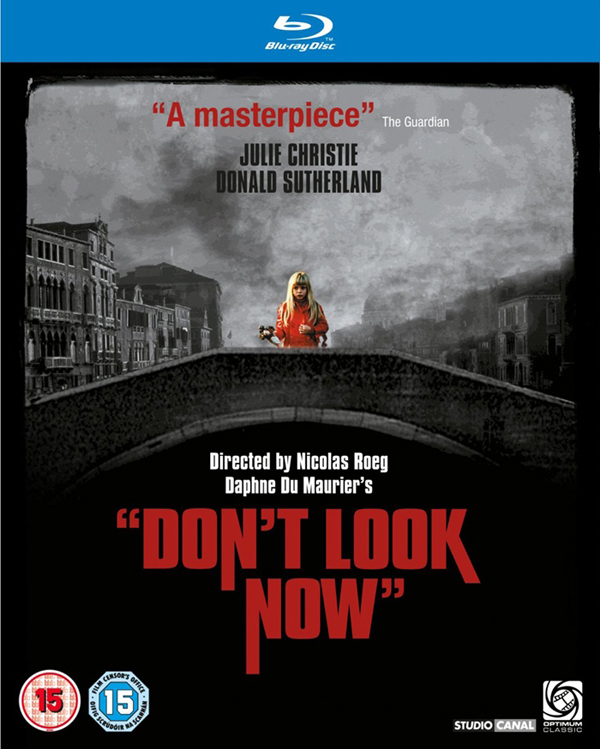
REVIEW – Don’t Look Now (1973)

I recently noticed a pattern in my choice of films to write about.  I tend to really enjoy the films I write about but the films I truly love tend to go unprocessed and un-deconstructed.  I did not write about Luca Guadagnino’s I Am Love (2009) and I did not write about Nicolas Winding-Refn’s Drive (2011) despite loving both of these films to pieces. In an bid to force myself out of this unfortunate habit, I decided to take on the recent Blu-ray release of one of my favourite films: Nicolas Roeg’s Don’t Look NowTHE ZONE has my review.

The common thread binding these three films together is their unapologetic devotion to the grammar of film. Indeed, rather than relying upon such theatrical devices as three act structures or novelistic devices such as expositionary dialogue, Don’t Look Now, Driver and I Am Love tell their stories using mostly pictures and sounds. Don’t Look Now is particularly cinematic as Roeg uses cinematic grammar for force us into the head of Donald Sutherland’s reluctant psychic: Sutherland’s character is assailed by images and sounds that he struggles to comprehend and Roeg shares these fragments with us, placing us next to Sutherland’s character. Struggling to comprehend:

The opening scene of Don’t Look Now introduces us to a series of memorable images that Roeg returns to throughout the film. Everywhere the Baxters go, they encounter water, red hoods and shards of light. As people trained in the basic grammar of art house cinema, we know how to recognise recurring motifs and know that we are supposed to treat them as clues to the film’s hidden subtext. However, rather than allowing these clues to sit in the mind of the audience, Roeg uses the possibility of psychic powers to drag these clues into the foreground of the film.

Suddenly, those motifs and images that are normally just hints at hidden artistic meaning become evidence of hidden patterns in the life of John Baxter. Baxter’s hostility to the sisters betrays a deeper hostility to the idea that he too may be psychic and that the recurring images that plague his life might be evidence of future unpleasantness. Baxter foresaw the death of his daughter and now he sees signs that point to his own death. Everywhere he turns, Baxter is haunted by water, shards of light and the colour red. Everywhere he turns, Baxter sees proof that he too will soon be dead.

To suggest that John Baxter may be psychic is, somewhat predictably, to do Roeg a disservice as talk of mediums and psychic powers inevitably conjures up images of third eyes and supernatural powers. However, much of the power of Don’t Look Now resides in the fact that Baxter’s psychic gift is only a slight exaggeration of that very human addiction to pattern recognition, an addiction that forces the audience to hunt for subtexts and clues in Roeg’s repeated use of water, shards of light and the colour red. Indeed, Don’t Look Now is a deeply unsettling film as it forces the audience into the same position as the film’s protagonist: just like John Baxter, we know that something is coming; we know that it is not going to be good but we are powerless to avoid it. The audience are powerless to avoid it because Don’t Look Now is a film. John Baxter is powerless to avoid it because his life is like a film; it is pre-scripted with a beginning, middle and an inevitably grizzly end.

Don’t Look Now is not just a film of towering cinematic brilliance it is also, in its own way, a film about the process of taking a series of disconnected images and forcing them into a cohesive and comprehensible whole.

This review is based upon the Blu-ray special edition that was released in summer 2011.  Billed as a “Special Edition”, this Blu-ray release is pretty much indistinguishable from the 2006 DVD “Special Edition” release.  The extras are exactly the same.  According to the sticker on the cover of the box, the colour restoration was supervised by Roeg himself but, while there is no denying that the colours are crisp and the pictures are clean, I genuinely struggle to tell the difference between this and the DVD special edition. This begs the question as to the purpose and future of Blu-ray releases.

The UK benefits from a growing second hand market for DVDs that has the effect that DVDs lose most of their value within a few weeks of release. In fact, if you are paying full price for a DVD that is more than a week old then you are nothing more than a sucker.  Though Blu-ray has not yet supplanted DVD, the market for Blu-ray disks is pretty much the same as that for DVDs only with Blu-ray discs starting and remaining ever so slightly more expensive. The reason for this is that, UK consumers have largely accepted the idea that Blu-ray is a meaningful step up from DVD. Using this perception, Blu-ray distributors are re-releasing older films hoping that those of us with Blu-ray players (i.e. people who own a PS3) will replace our old DVDs with more expensive and ‘better quality’ Blu-ray editions. However, despite Blu-ray being touted as better quality, it is notable that hardly any Blu-ray releases come with any more extras than their equivalent DVD release. In short, the only difference between Blu-ray and DVD is that Blu-ray discs support HD playback meaning that if you do not possess an HD screen then there is absolutely no reason whatsoever for buying a film on Blu-ray. I bought the special edition DVD of Don’t Look Now when it was originally released and, despite clearly adoring the film, I cannot think why you would choose to replace the DVD with a Blu-ray.

The fate of Blu-ray is made all the more tenuous by changes in the US market.  In the US, the online video streaming service Netflix has not just popularised watching films online it has pretty much killed both DVD and Blu-ray stone dead with the latter-most nails in physical media’s coffin being provided by iTunes and the video-on-demand capacities of cable TV, Xbox Live and the PlayStation Network. Blu-ray was only ever supposed to be a stopgap measure between the latter days of DVD and the early days on online streaming that might allow technology companies to sell one final generation of media players before everyone started watching stuff through their home computer. This gap in the market has now effectively closed in the US and the UK is not that far behind.

Despite chaotically shuffling between business models in a way that has seen its share price plunge, Netflix recently announced that it is planning on bringing its subscription-based video-on-demand service to the UK. In short, Blu-ray is history in the US and the same will soon be true in the UK. If Netflix and Lovefilm do not kill UK DVD sales then Amazon, iTunes and cable TV will.

Of course, physical copies of films will continue to retain some value as people will always to want to ‘own’ the films they love rather than simply retain the capacity to access them online.  Similarly, AV nuts who invested small fortunes in home cinema installations will probably not be the first in line to start watching films on their laptops. I mention this not because I have anything in particular against either Blu-ray or DVD (I own loads myself) but simply as a warning: In a year’s time, Blu-rays and DVDs will be just as worthless as CDs meaning that you will be able to buy films like Don’t Look Now on Blu-ray for next to nothing.  So, instead of splashing out on one great Blu-ray, either save your money and stick with the DVD or wait a year and buy five films for the price of one. And thus the wheel doth turn…


Some Thoughts On… Hunky Dory (2011)

Set in a Welsh comprehensive during the long hot summer of 1976, Marc Evans’ Hunky Dory tells of a bohemian drama teacher (Minnie Driver) who returns home after the death of her father and the collapse of her long-strived for career. Hoping to inject a bit of sunshine into the lives of her pupils Viv starts to pull together a version of The Tempest filled with musical numbers culled from the albums of David Bowie, Beach Boys and The Byrds. Faced with institutional hostility on the one hand and student indifference on the other, Viv strives to convince everyone of the importance of expressing oneself even when one’s life is falling apart.

Marc Evans is very much a journeyman director whose work in film (1998’s Resurrection Man and 2002’s My Little Eye) and television (2009’s Collision) has elicited some praise but not enough to make him a director with much of a following. Despite Evans’ somewhat patchy track record, Hunky Dory finds him on fine form as every shot screams ‘Long Hot Summer’ through sweat-glazed sepia tones while the film’s pacing never once slows or drags. Indeed, despite the fact that I did not think very much of this film, there is no denying that Evans perfectly understands the ‘string of pearls’ nature of genre plotting and so we are never more than a few minutes from a song or a big dramatic scene. On a purely structural and cinematic level, Hunky Dory is a very effective piece of filmmaking.  Which is strange given that pretty much every other aspect of this film fails to deliver.

The biggest problem affecting Hunky Dory is Laurence Coriat’s script. As one might expect from a coming-of-age teen musical, Hunky Dory is littered with Big Dramatic Scenes where characters learn about themselves and about life. Unfortunately, despite these scenes popping up quite frequently, Hunky Dory lacks the requisite amount of characterisation to lend these scenes the dramatic substance to which they so obviously aspire. For example, there is one scene in which the school hall burns down and Driver’s Viv rounds on her fellow teachers in order to challenge their hostility to the play. But because neither the sports teacher nor the social studies teacher are properly fleshed out, Viv’s grand exit from the room feels like a laughably childish flounce. Like most of Hunky Dory’s Big Dramatic Scenes, this was the pay-off to a dramatic arc that simply does not exist. Another example of this is the scene in which Viv finds an engraving of her dead father’s motto ‘Don’t Let The Bastards Grind You Down’. This discovery is clearly supposed to rekindle Viv’s faith in the stalled project but because neither Coriat’s script nor Evans’ direction bother to flesh out Viv’s relationship with her father, the scene feels like nothing more than a dishonest and undeserved emotional contrivance. By repeatedly trying to milk the pay-off to dramatic arcs that simply do not exist, Hunky Dory comes close to achieving the levels of hysteria found in Michael Bay’s Transformers 3 as Everyone! Is! Very! Upset! All! The! Fucking! Time! For! No! Apparent! Reason!

The weakness of Hunky Dory’s characterisation also carries across into much of its plotting as the film is littered with tensions and conflicts which, though useful in terms of moving the narrative forward, lack anything approaching psychological verisimilitude or emotional resonance. For example, when the school hall burns down the police decide to question Darren Evans’ ‘troubled’ skinhead Kenny. Discussing the fact that Kenny could not have done it, a couple of kids are confronted by Kenny’s skinhead brother who asks whether they shopped him to the police. Rather than simply saying No and going on their way, the pair decides to run off and a pointless chase ensues. Well… I say pointless but this race across town does serve to set up one of the kids discovering that his best friend is dating his sister. Because this is deemed unacceptable (for reasons that are largely glossed over), people get upset and this causes a Big Dramatic Scene with running and shouting. A scene that, again, feels utterly contrived and dramatically undeserved.

Aside from its weak characterisation and clunky plotting, Hunky Dory is also weighted down by some of the ugliest line-by-line writing that I have ever encountered. Coriat’s script is a wasteland of flaccid zingers and awkward exchanges littered with dull expletives in a desperate attempt to make it all seem a bit more real and a bit more urgent. Also deeply problematic is the film’s use of words such as “poof” and “paki”. While there is no denying that people in the mid-70s did use those terms, Hunky Dory not only strips them of their context but also fails to hold the people who use them to account. For example, one of the main characters becomes a skinhead but unlike Shane Meadows’ This is England (2006), Hunky Dory never explains what this means or why it might be a bad thing. Instead, the film presents racism and homophobia as mere local colour no different to a love of rugby or the quaintness of growing up without a telephone. Similarly, while I realise that Julia Perez’s Sylvie is supposed to be a comic character, her character’s comic impact lies in its stereotypical nature: French people have sex all the time and smoke! Ha Ha Ha! Period setting is no excuse for that kind of lazy and xenophobic writing. It simply has no place in a modern British film.

Of course, Hunky Dory is ultimately a genre piece and while it fails as both a comedy and a musical, the film might have been redeemed had its musical elements been successful. Unfortunately, they are not. Much of Hunky Dory’s marketing bumf stresses the fact that the film features classic works of 60s and 70s pop. While this may conjure up images of High School Musical (2006) meets Mama Mia (2008), the truth is that Hunky Dory’s songs are mostly quite obscure. Indeed, despite being in my mid-30s, I only recognised one of the tunes and even then it was because the tune was covered by Nirvana. Equally unimpressive are the performances of the mostly youthful cast who both lack charisma and display a terrifying tendency to wander off the note. Though some of the musical numbers are okay, none are particularly memorable and a few are faintly embarrassing. A lot of the singing in Hunky Dory is so flat that it could be Holland.

Clearly, I am not the target audience for Hunky Dory but I do see what it is that the film is trying to achieve. Inspired by the massive success of High School Musical and the TV series Glee, Hunky Dory is an attempt to do something a bit similar but set in Wales and with a slightly cooler soundtrack. Hunky Dory should have been about the power of music and performance to guide and transform teenaged lives, to find those that are lost and fix those that are broken. Hunky Dory should have been, as Driver’s character says, about the heroism of self-expression in a time and place where everybody wants you to shut up and knuckle down. Sadly, because of its weak performances, unimpressive musical numbers and astonishingly weak script, Hunky Dory is none of these things. All it is is a mess.

REVIEW – Tyrannosaur (2011)

FilmJuice have my review of Paddy Considine’s directorial debut Tyrannosaur, which is out this weekend.

A little while ago, I wrote about the phenomenon of Oscar Bait.  While this industry term is often taken to describe films that are god enough to be serious Oscar contenders, I chose to apply the term to films that seem to have been designed to explicitly pander to the preferences of Academy Voters as part of the film’s marketing strategy. Oscar Bait films rely upon Oscar nominations in order to find an audience and they rely upon their potential for Oscar nomination in order to attract prestigious A-list actors who are willing to work for scale on the understanding that their performance will net them an award. Films like The King’s Speech (2010), Rabbit Hole (2010) and The Reader (2008) are all based upon literary properties, they all feature strong central performances and they all feature very well thought of actors who might well be considered ‘overdue’ an Oscar. As Peter Biskind points out in his book on Miramax (the company that turned Oscar-baiting into a business plan), this is a win-win formula: The Academy gets to look smart, the actors get awards and the studios get easily-marketable prestige pictures that don’t cost a lot of money to make. While I’ve written about the evolutionary process distorting blockbuster scriptwriting before, the same process is at work in prestige drama.

I mention Oscar Bait as it can be seen as a distortion of another equally puzzling product of the film industry: the actor’s piece. Paddy Considine has a (admittedly well-earned) reputation as one of the best actors working today. Having made a name for himself in such dark and edgy independent films as Dead Man’s Shoes (2004), Considine has managed to cultivate a reputation for intelligence and emotional integrity. A reputation due to his intelligent selection of roles and the generosity of his erstwhile collaborator Shane Meadows. Indeed, the mock documentary Le Donk & Sco-Zay-Zee (2009) was marketed as a Meadows film in which Considine was given lots of room in which to create his own character. Given that Considine has been quite vocal about his creative powers and has directed a short film, it was only a matter of time before someone ponied up the dough for his to make a film of his own.  The resulting poneyage is the rather uneven Tyrannosaur:

The problem is that, once Considine has introduced us to the story of an emotional incontinent befriended by an obliging sponge, he suddenly becomes concerned about the lack of accountability in this sort of dynamic. Realising that there is something fundamentally dishonest and unfair about expecting Hannah to pay the psychic cost for Joseph’s redemption, Considine introduces us to a secondary layer of characters whose very unpleasantness sets them up as candidates for some redemptive act of violence. However, this secondary dynamic established, Considine then changes course again and decides to deny his characters redemption because no violent act can ever be redemptive. While these reversals serve to both keep the audience guessing and keep the film from falling into cliché, they also serve to muddy the psychological waters to the point where character motivation become completely impenetrable. The film tellingly ends with Joseph reading out a letter in which he explains why he did what he did and why he thinks Hannah did what she did; what is this letter if not an admission by the writer/director that he can no longer make sense of his own characters?

It is interesting to compare Considine’s career trajectory to that of Tyrannosaur‘s star Peter Mullan. Much like Considine, Mullan is an actor with a reputation for integrity and intelligence. His career features a blend of low-budget independents and wisely chosen bigger-budget parts that seems to have provided a model for Considine’s careful engagement with the mainstream. However, while Considine’s first directorial foray proved to be a poorly thought-through actor’s piece that falls apart once you look beyond the (admittedly brilliant) performances, Mullan’s films (the wonderful black comedy Orphans, the politically-engaged weepy The Magdalene Sisters and the blisteringly powerful Neds) all benefit from an intellectual substance that owes nothing to their central performances.

As someone who is hyper-sensitive about self-promotion, the difference between Orphans and Tyrannosaur is quite striking. Considine talks endlessly about how creative he is and yet shows little evidence of that creativity once he steps behind a camera. Conversely, Peter Mullan is known primarily as an actor and yet his films are universally intelligent, powerful and memorable. I suspect that Considine’s choice of Mullan for the lead in Tyrannosaur is hardly accidental given the similarities between the two men’s careers.  In fact, I suspect that Mullan may be something of a role-model for the younger Considine but while Considine has followed Mullan in becoming a director, Tyrannosaur suggests that he still has some way to go before he can be said to be on a par with Mullan.

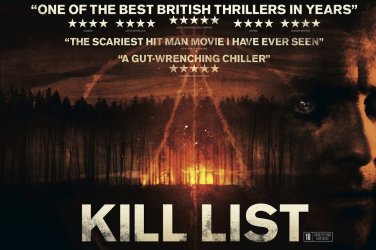
Some Thought On… Kill List (2011)

A little while ago, I was lucky enough to attend a British film festival designed to find foreign distributors for British films. While only a few of the festival’s films showed any promise, what they all demonstrated was the relative ease with which British thrillers were able to secure funding. Jean-luc Goddard once said that all you needed to make a film is a girl and a gun and low-budget British filmmakers seemed to be proving exactly that. Over the last couple of years, this financial trend has blossomed into a full-scale British genre revival including such works of psychological tension as J Blakeson’s The Disappearance of Alice Creed (2009), Matthew Hope’s The Veteran (2011) and Lynne Ramsay’s We Need To Talk About Kevin (2011). All of these films speak to the darkness of the human soul with a style and grace that elevate them above predictable exploitation narratives into something altogether more interesting.  Ben Wheatley’s Kill List is yet further proof of the intellectual vibrancy of the British thriller, it is one of the most effective films I have seen this year.

Wheatley began his feature-length directorial career with the micro-budgeted crime film Down Terrace (2009).  Grounded in dysfunctional human psychology, Down Terrace blurred the line between genre and traditional drama by embedding its narrative in a seemingly banal working-class environment. Wheatley’s desire to ground his films in the mundane details of everyday life continues with Kill List. Kill List opens by introducing us to Jay (Neil Maskell), a working-class man enjoying a comfortable middle-class life with his son and beautiful Swedish wife Shel (MyAnna Buring). Claiming to be suffering from back pain, Jay has not worked for eight months and the couple are now running in to the sorts of financial difficulties that put strains on even the most loving of marriages. Aware that Jay may not be completely ‘ready’ to go back to work, Shel invites Jay’s old partner Gal (Michael Smiley) over for dinner in the hope of luring her husband from retirement.

Having painted a scene of mundane domesticity in beautifully vibrant colour, Wheatley then sets about filling in the shadows. When Gal’s date for the evening pops to the loo, she turns the mirror over and carves a strange rune into the back of it.  Meanwhile, Gal and Jay chat about the old days in evasive terms until one of them pulls out an assault rifle.  Clearly, Jay and Gal’s mundane lower-middle class existence is supported thanks to a decidedly unusual career. The oddness of the boys’ day job is made all the more clear in an extraordinary sequence that transforms a mundane business meeting into an occult rite by having the boys sign their acceptance of the contract in blood. From there, the film becomes progressively more and more weird, and more and more disturbing.

As in Down Terrace, Wheatley breaks the action down into chapters by filling the screen with text.  Thus, the first hit on the kill list is ‘The Priest’ and then we move on to ‘The Librarian’ and ‘The M.P.’ before concluding with ‘The Hunchback’.  Ostensibly quite a crude piece of meta-narration, these inter-titles serve not only to anchor the narrative as the film’s narrative structures begin to fray, they also serve to heighten the sense of unreality surrounding Jay’s working life. What kind of professional to-do list features hunchbacks, priests and members of parliament? The further the film progresses, the more the fantastical encroaches upon the lives of the characters and the more the characters begin to crack under pressure with cinematography, sound-design and narrative working in unison to present a powerful and psychotropic voyage into the outer darkness.

Looking at the critical coverage this film has received, it is clear that critics have struggled to pin down the argument behind Kill List. Though beautifully realised and almost insanely tense, the film’s profligate use of familiar themes and images make interpreting it something of an uphill battle.  Is the film about Jay’s nervous breakdown (fore-shadowed by early trips to the supermarket and the doctor)? Is it a tale of morality set against an ink-black British underworld filled with mercurial figures?  Or is it simply a beautifully made thriller that borrows from the crime and horror genres to produce a cinematic experience that pushes all of the audience’s buttons at once? Obviously, Kill List is all of these things (and none) but my impression was of a film that ventures onto the same territory as the work of Thomas Ligotti.

Thomas Ligotti is one of the finest American horror writers of the last fifty years. Unfairly overshadowed by ancestors such as Lovecraft and more commercial contemporaries such as Stephen King, Ligotti’s collections of short fiction are seldom in print and seldom easy to write about. However, one of the recurring motifs in Ligotti’s work is the horror of the workplace. Short stories such as “The Town Manager” and “Our Temporary Supervisor” as well as longer pieces such as the novella My Work is Not Yet Done, reflect upon the surreal brutality of an institution that consumes most of your waking life whilst humiliating and dehumanising you from dawn till dusk. Kill List vocalises the same sense of surreal disconnection as the work of Ligotti; Jay is called upon to carry out tasks that he does not comprehend (his employer calls him “a cog”) and these tasks carry a heavy psychological burden.  Ideally, Jay would not have to work at all but in order to feed his family and keep them in the style to which they have become accustomed, Jay must return to work and do what it is that he has to do. Even when Jay wants to quit and go home, work follows him to his door.  There is simply no escaping the workplace. The film’s final denouement offers Jay the possibility of escape but makes it abundantly clear what price he will be expected to pay for his freedom.

Kill List’s denouement encompasses all of the strengths and weaknesses of Wheatley’s film: beautifully shot and powerfully scored, Kill List’s final scenes are a master class in pure cinematic tension. However, the impressionistic quality of the direction and the embarrassment of symbolic riches also create a distinct sense of directorial profligacy. Rather than restrain himself and pin Jay’s experiences down to a singular precise meaning, Wheatley ends his film in the broadest way imaginable: we know that Jay is unhappy, we know that his unhappiness is linked to issues of sanity, morality and family but beyond that the film’s emotional and psychological content is vague and elusive. Kill List makes its point with considerable style and power but as the smoke clears and the credits roll, it is by no means clear that that point might have been.


Robinson in Ruins (2010) – Mould on a Dystopian Corpse

Back in the 1990s, the filmmaker and architectural scholar Patrick Keiller made a pair of films about Britain. As much video essays as they were documentary films, London (1994) and Robinson in Space (1997) were concerted attempts to find the true spirit of Britain that had been buried by a decade and a half of Thatcherite rule.  Sensing that the wheels were coming off the Tory juggernaut and that a fresh start would soon be required, Keiller used the eccentric academic Robinson and a wryly-comic unnamed narrator to sift the wreckage in search of gold.  Unfortunately, despite the best efforts of Keiller’s intrepid explorers, the project was a political failure: Britain, much like its capital city, was a place devoid of any truth that could not be measured in pounds, euros, dollars or units of industrial measurement.  London and Robinson in Space are films about the defeat of the romantic spirit and the absolute victory of neoliberalism.

Over a decade later, Keiller returns with Robinson in Ruins, an unexpected addendum to the Robinson duology.  With the narrator dead and Robinson gone, the narration has fallen to an equally unnamed female public sector worker (voiced by Vanessa Redgrave) who discovers Robinson’s footage and notes in an old caravan on a site destined for re-development. Made at the height of the credit crunch, when the towers of Capitalism tottered and nearly fell, Robinson in Ruins is far less pessimistic than either London or Robinson in Space.  Eerily apocalyptic and as visually arresting as all of Keiller’s work, Robinson in Ruins suggests that humanity’s salvation may lie in communion with non-human intelligences.

Continue reading →

We Need To Talk About Kevin (2011) – Fear and Loathing in Thebes

Back in 2003, Lionel Shriver published the Orange award-winning novel We Need to Talk About Kevin. Taking the form of a series of letters, the book chronicles a mother’s attempt to come to terms with the extent of her responsibility in the creation of a monster. The novel’s epistolary structure means that adapting it for the cinema was always going to horrify the book’s ever-growing legion of fans but a ripple of excitement passed through cinephilia when the news began to spread that a film had been produced and that it marked the long-overdue return of Scotland’s Lynne Ramsay, a director whose earlier films Morvern Callar (2002) and Ratcatcher (1998) demonstrated a real gift for tackling darker themes with a decidedly poetic sensibility. We Need to Talk About Kevin is not only a successful adaptation of a great novel, it also heralds the return of a director who has been absent from our screens for far too long.  We Need to Talk About Kevin is nothing short of breath taking.


Continue reading →

Some Thoughts On… A Lonely Place To Die (2011)

Back in 2007, Julian Gilbey co-wrote and directed a film entitled Rise of the Footsoldier.  Boasting some execrable cockney dialogue, vast amounts of violence and an intent to glamorise football hooliganism that was as morally repugnant as it was artistically derivative, Rise of the Footsoldier sank rapidly, leaving behind it only a greasy slick of DVDs that clogged up the ‘3 for £10’ aisle for months on end. Four years later and Julian Gilbey returns with his co-writer Will Gilbey to offer us a film that is just as violent and unpleasant as Rise of the Footsoldier but which somehow manages to work.  A Lonely Place to Die is a lean and misanthropic action thriller that warns middle-class thrill seekers to be careful what they wish for.

Dateline Scotland where Eagles soar over rocky mountainsides of almost unbearable beauty.  As the camera swoops past outcrops and peaks, we suddenly see a series of coloured fleeces picked out against the barren greyness of the Scottish peaks.  These fleeces belong to three friends on a climbing holiday.  Well… I say friends but the tensions within the group are obvious from the get-go as Alison (Melissa George) scolds Ed (Ed Speleers) for his lack of focus while experienced climber Rob (Alec Newman) rolls his eyes at the couple’s bickering.  A potentially fatal fall narrowly averted, the group trudge back to a nearby cottage where they meet up with another couple and spend the evening getting drunk.  Unlike many films that attempt to stress the camaraderie of the protagonists, A Lonely Place To Die makes it abundantly clear that these people hate each other.  They not only hate each other but they tease and antagonise each other to the point of nearly coming to blows.  “I’d rather eat my own shit” harrumphs Ed when he is handed a fish-based sarnie after a morning’s hiking. This is a group that is tired, bored and spoiling for a bit of adventure.  Needless to say, their wish is granted.

As the group make their way through a forest, a noise is carried to them on the wind.  Is it an animal in pain? Is it a human voice? Spreading out to search, the group soon discover a pipe sticking out of the ground leading to a box that contains a young girl. Clearly, she has been buried alive… but by whom? Squabbling as they go, the group split up with the more experienced climbers taking the direct route to civilisation while the others move more slowly across country with the girl.

Forced out of comfort zone, the climbers are forced to climb fast and hard.  Gilbey’s camera spins around and plays up the sense of vertigo as Alison and Ed hang on for dear life.  However, after a nasty fall and an inexplicable rockslide, it soon becomes clear that the pair are not alone.  Someone out there is after them.

In a slick move, Gilbey holds off introducing us to the villains of the piece, choosing instead to play up the sense of oppressive paranoia gripping both sets of climbers as they move across the brutal Scottish hillside. With the identities and motivations of the kidnappers still unclear, Gilbey introduces us first to a pair of hunters and then a carload of heavies who both seem to be involved in the kidnapping in some way.  However, in the first of a series of reversals, Gilbey rapidly pulls the rug from beneath our understanding of the situation as people slowly reveal not only their true motivations but also their true character. People you would expect to be immoral speak of the need for trust while people that seem good and upstanding are revealed to be cold and calculating mercenaries.

By the time the group has made it back to civilisation, there are three different groups in play.  All of them desperate and all of them ready to kill in order to get whatever they want.  Here, the film transitions from paranoid thriller to all-out action as the three groups go to war in a small Scottish town in the midst of a spectacular street carnival populated by flame-wielding demons and strange naked figures.  As flames belch into the sky and fireworks detonate above the village, the three groups go to war, filling the streets of the Scottish town with blood and bullets in a series of well-conceived and exquisitely directed gun-fights that easily rival the climbing set-pieces from earlier in the film.

In his book The Whole Equation: A History of Hollywood (2004), the film critic David Thomson speaks of the role of Californian light in helping to establish the American film industry.  Indeed, by building their studios in Los Angeles, executives were able to tap into a free natural resource that would have cost them an absolute fortune to artificially replicate.  Because of the climate and because of the environment, films made in Hollywood just flat out looked better than films made elsewhere. While there is previous light to be had in the Scottish Highlands, Gilbey’s film benefits hugely from the awe-inspiring natural beauty of its mountain backdrop.  From the opening frames, A Lonely Place to Die is a film that looks absolutely stunning.  Even when the action moves to the town, Gilbey makes brilliant use of a Scottish Winter Fire Festival to create a bizarre world of flickering firelight and sinister figures.  Add to this some beautifully devised set-pieces, some neat structural tricks, some clever use of camera filters and an absolutely flawless feel for pacing and what you have is one of the best-directed action thrillers I have seen in a long time.  Based upon A Lonely Place to Die, I would put Gilbey in the same bracket as the Frenchman Fred Cavaye whose Anything for Her (2008) recently received a Hollywood remake and whose Point Blank (2010) confirmed his status as one of the best thriller directors working at the moment.

For all of its technical accomplishment, A Lonely Place to Die does suffer from a regrettable lack of interiority.  Gilbey introduces us to characters and plays games with our attitudes towards them but at no point does any of this game-playing really result in anything that I would call a dramatic arc; the story is that there’s a group of climbers and a kidnapped girl and people are chasing them… there is no sub-text, there is no emotional core, there are no character arcs… there’s just lots of chasing, lots of excitement, lots of people falling off of things, getting shot and being blown up but nothing really beyond that.  Were A Lonely Place to Die any less technically impressive as a piece of action cinema, this lack of dramatic interiority would be a terrible problem but with pacing this good and spectacle this well constructed, I am inclined to forgive Gilbey and Gilbey their somewhat lightweight plot, particularly as the characters are well-defined and well served for dialogue despite their lack of dramatic ‘movement’. Had maybe a scene or two been devoted to giving this film some sort of ‘message’ then I would be hailing A Lonely Place to Die as one of the best films I have seen so far this year but, because of the lack of substance, I am reduced to saying that this is one of the best thrillers I have seen this year and that is still something.  A Lonely Place to Die has appeared at a couple of festivals and is slated (according to IMDb) for an autumn release, this release may be theatrical or it may be on DVD but either way, it is a film that deserves to find an audience. I would be intrigued to know what Gilbey could accomplish with a really good script behind him.