Divorce Iranian Style (1998) — Some Semblance of Order in the Court

The title of Kim Longinotto’s documentary Divorce Iranian Style appears to be a tip of the hat to Pietro Germi’s Divorce Italian Style, an award-winning comedy from a time when being in a language other than English was no barrier to success at the Oscars. Germi’s film concerns an Italian nobleman who, despite having fallen out of love with his wife, is unable to get a divorce under the Italian legal system. Desperate for a way out, he concocts a plan to manipulate his wife into having an affair so that he can burst in on the lovers, kill his wife and then escape with a slap on the wrist after claiming that it was a crime of passion. While the outcome of the nobleman’s scheming is neither here nor there, the film suggests that people will always find a way to liberate themselves from an un-loved spouse… even when the legal system makes divorce a practical impossibility.

Longinotto’s Divorce Iranian Style is shot almost entirely inside one of Teheran’s family courts where Islamic judges known as Qadi preside over divorce proceedings that heavily favour the husband and the institution of marriage. However, despite the presence of horrendous structural inequalities, Longinotto’s subjects fight for their emancipation using any and all tactics at their disposal.

Continue reading →

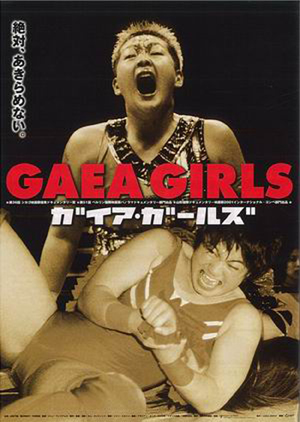
Gaea Girls (2000) — Those Aren’t Real Tears

Back in the early 1980s, Chigusa Nagayo and Lioness Asuka formed a professional wrestling tag-team known as The Crush Girls. Part of the second generation of Japanese professional wrestlers, the Crush Girls proved so impossibly popular that they changed the face of professional women’s wrestling and raised the bar for female wrestlers all over the world. Despite their immense popularity, the Crush Girls split up in 1989 when they reached the then-mandatory retirement age of 27. Six years later, Chigusa Nagayo came out of retirement to found Gaea Japan, an entirely new wrestling promotion in which she would also play out a long-standing grudge with her one-time partner Lioness Asuka. Kim Longinotto and Jano Williams’ Gaea Girls is a documentary filmed in and around the training facilities of Gaea Japan that looks at how aspiring female wrestlers cope not only with the traditionally male-dominated world of professional wrestling but also with Chigusa Nagayo’s ideas about parenting.

Continue reading →

Shinjuku Boys (1995) — Even When Words Fail

The Austrian philosopher Ludwig Wittgenstein once wrote that “The limits of my language mean the limits of my world”. What Wittgenstein actually meant remains a subject of philosophical debate but we can read his comment as a reflection upon the two-way relationship between our perception of the world and the ways in which we talk about it.

Intuitively, facts should always take precedence over language and whenever we encounter a fact that does not fit with our use of language, we should simply update our vocabulary to better reflect the facts on the ground. While there are certainly institutions and groups who try to educate people about ‘correct’ language use, the meaning of a word is always determined by the way it is most commonly used by a given population. What this means in practice is that while experts may be forever inventing language that is a better fit with current thinking about a particular phenomenon, having those new terms filter down into general usage is subject to the same structural biases as any other attempt at changing the way that people think.

The problem with the rigidity of our spoken language is that the vernacular often contains concepts and assumptions that are not only out of date but actively harmful. For example, if we define masculinity in terms of having a penis then someone who identifies as male despite not having a penis must simply be wrong about their gender. While there was a time when our culture was quite happy to make this type of judgement, our understanding of gender has now evolved to the point where terms like ‘male’ and ‘female’ are becoming increasingly hard to pin down.

The language of gender and sexuality has evolved with almost unprecedented speed over the last few decades and new conceptual iterations seems to generate more and more political heat as words are fought over by people with different needs and ideas. If the limits of our shared language mean the limits of our world then the battle to control the conceptual underpinnings of our language is also the battle to control our world.

Directed by Kim Longinotto and Jano Williams, Shinjuku Boys is a documentary about a group of people who were assigned female at birth but identify more closely with the male gender than the female. Made all the way back in 1995, I am sure that many of the terms used in this documentary are horrendously outdated but while Shinjuku Boys may struggle with its pronouns, it does show how people will continue to perform and negotiate their genders even when words fails them.


Continue reading →

REVIEW — Dreamcatcher (2015)

FilmJuice have my review of Kim Longinotto’s thoroughly excellent documentary Dreamcatcher.

As I say in my review, Kim Longinotto is one of the most criminally under-appreciated documentarians that Britain has ever produced. Her latest film follows the exploits of Brenda Myers-Powell, a former sex-worker who has set up an organisation designed to help people leave the sex trade. The activities of Dreamcatcher Foundation include handing out condoms on street corners and helping people to find beds in drug treatment programmes but also to reach out to people in schools and prisons who are at risk of falling into prostitution.

Aside from being incredibly moving and a really amazing documentary about the lives of America’s urban poor, Dreamcatcher does two really interesting and important things:

Firstly, it takes its cues from Brenda and talks about sex-work as a form of addiction. Brenda’s methods are not those of the politician, religious leader, or social worker but those of the recovering addict who talks about their experiences and encourages others to do the same:

Brenda’s attitude seems to be that she ‘was’ all of the women she encounters and so she can speak to them and help them to do whatever it is that they need to do in order to survive and live free. Brenda’s capacity for understanding is captured in a series of amazing interviews where she will ask a teenage girl or a sex worker whether they have done something and, despite the other person’s denial, she will talk about how it is okay to do what you need to do in order to survive. The power of these scenes lie in the facial expressions of the people Brenda talks to as while they are used to lying through their teeth to parents and authority figures, they cannot lie to Brenda because she knows exactly what they are going through. The most moving scene in the film is undoubtedly the moment in which Brenda gets a bunch of teenaged girls to talk openly about their histories of sexual violence for what seems to have been the first time ever. Longinotti captures not only the moment but also the sense of relief that comes from sharing and knowing that they are not alone.

I think there is probably an important book to be written about the language of addiction and how it has spread beyond the traditional confines of drink and drugs to encompass activities including sex and sex-work as well as food. Scarcely a month goes by without someone writing an article for the Guardian about the addictive nature of processed sugar and junk food.


Secondly, Dreamcatcher does for prostitution what The Wire did for the drugs trade. In other words, just as The Wire showed the drugs trade to be an amazingly complex social phenomenon whose tendrils had worked not only into local politics but also the school system, Dreamcatcher suggests that prostitution has its roots firmly embedded in the American family:

All the women in this film have stories about how they were abused as a child and how this abuse got them used to relationships with older men who would exploit their sexuality in increasingly aggressive and brutal ways. One of Brenda’s helpers is a former pimp named Homer and he explains how childhood abuse served to normalise not only under-age sex and the exchange of sex for money but also the use of violence to keep women under control. This vision of the sex trade as a system of exploitation is made particularly clear when Brenda talks to a young woman who grew up in California and got her start in the sex trade at the age of eight when she was picking up money and taking it back to the pimps.

The extent to which prostitution has perverted these women’s relationships is made particularly clear in a scene where a sex-worker takes a call from her baby’s father. Initially, the call seems a bit weird as she keeps calling him ‘baby-daddy’ but it then becomes clear that while the man is certainly her child’s father, he is also her pimp and so the role of ‘baby-daddy’ is reconfigured by the sex trade to include the sexual exploitation of women. This pattern plays itself out again and again throughout the film as women are never put onto the street by ‘pimps’ or ’employers’, it is always lovers and family members.


I simply cannot recommend this film enough, it’s an absolutely fantastic documentary that touches on many of the themes and ideas visited in David James’ The Interrupters and Werner Herzog’s Into the Abyss but I think it actually manages to do much better than either of those films. This is a great film and a great jumping-on point for anyone interested in discovering the work of one of Britain’s greatest living documentarians. Even the Q&A included on the DVD is amazing!

REVIEW – Effie Gray (2012)

FilmJuice have my review of Richard Laxton’s Effie Gray, a biopic dealing with the disastrous marriage between Euphemia ‘Effie’ Gray and the eminent Victorian art critic John Ruskin. Like many of the books, plays and films that have dealt with doomed marriage, Laxton’s film lays the blame squarely on Ruskin’s refusal to consummate the marriage while an ambitious script by the actress Emma Thompson tries to account for his reluctance in terms of Victorian society’s ambient sexism. This film has something of a troubled history as while it was completed over two years ago, two separate (and ultimately groundless) plagiarism cases prevented the film’s release. When the film did finally limp onto British cinema screens, it did so on the same weekend as Mike Leigh’s Mr. Turner (a film that also featured the couple) and without the support of Thompson who refused to do any publicity for the film despite both writing it and appearing in it. While it may be a bit gauche to speculate as to why Emma Thompson would refuse to do any publicity for a film she once considered an intensely personal project, I think it has something to do with the fact that Laxton really seems to struggle with the film’s feminist themes:

The real tragedy here is that while Thompson’s script may try to tell the story of a feminist icon, the man employed to turn that script into a film took his cues from John Ruskin and contented himself with a sexless doll.

The problem is that the script and the film are pulling in opposite directions. Things start off quite well as Thompson’s script and Laxton’s direction combine quite well to expose the everyday sexism of Victorian society. Unfortunately, when asked to turn this social analysis into a psychological explanation for Ruskin’s refusal to have sex with his wife, the film dithers and slithers and winds up not saying anything at all. The reason for this failure of characterisation is that while Laxton wanted to make a film about Ruskin, the script is actually about Gray and so it is quite content to voice a few ideas about Ruskin before moving onto the meat of the film: Effie’s experiences in a loveless marriage and how she found the agency required to take control of her own life. In fairness to Laxton, Thompson’s script really does not give Dakota Fanning a huge amount to work with but a director who was sensitive to Thompson’s aims would have realised that Effie’s character lay not so much in what she did and did not say but in how she felt while she was saying it. A sympathetic director would have encouraged Fanning to create an Effie Gray who was visibly constrained and ill-at-ease with the society she inhabited but instead we are given an Effie who is almost hypnotically passive… a beautiful china doll in need of nothing more than a good fuck and a house to keep.

As my score of 2 out of 5 would suggest, I did not enjoy Laxton’s Effie Gray but my lack of enjoyment stemmed more from my intense feelings of frustration at what an awesome film this could have been if either the script or the director had been allowed to take precedence:

  • A director sympathetic to Thompson’s script would have kept the focus on Effie and realised that the final act was actually the climax in a series of social confrontations that began on the day that Effie arrived at Ruskin’s family home. The film’s final act feels a lot like a thriller with Effie sneaking around to meet doctors and lawyers under the noses of her family and a sympathetic director might have taken this ending as a cue to turn Thompson’s script into a social thriller comparable to Wilkie Collins’ The Woman in White where an intelligent and ambitious young woman finds herself fighting for freedom against villainous men and matriarchs who are supported by a set of social attitudes that are designed to break women on the wheel and turn them into objects. All of those scenes in which Effie clashes with older women should have been tiny battles of wit rather than acts of one-sided oppression!
  • A screenwriter sympathetic to Laxton’s interest in Ruskin might have connected with the character’s humanity, taken his asexuality at face value and dealt with how it must have felt to be asexual when both your wife and your entire society expect you to be sexually active. If we do assume that Ruskin was asexual then Thompson’s suggestion that he was some kind of incestuous misogynist with a fondness for young girls is nothing short of monstrous. Even if a script didn’t assume that Ruskin was naturally asexual, it could still explore the links between his refusal to consummate his own marriage with his parents’ tendency to treat him as a child. Alternately, one could argue that Ruskin was simply an introverted and cerebral man who was far more comfortable treating love as an abstract concept than as a physical action.

So I guess what I am really saying is that while I found Ruskin and Gray’s marriage to be a really fascinating subject, I was not impressed by Thompson and Laxton’s take on it.

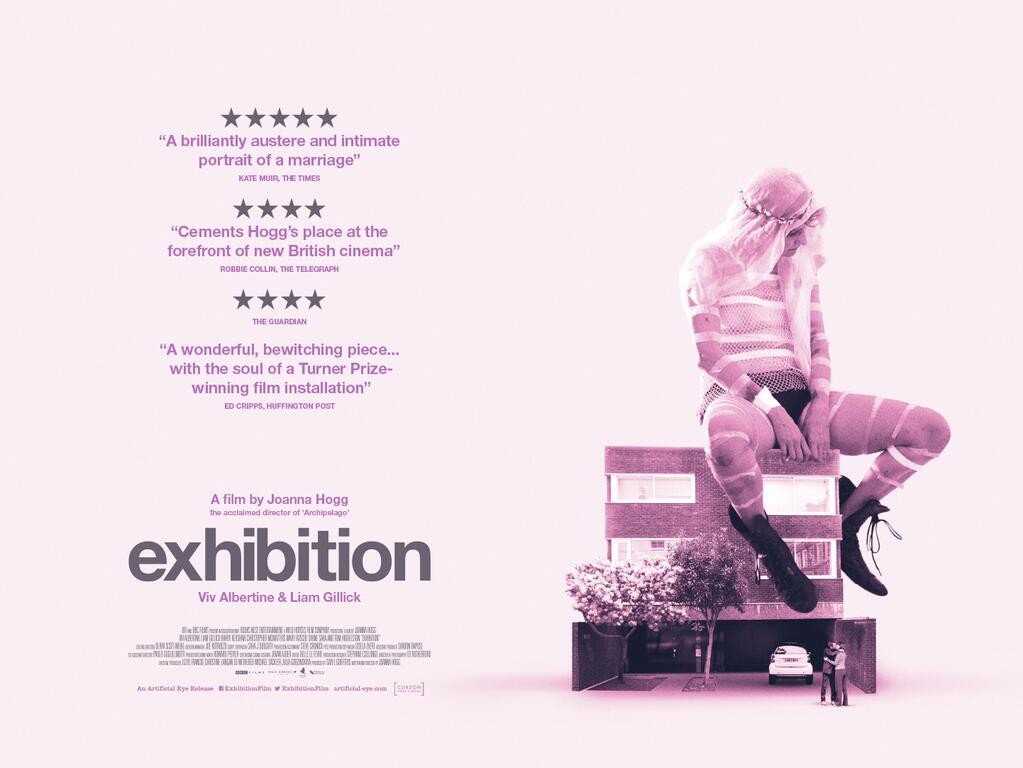
Exhibition (2013) – Little Boxes

Joanna Hogg is one of the most exciting film directors working in Britain today. A graduate of the National Film and Television School, Hogg spent the 1990s working in British television on series such as Casualty, London’s Burning and an Eastenders spin-off exploring the wartime exploits of a young Dot Cotton. While a decade behind the cameras of soap operas and disposable dramas does not usually herald the arrival of a major directing talent, it is worth remembering that British soap operas have a long history of social realism meaning that every year Hogg spent on Casualty and London’s Burning was a year in which she got better at observing people and the worlds they inhabit.

Hogg’s eye for social rituals and group dynamics was evident even in her debut feature Unrelated. The film revolves around a woman who joins her friends on holiday as an excuse to spend some time away from her partner. Upon arriving in Italy, the woman finds herself in a house that is already split down the middle along generational lines and decides to hang out with her friends’ hedonistic teenaged children rather than the people she came to visit. This yields a splendid holiday until a failed attempt at seduction sends the woman scurrying back to the grown-up side of the house and the grown-up life she left in Britain. While Unrelated is a recognisably British film about recognisably British characters who behave in a recognisably British way, the film’s treatment of its subject matter evokes European rather than British cinema. Aside from a southern climate and an interest in middle-aged sexuality that recalls works like Ozon’s Swimming Pool, Unrelated is defined by its emotional ambiguities and a fondness for long dialogue-free scenes and palate-cleansing landscape photography that are common in European cinema but almost entirely absent from British film.

Much like Unrelated, Hogg’s Archipelago is best understood as an attempt to explore the products of British social realism using the language of French art house drama. However, where Hogg’s first film seemed to go out of its way to retain such European topoi as sun-drenched holiday homes and illicit affairs, her second film is far more recognisably British thanks to its focus on wind-blasted landscapes and awkward family holidays. Shot on the isles of Scilly off the South-West coast of Cornwall, Archipelago features a pair of grown-up children who decide to go on holiday with their mother. The family’s unhappiness is manifest right from the start as disagreements escalate into arguments with a speed that suggests the presence of unaddressed problems. However, despite numerous elephants in the room, the family never sit down to discuss their feelings… they simply evade and deflect them by choosing to blow up over ridiculous things such as choice of bathroom and whether or not a piece of food has been properly cooked. Elegantly reserved when it comes to its characters’ actual inner lives, Archipelago is a magnificent study of the British middle-classes and how taboos surrounding direct confrontation and talking about one’s feelings have encouraged people to become emotionally self-contained. The film suggests that while this system of self-containment may be completely unreliable, it is supported by a cultural tolerance of passive-aggressive venting and the kind of extreme emotional projection that would probably be regarded as psychotic in a more emotionally-expansive culture. Like Unrelated, Archipelago explores these ideas in a quintessentially European manner by forcing the audience to observe only to then pull back and provide them with evocative imagery that will encourage them to draw their own conclusions about the things they have just been shown. This willingness to use European cinematic techniques to explore British emotional landscapes not only made for an incredibly fresh cinematic experience, it also served as a timely reminder of how staid, unadventurous and lacking in diversity European art house film can be.

Archipelago is not only a perfect fusion of British social realism and European cinematic vocabulary but also the completion of an experimental journey that began with Unrelated. This posed an interesting question: if Archipelago was everything that Unrelated wanted to be, where would their director go next?

Joanna Hogg’s third film Exhibition is also her most ambitious. Like its predecessors, the film uses a European cinematic vocabulary to explore the emotional dynamics of British middle-class life. However, whereas Unrelated and Archipelago both revolved around relatable characters who were really quite easy to understand, Exhibition concerns itself with a couple whose inner lives are so bizarre and complex that they can only be expressed artistically.

Continue reading →

REVIEW – Hockney (2014)

FilmJuice have my review of Randall Wright’s documentary Hockney.

I approached the film without knowing a huge amount about the work of David Hockney and I left in pretty much the exact same condition. Like a lot of documentaries produced these days, Hockney tries to convince us that its subject matter is worthy of our attention without engaging either with the subject matter itself or with the cultural context that allowed the creation of said subject matter. The result is a film content to display the work of David Hockney without really bothering to say anything about it. In lieu of commentary, the film provides a string of anecdotes that are intended to be amusing but actually come across as intensely patronising:

Wright tries to establish Hockney as someone who was considered eccentric even by the lofty standards of the 1960s London art scene. Allergic to anything that might resemble a broader context, the film draws on anecdotes that all seem to revolve around the fact that Hockney is a gay northerner who happens to dye his hair. Far from establishing Hockney as a rebellious artist, this suggests that the 1960s London art scene was full of patronising snobs who are still patting themselves on the back for giving house room to people from Bradford. Oh darlings… it was all so mad in the 1960s! We all had long hair and pretended to be friends with ghastly northern yobbos who dyed their hair!

On reflection, the film reminds me quite a bit of Sophie Fiennes’ film about Anselm Kiefer Over Your Cities Grass Will Grow as both films are content to let the art speak for itself. The problem is that whereas Kiefer’s art is a huge installation that has transformed an old silk factory into a mad alien landscape, Hockney’s art is a series of twee and colourful paintings of his friends. On a very basic level, Hockney’s art is not as well served by the cinematic medium as Kiefer’s and, on a more critical level, Fiennes’ wordless approach to Kiefer’s art emphasises its opaque and inscrutable nature whereas Wright’s attempt to juxtapose Hockney’s paintings with anecdotes about the artist only serves to make his work seem insubstantial and whimsical.


The Trip to Italy (2014) – Poo and Broken Glass

The longer a drama is allowed to run, the closer it comes to resembling a soap opera. The difference between these two forms is that while both are made from the relationships between fictional characters, dramas use those relationships as a means of articulating some deeper truth about the human condition. Soap operas are dramas that have been robbed of significance; they treat the relationships between fictional characters as ends in themselves.

As someone who has never entirely understood why I am supposed to become emotionally invested in the lives of people who do not exist, I am very sensitive to the difference between drama and soap opera and I am always wary of films and series that move from one form to another. An excellent example of the slide from drama to soap is the French procedural Spiral. When Spiral first aired in 2005, it was a tightly-written drama exploring how various aspects of the French legal system interact as part of an investigation and how incompetence, mendacity and institutional dysfunction can get in the way of justice. At the time, many people compared Spiral and to The Wire but where the two programmes part company is that while The Wire used its additional seasons to expand its critique of American society, Spiral lost interest in the real world: By the third season, the writers of Spiral had shifted their interest away from the French legal system towards the emotional lives of their characters. By the fourth season, the procedural elements were serving as little more than an excuse for characters to bicker, plot and occasionally jump into bed with each other. A fifth season of the programme has been produced and has begun to air and I see no reason why it shouldn’t continue indefinitely. Spiral’s viewers may have been drawn in by the critique of French society but it is their emotional investment in the characters that keeps them coming back. In the nine years since it first aired, Spiral has transitioned from a drama about the French legal system to a soap opera set in courthouses and police stations.

This process is also beginning to affect the on-going collaboration between director Michael Winterbottom and the comic actors Steve Coogan and Rob Brydon; a creative partnership that began by producing thought-provoking drama now traffics in smug, middle-class soap opera.

Continue reading →

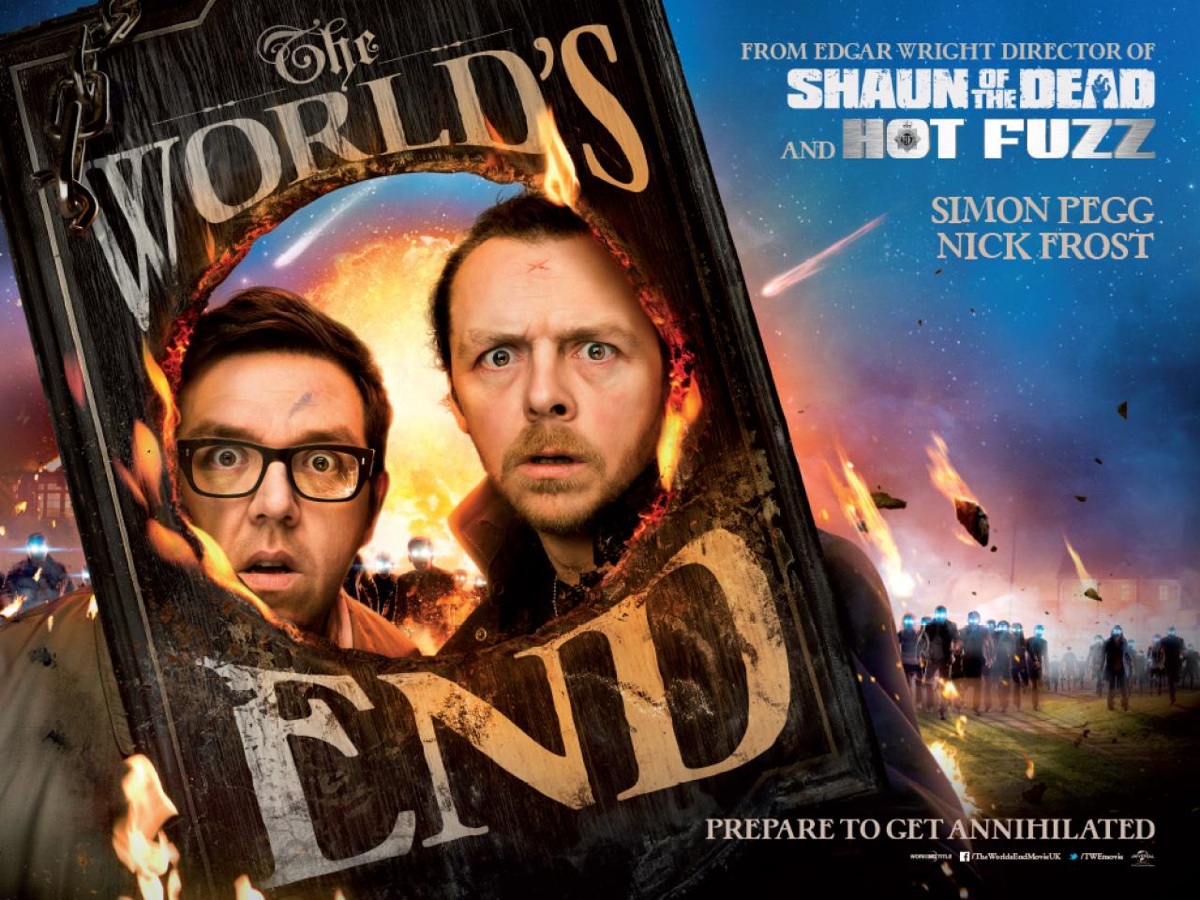
World’s End (2013) – Fuck Geek Culture for Making Me a Millionaire

The World’s End may be a shit film but at least it is full of bitterness and self-recrimination. The roots of that bitterness reach all the way back to the late 1990s when the writers of The World’s End first found success with a sitcom named Spaced.

This may be hard to believe but geek culture really wasn’t really that much of a thing before the late 90s. Sure… people enjoyed the films, books, comics and games that continue to provide geeks with a sense of common ground but mainstream culture rarely acknowledged that people (other than sports fans) were beginning to define themselves through their love of popular culture. Postmodernism was popularised throughout the 1990s but what drove that popularisation was not so much the death of cultural meta-narratives as the frisson of parental approval that came with every suggestion that a creator loved the same shitty pop culture as the rest of us. We often speak of constructing identities in terms of self-expression and self-acceptance but what really drives the adoption of a particular label is the recognition of others, particularly people in positions of authority. Simply stated, geek culture was not much of a thing until the late 1990s because advertisers and cultural creators rarely pandered directly to geeks and so rarely legitimised their identities.

Things began to change is the late 1990s when marketers noticed how devotion to a particular cultural product acted very much like devotion to a particular set of cultural values. Way back in ye olde black and whitey times, advertisers realised that if you associated a particular brand of pipe tobacco with values of manliness and respectability then people who valued manliness and respectability were more likely to buy the pipe tobacco. The success of films like Kevin Smith’s Clerks and Quentin Tarantino’s Pulp Fiction demonstrated that this transferral of affection also worked with popular culture; if a film makes a reference to some aspect of popular culture then the people emotionally invested in that aspect of popular culture are more likely to seek out and enjoy that film even if the subject of the film is entirely unrelated to the subject of the obsession. First broadcast in 1999, Spaced ruthlessly exploited these quirks in human psychology by dignifying geeks with their own slice of comedic social realism.


Continue reading →

REVIEW – If… (1968)

FilmJuice have my review of Lindsay Anderson’s story of public school rebellion If…

One of the things I most remember from my time attending press screenings is the extent to which a clever PR might ensure the good will of the critical community. At the lower end of the scale, a PR might turn up early and lay on the booze, thereby ensuring that critics went into the screening feeling appropriately jolly. Further up the scale, a PR with a bit of a budget might book a more upscale screening room and lay on proper food and drink. Once you get into the bigger budget films it is not unheard of for PRs to lay on entire meals and special events, particularly if they are trying to ensure that a film is well-reviewed by non-specialised but widely-read press such as women’s magazines. When the last James Bond film Skyfall was released to rapturous applause, I couldn’t help but imagine film critics being dosed up with vodka martinis and champagne. This type of shit shouldn’t impact on how well a film is received but it really, really does.

Another way of ensuring a warm reception by critics is to speak directly to the concerns and lived experience of the kind of people who tend to become critics. Why else would so many critically-praised novels involve middle-age intellectuals feeling a bit sad and having affairs with sexually generous young women? At its worst, this phenomenon can even lead to critics suggesting that the only books worth reading and films worth watching are the ones that speak directly to them; Isn’t it funny how inward looking films about middle-aged men tend to be seen as more serious and worthwhile than romantic comedies? Isn’t it funny that romantic comedies began to lose prestige and standing the instant they began to be marketed at women rather than men? Anderson’s If… is an undoubted beneficiary of this phenomenon as it is a film about intellectuals rebelling against their public school that was released at a time when practically every film critic in the country would have been a public school-educated intellectual.

I have a good deal of affection for If… and I can totally see why it proved so influential but, as someone who didn’t go to public school, I must say that this film simply does not speak to me. In fact, I think this is less a film about revolution than it is about the upper class finally getting fed up of pretending not to be selfish pricks:

It is easy to imagine Travis growing up to be a Richard Branson-type figure, a ruthless businessman who considers himself a rebel and an individualist because he wears his hair long and doesn’t even pretend to take an interest in the welfare of the poor. Far from being a politically progressive film, If… is a reminder that Capital has always been far more revolutionary than the left-wingers and trade unionists who sought to oppose it.

Maybe if Travis had shown some self-awareness about his position and privilege… Maybe if his rejection of the system had been on moral grounds… Maybe if Travis had wanted something more out of life than the ability to get drunk, wear his hair long and seduce women. Maybe then I might have been sympathetic to his rebellion. Maybe then I might have seen him as a revolutionary rather than a spoiled brat.