REVIEW – Breaking the Waves (1996)

FilmJuice have my review of Lars von Trier’s Palme D’Or-winning tragedy Breaking the Waves.

Breaking the Waves tells of a rather innocent young woman from an isolated Scottish religious community who decides to marry a man who is employed on one of the local oil rigs. At first, the couple (played by Emily Watson and Stellan Skarsgaard) seem perfectly matched as their sex life is nothing short of epic. So profound is the young woman’s passion for her husband that when he has to go back to the oil rig to work, she pines terribly. In fact, she pines so much that she prays for God to return her husband to her side. God appears to answer the young woman’s prayers when a hideous industrial accident paralyses her husband. Unfortunately, because the couple’s relationship is almost exclusively physical, the husband’s inability to have sex with his wife comes to represent a failure of their love and so he encourages her to have sex with other men.

Breaking the Waves is a film about faith. Bess uses her faith in God as a template for her relationship with Jan and because her relationship with God is one of blind, unquestioning and passionate submission, she does not have it in her to deny her heavily-medicated husband when he begins making perverse requests. Bess’s faith in God and Jan is so pronounced that when Jan’s condition deteriorates, she believes that it is because of her lack of faith and so she begins to seek out increasingly violent and degrading men with whom to have sex. The end of the film is gut-wrenching because it proves that Bess was right all along but it also leaves you wondering what kind of God/Husband would demand such blind and self-destructive obedience from those they claim to love?

I very much enjoyed Breaking the Waves and — incredibly rarely for me — I actually teared up at the end of it but my enjoyment of the film in no way diminishes the fact that I regard it as somewhat problematic.

We would all like to believe that art house film provides a viable alternative to the generic and politically dubious output of Hollywood but the truth is that European art film has its own set of well-rehearsed and problematic narratives. Narratives favoured simply by virtue of the fact that most of the people making European art house films come from a particular gender, a particular class and a particular ethnicity. One of the more oppressively ugly stock narratives in art house film involves a beautiful and engaging young woman who winds up getting beaten, humiliated, raped and forced into sex work so that the pathos of her downfall may help the director point an accusing finger at the horrors of the world. Breaking the Waves uses this narrative as does Robert Bresson’s Mouchette, Bigas Lunas’ The Ages of Lulu and it also resurfaces (albeit in a more critical and self-aware form) in films like Kenji Mizoguchi’s Ugetsu Monogatari and Francois Ozon’s Jeune et Jolie. How many times do we have to revisit this narrative before people start to realise that it’s rather long in the tooth? How frequently do you see a film in which a man’s descent into sex work mirrors their existential collapse? How many films are there in which a female character sees the horror of the world and responds by becoming a cold-eyed murderer or ruthless business woman? As I say in my review, Breaking the Waves is a brilliantly made and deeply affecting film but the reason it works so well is that there have been literally dozens of films made using the exact same storyline.

Having re-watched Antichrist since watching Breaking the Waves, I am struck by how many of von Trier’s works seem to walk the line between casual prejudice and critical self-analysis. Indeed, many critics of Antichrist accused it of being profoundly misogynistic as the plot revolves around a woman who goes insane after internalising some misogynistic texts she had been studying as part of a PhD. I certainly agree that Antichrist (much like Breaking the Waves) is in dialogue with a western tradition of misogynistic attitudes towards women but both films make it quite clear that misogyny enters the world of the film through the actions of patriarchal men who coerce their wives into acting out misogynistic  life scripts (the deranged screeching harpy in Antichrist and the saintly victim in Breaking the Waves).

It is always tempting to invoke authorial intent in order to collapse the wave function and deposit von Trier’s work on one side or another of the fence but what keeps me returning to his work is precisely this ambiguity, his recognition that horrible attitudes lie buried just below the surface and that it is often incredibly difficult to work out whether one is doing the right thing or perpetuating blind privilege and prejudice. I have long been of the opinion that the art house film scene needs a groundswell of popular feminist criticism to challenge the out-dated attitudes and tropes that are blindly reproduced in film after film but I genuinely have no idea what the social justice movement would make of a filmmaker like von Trier.
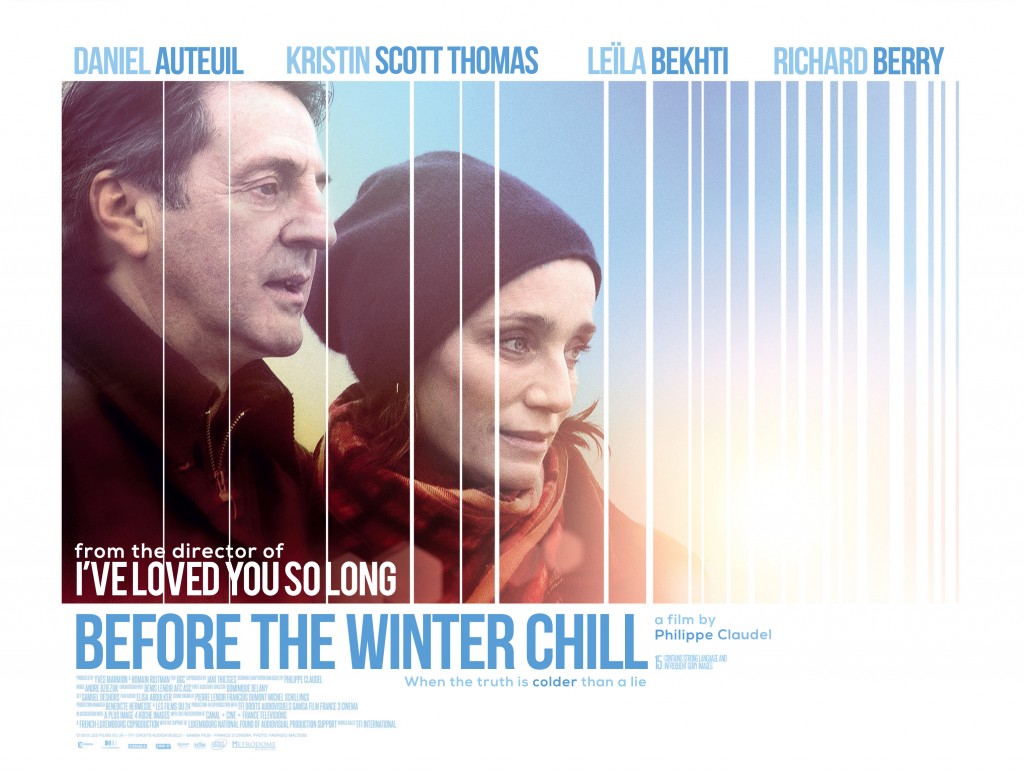
 

REVIEW – Before the Winter Chill (2013)

One of the first films I reviewed when I started this blog was Philippe Claudel’s debut I Have Loved You So Long, a beautifully made but cynically constructed film that skilfully leads you up the garden path before taunting you for having the temerity to set foot in someone’s garden. Like many of the works I value most, I adore and hate I Have Loved You So Long in almost equal measure: I adore it because I admire its courageous choice of subject matter (a woman who murdered her own child) and the skill with which Claudel guides us into a very specific emotional state.  I hate it because Claudel would rather get one over on his audience than use his skill to set them free with a fresh idea or perspective. I have reviewed hundreds of films in the years since I first saw I Have Loved You So Long and yet Claudel’s betrayal has always stayed with me… I am not an academic critic and I do not approach the culture I write about through a fixed ideology but one thing I believe is that great works encourage the audience to make their own choices and their own interpretations.

Given that I have something of a history with Claudel’s films, I jumped at the chance to write about his latest work Before the Winter Chill for FilmJuice.

Before the Winter Chill is one of those incredibly grown-up films that French cinema keeps quietly churning out while the English-speaking world gorges itself on films aimed at children. Set in contemporary France, the film revolves around an aging neurosurgeon (Daniel Auteuil) who has drifted through life without asking himself too many questions. As I explain in my review, the film is filled with pastoral images in which only his wife Lucie (Kristin Scott Thomas) is seen to be working. Indeed, the gap between the surgeon’s indolence and his wife’s incessant toil provides the pastoral setting (a vast modernist house with floor-to-ceiling windows that make the garden feel like part of the house) with its own emotional counter-force. Even as the film bends over backwards to establish the surgeon as an intelligent and sensitive man, it is abundantly clear that something has to give… there is too much unhappiness in every sour comment and petulant gaze. The shock to the system comes in the form of an attractive young woman who seems to be either in love with the surgeon, stalking him or quite possibly both. However, the film keeps the young woman’s motivations at arm’s length and encourages us to stretch our empathic muscles:

The film’s central mystery is a beautiful art student named Lou who seems to be very taken with Paul. Forced to assume Paul’s viewpoint, the audience is asked to keep guessing about Lou’s motivations; in one scene she is a young woman attracted to an older married man, then she is a stalker, next she is gravely disturbed and in need of help. All of these versions of Lou seem to exist in Paul’s head at the same time and his need to ‘solve’ the puzzle of Lou encourages him to spend time with her in a way that only serves to enrage his family and expose the tensions between them. While the film may begin by asking us to identify with Paul and ask why everyone is so grumpy, the film ends by asking us to identify with Lucie and ask: Why didn’t he put that much effort into making sense of the people who love him? Why did he open up to a peculiar stranger but keep everyone else at arm’s distance? How could he ask so much and give so little?

I have quite a strong critical read on this film but, unusually for me, I feel no great desire to share it with the world. As I explain in my review, Before the Winter Chill is one of those films that encourages speculation without providing sufficient clues as to why the various characters act in the way they do. People who are averse to spoilers want to preserve the sanctity of the plot, what concerns me is that by presenting you with a strong read, I would be denying you the pleasure of resolving the film’s ambiguities in your own unique way.

Part of what makes this film so satisfying is that it shows quite how far Claudel has developed as an artist. I Have Loved You So Long was an incredibly impressive debut but it was also intensely controlling as Claudel beat his audience over the head with very specific sets of emotions. Before the Winter Chill is no less skillfully made, Claudel’s use of music, acting and cinematography continue are still absolutely masterful. The difference is that today’s Claudel is comfortable with ambiguity and the audience’s right to resolve that ambiguity in a manner that works for them.

REVIEW – The Informant (2013)

After something of a break, FilmJuice have my review of Julien LeClercq’s The Informant (a.k.a. Gibraltar), from which I expected a lot but received surprisingly little.

Written by the same person as the excellent A Prophet and the epic Mesrine, The Informant concerns itself with a Frenchman living on Gibraltar who gets sucked into a world of smuggling and espionage in which everyone lies, everyone betrays and most of the smart people have protection from at least one set of customs officials. Unlike many recent films about the world of espionage, The Informant doesn’t perpetuate the now ubiquitous  Thatcherite saw that state power is necessarily evil and corrupt, instead it takes a much more credible tack, which is to suggest that people in the intelligence service are ambitious, incompetent and under so much pressure to deliver results that they invariably cut corners that impact upon people’s lives. Indeed, The Informant is actually based upon the real life story of a Frenchman named Marc Flevet who served as an informant for the French customs only to wind up rotting in Canadian and Spanish jails when French customs decided to disavow his existence for fear of political and diplomatic scandal. The fact that the film is based upon a real life story of government intrigue and ethical shabbiness should have made it a natural companion piece to Mathieu Kassovitz’s excellent Rebellion (a.k.a. L’Ordre et La Morale), which described the politically-motivated slaughter of New Caledonian activists by a French government desperate to look tough in the run up to elections. However, despite the fact that The Informant had the potential to be a proper espionage thriller with a potent political message, Leclerq’s film comes across as little more than an under-written drama:


This plot synopsis makes the film sound significantly more interesting than it actually is. The principle problem is one of emphasis: Had Leclerq rather than allowing the needs of his story to dictate mood and pacing, Leclerq takes his cues from the human drama meaning that a film all about international smuggling and corrupt official seems quiet and plodding rather than tense and dynamic. Leclerq lavishes time and attention on his actors who explore their characters to the full only to realise that there’s not really enough human drama in the script to support nearly two hours of film.


This rather reminded me of Kieran Darcy-Smith’s surprisingly well-received Australian drama Wish You Were Here, which made the identical mistake of taking a script structured like a thriller and using it to make a film whose pacing and emphasis were more consistent with that of a traditional drama. Thinking about it a bit more, I wounder whether this trend might not have something to do with the critical success of works like Top of the Lake and Polisse, which take their cues from TV in that they occupy the space traditionally associated with detective stories but deploy the narrative tools of TV drama. The key difference between The Informant and Top of the Lake is that while both slow the pacing and focus on the characters, Top of the Lake’s characters are substantial enough to support that level of attention while those of the The Informant are now. This also explains why I gave up on the universally-popular Breaking Bad; I enjoyed the early seasons that focused on the plot of a science teacher learning to become a drug dealer but at some point in the third season, a decision was made to slow down the pace and focus on the characters despite the fact that the characters were really not interesting enough to support hour-after-hour of detailed examination.

REVIEW – We Are The Best! (2013)

FilmJuice have my review of Lukas Moodysson’s thoroughly wonderful We Are The Best! Set in 1980s Sweden, the film is a densely-written and realised drama about a group of diffident teenaged girls who spin their feelings of alienation and abandonment into friendship and punk rock. Based on a graphic novel by Coco Moodysson, We Are The Best! is one of those films that renews your trust in the fundamental precepts of world cinema:

The most striking thing about this film is its astonishing density. Not content with providing his audience with a whistle-stop tour of the 1980s punk scene and producing three exquisitely drawn characters, Moodysson unpacks his characters’ motivations and uses them to critique a society that sees little of value in teenaged girls. The film is littered with beautifully quiet scenes in which the girls come up against sexist attitudes and it is in these moments that we are reminded of the central aesthetic principle underlying world cinema: The depth and breadth of human experience is not exhausted by stories about heroic tough guys and mildly depressed middle-class people, so why should cinema limit itself to those types of stories?

Re-watching the film and considering my reaction to it, I was struck by the difference between the vision of Scandinavia presented in this film and the vision of Scandinavia that is presented in the so-called Nordic Noir TV series that are currently proving popular with the British chattering classes. One of the reasons why these TV series are proving so popular is that austerity has pushed British political culture further and further towards the nightmarish individualism of American political culture and the social democracies of Northern Europe are increasingly becoming totemic symbols of what can be achieved when social institutions remain under popular control. Who wouldn’t want to live in a place filled with beautiful people, minimalist interior design and supremely competent police that drive vintage Porsches and wear cooky jumpers? In fact, going by the TV series, Scandinavia is a place entirely devoid of fat or brown people! Despite believing that the state is a more effective and humane means of government than the market, I welcome any film and TV series that critiques the creation of a racially-problematic dreamworld.

We Are The Best! is set in a sports-obsessed Swedish suburb similar to that of Tomas Alfredson’s peerless gothic romance Let The Right One In. In both films, the parents are supremely liberal and the state provides housing and schooling that ensures that no child need ever feel the sting of hunger or the lash of want. 1980s Sweden should have been a paradise on Earth but society’s largesse came an inevitable price tag: Silence. The children in these films are showered with well-meaning attention but a refusal to follow the script and enjoy society’s riches means that they are forced to the margins and denied a vocabulary with which to express their discontent. This is neither Africa nor America… this is socialist Sweden and what could a bunch of middle-class kids possibly have to complain about? While the protagonist of Let The Right One wound up expressing his alienation through an unusual relationship with an intersexual vampire, the protagonists of We Are The Best! reach for a lexicon that is at once more mundane and more universally accessible: Punk rock.

REVIEW – Thunderbolt and Lightfoot (1974)

FilmJuice have my review of Michael Cimino’s Thunderbolt and Lightfoot starring Clint Eastwood and Jeff Bridges.

No director has enjoyed a more artfully ballistic rise and fall than Michael Cimino. A film school graduate who cut his teeth on Madison Avenue before working as a screenwriter, Cimino’s first directorial pitch meeting was for an adaptation of Ayn Rand’s The Fountainhead, a bloated and self-righteous fantasia in which a ruggedly individualistic architect struggles against the ignorance of lesser humans in the pursuit of his vision. Knocked back amidst fears that the production would result in the construction of a real-life skyscraper, Cimino demurred and assumed the role of the company man… an auteur but one who could give the studios what they wanted. His first film was Thunderbolt and Lightfoot, an amiable Clint Eastwood caper picture that borrows extensively from the New Hollywood bag of tricks without ever really understanding why those tricks were used in the first place.

Hugely successful, the film earned Cimino just enough rope to produce a film as bloated and self-righteous as The Deer Hunter. The Deer Hunter is a complex film that does a number of things very well and a number of things incredibly poorly but while the film’s ability to voice then-prevalent American attitudes to the Vietnam War was enough to win it a lorry load of Oscars at the time, its connection to a now abandoned cultural moment no longer inspires forgiveness in the face of its racism, fascism and self-indulgent running time.

The money and awards garnered by The Deer Hunter convinced the suits to give Michael Cimino a free-reign on his next film and Cimino responded to this increased responsibility by producing a film so expensive and so relentlessly terrible that it destroyed a Hollywood studio that had been founded by Charlie Chaplin, Mary Pickford, Douglas Fairbanks Jr. and D.W. Griffith. This failure not only ensured that Cimino would spend the rest of his career as a third-string director, it also inspired the studios to re-assert themselves and put an end to the creating freedoms that had brought about the last Golden Age of American film.

Watching Thunderbolt and Lightfoot I was struck by how easy it is to blame Heaven’s Gate and Cimino for a problem with much deeper roots:

An approach to filmmaking that began by capturing the ambiguities of the public mind and encouraging people to think for themselves had ossified into a set of tropes and techniques that could be applied to even the slightest of traditional films. The sad truth about New Hollywood is that once the initial creative energy was spent, the movement struggled to renew itself and so grew decadent. Michael Cimino’s Thunderbolt and Lightfoot is what happens when decadent self-indulgence and pastiche get mistaken for art.

Out this week and as forgettable as any film produced by mid-70s Hollywood.

REVIEW – The Armstrong Lie (2013)

FilmJuice have my review of Alex Gibney’s sports documentary The Armstrong Lie.

I went into this film with quite a good impression of Gibney as a filmmaker. I loved his award-winning Taxi to the Dark Side about the use of torture in the Iraq war and his Enron: The Smartest Guys in the Room about the myriad ways in which elements of American government, business and media made the collapse of Enron possible. I love those films because Gibney takes a couple of big, explosive news stories and proceeds to do precisely the kind of stuff that the media reporting the stories refused to do: Explain events by embedding them in a broader cultural and sociopolitical context. When The Armstrong Lie applies this methodology to the world of professional cycling, the film is fascinating… the problem is that Gibney keeps allowing Armstrong himself to get in the way:

The problem with this film is that Armstrong’s story is not interesting enough to sustain an entire film. At the end of the day, Armstrong was an ambitious and aggressive man who did everything in his power to win, including cheat. His history of testicular cancer along with his deprived childhood may well account for his will to victory but anyone who looks at the amount of money he made and the level of fame he reached should be able to work out why he cheated and why he continued lying about it until he was eventually caught. Like most sportsmen, Armstrong does not appear to be imbued with a profound inner life and so any attempt to tell his personal story will inevitably come across as being rather dull and predictable

Lance Armstrong’s story should by now be familiar to anyone who is not living in a cave on Mars with their fingers crammed in their ears. Gibney originally set out to make a film about Armstrong’s return to the sport in 2009 and his claims to be running the race ‘clean’ for the first time since his return after testicular cancer. Mercifully, this film collapsed when it became obvious that Armstrong was still cheating and planning on using Gibney to help repair his reputation. The collapse of this earlier project forced Gibney to make a more interesting film as his desire to understand Armstrong’s motivations forced him to look into the culture of a sport that had effectively been sanctioning secret doping for decades. At its best, The Armstrong Lie really connects with the idea that Armstrong succeeded simply because he was a more talented and organised cheat than anyone else in cycling at the time. The problem is that, rather than focusing upon what made Armstrong such an effective cheat, Gibney keeps getting distracted by questions about Armstrong’s motivations and mental state. This proves incredibly frustrating as the whole point of the film is that Armstrong was always a wheel in a much bigger machine who managed to protect the machine by attracting all the attention to a single cog.

The film is filled with footage of journalists and sporting officials trying to hold Armstrong to account but they never get close to him. Every time someone asks about doping, Armstrong puts on a sad face, mentions his cancer as well as the work he did for cancer charities and moves the debate away from whether or not he cheated to the more tricky question of whether or not a journalist or a sporting official have the right to persecute a cancer survivor who raises millions of dollars for other cancer survivors. Indeed, Gibney completely misses the fact that Armstrong’s 2009 Tour de France saw him refusing to answer questions from anyone other than a  disgrace former team-mate who had reinvented himself as a sports presenter. Even if such a man did manage to hold Armstrong to account with an awkward question, Armstrong could simply paint the journalist as a bitter hypocrite and thereby shift the discussion away from whether or not he cheated and towards the far more comfortable question of whether or not it was appropriate to even discuss that possibility.

Armstrong was a brilliant cheat because he managed to protect not only himself but his entire sport from serious scrutiny. He did this by magically transforming all questions about drugs in cycling into questions about whether or not it was appropriate to question the honesty of a cancer survivor and charity worker.

The question of how Armstrong managed this trick is actually very similar to the question of how a vicious paedophile like Jimmy Saville could not only escape prosecution but also enjoy a successful career in show-business. The trick that both Saville and Armstrong pulled is that they managed to position themselves so close to a series of institutions that it effectively became impossible to challenge the individual without also challenging the institutions they stood next to. If this wasn’t bad enough, the relationship between the criminals and the institutions was so close that the institutions wound up with a vested interest in defending the criminal who was using them as cover. How could the BBC, the Royal Family or the various charities he supported distance themselves from Jimmy Saville without admitting their close ties to a paedophile? How could the Tour de France distance itself from Lance Armstrong without admitting that it was their culture of rules-bending that allowed him to rise to prominence in the first place?


REVIEW – Boomerang! (1947)

FilmJuice have my review of Elia Kazan’s impressively crunchy but politically ambivalent legal drama Boomerang!

Set in what the film goes out of its way to refer to as a typical town from the American mid-west, Boomerang! begins exploring the political landscape of a small town on the move. We are introduced to the well-meaning reformers who kicked out the ‘machine politicians’ in order to make their home town a better place and how these patrician figures relate to the wider community through institutions such as the local church. There’s even a nice scene where a planning committee is shown and despite the committee having a woman for a chairperson, it’s pretty clear that the real person in charge is the local priest. Given the extent to which the various power-groups rely on each other to stay in power, it is hardly surprising that when the local priest is inexplicably gunned down, the political scene undergoes a crisis with politicians demanding results while newspapers and rival political parties sharpen their knives. The pressure is so great that the police wind up taking shortcuts, arresting everyone in sight and effectively torturing someone into signing a confession.All of this social realism is beautifully realised but unlike similar endeavours such as David Simon’s The Wire, the film does not end with a call for revolution or the liberal conclusion that everything is fucked. Instead, the film seems to conclude that the system is okay because a single corrupt politicians wound up doing the right thing whilst angling to be made governor. This makes for a denouement that is as dramatically unsatisfying as it is confounding of genre expectations:

There is a tendency in American popular culture to treat the legal process as a moral crucible. Well-meaning bourgeois films like My Cousin Vinny and 12 Angry Men suggest that all of humanity’s moral impurities can be boiled away by the system while more politically radical films such as JFK and Amistad draw attention to the failings of the legal system as a way of demonstrating an urgent need for reform.

Having thought about it a bit more, I am struck by the suspicion that treating courtrooms as moral crucibles is a singularly American affectation. America is a country founded by lawyers as well as run by a political class mostly comprising lawyers and so it is hardly surprising that American popular culture has come to believe that court is the place where justice and truth are imposed upon the world. Even comparatively cynical legal dramas such as The Good Wife and Damages present corruption and inequality as incidental rather than systemic problems meaning that they can be defeated by a lawyer who is both talented and righteous. Compare this to a drama such as the French series Engrenages where the French legal system is presented as universally corrupt or the venerable Rumpole of the Bailey, which depicted the British legal system as little more than a playground for ambitious scions of the establishment.

Another interesting question is the extent to which these legal programmes have shaped the minds of the people who viewed them. Children subjected to endless police dramas might be likely to see justice as something meted out by the police just as children trained to see the world through the eyes of the Good Wife would doubtless come to see lawyers as being in the business of keeping the system in line and ensuring that it continues to deliver justice. One of the reasons why a flawed and frankly preposterous programme like The West Wing is well remembered is that it suggested that it was the job of the state to impose justice on the world, which is rather unfashionable in an age where most politicians see their jobs as being all about waging war, locking up prisoners and outsourcing everything to the private sector. An interesting tangent to this issue is the way that American superhero comics explain their protagonists’ capacity to do good.

It used to be that superheroes were frequently patrician figures who used their personal fortunes to fund both their crime-fighting activities and a variety of different charitable works. Thus, Bruce Wayne funded Batman as well as the Wayne Foundation just as Professor Charles Xavier funded both the X-Men and Xavier’s School for Gifted Youngsters. While these characters endure, the nature of their financial backing has significantly changed. For example, there was no talk in the 1960s Batman TV series of Bruce Wayne being an industrialist but now it is impossible to think of Batman without thinking of Wayne Enterprises and the incorporation of Batman that took place during Grant Morrison’s extended run on the comic. That’s a pretty substantial message to send to kids: Not only will justice come at the hands of a masked vigilante but that vigilante will be a franchised brand that is owned by a multinational corporation. This idea that only corporations can deliver justice has also leached into the X-Men as more recent X-Men comics cast Charles Xavier as founder of the X-Corporation which funds the X-Men in much the same way as Tony Stark’s Stark Industries funds the Avengers and many of the lower-level supers that inhabit the Marvel Universe.

An interesting counter-point to this drive to incorporation is the group known as Stormwatch. Created as part of the Wildstorm universe, Stormwatch were funded and controlled by the United Nations. However, as time progressed (as Wildstorm comics were purchased by DC) these links to publicly-minded NGOs were put under dramatic pressure as writer after writer chose to depict the UN as a bureaucracy that was as incompetent as it was corrupt. One of the first things to happen in The Authority is that the heroes severed all ties with Stormwatch and took it upon themselves to impose their own ideas of justice on a series of corrupt and incompetent human governments. Somewhat tellingly, the cinematic Avengers began life under the control of the government agency known as SHIELD but Captain America: Winter Soldier revealed SHIELD to be corrupt, thereby setting the stage for Stark Enterprises to step in and provide the group with funding.

On the one hand, this is clearly nothing more than aggressive right-wing propaganda as corporations are effectively using corporate-owned intellectual property to train children to believe that all governments are corrupt and only Capital can save them. However, on the other hand, this is an excellent example of the narrowing of the imagination associated with late capitalism: We are so wedded to the capitalist system that even escapist fluff struggles to portray a world in which only people with corporate backing can hope to make a difference.

REVIEW – Wish You Were Here (2012)

wishyouwerehereFilmJuice has my review of Kieran Darcy-Smith’s Wish You Were Here, an Australian mystery/drama that is not to be confused with David Leland’s oddball British tragedy of the same name.

Set between Australia and Cambodia, Wish You Were Here is a great-looking film that is hamstrung by its director’s self-indulgence and borderline racism. The plot revolves around a pair of Australian couples who visit Cambodia and have a great old time until one of the group disappears. Understandably distraught, the remaining holiday makers limp back home and begin worrying about the disappearance of their friend and the fact that reporting his disappearance to the authorities might shine a light not only on their illegal activities but also their dysfunctional relationships. I say that the film is borderline racist as it falls into the familiar trap of using a non-white culture as backdrop for the breakdown of white middle-class lives. Colourful marketplaces, yay! Maimed beggars and brown dudes with machine guns, boo!

However, more interesting than Darcy-Smith’s use of lazy racist stereotypes is his failure to fuse the mystery and kitchen sink drama genres:

Darcy-Smith’s mistake lies in a fundamental misunderstanding of the differences between mysteries and dramas: The focus of a mystery is on leading the audience through a particular narrative while the focus of a drama is on unravelling the complexities of character. While psychological mysteries can sustain a hybridisation of the two genres, Wish You Were Here is ultimately a story about a missing tourist and not an exploration of why the characters are the way that they are. As you would expect from a plot structured around a missing person narrative, the characters only have as much depth as that central mystery requires meaning that while Darcy-Smith gives his actors vast amounts of time in which to explore their characters, the characters they are exploring are neither particularly deep nor particularly interesting. If Darcy-Smith wanted to direct a character-based drama then he should have written a script about character and not about an extraneous mystery. In a way, it’s a bit like turning up at the cinema to watch Avengers 2 only to discover that the director has decided to focus on the inner life of the bloke who drives the aircraft carrier. There’s nothing wrong with making a film about the bloke who drives the aircraft carrier but if you do then at least go to the trouble of working from a script that explores the character’s background and how they got recruited into SHIELD. Don’t just turn on the camera, leave them emote and expect the audience to be as fascinated by the results as the people doing the acting! That would make for a dull Avengers 2 and it certainly makes for a dull Wish You Were Here.

It is interesting that positive reviews of this film tend to point to the central performances of Joel Edgerton and Felicity Price as while both do well and are accorded a good deal of time and space, neither character is particularly complex or engaging. They’re just vaguely unhappy middle-class people who can’t talk about their problems. In truth, I’m not convinced that either performance was really all that worthy of commentary, though I do think that Darcy-Smith made their performances the focus of the film.

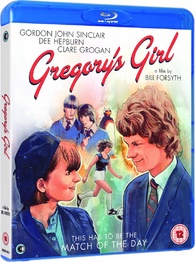
REVIEW – Gregory’s Girl (1981)

GGFilmJuice have my review of Bill Forsyth’s unimpeachably wonderful Romantic Comedy Gregory’s Girl.

I have seen Gregory’s Girl a number of times and each time I return to it, I am struck by another wonderful little moment. Set in urban Scotland in the early 1980s, the film takes place in a surprisingly well-mannered state school peopled with a variety of wonderful and colourful characters including the passionate chef, the diminutive football coach, the furtively light hearted head master and, of course, the charmingly naive Gregory. Tall and somewhat gangly, Gregory loses his place on the football team to a particularly athletic young woman:

One of the most striking things about Gregory’s Girl is the thoroughly progressive manner in which Forsyth handles Gregory’s growing obsession with Dorothy. These days, even relatively benign high school movies such as Easy A and Mean Girls go out of their way to sexualise their young female characters in a way that not only turns the audience into voyeurs but also speaks to Hollywood’s lack of confidence in an audience’s ability to empathise with female characters. A remade Gregory’s Girl would linger on Dorothy’s shorts and marvel at her thighs but Forsyth uses Dorothy’s athletic prowess as little more than the distinguishing characteristic that brings her to Gregory’s attention. Before Dorothy, Gregory viewed women as fantasy objects but losing his place on the football team to a girl means that he is suddenly able to relate to that girl as a real person and so falls hopelessly in love with her.

The reason I stress the important of the supporting characters is that Forsyth makes wonderful use of them as a means of providing a sense of emotional scale to what Gregory is undergoing. For example, the film opens with Gregory and his mates peeping at a nurse getting undressed but while Gregory’s realisation that girls can play football allows him to realise that women are people rather than sex objects, two of Gregory’s friends remain stuck in a state of adolescent sexuality and so spend the entire film talking about Caracas where the women reportedly outnumber the men. Also wonderful is the way that the film’s female characters usher Gregory into adulthood by urging him first to look after himself and then to realise that there are plenty of women in the world who are people despite the fact that they do not play football. Without the people around him, Gregory would not be anywhere near as memorable a character. Without the people around him, Gregory would have struggled to grow up.

REVIEW – The Hobbit: The Desolation of Smaug (2013)

TDoSFilmJuice have my review of Peter Jackson’s The Hobbit: The Desolation of Smaug, a film that rivals Iron Man 2 and Man of Steel for the title of Worst Film Ever Made.

Peter Jackson is a terrible loss to the special effects profession and a terrible addition to that of professional film direction. Right from the start, his films have been filled with technical excellence and entirely devoid of artistic merit. The flaw in Jackson’s approach to direction is most evident when you consider his adaptations of existing works:Regardless of whether we are talking about Lord of the Rings, King Kong or The Lovely Bones, the involvement of Peter Jackson means that the resulting film will invariably be worse than the source material.

  • King Kong took a very simple and elegant story and expanded it into a 187 minute-long monstrosity in which the elegance and drama of the original were entirely lost.
  • Lord of the Rings bent over backwards to put as much of the books on screen as possible but whenever Jackson was called upon to make an interpretative leap, his interpretations were invariably less interesting and more prosaic than those of conventional understanding.
  • The Lovely Bones made the most of Jackson’s mastery of visual effects to create an impressive vision of the afterlife but Jackson’s interpretation of the book mislaid the original horror and settled instead for a jarring combination of brutal violence and horrific sentimentality.

Jackson’s interpretation of The Hobbit is plagued by these exact same mistakes:

  • A short children’s book has been expanded into three over-long films thanks to tedious CGI action sequences that unbalance the plot and submerge the original drama.
  • Every time that Jackson is called upon to make an interpretative leap, his interpretations tend to be less interesting, more prosaic and prone to moving the film into the realm of fantasy cliche.
  • Having decided to transform a whimsical children’s story into a portentous epic, Jackson struggles with tone and so veers between horrific violence, grinding sentimentality and childish comedy.

My review of The Hobbit: The Desolation of Smaug focuses on two particular areas: The paucity of the writing and the intense ugliness of the visuals.

Of the writing I say:

Given that The Desolation of Smaug contains much less of The Hobbit than its predecessor, the joins between source and additional materials are far less noticeable. However, while this frees us from the first film’s bizarre tone changes, it does mean that the film comes to be dominated by an array of characters and sub-plots who owe a good deal less to Tolkien’s brilliance than they do to Peter Jackson’s fondness for fantasy clichés. The additional plotlines are not only thin and crippled with incredibly cheesy dialogue, they also feature a grand total of three lank-haired white dudes with soulful eyes, tragic backgrounds and a need for redemption when even one would have been too many. With so many unconnected characters and plotlines to follow, the film haemorrhages thematic focus and dramatic energy and so keeps relying on orc attacks to jump-start the plot and keep things moving.

Of the look of the film I say:

The root of the problem lies in the first film’s revelation that traditional sets, effects and make-up tend to look absolutely terrible when shot at 48 frames-per-second. In an effort to stop his film from looking like something shot between takes with an old-fashioned camcorder, Jackson has taken to replacing sets and actors with CGI backgrounds and figures. When a scene cannot be done entirely in CGI, Jackson limits himself to superimposing CGI over the sets and actors in an effort to make them look less real and so provide a more even distribution of unreality. What this means in practice is that all the actors wind up with enormous bulbous noses but at least it doesn’t look like they’re being interviewed on the set. The real problem occurs when Jackson switches entirely to CGI and creates the kinds of figures and landscapes that only exist in videogames. Lacking the weight and reality of actors and practical effects, the CGI character bounce around the screen in a manner all to reminiscent of the Legolas sequences in the original trilogy and the monster fights in Jackson’s laughable remake of King Kong. Taken on their own and in small doses, these digital inserts are technically impressive and reasonably well choreographed but, taken in the context of an extremely long film where they are allowed to continue for upwards of twenty minutes, their cartoonish lack of realism rapidly devolves from unintentionally funny to downright excruciating.

The reason why I consider The Desolation of Smaug to be one of the worst films ever made is that I believe in grading on a curve: Whenever people talking about the WORST. FILM. EVAH. their minds turn to Ed Wood and Uwe Boll despite the fact that both men were operating with comparatively small budgets and incredibly tiny pools of talent. How many great technicians and actors would answer the call if Uwe Boll approached them about working on his latest adaptation of a shitty video game? Now how many actors and technicians would answer the call if Peter Jackson asked them to fly to New Zealand and work on an incredibly expensive production of much-beloved and hugely successful books? Works like The Desolation of Smaug, Iron Man 2 and The Man of Steel operate with virtually unlimited budgets, unlimited good will and immediate access to the best writers, actors and technicians operating in contemporary cinema. To take all of those resources and turn them into a tedious mess like Desolation of Smaug is not only an obscene waste of money, it is also a sign of true directorial incompetence.