REVIEW: Empire of Passion (1978)

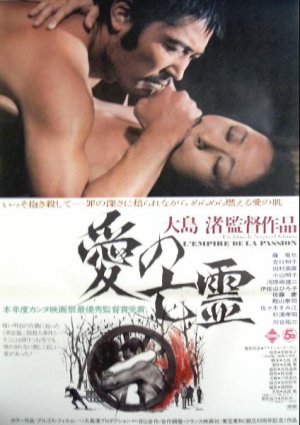
THE ZONE have my review of Nagisa Oshima’s old-fashioned ghost story Empire of Passion.

There is something decidedly odd about the fact that Empire of Passion netted Oshima an award for best director at Cannes. Indeed, while the film is wonderfully atmospheric and elegantly composed, it is ultimately nothing more than a genre piece in which an adulterous couple are hounded into madness by what they perceive to be an avenging spirit.  In my review, I suggest that the award may well have been given out not for Empire of Passion but for In The Realm of The Senses, the hugely controversial and sexually graphic film that Oshima made prior to this one.

Such trifles aside, Empire of Passion remains a hugely compelling exploration of the mechanics of desire, self-censure and social oppression. Indeed, one of the most striking things about this ghost story is that the ghost never actually cries out for vengeance. In fact, all the ghost wants to do is continue to work as a rickshaw driver. Rather than coming from the ghost, the couple’s slide into madness is caused by their refusal to accept what it is that they have done and why it is that they did it:

Empire Of Passion lends itself beautifully to a Freudian interpretation because it articulates not only the individual’s reticence to accept their hidden desires but also the problem of living as a person who does accept that they have certain needs and desires. Indeed, while Seki and Toyoji seem genuinely horrified by the intensity of the desire that their tryst unlocks, the real meat of the film lies in the characters’ refusal to own up to those desires and incorporate them into their personalities.

A thoroughly excellent film

REVIEW – Secret Behind The Door (1947)

THE ZONE have my review of Fritz Lang’s classic psychological thriller Secret Behind the Door starring Joan Bennett and Michael Redgrave.

Based upon Charles Perrault’s fable Bluebeard, Secret Behind the Door explores the process through which a couple get to know each other.  After a whirlwind romance, Bennett’s character marries Redgrave’s secretive and intense architect.  After a rudely interrupted honeymoon, Bennett’s character arrives at the architect’s home and finds him sharing it with two other women and a son from a previous marriage. As in the fable, Bennett’s character begins poking around in her husband’s background until she discovers something sinister.

Bluebeard is perhaps better known in its native France than it is in the Anglo-Saxon world. One reason for this is that it is one of those stories that paints women as a race of incessant and toxic meddlers whose refusal to follow simple male instructions result in the destruction of everything.  Think of Else to Lohengrin. Think of Eve to Adam. Because of the story’s misogynistic roots, generations of feminist authors have been quick to reclaim the role of interfering spouse and cast it in a more positive and transformative light such as the one that bathes Jane Eyre in Charlotte Bronte’s novel. Neither misogynistic nor feminist, Lang’s adaptation of Silvia Richards’ screenplay presents Bennett’s character as a wonderfully ambiguous figure who ‘fixes’ her husband for reasons all of her own. However, while the characters are engaging and the plot is fascinating, what really grabbed me was Lang’s decision to use a voice over as the primary means of communicating inner states:

Watching Secret Beyond The Door and noticing Lang’s tendency to simply pause the action and linger on his actor’s faces while their voiceovers are delivered, I was struck by how little has changed in the way that directors communicate interiority. Indeed, while directors of Lang’s generation paused so that voiceovers can be delivered, contemporary directors simply pause and allow audiences to fill in their own voiceovers. Doubtless many art house films could be transformed by using these little pauses and gazings into the middle distance to deliver short voiceovers in which characters speak directly to the audience. Clearly the basic grammar of cinema has not evolved that much since the days of Lang, it is just that nowadays art house directors tend to outsource exposition to audience speculation.

Secret Behind the Door is a flawed gem and its arrival on region-free DVD is long overdue. This is a must for anyone who enjoys psychological thrillers and an absolute necessity for anyone who loves Fritz Lang’s film noirs.

REVIEW – Don’t Look Now (1973)

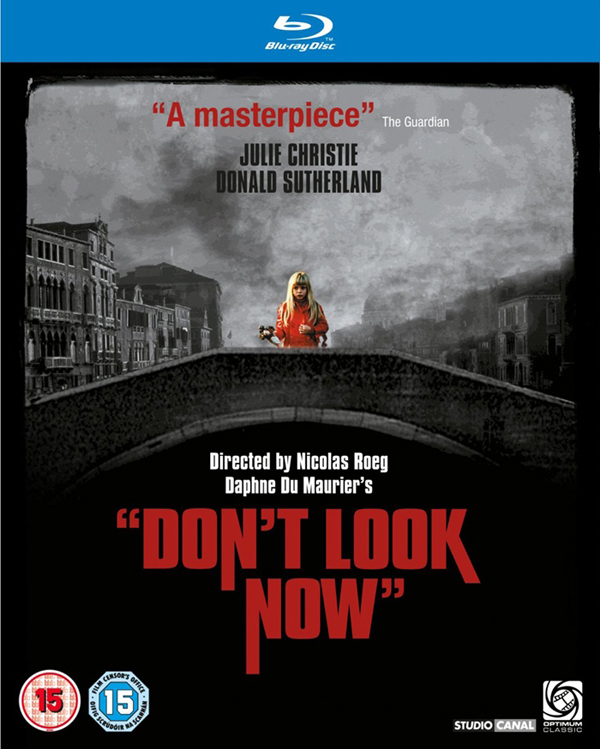
I recently noticed a pattern in my choice of films to write about.  I tend to really enjoy the films I write about but the films I truly love tend to go unprocessed and un-deconstructed.  I did not write about Luca Guadagnino’s I Am Love (2009) and I did not write about Nicolas Winding-Refn’s Drive (2011) despite loving both of these films to pieces. In an bid to force myself out of this unfortunate habit, I decided to take on the recent Blu-ray release of one of my favourite films: Nicolas Roeg’s Don’t Look NowTHE ZONE has my review.

The common thread binding these three films together is their unapologetic devotion to the grammar of film. Indeed, rather than relying upon such theatrical devices as three act structures or novelistic devices such as expositionary dialogue, Don’t Look Now, Driver and I Am Love tell their stories using mostly pictures and sounds. Don’t Look Now is particularly cinematic as Roeg uses cinematic grammar for force us into the head of Donald Sutherland’s reluctant psychic: Sutherland’s character is assailed by images and sounds that he struggles to comprehend and Roeg shares these fragments with us, placing us next to Sutherland’s character. Struggling to comprehend:

The opening scene of Don’t Look Now introduces us to a series of memorable images that Roeg returns to throughout the film. Everywhere the Baxters go, they encounter water, red hoods and shards of light. As people trained in the basic grammar of art house cinema, we know how to recognise recurring motifs and know that we are supposed to treat them as clues to the film’s hidden subtext. However, rather than allowing these clues to sit in the mind of the audience, Roeg uses the possibility of psychic powers to drag these clues into the foreground of the film.

Suddenly, those motifs and images that are normally just hints at hidden artistic meaning become evidence of hidden patterns in the life of John Baxter. Baxter’s hostility to the sisters betrays a deeper hostility to the idea that he too may be psychic and that the recurring images that plague his life might be evidence of future unpleasantness. Baxter foresaw the death of his daughter and now he sees signs that point to his own death. Everywhere he turns, Baxter is haunted by water, shards of light and the colour red. Everywhere he turns, Baxter sees proof that he too will soon be dead.

To suggest that John Baxter may be psychic is, somewhat predictably, to do Roeg a disservice as talk of mediums and psychic powers inevitably conjures up images of third eyes and supernatural powers. However, much of the power of Don’t Look Now resides in the fact that Baxter’s psychic gift is only a slight exaggeration of that very human addiction to pattern recognition, an addiction that forces the audience to hunt for subtexts and clues in Roeg’s repeated use of water, shards of light and the colour red. Indeed, Don’t Look Now is a deeply unsettling film as it forces the audience into the same position as the film’s protagonist: just like John Baxter, we know that something is coming; we know that it is not going to be good but we are powerless to avoid it. The audience are powerless to avoid it because Don’t Look Now is a film. John Baxter is powerless to avoid it because his life is like a film; it is pre-scripted with a beginning, middle and an inevitably grizzly end.

Don’t Look Now is not just a film of towering cinematic brilliance it is also, in its own way, a film about the process of taking a series of disconnected images and forcing them into a cohesive and comprehensible whole.

This review is based upon the Blu-ray special edition that was released in summer 2011.  Billed as a “Special Edition”, this Blu-ray release is pretty much indistinguishable from the 2006 DVD “Special Edition” release.  The extras are exactly the same.  According to the sticker on the cover of the box, the colour restoration was supervised by Roeg himself but, while there is no denying that the colours are crisp and the pictures are clean, I genuinely struggle to tell the difference between this and the DVD special edition. This begs the question as to the purpose and future of Blu-ray releases.

The UK benefits from a growing second hand market for DVDs that has the effect that DVDs lose most of their value within a few weeks of release. In fact, if you are paying full price for a DVD that is more than a week old then you are nothing more than a sucker.  Though Blu-ray has not yet supplanted DVD, the market for Blu-ray disks is pretty much the same as that for DVDs only with Blu-ray discs starting and remaining ever so slightly more expensive. The reason for this is that, UK consumers have largely accepted the idea that Blu-ray is a meaningful step up from DVD. Using this perception, Blu-ray distributors are re-releasing older films hoping that those of us with Blu-ray players (i.e. people who own a PS3) will replace our old DVDs with more expensive and ‘better quality’ Blu-ray editions. However, despite Blu-ray being touted as better quality, it is notable that hardly any Blu-ray releases come with any more extras than their equivalent DVD release. In short, the only difference between Blu-ray and DVD is that Blu-ray discs support HD playback meaning that if you do not possess an HD screen then there is absolutely no reason whatsoever for buying a film on Blu-ray. I bought the special edition DVD of Don’t Look Now when it was originally released and, despite clearly adoring the film, I cannot think why you would choose to replace the DVD with a Blu-ray.

The fate of Blu-ray is made all the more tenuous by changes in the US market.  In the US, the online video streaming service Netflix has not just popularised watching films online it has pretty much killed both DVD and Blu-ray stone dead with the latter-most nails in physical media’s coffin being provided by iTunes and the video-on-demand capacities of cable TV, Xbox Live and the PlayStation Network. Blu-ray was only ever supposed to be a stopgap measure between the latter days of DVD and the early days on online streaming that might allow technology companies to sell one final generation of media players before everyone started watching stuff through their home computer. This gap in the market has now effectively closed in the US and the UK is not that far behind.

Despite chaotically shuffling between business models in a way that has seen its share price plunge, Netflix recently announced that it is planning on bringing its subscription-based video-on-demand service to the UK. In short, Blu-ray is history in the US and the same will soon be true in the UK. If Netflix and Lovefilm do not kill UK DVD sales then Amazon, iTunes and cable TV will.

Of course, physical copies of films will continue to retain some value as people will always to want to ‘own’ the films they love rather than simply retain the capacity to access them online.  Similarly, AV nuts who invested small fortunes in home cinema installations will probably not be the first in line to start watching films on their laptops. I mention this not because I have anything in particular against either Blu-ray or DVD (I own loads myself) but simply as a warning: In a year’s time, Blu-rays and DVDs will be just as worthless as CDs meaning that you will be able to buy films like Don’t Look Now on Blu-ray for next to nothing.  So, instead of splashing out on one great Blu-ray, either save your money and stick with the DVD or wait a year and buy five films for the price of one. And thus the wheel doth turn…
 

REVIEW – Angels of Evil (2009)

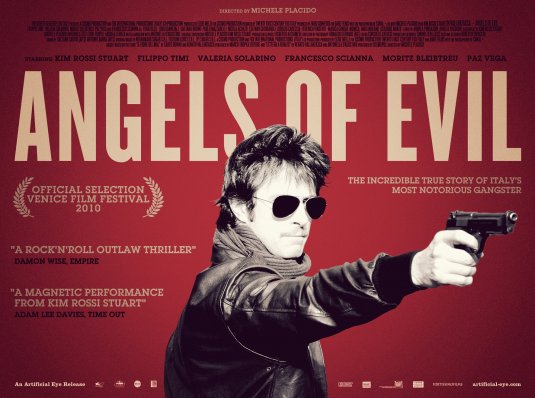
Videovista have changed their format.  Rather than spewing a torrent of reviews at you once a month, the site has moved towards a more selective approach to publishing in which they devote attention solely to a few note-worthy films.  My first shot at the DVD of the month is a piece about Michele Placido’s Angels of Evil (a.k.a. Valanzasca – Gli Angeli del Male), the follow-up to Placido’s 2005 crime bio-pic Romanzo Criminale. While I ultimately found the film a good deal less engaging than the politically thoughtful Romanzo Criminale, Angels of Evil remains a beautifully shot and stylishly produced crime thriller that sheds an intriguing light on the challenges facing the crime bio-pic genre. My review is HERE.

Though undeniably well made, Angels Of Evil suffers terribly from an overabundance of familiar elements: it is a film entirely composed of stock characters. Vallanzasca’s first wife Consuelo (Valeria Solerino) is a beautiful woman who doesn’t take any shit from anyone right up until the moment she meets Vallanzasca and promptly transforms into a long-suffering doormat with a sensible haircut. Similarly, the members of Vallanzasca’s gang are differentiated solely through their facial hair and their professional characteristics including the capacity to ride a motorcycle at 125 mph, and make good use of a sub-machinegun. Even Turatello is something of a cliché as his charismatic public persona masks a psychopathic fondness for violence and a rather predictable obsession with his hair that has him visiting women’s salons and sleeping in a hair-net. Anyone who has seen Goodfellas will recognise these sorts of characters and Goodfellas’ influence means that they have spent the last 20 years appearing and re-appearing in every crime thriller you care to mention. Aside from being faintly depressing, Placido’s refusal to depart from traditional genre stereotypes also serves to weaken his treatment of Vallanzasca himself.

Having damned the film for its generic nature, I then ponder whether the generic nature of the film’s characters might not be the result of deeper sociological forces. Indeed, if you watch The Sopranos, it is obvious that the characters have all partly modelled themselves on figures from the Godfather. This begs the following question: does the film’s depiction of Vallanzasca and his gang seem generic because of lazy script-writing or does the script capture the basic truths about a group of characters who modelled themselves on figures out of crime fiction and film?

Abbas Kiarostami to direct Paranormal Activity 4?

Almost certainly not… but you never know.

Aside from confounding search engines and the countless websites that survive by publishing idle film industry gossip, the title of this post does actually have a point. Namely that I see a number of similarities between the films of Iranian director Abbas Kiarostami and the latest iteration in the Paranormal Activity series directed by Ariel Schulman and Henry Joost.  In short, these cameras are all about forcing us to dwell on that which we do not see.

Continue reading →

Some Thoughts On… The Debt (2010)

Best known as the director responsible for such safe, middle brow, award-bothering prestige productions such as Mrs Brown (1997), Shakespeare in Love (1998) and Captain Correlli’s Mandolin (2001), John Madden returns with a thriller written by Jane Goldman and Matthew Vaughn. As might be expected from the writing team behind X-Men: First Class (2011) and Kick-Ass (2010), The Debt is a kinetic thriller that is forever promising to erupt into something a good deal more complex. However, much like both Kick-Ass and First Class, The Debt is a film that works best when it is in movement as its quiet character moments are under-written and under-powered despite some decent performances by two eye-catching casts.

Split between two timelines, The Debt tells the story of a group of 1960s Mossad agents who are sent into Soviet-controlled East Germany to kidnap a Nazi war criminal. Forced to live together, the three agents quickly stumble into a love triangle that finds the quietly intense Rachel (Jessica Chastain) having to choose between the introverted idealist David (Sam Worthington) and the arrogantly ambitious Stephan (Marton Csokas). When the kidnapping goes wrong, the three young people find themselves having to babysit an aging but fiercely intelligent Nazi who relentless probes their weaknesses and tries to set them against each other. Bookending this middle section is the film’s second timeline. Set in the 1990s, this timeframe explores the psychological consequences of the events of the film’s middle section. Still physically and psychologically scarred by her ordeal, Older Rachel (Helen Mirren) shifts uncomfortably as her daughter pays public tribute to her heroism. Meanwhile, Older David (Ciaran Hinds) is crippled by the burden of guilt and secrecy while Older Stephan’s (Tom Wilkinson) arrogant bluster has turned into tyrannical will-to-power.

The Debt features some excellent action direction and powerful sound-design that lends its fight sequences a brutal clarity that is terrifying when compared to expanses of quiet emotional desolation that dominate the rest of the film.  The scenes in which a manipulative Nazi confronts the agents are similarly impressive even though Quentin Tarantino did the same thing only better in Inglorious Basterds (2009).  Unfortunately, once the film moves beyond such genre staples, the limits to both the script and Madden’s direction start to become painfully evident.

Much of the film’s drama rests upon the tension of the plot colliding with both the characters’ back-stories and the bonds of affection that tie them together. While this occasionally works quite well (in particular the scene where Stephan seduces Rachel at the piano while the introverted David flinches in pain with every note they play), the film does not manage to pull off the bulk of its dramatic moves and because many of the film’s emotional beats fall short of the mark, many of the film’s sequences seem overly long and hopelessly flabby. Indeed, there were huge expanses of this film where time seemed to stand still as characters pouted and bemoaned some inner turmoil that never managed to feel real let alone seem particularly compelling.

The problem is that while The Debt had the potential to be an interesting genre film, the filmmakers clearly want it to be quite a bit more. Having secured a good deal of top-notch acting talent, you can sense their desire to make the most of it and maybe push for a few awards but, at the end of the day, both the script and the direction of The Debt fail to support these lofty ambitions and so a promising espionage thriller finds itself transformed into an over-long and dramatically dysfunctional exercise in thespian posturing. This film has nothing much to say about the human condition and its insistence on trying to say it for close to two hours is both depressingly and frustratingly tedious.

Cutter’s Way (1981) – The Complete Hero

When the golden age of 1970s Hollywood came to an end and the studios reasserted their control there were many unworthy casualties. The great tide of the American New Wave had surged up the beach and rolled back to a sea of spiralling budgets, slumping revenues and bottomless self-indulgence. One of these casualties was Ivan Passer’s adaptation of Newton Thornburg’s novel Cutter and Bone (1976).

Buried in a corporate shake-up and largely forgotten until its DVD re-release, Cutter’s Way is very much a product of the American New Wave. Ostensibly about a pair of misfits investigating a conspiracy to protect a wealthy industrialist, the film taps into the same cultural anxieties as Alan J. Pakula’s political paranoia trilogy comprising Klute (1971), The Parallax View (1974) and All the President’s Men (1976). However, rather than pandering to the audience’s belief that someone is out to get them, Passer’s film presents its conspiracy in a deeply ambiguous manner. Indeed, Cutter’s Way is a film that asks whether the tendency to see conspiracies everywhere might not in fact be a reflection of a deeper psychological need to be appreciated and desired. After all… if people are out to get you then that must mean that they consider you worth getting. Far more than a simple conspiracy thriller, Cutter’s Way is an exploration of the comfort that can be had in being a victim.

Continue reading →

The Rules of the Game (1939) – A Theatre of Nightmares

One of the best known rants in the history of film criticism is the one in which Andre Bazin rounds on the French film industry and lambasts it for its failure to be properly cinematic. Instead of producing properly cinematic works of art, Bazin argues, most French film directors were happy to simply film a theatrical performance. Rather than making the most of a new medium, French film was reducing the camera to the role of dumb spectator.

Jean Renoir’s La Regle Du Jeu was first released in 1939. Banned by the Vichy government for being ‘demoralising’, the film’s original negative was later destroyed in an Allied bombing raid forcing post-War cinephiles to assemble their own version of the film with advice from Renoir. This reconstructed version of the film is the one that we know today and it is dedicated to Andre Bazin.

It is tempting to link these two statements together: Renoir’s La Regle du Jeu may well be one of the great masterpieces of 1930s French cinema, but it is also an intensely theatrical film. Not only does the film contain an infamous ‘play-within-a-play’ but many of Renoir’s mis-en-scenes are explicitly and quite intentionally theatrical in both composition and reference. Reading between the lines, one can divine a response to Bazin’s famous rant.  La Regle du Jeu is full of slamming doors and romantic misunderstandings but the film’s theatrical nature is far from unthinking. In fact, in packs a powerful political punch. La Regle du Jeu uses its theatricality to present the pre-War French bourgeoisie as a frothy and insubstantial band of corrupt and self-indulgent buffoons. Wielders of a social morality so completely disconnected from the demands of the real world that they no longer seem to believe in it themselves, Renoir’s upper-classes are incapable of defending France against the rising tide of Fascism. Where were the ruling class when Vichy was on the rise? They were dressing up as bears and having delightful weekends in the country. Showing an almost post-modern awareness of media and irony, La Regle du Jeu remains one of the most powerful indictments imaginable of a society that has become lost in the maze of its own self-indulgence.

Continue reading →

REVIEW – The Black Power Mixtape 1967-1975 (2011)

FilmJuice have my review of Goran Olsson’s archival documentary The Black Power Mixtape 1967-1975.

Back in the 60s, a group of Swedish journalists traveled to California in the hopes of understanding the American mindset. Once there, the filmmakers slowly found themselves gravitating away from ‘mainstream’ America and towards the burgeoning Black Power movement centered upon the Black Panther party. Nothing much was done with this footage at the time and so it sat in a vault for several decades until researchers uncovered it and turned it into a film. At its best, Black Power Mixtape is shining a fascinating and historically important light on a radical political movement whose reputation has long been unfairly tarnished. Unfortunately, once the film moves beyond the footage of the Black Panthers, the problems start to stack up:

Sadly, once the Black Power Mixtape shifts its emphasis from the Black Panthers to the Nation of Islam and the War on Drugs, the documentary begins to lose both its precision and its power.  An interview with Louis Farrakhan is eerie in its fantastical delusions and the documentary’s uncritical attitude towards the idea that the Nation of Islam offers a disciplined lifestyle heralds the arrival of a number of bizarre conspiracy theories including the somewhat inconsistent view that the authorities both turned a blind-eye to the drug trade in Black areas and cracked down on the drug trade in Black areas in a way that damaged the community and undermined the pursuit of civil rights.

Equally unconvincing are the documentary’s attempts to articulate the Swedish perspective on the civil rights movement.  While the amusing footage of Swedish tourists travelling round Harlem in a bus suggests that there is something vaguely inauthentic about Swedish concern for American civil rights, the documentary never manages to articulate what it is that is particularly Swedish about any of the footage or the interviews. Frankly, these could have come from the vaults of any European television station.

There’s no denying that this is an important film and I can completely understand why Sight and Sound magazine made it their film of the month. However, in an effort to expand the film to feature length and widen the scope of its observations, the film puts out a number of thematic feelers (war on drugs, Swedish opinions of 60s America) that not only fail to pay off but actually muddy the waters sufficiently that they distract from the power and importance of the film’s opening third.

Julia (2008) – An Experiment in Unsympathetic Empathy

What can I say? I understand Lars von Trier. He did some wrong things, absolutely, but I can see him sitting there at the Cannes film festival… I sympathise with him, yes, a little bit.

When von Trier announced that he felt sympathy for Hitler, the grandees of the Cannes film festival responded by declaring him persona non grata. While much can be said of von Trier’s history of provocation, I believe that von Trier’s real mistake lay in expressing sympathy for Hitler rather than empathy. Indeed, while empathy involves understanding why someone does what they do and ‘feeling their pain’, sympathy means also seeing that person in a positive light. The slipperiness of these two concepts and their tendency to bleed into one another poses something of a challenge for writers because empathy and sympathy are quite different concepts. We should be able to understand why someone did something without seeing those actions as in any way acceptable.

Humans can be a surprisingly forgiving bunch and the more we understand another person, the more likely we are to see their actions as justified even if we do not necessarily agree with them. Because of this quirk in human nature, there is a tendency for unlikeable characters to wither beneath the glare of sustained psychological scrutiny, meaning that the more you explore a character’s back story and explain their motivations, the more likely it is that an unsympathetic bastard will turn into a big misunderstood puppy.  One could even argue that our tendency to automatically feel sympathy for the characters with whom we empathise accounts for the rise of psychopaths as anti-heroes. Indeed, by labelling a character as a psychopath, writers are making it clear that we ought not to feel much sympathy for them. Consider, for example the difference between character such as Dexter Morgan from Dexter and Vic Mackey from the Shield: Both are stone-cold killers who do not flinch from using horrific violence when it suits them. However, because Dexter has the label ‘psychopath’ attached to him, the character can never be completely sympathetic and so maintains his edge. Conversely, Vic Mackey is just a corrupt cop and, over the series, his actions take on a logic of their own that shifts the character from morally dysfunctional anti-hero to Dirty Harry-style crusader with a private sense of morality. Tellingly, when The Shield ended, Mackey’s future as an office drone was played for its pathos… we were supposed to feel sorry for a man denied access to the streets.

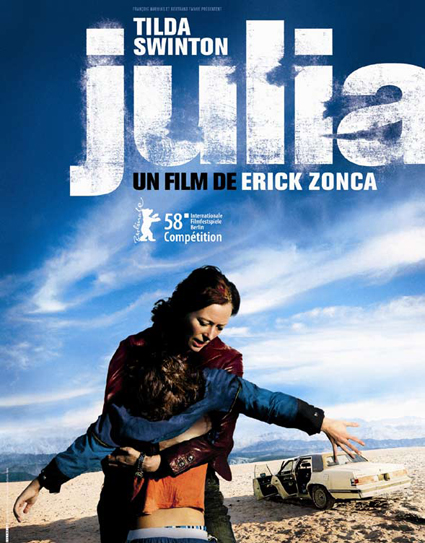
Based upon John Cassavetes’ Gloria (1980), Erick Zonca’s Julia can be seen as an attempt to solve this unintentional drift from empathy to sympathy. Telling the story of a selfish, unpleasant and manipulative alcoholic who kidnaps a child, the film works very hard at humanising its protagonist whilst retaining the opinion that she is a wretched human who is undeserving of either our sympathy or forgiveness. While the experiment is not entirely successful and the film does eventually collapse into something approaching sympathy for its protagonist, the move towards a more sympathetic portrayal is marked by a parallel drift away from character-based drama and towards a more genre-friendly approach to storytelling, thus begging the question as to whether we are more forgiving of genre characters than we are of real people.


Continue reading →