REVIEW – Tyrannosaur (2011)

FilmJuice have my review of Paddy Considine’s directorial debut Tyrannosaur, which is out this weekend.

A little while ago, I wrote about the phenomenon of Oscar Bait.  While this industry term is often taken to describe films that are god enough to be serious Oscar contenders, I chose to apply the term to films that seem to have been designed to explicitly pander to the preferences of Academy Voters as part of the film’s marketing strategy. Oscar Bait films rely upon Oscar nominations in order to find an audience and they rely upon their potential for Oscar nomination in order to attract prestigious A-list actors who are willing to work for scale on the understanding that their performance will net them an award. Films like The King’s Speech (2010), Rabbit Hole (2010) and The Reader (2008) are all based upon literary properties, they all feature strong central performances and they all feature very well thought of actors who might well be considered ‘overdue’ an Oscar. As Peter Biskind points out in his book on Miramax (the company that turned Oscar-baiting into a business plan), this is a win-win formula: The Academy gets to look smart, the actors get awards and the studios get easily-marketable prestige pictures that don’t cost a lot of money to make. While I’ve written about the evolutionary process distorting blockbuster scriptwriting before, the same process is at work in prestige drama.

I mention Oscar Bait as it can be seen as a distortion of another equally puzzling product of the film industry: the actor’s piece. Paddy Considine has a (admittedly well-earned) reputation as one of the best actors working today. Having made a name for himself in such dark and edgy independent films as Dead Man’s Shoes (2004), Considine has managed to cultivate a reputation for intelligence and emotional integrity. A reputation due to his intelligent selection of roles and the generosity of his erstwhile collaborator Shane Meadows. Indeed, the mock documentary Le Donk & Sco-Zay-Zee (2009) was marketed as a Meadows film in which Considine was given lots of room in which to create his own character. Given that Considine has been quite vocal about his creative powers and has directed a short film, it was only a matter of time before someone ponied up the dough for his to make a film of his own.  The resulting poneyage is the rather uneven Tyrannosaur:

The problem is that, once Considine has introduced us to the story of an emotional incontinent befriended by an obliging sponge, he suddenly becomes concerned about the lack of accountability in this sort of dynamic. Realising that there is something fundamentally dishonest and unfair about expecting Hannah to pay the psychic cost for Joseph’s redemption, Considine introduces us to a secondary layer of characters whose very unpleasantness sets them up as candidates for some redemptive act of violence. However, this secondary dynamic established, Considine then changes course again and decides to deny his characters redemption because no violent act can ever be redemptive. While these reversals serve to both keep the audience guessing and keep the film from falling into cliché, they also serve to muddy the psychological waters to the point where character motivation become completely impenetrable. The film tellingly ends with Joseph reading out a letter in which he explains why he did what he did and why he thinks Hannah did what she did; what is this letter if not an admission by the writer/director that he can no longer make sense of his own characters?

It is interesting to compare Considine’s career trajectory to that of Tyrannosaur‘s star Peter Mullan. Much like Considine, Mullan is an actor with a reputation for integrity and intelligence. His career features a blend of low-budget independents and wisely chosen bigger-budget parts that seems to have provided a model for Considine’s careful engagement with the mainstream. However, while Considine’s first directorial foray proved to be a poorly thought-through actor’s piece that falls apart once you look beyond the (admittedly brilliant) performances, Mullan’s films (the wonderful black comedy Orphans, the politically-engaged weepy The Magdalene Sisters and the blisteringly powerful Neds) all benefit from an intellectual substance that owes nothing to their central performances.

As someone who is hyper-sensitive about self-promotion, the difference between Orphans and Tyrannosaur is quite striking. Considine talks endlessly about how creative he is and yet shows little evidence of that creativity once he steps behind a camera. Conversely, Peter Mullan is known primarily as an actor and yet his films are universally intelligent, powerful and memorable. I suspect that Considine’s choice of Mullan for the lead in Tyrannosaur is hardly accidental given the similarities between the two men’s careers.  In fact, I suspect that Mullan may be something of a role-model for the younger Considine but while Considine has followed Mullan in becoming a director, Tyrannosaur suggests that he still has some way to go before he can be said to be on a par with Mullan.

REVIEW – Atrocious (2010)

THE ZONE have my review of Fernando Barreda Luna’s found footage horror film Atrocious.

One of the more bizarre quirks in the current cinematic landscape is the popularity of Spanish genre films. Seemingly inspired by the trailblazing success of such Guillermo del Tor-produced horror films as Guillem Morales’ Julia’s Eyes (2010) and J.A. Bayona’s The Orphanage (2007), British distributors seem to be falling over themselves to release every half-baked Spanish horror flick they can get their hands on. Given the marketplace’s current fondness for Spanish genre and the commercial re-invigoration of the found footage genre by Oren Peli’s Paranormal Activity (2007), Atrocious must have seemed like money in the bank and while that may very well prove to be the case, the film itself is nothing short of disastrous:

Despite an opening act that promises an intense familial psychodrama, Atrocious soon devolves into endless footage of people running through mazes and basements. As Blair Witch demonstrated, the use of night-vision, shaky camerawork, sinister noises, shadowy figures and plenty of screaming, swearing, and terrified heavy breathing can be supremely effective in generating tension without the need for elaborate scoring or special effects. However, while Atrocious uses all the toys in the Blair Witch toy-box, it fails to realise that Blair Witch‘s effectiveness relied upon both a good deal of restraint and the effective use of exposition to prime the pumps. Blair Witch used its signature shaky cameras sparingly and always prefaced them with huge amounts of exposition so even if you couldn’t really tell what was going on, you knew what you were supposed to see and your mind simply filled in the blanks.

Lacking the post-cinematic reflexive intelligence of both Cannibal Holocaust and The Blair Witch Project, Atrocious is a case study in the death of a genre cycle. As I explain in my review, cycles emerge when a breakthrough hit creates a market for imitation. In the 70s, people simply could not watch enough slasher movies and in the 00s people simply couldn’t see enough zombie movies. Atrocious is one of the films that ends cycles because while it is clearly attempting to jump on the found footage bandwagon, it completely fails to recognise what it was about the found footage films that made them so interesting.

Clearly, Fernando Barreda Luna looked at The Blair Witch Project and concluded that what attracted audiences to that film was hand-held camera footage of people running around a wood. I have a lot of time for The Blair Witch Project both as a postmodern text and as a piece of techinically proficient filmmaking but to look at Myrick and Sanchez’s film and conclude that it was all about the woods really is to miss the point.

REVIEW – Cannibal Holocaust (1980)

THE ZONE have my review of Ruggero Deodato’s hugely influential found footage horror film Cannibal Holocaust.

Watching the film for the first time since my teens, I was struck both by how poorly it worked as a horror film and how brilliantly it worked as a piece of postmodern cinema. The most shocking thing about Cannibal Holocaust is not the casual use of rape, the deliberate cruelty to animals or the shameless pandering to ignorant prejudices regarding the developing world, it is the way in which Deodato uses the format of the film to point an accusatory directly at his audience. In fact, the film’s nested narration reminded me of Conrad’s Heart of Darkness and its similarly mephitic critique of colonialism:

The point of Marlow’s tale is thus not his encounter with Kurtz but the context of his observations about the journey. By providing us with an extra layer of narration that draws us even further back from the events in the Congo, Conrad is inviting us to reflect upon the comparison between the Thames and the Congo itself. For while Conrad is clear that the heart of darkness resides in deepest Africa, the suggestion is that even the well-groomed hillsides of the Thames valley were once a place of impossible savagery. By providing us with an extra layer of narration, Deodato is not only drawing quite a clear comparison between the peerless Kurtz and the peerless documentary filmmakers, he is also inviting us to reflect upon the context in which their story is told. Indeed, the meat of Cannibal Holocaust lies not in the story of the filmmakers or even the academic’s encounters with the TV producers, but in our own willingness to look at the bigger picture and realise the similarities between the fictional events of the film and the real-world practices of filmmakers and journalists.

Arguably a classic, but for all the wrong reasons.

Fright Night (2011) – Even The Straight Boys are Queer

There are some things that female directors do better than male directors and one of them is acknowledging the moral and psychological ambiguities inherent in the loss of sexual innocence.

Consider such mainstream accounts of adolescent sexuality as the Porky’s and American Pie series and you will find teenaged boys that are monuments to frustrated worldliness.  Endless fonts of libidinal energy, these teenagers know all the moves and all the rules but cannot find anyone with whom to put them into practice. In most films, males are either guileless children or frenetic satyrs, there is no middle ground and there is no real sense of psychological transition. Films that should describe a coming of age all too often opt for depicting an age of cumming. By contrast, films such as Lucille Hadzhihalilovic’s Innocence (2004), Katell Quillevere’s Love Like Poison (2010) and Celine Sciamma’s Water Lillies (2007) depict the loss of female innocence as a profoundly ambiguous process, a fall from grace into desire and a movement from protected freedom to vulnerable responsibility.

Cinema’s lack of engagement with the subtleties of male sexuality is also evident in a lot of gay independent cinema. ‘Coming out’ dramas such as The String (2009), Shank (2009) and even Tropical Malady (2004) focus less upon the emergence of homosexual desire than they do upon the process through which apparently straight men come to terms with the social pressures keeping them in the closet. One notable exception to this rule is Tom Holland’s sadly overlooked vampire film Fright Night (1985), in which a teenaged boy finds himself trapped between the sexual demands of his increasingly frustrated girlfriend and the siren’s call of the sexually ambiguous man-next-door. Nowadays, the equation of male sexuality with vampirism is a largely unquestioned part of the genre landscape given that both Buffy the Vampire Slayer and the Twilight books present adolescent males as dangerously libidinal creatures whose desires must be kept in check lest all hell break loose. This metaphorical Othering of male sexuality is particularly evident in Meyer’s Twilight series as the books feature a male vampire who effectively castrates himself in order to assume the role of an ersatz gay best friend. Once feared and desired in equal measure, the vampiric sexuality of adolescent boys is now house-broken for the purposes of romance, teenaged boys are now expected to sigh and to speak of love but never to demand a hand-job.

Half an hour into Craig Gillespie’s remake of Fright Night, a character expresses absolute outrage at the suggestion that he reads Twilight novels. This fragment of dialogue constitutes a statement of intent: Fright Night is not about dickless pretty-boys; it is about a male sexuality that is red in tooth and claw. A sexuality so terrifying in its primal nature that it even frightens the men afflicted by it.  Far more than a vampire movie or a horror-comedy, Gillespie’s Fright Night attempts to follow in the footsteps of Innocence and Love Like Poison by confronting received wisdom about the adolescent sexual experience. However, the more the movie deconstructs traditional depictions of adolescent male sexuality, the more it struggles to find an alternative to the frustrated satyrs of American Pie thereby begging the question: What is it like to be a teenaged boy?

Continue reading →

Some Thought On… Kill List (2011)

A little while ago, I was lucky enough to attend a British film festival designed to find foreign distributors for British films. While only a few of the festival’s films showed any promise, what they all demonstrated was the relative ease with which British thrillers were able to secure funding. Jean-luc Goddard once said that all you needed to make a film is a girl and a gun and low-budget British filmmakers seemed to be proving exactly that. Over the last couple of years, this financial trend has blossomed into a full-scale British genre revival including such works of psychological tension as J Blakeson’s The Disappearance of Alice Creed (2009), Matthew Hope’s The Veteran (2011) and Lynne Ramsay’s We Need To Talk About Kevin (2011). All of these films speak to the darkness of the human soul with a style and grace that elevate them above predictable exploitation narratives into something altogether more interesting.  Ben Wheatley’s Kill List is yet further proof of the intellectual vibrancy of the British thriller, it is one of the most effective films I have seen this year.

Wheatley began his feature-length directorial career with the micro-budgeted crime film Down Terrace (2009).  Grounded in dysfunctional human psychology, Down Terrace blurred the line between genre and traditional drama by embedding its narrative in a seemingly banal working-class environment. Wheatley’s desire to ground his films in the mundane details of everyday life continues with Kill List. Kill List opens by introducing us to Jay (Neil Maskell), a working-class man enjoying a comfortable middle-class life with his son and beautiful Swedish wife Shel (MyAnna Buring). Claiming to be suffering from back pain, Jay has not worked for eight months and the couple are now running in to the sorts of financial difficulties that put strains on even the most loving of marriages. Aware that Jay may not be completely ‘ready’ to go back to work, Shel invites Jay’s old partner Gal (Michael Smiley) over for dinner in the hope of luring her husband from retirement.

Having painted a scene of mundane domesticity in beautifully vibrant colour, Wheatley then sets about filling in the shadows. When Gal’s date for the evening pops to the loo, she turns the mirror over and carves a strange rune into the back of it.  Meanwhile, Gal and Jay chat about the old days in evasive terms until one of them pulls out an assault rifle.  Clearly, Jay and Gal’s mundane lower-middle class existence is supported thanks to a decidedly unusual career. The oddness of the boys’ day job is made all the more clear in an extraordinary sequence that transforms a mundane business meeting into an occult rite by having the boys sign their acceptance of the contract in blood. From there, the film becomes progressively more and more weird, and more and more disturbing.

As in Down Terrace, Wheatley breaks the action down into chapters by filling the screen with text.  Thus, the first hit on the kill list is ‘The Priest’ and then we move on to ‘The Librarian’ and ‘The M.P.’ before concluding with ‘The Hunchback’.  Ostensibly quite a crude piece of meta-narration, these inter-titles serve not only to anchor the narrative as the film’s narrative structures begin to fray, they also serve to heighten the sense of unreality surrounding Jay’s working life. What kind of professional to-do list features hunchbacks, priests and members of parliament? The further the film progresses, the more the fantastical encroaches upon the lives of the characters and the more the characters begin to crack under pressure with cinematography, sound-design and narrative working in unison to present a powerful and psychotropic voyage into the outer darkness.

Looking at the critical coverage this film has received, it is clear that critics have struggled to pin down the argument behind Kill List. Though beautifully realised and almost insanely tense, the film’s profligate use of familiar themes and images make interpreting it something of an uphill battle.  Is the film about Jay’s nervous breakdown (fore-shadowed by early trips to the supermarket and the doctor)? Is it a tale of morality set against an ink-black British underworld filled with mercurial figures?  Or is it simply a beautifully made thriller that borrows from the crime and horror genres to produce a cinematic experience that pushes all of the audience’s buttons at once? Obviously, Kill List is all of these things (and none) but my impression was of a film that ventures onto the same territory as the work of Thomas Ligotti.

Thomas Ligotti is one of the finest American horror writers of the last fifty years. Unfairly overshadowed by ancestors such as Lovecraft and more commercial contemporaries such as Stephen King, Ligotti’s collections of short fiction are seldom in print and seldom easy to write about. However, one of the recurring motifs in Ligotti’s work is the horror of the workplace. Short stories such as “The Town Manager” and “Our Temporary Supervisor” as well as longer pieces such as the novella My Work is Not Yet Done, reflect upon the surreal brutality of an institution that consumes most of your waking life whilst humiliating and dehumanising you from dawn till dusk. Kill List vocalises the same sense of surreal disconnection as the work of Ligotti; Jay is called upon to carry out tasks that he does not comprehend (his employer calls him “a cog”) and these tasks carry a heavy psychological burden.  Ideally, Jay would not have to work at all but in order to feed his family and keep them in the style to which they have become accustomed, Jay must return to work and do what it is that he has to do. Even when Jay wants to quit and go home, work follows him to his door.  There is simply no escaping the workplace. The film’s final denouement offers Jay the possibility of escape but makes it abundantly clear what price he will be expected to pay for his freedom.

Kill List’s denouement encompasses all of the strengths and weaknesses of Wheatley’s film: beautifully shot and powerfully scored, Kill List’s final scenes are a master class in pure cinematic tension. However, the impressionistic quality of the direction and the embarrassment of symbolic riches also create a distinct sense of directorial profligacy. Rather than restrain himself and pin Jay’s experiences down to a singular precise meaning, Wheatley ends his film in the broadest way imaginable: we know that Jay is unhappy, we know that his unhappiness is linked to issues of sanity, morality and family but beyond that the film’s emotional and psychological content is vague and elusive. Kill List makes its point with considerable style and power but as the smoke clears and the credits roll, it is by no means clear that that point might have been.


REVIEW – Spread (2009)

Videovista have my review of David Mackenzie’s Spread (a.k.a. Toy Boy).

Trapped somewhere between romantic comedy and a warts-and-all indictment of life on the Hollywood fringe, Mackenzie’s film garnered a good deal of festival buzz thanks to the presence of Ashton Kutcher and the insider-y nature of the subject matter.  Kutcher — whose career received a sizeable boost as a result of his relationship with the older Demi Moore — plays a pretty young man who lives off of older women.  On paper, this film promised a lot and initial reviews were strong but once the collective hysteria of festival season faded, so too did the film’s buzz and reality soon reasserted itself.  A reality of muddled tone, indifferent scripting and lack of sociological bite:

I suspect that these variations on the traditional romantic comedy theme are intentional and that, by breaking with generic tradition, the film is trying to make some wider point about the way in which we think our lives are going to follow these grand romantic arcs but, while Spread hints at this sort of deconstructive agenda, it ultimately fails to explore any of these themes meaning that the film comes across as broken rather than deconstructed.

All in all: Not nearly clever enough.

REVIEW – Hatchet II (2010)

Videovista have my review of Adam Green’s latter-day slasher film Hatchet II.

I requested Hatchet II because I had heard great things coming out of the film’s US screenings. Having enjoyed Hatchet’s ironic humour, I was hoping that Hatchet II might push the boat out that little bit further and be maybe just a little bit sillier, a little bit gorier and a little bit funnier.  Instead, I discovered a film that caused me to reconsider my view of the original film.  Suddenly I was reminded of that scene in The Simpsons episode where Moe builds a tunnel from the fashionable waterfront district to his bar in the slums in order to lure in yuppies. “Hey, this isn’t faux dive… this is a dive”.  Upon watching Hatchet II, I thought of Hatchet and exclaimed “Hey, this isn’t faux schlock… this is schlock!”:

Unfortunately, because Green struggles with both the campier elements and the more serious moments, Hatchet II never manages to find that sweet spot between postmodern irony and absolute sincerity. Because it is impossible to know when the film is being intentionally awful and when it is merely being awful, Hatchet II‘s moments of intentional self-parody feel more like defence mechanisms designed to allow the filmmakers to cry ‘irony’ whenever their attempts at tension and human drama fall wide of the mark. This makes for an uncomfortably defensive cinematic experience, like sharing a drink with someone who keeps putting himself down in the hope that you’ll tell him how wonderful he is.

Avoid it like the proverbial.

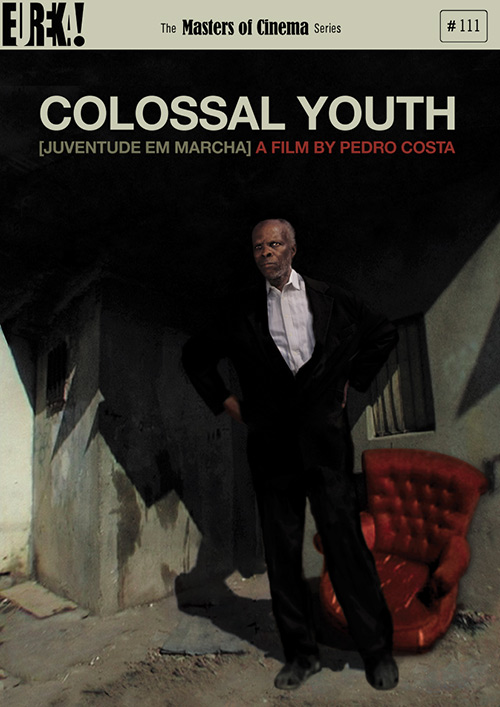
REVIEW – Colossal Youth (2006)

Videovista have my review of Pedro Costa’s Juventude em Marcha, which has been released by the always excellent boutique DVD and Blu-ray label Masters of Cinema.

While Colossal Youth is not the first Pedro Costa I have seen, my familiarity with the filmmaker’s work in no way made it either an easier or a more appealing watch.  The film is beautiful, intelligent and is inspired by the same singular vision that pervades all of Costa’s work but it is also cataclysmically boring and inaccessible. This is art house film making without compromise or concession, either you accept the film on its own terms or you don’t bother:

While Costa’s films are almost completely unwatchable, there is clearly a coherent vision behind the impenetrable boredom that dominates his films. Because this coherent vision exists, Costa has found an audience for his decidedly singular and experimental approach to filmmaking. Indeed, while I suspect that Costa has few followers outside of academic film studies and film schools, the substance that exists in his work means that his films contribute to the evolution of the cinematic form. While the films that Costa makes may be boring and unwatchable, they will be influential and it would not surprise me if Costa’s devotees can find echoes of his work in that of the filmmakers who have come after him. As boring as his work may be to me, I cannot deny that Costa is an important figure and that his films constitute a boon to the on-going evolution of the cinematic form.

Going by the recent output of Colin Marshall’s excellent podcast Marketplace of Ideas, I get the impression that certain elements of the lit-blogosphere are attempting to re-claim boredom as a position of spiritual strength and a reaction against the media-saturation and sensationalism of much of Western culture. It seems to me that Costa’s work would probably make a good case-study for people sympathetic to that position.

Amer (2009) – Faceless Wordless Passion

In 1963, the Swedish director Ingmar Bergman concluded what has become known as the Trilogy of Faith.  Prior to this trilogy, many of Bergman’s films tended to revolve around questions of religion and faith as their characters struggled to find meaning in the meaningless void of life.  Paradoxically, the Trilogy of Faith marked a departure in Bergman’s filmmaking as it displayed an interest not in God but in people. In Through a Glass Darkly (1961) and Winter Light (1962), Bergman explored the roots of religious faith and how that faith might be lost.  In The Silence (1963), Bergman examined a world characterised only by absence; absence of God, absence of faith and absence of speech.  As Bergman himself put it:

“These three films deal with reduction. Through a Glass Darkly – conquered certainty. Winter Light – penetrated certainty. The Silence – God’s silence – the negative imprint. Therefore, they constitute a trilogy.”

What Bergman found when he stripped away God and faith was a world of passion and turmoil, a world in which nobody speaks but everyone yearns.  The Silence is a remarkable film in that it manages to be both intensely psychological and almost entirely free of dialogue. Helene Cattet and Bruno Forzani’s Amer marks a return to Bergman’s silent realm of desire, passion, alienation and horror.

Continue reading →

Final Destination 5 (2011) – The Last Laugh is On Us

The literary critic Paul Bleton argues that the difference between genre and non-genre pieces is that genre pieces have a structure resembling that of a string of pearls.  What Bleton means is that genre (whether erotic, sensational or criminal) is all about big dramatic set pieces.  These dazzling moments of spectacle attract the eyes, stimulate the brain and distract you from the fact that the plots and characters they involve frequently serve no purpose other than to tie the set-pieces together into something broadly resembling a story.

Interesting though it may be, Bleton’s conception of genre is now seriously out of date.  Firstly, a generation of writers and directors with interests in character and subtext have worked at reclaiming genre devices so as to blur the distinction between pearl and string.  Secondly, a generation of directors including Michael Bay (Transformers), Gore Verbinsky (Pirates of the Caribbean), and Mark Neveldene and Brian Taylor (Crank) have stripped away the fig leaf of plot and character to produce films that are nothing more than series of set-pieces held together by implication and the fact that they are packaged and sold as a single artistic unit.

With the difference between genre and non-genre under continuous assault on multiple sides, there is something pure and elegant in a film that is unapologetic in its string of pearls-like structure.  The Final Destination series has never been anything other than a series of lavish set-pieces held together by weak plots and terrible characters but in that terrible predictability lies real profundity.

Continue reading →