REVIEW – The Keeper of Lost Causes (2013)

FilmJuice have my review of Mikkel Nørgaard‘s Scandinavian police procedural The Keeper of Lost Causes. Based on the novel Mercy by Jussi Adler-Olssen, The Keeper of Lost Causes is an entirely predictable and by-the-numbers Scandinavian police procedural. Its plot is entirely linear and generic, its characters are generic, one-dimensional stereotypes and nothing introduced by either the director or the writer complicates matters in any way. This is a solidly entertaining slice of Scandinavian noir that offers no surprised whatsoever:

The Keeper of Lost Causes is the Tesco Everyday Mild Cheddar of Scandinavian noir: Competently made and entirely free of anything in the least bit new or different, it gets the job done but leaves you yearning for something with a little more flavour.

I quite enjoyed The Keeper of Lost Causes but, as I point out in my review, I can’t help but wonder how much more Scandinavian noir the British market can endure before people start getting sick of it. How many more series of The Bridge can sit through before we start shouting ‘Oh for fuck’s sake get some colour on those walls and go and have a shave!’? The Keeper of Lost Causes is based on the first novel in a series meaning that the film feels a lot like a pilot. In fact, there is already an adaptation of the second book in the series by the same director and with the same actors. Will it be released in the UK? Almost certainly but Scandinavian noir is definitely starting to feel a little bit long in the tooth… time for someone to adapt Jean-Claude Izzo’s Marseilles trilogy and move us away from grizzled beardy Scandinavian men and towards grizzled beardy Mediterranean men instead! The Keeper of Lost Causes actually raises an interesting critical question as while the film does absolutely nothing even remotely new or different, it does it in a very competent and enjoyable manner. For as long as I have been paying attention to it, the conversation surrounding science fiction has portrayed genre boundaries and conventional narrative forms as something to be overcome but I think there is probably a case to be made for innovation being a somewhat over-rated quality. A lot has been made of the way that the gender of critics and gatekeepers tends to skew the conversation around a cultural scene but I think the same is probably true of scenes where the conversation is lead by creators and experienced critics. I suspect that a reader-focused conversation about books or an audience-focused conversation about film would see formal and narrative innovation as much less important than the competent deployment of established forms and story-types. The Keeper of Lost Causes is a solid piece of genre cinema, it does precisely what it says on the tin and absolutely nothing more.

REVIEW – Hockney (2014)

FilmJuice have my review of Randall Wright’s documentary Hockney.

I approached the film without knowing a huge amount about the work of David Hockney and I left in pretty much the exact same condition. Like a lot of documentaries produced these days, Hockney tries to convince us that its subject matter is worthy of our attention without engaging either with the subject matter itself or with the cultural context that allowed the creation of said subject matter. The result is a film content to display the work of David Hockney without really bothering to say anything about it. In lieu of commentary, the film provides a string of anecdotes that are intended to be amusing but actually come across as intensely patronising:

Wright tries to establish Hockney as someone who was considered eccentric even by the lofty standards of the 1960s London art scene. Allergic to anything that might resemble a broader context, the film draws on anecdotes that all seem to revolve around the fact that Hockney is a gay northerner who happens to dye his hair. Far from establishing Hockney as a rebellious artist, this suggests that the 1960s London art scene was full of patronising snobs who are still patting themselves on the back for giving house room to people from Bradford. Oh darlings… it was all so mad in the 1960s! We all had long hair and pretended to be friends with ghastly northern yobbos who dyed their hair!

On reflection, the film reminds me quite a bit of Sophie Fiennes’ film about Anselm Kiefer Over Your Cities Grass Will Grow as both films are content to let the art speak for itself. The problem is that whereas Kiefer’s art is a huge installation that has transformed an old silk factory into a mad alien landscape, Hockney’s art is a series of twee and colourful paintings of his friends. On a very basic level, Hockney’s art is not as well served by the cinematic medium as Kiefer’s and, on a more critical level, Fiennes’ wordless approach to Kiefer’s art emphasises its opaque and inscrutable nature whereas Wright’s attempt to juxtapose Hockney’s paintings with anecdotes about the artist only serves to make his work seem insubstantial and whimsical.


The Trip to Italy (2014) – Poo and Broken Glass

The longer a drama is allowed to run, the closer it comes to resembling a soap opera. The difference between these two forms is that while both are made from the relationships between fictional characters, dramas use those relationships as a means of articulating some deeper truth about the human condition. Soap operas are dramas that have been robbed of significance; they treat the relationships between fictional characters as ends in themselves.

As someone who has never entirely understood why I am supposed to become emotionally invested in the lives of people who do not exist, I am very sensitive to the difference between drama and soap opera and I am always wary of films and series that move from one form to another. An excellent example of the slide from drama to soap is the French procedural Spiral. When Spiral first aired in 2005, it was a tightly-written drama exploring how various aspects of the French legal system interact as part of an investigation and how incompetence, mendacity and institutional dysfunction can get in the way of justice. At the time, many people compared Spiral and to The Wire but where the two programmes part company is that while The Wire used its additional seasons to expand its critique of American society, Spiral lost interest in the real world: By the third season, the writers of Spiral had shifted their interest away from the French legal system towards the emotional lives of their characters. By the fourth season, the procedural elements were serving as little more than an excuse for characters to bicker, plot and occasionally jump into bed with each other. A fifth season of the programme has been produced and has begun to air and I see no reason why it shouldn’t continue indefinitely. Spiral’s viewers may have been drawn in by the critique of French society but it is their emotional investment in the characters that keeps them coming back. In the nine years since it first aired, Spiral has transitioned from a drama about the French legal system to a soap opera set in courthouses and police stations.

This process is also beginning to affect the on-going collaboration between director Michael Winterbottom and the comic actors Steve Coogan and Rob Brydon; a creative partnership that began by producing thought-provoking drama now traffics in smug, middle-class soap opera.

Continue reading →

REVIEW – The Congress (2013)

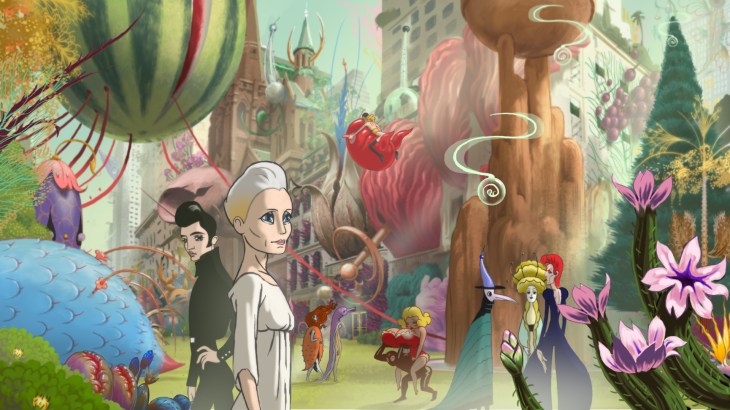
Videovista has my review of Ari Folman’s second feature film The Congress. Set in the immediate future, the film revolves around a fictionalised version of the actress Robin Wright who decides to sell all of her image rights to Hollywood and retire from public life for a period of no less than twenty years. In return for the paying the actress a generous pension, Hollywood will be able to use the image and name of Robin Wright to make all of the films and adverts they deem appropriate for her brand. With no awkward human actress to wrangle, the studios turn Robin Wright into a global superstar but the next contract pushes much further… twenty years from now, people won’t be wanting to watch Robin Wright, they will be wanting to be Robin Wright.

Loosely based on a Stanislaw Lem novel called The Futurological Congress, The Congress is best understood as a cinematic critique of contemporary cinema. Less a film than an extended visual essay designed to critique cinema itself, The Congress is a collage of carefully assembled cinematic references designed to draw our attention to the fact that contemporary Hollywood is in the business of wholesale emotional manipulation in which film is never anything more than a means to an end:

The Congress is a difficult film to evaluate as it is a cynical and manipulative film designed to draw our attention to the fact that Hollywood films are incredibly cynical and manipulative. The sheer density of the text draws us up and away from the drama and encourages us to engage with the film on a purely intellectual level as Robin is never more than ballast in a film that feels more like an animated meta-textual essay than a conventional cinematic narrative. Readers of science fiction who have encountered the work of Adam Roberts will be familiar with this effect as both Roberts and Folman produce beautifully constructed and achingly clever works filled with neat little ideas and interesting things to say that really make you think but rarely make you feel.

There is nothing new in films suggesting that corporations want to take over reality but Folman’s critique is surprisingly explicit. Rather than attacking a faceless multinational corporation, Folman aims his guns directly at contemporary Hollywood.  Particularly surprising is his willingness to critique actors who sell their image rights to corporations who then go on to use those image rights as a means of putting a human face on their exploitative business practices.  Consider this quote from a Variety article about the sponsorship deals built around Iron Man 2:

“This was not a hugely recognized superhero character,” Bob Sabouni, senior VP of business development and promotions for Marvel Entertainment told Daily Variety . “These partners got the mystique of the Marvel brand the first time around and took their faith in that. They were pretty well rewarded and are now stepping up their game and creating even better programs.”

Which partners are we talking about?

Marvel’s “Iron Man 2,” which rockets into megaplexes May 7, has brought back most of the promotional partners — including Audi, LG Mobile, 7-Eleven, Dr. Pepper, Oracle and Burger King — that spent considerable coin to help launch the first film in 2008.[…] The Hershey Co.’ Reese’s brand, Royal Purple motor oil and Symantec’s Norton software are also partners.

It is something of a misnomer to refer to the likes of Disney and Marvel Entertainment as film companies as the artefacts they produce behave more like malware than conventional films. Once introduced into a cultural space, cultural malware sucks up all available resources to the point where it is almost impossible to get away from said product let alone start a conversation about anything else. Everywhere you look, there will be articles about what the product is like and what it tells us about other products that will be released in years to come. Anyone who happens to be plugged into a cultural space that has become infected by cultural malware will most likely become infected too meaning that smart, principled commentators will soon devote all of their time to writing about stupid, regressive cultural artefacts while completely ignoring films, books and TV series that are not themselves disease vectors. Once established in a cultural system, the malware will use the system to undertake tasks that are harmful to the components of said system such as encouraging them to buy over-priced status objects and foodstuffs that make them significantly more likely to develop a serious health problem. Fully aware that these harmful tasks might cause the system to react against the infection, the cultural malware also seeks to replicate itself by encouraging people to get excited about the next generation of cultural pathogens.

I was not entirely convinced by The Congress in much the same way as I was not entirely convinced by his first film Waltz with Bashir.

When I reviewed Waltz with Bashir back in 2008, I expressed my frustration with Folman’s apparent lack of focus.  Having now re-watched the film, it occurs to me that what I originally took to be a lack of intellectual focus was actually an intelligent man flinching from the truth and attempting to derail his own line of thought. The reason Folman sabotaged his own film is that the process of therapeutic self-analysis documented by the film lead him to a door that he refused to open, a door marked ‘What Ari Folman did during the 1982 Lebanon War’.  In fact, you could very well argue that Waltz with Bashir is all about a man being offered the chance to learn the truth about who he really is only for that man to decide that he is better off not knowing.


waltz


My review of The Congress calls it a less personal project than Waltz with Bashir but one could argue that The Congress is actually Folman’s attempt to confront the tissue of lies he has assembled around his involvement in the 1982 Lebanon War. In the film, Robin Wright is presented with a choice between returning to the misery of the real world in order to maybe track down her children and remaining in the chemically-induced corporate virtual reality with a man she loves. Wright chooses the first option but Folman’s explanation as to why she would make such a decision feels just as evasive as the conclusion to Waltz with Bashir where he pointedly refuses to ask the questions that would help him connect with his past and discover how involved he really was in the Sabra and Shatila massacre. If Folman can’t convince himself about the virtues of the real world, how can he possibly hope to convince us? The philosopher Robert Nozick asked a similar question in his book Anarchy, State, and Utopia but the argument he presented for refusing to plug yourself into a bliss machine was just as unconvincing as Folman’s. Folman’s The Congress is engaging, frustrating and at least too clever by half but it remains that rarest and most previous of breeds: a work of cinematic science fiction that encourages us to think rather than gorge on hydrogenated vegetable fat while thinking about Robert Downey Jr.
 

thecongress1


REVIEW – Breaking the Waves (1996)

FilmJuice have my review of Lars von Trier’s Palme D’Or-winning tragedy Breaking the Waves.

Breaking the Waves tells of a rather innocent young woman from an isolated Scottish religious community who decides to marry a man who is employed on one of the local oil rigs. At first, the couple (played by Emily Watson and Stellan Skarsgaard) seem perfectly matched as their sex life is nothing short of epic. So profound is the young woman’s passion for her husband that when he has to go back to the oil rig to work, she pines terribly. In fact, she pines so much that she prays for God to return her husband to her side. God appears to answer the young woman’s prayers when a hideous industrial accident paralyses her husband. Unfortunately, because the couple’s relationship is almost exclusively physical, the husband’s inability to have sex with his wife comes to represent a failure of their love and so he encourages her to have sex with other men.

Breaking the Waves is a film about faith. Bess uses her faith in God as a template for her relationship with Jan and because her relationship with God is one of blind, unquestioning and passionate submission, she does not have it in her to deny her heavily-medicated husband when he begins making perverse requests. Bess’s faith in God and Jan is so pronounced that when Jan’s condition deteriorates, she believes that it is because of her lack of faith and so she begins to seek out increasingly violent and degrading men with whom to have sex. The end of the film is gut-wrenching because it proves that Bess was right all along but it also leaves you wondering what kind of God/Husband would demand such blind and self-destructive obedience from those they claim to love?

I very much enjoyed Breaking the Waves and — incredibly rarely for me — I actually teared up at the end of it but my enjoyment of the film in no way diminishes the fact that I regard it as somewhat problematic.

We would all like to believe that art house film provides a viable alternative to the generic and politically dubious output of Hollywood but the truth is that European art film has its own set of well-rehearsed and problematic narratives. Narratives favoured simply by virtue of the fact that most of the people making European art house films come from a particular gender, a particular class and a particular ethnicity. One of the more oppressively ugly stock narratives in art house film involves a beautiful and engaging young woman who winds up getting beaten, humiliated, raped and forced into sex work so that the pathos of her downfall may help the director point an accusing finger at the horrors of the world. Breaking the Waves uses this narrative as does Robert Bresson’s Mouchette, Bigas Lunas’ The Ages of Lulu and it also resurfaces (albeit in a more critical and self-aware form) in films like Kenji Mizoguchi’s Ugetsu Monogatari and Francois Ozon’s Jeune et Jolie. How many times do we have to revisit this narrative before people start to realise that it’s rather long in the tooth? How frequently do you see a film in which a man’s descent into sex work mirrors their existential collapse? How many films are there in which a female character sees the horror of the world and responds by becoming a cold-eyed murderer or ruthless business woman? As I say in my review, Breaking the Waves is a brilliantly made and deeply affecting film but the reason it works so well is that there have been literally dozens of films made using the exact same storyline.

Having re-watched Antichrist since watching Breaking the Waves, I am struck by how many of von Trier’s works seem to walk the line between casual prejudice and critical self-analysis. Indeed, many critics of Antichrist accused it of being profoundly misogynistic as the plot revolves around a woman who goes insane after internalising some misogynistic texts she had been studying as part of a PhD. I certainly agree that Antichrist (much like Breaking the Waves) is in dialogue with a western tradition of misogynistic attitudes towards women but both films make it quite clear that misogyny enters the world of the film through the actions of patriarchal men who coerce their wives into acting out misogynistic  life scripts (the deranged screeching harpy in Antichrist and the saintly victim in Breaking the Waves).

It is always tempting to invoke authorial intent in order to collapse the wave function and deposit von Trier’s work on one side or another of the fence but what keeps me returning to his work is precisely this ambiguity, his recognition that horrible attitudes lie buried just below the surface and that it is often incredibly difficult to work out whether one is doing the right thing or perpetuating blind privilege and prejudice. I have long been of the opinion that the art house film scene needs a groundswell of popular feminist criticism to challenge the out-dated attitudes and tropes that are blindly reproduced in film after film but I genuinely have no idea what the social justice movement would make of a filmmaker like von Trier.


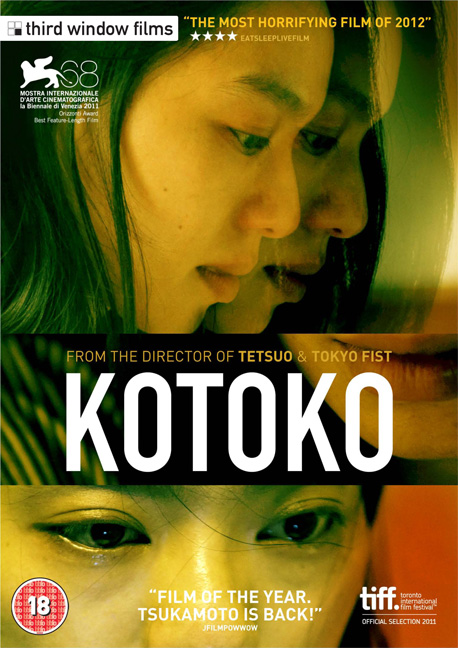
Kotoko (2011) – Track the Emotions, Not the World

Back in 1986, Shinya Tsukamoto began producing short experimental films with science fictional themes. One of these films entitled “A Phantom of Regular Size” featured a man living in a dystopian Tokyo being pursued, infected and ultimately transformed by a cybernetic spirit of the age, a woman in dark glasses and immaculate tailoring who could have stepped right out of The Matrix almost a generation later.

Phantom went on to form the backbone to a series of feature films that brought Tsukamoto to the attention of a global audience. Tetsuo: The Iron Man, Tetsuo II: The Body Hammer, and Tetsuo: The Bullet Man are all attempts to communicate what it felt like to be a member of the Japanese middle-classes at the end of a period of unprecedented economic growth that had completely transformed Japanese society in the space of a generation. These films portray the Japanese as a people worn down by the technologically sophisticated society that they themselves constructed. The opening scenes of Phantom are of a man in a subway convulsing with anguish as trains roar past like the blades on an enormous mincing machine. Every passage shaves away another ounce of humanity until there is nothing left but a host for technological infrastructure, as though the machine that had robbed the Japanese of their humanity was now putting them to work debasing and infecting the people around them. The early Tetsuo films not only diagnosed the sickness that was the late-20th Century Japanese experience, they also articulated what that sickness felt like by using imagery inspired by science fiction and horror.

Tsukamoto’s Kotoko feels a lot like a companion piece to the early Tetsuo films but rather than grappling with feelings of rage and alienation brought on by the experience of living under capitalism, Kotoko is all about articulating what it feels like to be a mentally ill single mother.

Continue reading →

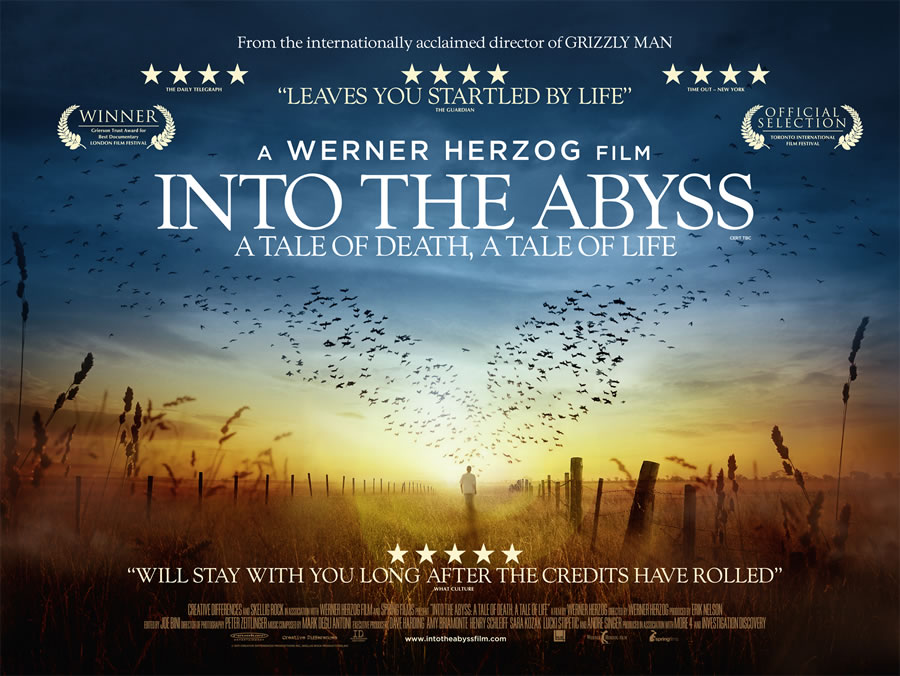
Into the Abyss (2011) – The Traumafare State

When has Werner Herzog ever made a film that couldn’t be summarised as a journey into the abyss? Early feature films such as Even Dwarfs Started Small and Aguirre, the Wrath of God seem to revel in the existential savagery of the world while more recent documentaries such as Grizzly Man and Happy People: A Year in the Taiga serve as reminders that the world has little time for the collection of bourgeois conceits that we dare to call a civilisation. The question is never whether Herzog will turn his film into a meditation on the savagery of the world, but which tone he will select as a means of approaching it:

Sometimes (as with Encounters at the End of the World and The Bad Lieutenant: Port of Call New Orleans) he is a whimsical fantasist who recognises that silliness is the only possible response to a world so cold and drenched with blood.

Sometimes (as with Fitzcarraldo and Little Dieter Needs to Fly) Herzog is a humanist who marvels at our human capacity to overcome the savage injustices of life.

Sometimes (as with Nosferatu the Vampyre and Aguirre) he is filled with bitterness and cynicism by nature’s ability to dissolve humanity’s finest dreams.

If becoming a cinematic auteur requires a director to develop a recognisable sensibility and carry it with them from project to project then Werner Herzog must be considered one of the most prolific and versatile auteurs in cinematic history. Regardless of whether he is producing documentaries or feature-length narrative films, Herzog is one of the brightest jewels in the crown of world cinema but he is also starting to get on.

Back in the early 2000s, a string of moderately successful films provided the veteran director with a level of visibility that had long since been denied him. Thrust into the spotlight and transformed into a celebrity, Herzog made the most of it by adopting the engagingly self-parodic persona of an austere German filmmaker who muses on the savagery of the world with his tongue planted squarely in his cheek. Long-time fans would not have been surprised by this development as Herzog has always had a fondness for deadpan satire and self-mythologising (the documentary My Best Fiend is at least as full of made up crap about Herzog as it is of stuff about Klaus Kinski). The problem with this moment of visibility is that while it evidently made it much easier for Herzog to secure funding on his next project, it also encouraged him to remain Herzog the whimsical fantasist who undercut his meditations on death and destruction with talk of depressed penguins and mutated crocodiles. Given that Herzog was now reaching 70 and more visible than ever, I was concerned that the whimsical Herzog might become a permanent fixture. Would the bitter and humane Herzogs ever return or would it be nothing but dancing souls and iguanas on the coffee table until the end? Clearly, I needn’t have worried as Into the Abyss is a documentary that shows us an entirely new Werner: Herzog the humane socialist.

Continue reading →

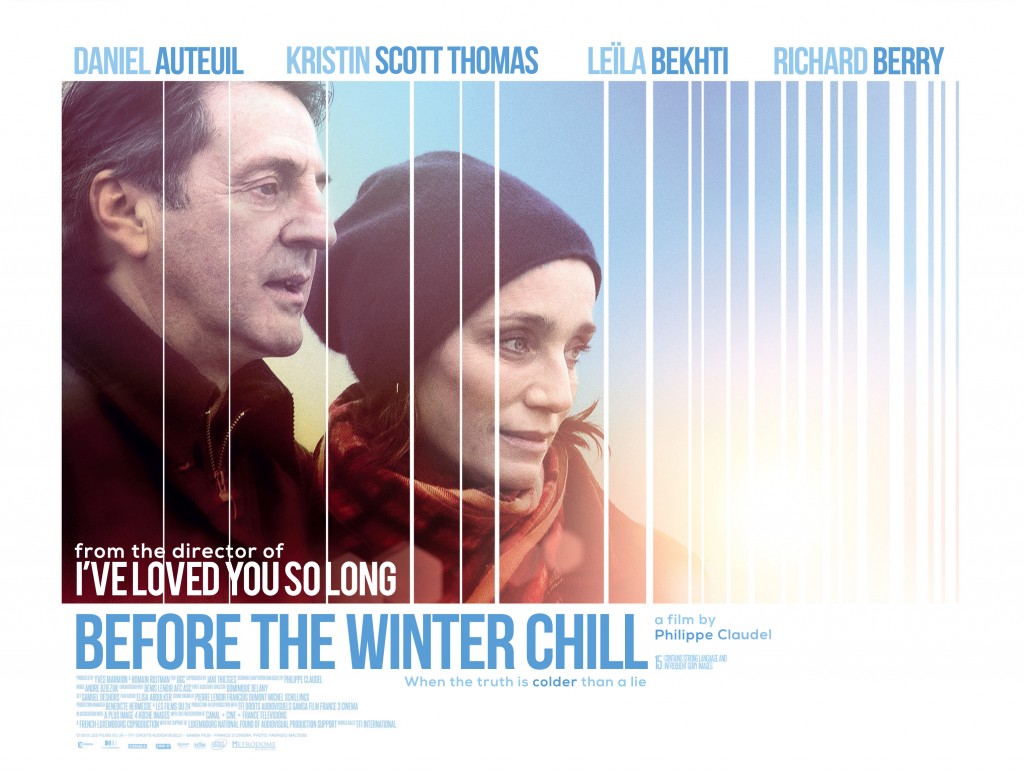
REVIEW – Before the Winter Chill (2013)

One of the first films I reviewed when I started this blog was Philippe Claudel’s debut I Have Loved You So Long, a beautifully made but cynically constructed film that skilfully leads you up the garden path before taunting you for having the temerity to set foot in someone’s garden. Like many of the works I value most, I adore and hate I Have Loved You So Long in almost equal measure: I adore it because I admire its courageous choice of subject matter (a woman who murdered her own child) and the skill with which Claudel guides us into a very specific emotional state.  I hate it because Claudel would rather get one over on his audience than use his skill to set them free with a fresh idea or perspective. I have reviewed hundreds of films in the years since I first saw I Have Loved You So Long and yet Claudel’s betrayal has always stayed with me… I am not an academic critic and I do not approach the culture I write about through a fixed ideology but one thing I believe is that great works encourage the audience to make their own choices and their own interpretations.

Given that I have something of a history with Claudel’s films, I jumped at the chance to write about his latest work Before the Winter Chill for FilmJuice.

Before the Winter Chill is one of those incredibly grown-up films that French cinema keeps quietly churning out while the English-speaking world gorges itself on films aimed at children. Set in contemporary France, the film revolves around an aging neurosurgeon (Daniel Auteuil) who has drifted through life without asking himself too many questions. As I explain in my review, the film is filled with pastoral images in which only his wife Lucie (Kristin Scott Thomas) is seen to be working. Indeed, the gap between the surgeon’s indolence and his wife’s incessant toil provides the pastoral setting (a vast modernist house with floor-to-ceiling windows that make the garden feel like part of the house) with its own emotional counter-force. Even as the film bends over backwards to establish the surgeon as an intelligent and sensitive man, it is abundantly clear that something has to give… there is too much unhappiness in every sour comment and petulant gaze. The shock to the system comes in the form of an attractive young woman who seems to be either in love with the surgeon, stalking him or quite possibly both. However, the film keeps the young woman’s motivations at arm’s length and encourages us to stretch our empathic muscles:

The film’s central mystery is a beautiful art student named Lou who seems to be very taken with Paul. Forced to assume Paul’s viewpoint, the audience is asked to keep guessing about Lou’s motivations; in one scene she is a young woman attracted to an older married man, then she is a stalker, next she is gravely disturbed and in need of help. All of these versions of Lou seem to exist in Paul’s head at the same time and his need to ‘solve’ the puzzle of Lou encourages him to spend time with her in a way that only serves to enrage his family and expose the tensions between them. While the film may begin by asking us to identify with Paul and ask why everyone is so grumpy, the film ends by asking us to identify with Lucie and ask: Why didn’t he put that much effort into making sense of the people who love him? Why did he open up to a peculiar stranger but keep everyone else at arm’s distance? How could he ask so much and give so little?

I have quite a strong critical read on this film but, unusually for me, I feel no great desire to share it with the world. As I explain in my review, Before the Winter Chill is one of those films that encourages speculation without providing sufficient clues as to why the various characters act in the way they do. People who are averse to spoilers want to preserve the sanctity of the plot, what concerns me is that by presenting you with a strong read, I would be denying you the pleasure of resolving the film’s ambiguities in your own unique way.

Part of what makes this film so satisfying is that it shows quite how far Claudel has developed as an artist. I Have Loved You So Long was an incredibly impressive debut but it was also intensely controlling as Claudel beat his audience over the head with very specific sets of emotions. Before the Winter Chill is no less skillfully made, Claudel’s use of music, acting and cinematography continue are still absolutely masterful. The difference is that today’s Claudel is comfortable with ambiguity and the audience’s right to resolve that ambiguity in a manner that works for them.

REVIEW – Camera Obscura: The Walerian Borowczyk Collection (2014)

This week saw the release of Arrow Films’ Camera Obscura; a magnificent box set exploring the early work of Polish director Walerian Borowczyk. As someone who already owns quite a few luxurious box sets devoted to art house film directors, you would think that I’d be immune to the packaging-foo of independent DVD publishers but Camera Obscura has taken me completely by surprise. Aside from an impressively thick booklet, the box set contains five beautifully restored feature-length films as well as Boro’s early short films and a suite of documentaries about both him and his work. To say that Camera Obscura is comprehensive would be an understatement, FilmJuice have my reviews of:

FilmJuice’s editorial format required me to break the box set down into five separate films, which is something of a pity as Camera Obscura does an absolutely amazing job of capturing Borowsczyk’s development as an artist. The key to this process of evolution are the short films included on the same disc as The Theatre of Mr. and Mrs. Kabal.   Continue reading →

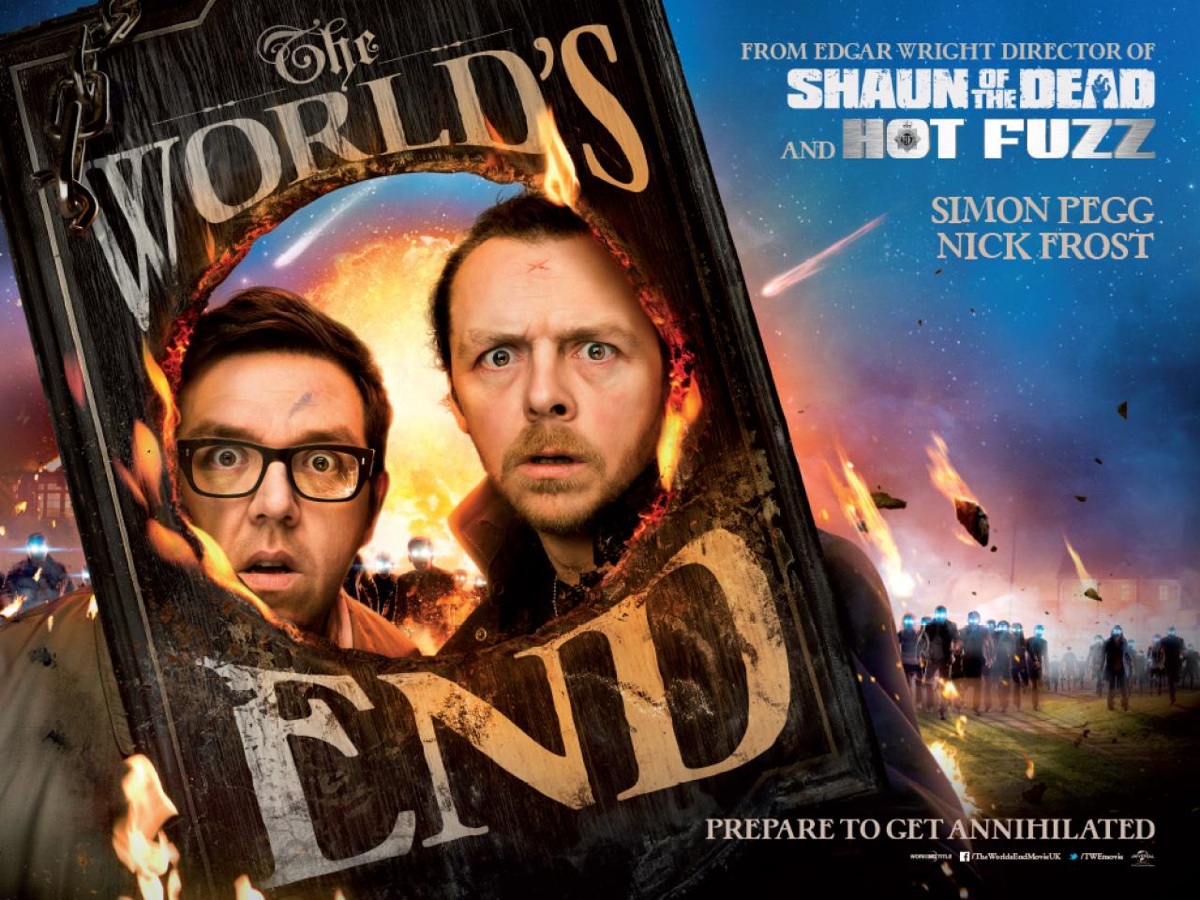
World’s End (2013) – Fuck Geek Culture for Making Me a Millionaire

The World’s End may be a shit film but at least it is full of bitterness and self-recrimination. The roots of that bitterness reach all the way back to the late 1990s when the writers of The World’s End first found success with a sitcom named Spaced.

This may be hard to believe but geek culture really wasn’t really that much of a thing before the late 90s. Sure… people enjoyed the films, books, comics and games that continue to provide geeks with a sense of common ground but mainstream culture rarely acknowledged that people (other than sports fans) were beginning to define themselves through their love of popular culture. Postmodernism was popularised throughout the 1990s but what drove that popularisation was not so much the death of cultural meta-narratives as the frisson of parental approval that came with every suggestion that a creator loved the same shitty pop culture as the rest of us. We often speak of constructing identities in terms of self-expression and self-acceptance but what really drives the adoption of a particular label is the recognition of others, particularly people in positions of authority. Simply stated, geek culture was not much of a thing until the late 1990s because advertisers and cultural creators rarely pandered directly to geeks and so rarely legitimised their identities.

Things began to change is the late 1990s when marketers noticed how devotion to a particular cultural product acted very much like devotion to a particular set of cultural values. Way back in ye olde black and whitey times, advertisers realised that if you associated a particular brand of pipe tobacco with values of manliness and respectability then people who valued manliness and respectability were more likely to buy the pipe tobacco. The success of films like Kevin Smith’s Clerks and Quentin Tarantino’s Pulp Fiction demonstrated that this transferral of affection also worked with popular culture; if a film makes a reference to some aspect of popular culture then the people emotionally invested in that aspect of popular culture are more likely to seek out and enjoy that film even if the subject of the film is entirely unrelated to the subject of the obsession. First broadcast in 1999, Spaced ruthlessly exploited these quirks in human psychology by dignifying geeks with their own slice of comedic social realism.


Continue reading →