REVIEW – West of Memphis (2012)

west-of-memphis-posterEvidently, I am passing through a documentary phase as FilmJuice have my review of Amy J. Berg’s West of Memphis.

I first became aware of Amy J. Berg through her film about the clerical abuse scandal Deliver Us From Evil. While the subject matter may now be reaching the point of saturation, Berg grabbed my attention by daring to place paedophile priests in the wider social context of a Catholic Church that hates homosexuality almost as much as it hates women. However, while Deliver Us From Evil was nominated for an Oscar, it also saw Berg drop off the map for a number of years and so I was very pleased to see her return to the director’s chair for this high-budget documentary about the West Memphis Three.

Given how impressed I was by Berg’s debut feature, it is slightly dispiriting to find her turning her hand to a film that is unadventurous both in terms of its form and its analysis. Indeed, much of West of Memphis‘s substantial running time is devoted to an extended recap of the ground already covered in the Paradise Lost trilogy of documentaries that have already been made about this particular topic. So while I’m sympathetic to the film’s aims and acknowledge that it’s a perfectly well-made and entertaining piece of documentary filmmaking, I do question the wisdom of making yet another film about this case. Are there really no other injustices in the world? If you are going to make a film about a topic that has already been covered by an entire trilogy of documentaries, I think it is important to do something new with the material and West of Memphis never quite manages to innovate:

There is no denying that West of Memphis is a worthy film and that this worthiness is utterly undiminished by the fact that three very good documentaries have already been made about this case. Nor is there any denying that Peter Jackson, Fran Walsh and all the other people working to free the West Memphis Three did a profoundly good thing by using their money and celebrity to help three unloved and unjustly convicted men from Arkansas. There is no denying any of these things and yet these things cannot entirely compensate for the fact that West of Memphis fails to offer us anything that we have not seen before. Hollywood has a fondness for documentaries designed to overturn miscarriages of justice and though certainly entertaining and occasionally compelling, this film never quite compares to either the exquisite ambiguity of Andrew Jarecki’s Capturing the Friedmans or the campaigning psychological complexity of Errol MorrisThe Thin Blue Line.

It’s hard to be unimpressed about this type of documentary without also seeming unimpressed with the subject matter but I was unimpressed, it felt like a step backwards by a promising director.
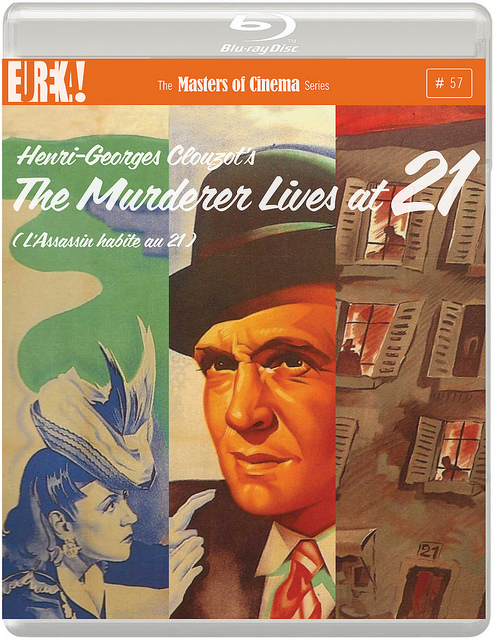
REVIEW – L’Assassin Habite au 21(1942)

21FilmJuice have my review of Henri-Georges Clouzot’s zesty whodunit L’Assassin Habite au 21 (a.k.a. The Murder Lives at 21)

Best known for his misanthropic thrillers Le Corbeau, Les Diaboliques and The Wages of Fear, Clouzot’s first film tells of a dapper and sarcastic detective who is charged with tracking down a mysterious serial killer known only as ‘Monsieur Durand’. Unfortunately for the detective, he is involved with a flighty and foul-mouthed opera singer who insists on going undercover with him in the hope that the ensuing publicity will help her faltering career:

Much like Ernst Lubitsch’s magnificent Trouble in Paradise, Clouzot’s film features a couple whose relationship has nothing to do with love or devotion and everything to do with sex and cynical self-advancement. This misanthropic vision of human relationships pervades every aspect of the film from the way people talk to each other in the boarding house to the way things get done at police headquarters.

L’Assassin Habite au 21 looks and feels like an adaptation of Dashiell Hammett’s The Thin Man filmed by Fritz Lang but aside from being brilliantly written, brilliantly shot and brilliantly acted, the film also reminds us that there was a point in cinematic history when films were not afraid to depict grown-up and unusual relationships in all of their complex glory. Indeed, one of the things that most struck me about J.J. Abram’s recently-released (and incredibly tedious) Star Trek into Darkness is that while all of the characters may technically be adults their concerns are those of much much younger men.

Today’s Hollywood blockbusters are locked in what can only be called a financial death spiral. Lured into competing with each other to produce more and more expensive films, the studios have now reached a point where they have spent the last decade actively alienating anyone who is not a teenaged American boy. Painfully aware that films like Star Trek into Darkness need to make about $1 Billion before they start making money, the studios are now making more of an effort to reach out to foreign markets and they are doing this by making their themes and narratives as broad and accessible as possible. A Hollywood blockbuster needs to be comprehensible to everyone in America but it also needs to be comprehensible to people who grew up in rural China or India. As a result, films like Star Trek into Darkness are about grown men confronting the generic problems of teenaged boys such as getting the right girl to like them and overcoming their love-hate relationship with Daddy. This infantilisation of Hollywood’s primary protagonists is particularly amusing in the case of Star Trek as there’s a scene where Zachary Quinto’s Spock contacts Leonard Nimoy’s Spock in order to get advice. 21st Century heroes are evidently not afraid to call their parents and have them come and pick them up from the party. There’s your crisis of masculinity right there!

The Murderer Lives at 21 is released on Monday by Masters of Cinema and it is worth every penny.

REVIEW – Blood Simple: Director’s Cut (1998)

BloodSimpleFilmJuice have my review of Joel and Ethan Coen’s first film Blood Simple. Or rather, the slightly shorter director’s cut that was released about fifteen years after the original film.

I found this review quite difficult to write as while I have seen and enjoyed most of the Coen Brothers’ films, I’m also acutely aware that their work invariably seems less substantial the more you think about it. Though some of their films are easily dismissed as more-or-less enjoyable tosh, some of their films feel like substantial dramas. Indeed, both A Simple Man and The Man Who Wasn’t There seemed intellectually robust when I first saw them but I am now hard pressed to remember anything about them aside from a couple of throwaway gags. Blood Simple felt very similar in that it is a film that does a great job of looking smart even though it is really little more than a pastiche:

Clearly inspired by such hardboiled crime novels as Dashiell Hammett’s Red Harvest and James M. Cain’s Double Indemnity, Blood Simple takes a collection of film noir clichés, drives them out of the city and deposits them in a crummy bar at the tail end of Texas. Stripped of their tilted fedoras and artfully crumpled raincoats, the clichés valiantly attempt to start new lives but eventually find themselves sliding back into old familiar habits.

Watching Blood Simple, I couldn’t help but reflect upon the fact that the dividing line between a ‘smart’ film and a ‘dumb’ film is often a question of viewer charity as a charitable viewer is more likely to detect meaning and symbolism than someone who is bored out of their tiny mind. Indeed, skilled directors know that it is possible to make a film seem smarter by using some of the visual and stylistic cues that people associate with smartness. For example, even though Jon Favreau’s Iron Man and Christopher Nolan’s The Dark Knight Rises do not actually say anything substantial about either the War against Terror or the Occupy movement, visual references to both of those real world events goaded critics into assuming both films had elaborate political messages. Similarly, art house films such as Eugene Green’s The Portuguese Nun and Carlos Reygadas’ Silent Light are so good at looking like serious intellectual films (long takes, lots of silence, beautiful photography, impressions of interiority) that many critics simply assume that they were in fact serious art house films filled with deep and meaningful truths.

Blood Simple is very much like a Batman comic in so far as it looks really dark, twisted and psychological but that look is ultimately all it has to offer. Watching Blood Simple I began to think about whether No Country For Old Men is a smart film or merely a film that looks smart… is there any difference? Does ‘smartness’ actually exist outside of the audience’s heads?

REVIEW – Les Cousins (1959)

LesCousinsFilmJuice have my review of Claude Chabrol’s second film Les Cousins, which has just been re-released by the ever-excellent Masters of Cinema.

Les Cousins tells of a young man who moves to the city in order to study law. Sharing his uncle’s place with his far more sophisticated and extroverted cousin, the young man finds himself being sucked into his cousin’s glamorous lifestyle filled with parties, girls and dubious European noblemen. Initially, this relationship works quite well as the cousin likes to be the centre of attention and the young man’s inexperience makes him feel like an older brother and a community leader. However, when the young man attempts to become romantically involved with a young lady in his cousin’s entourage, the cousin takes umbrage and decides to assert his supremacy. Disgusted both with his cousin’s behaviour and his own loss of focus, the young man throws himself into his studies but this only provokes his cousin into more frequent and louder parties:

Things come to ahead when Charles is trying to study for his finals but Paul keeps having loud parties. Charles pleads with his cousin to do some revision but Paul’s confidence is absolute… he knows what he is doing and revision is an absolute waste of time. As with Le Beau Serge, Chabrol presents the tension between the two boys as being social and psychological in nature but in truth their disagreement is a moral one: Charles writes endless letters home to his mother promising that he will succeed in his studies and suggesting that his desire to work is born of a sense of duty to do right by his parents. By not only refusing to study but also making it harder for Charles to study, Paul is challenging the moral order of Charles’s universe. In Charles’s mind, Paul is doomed to failure because the universe does not reward provocative layabouts. This means that when Paul does pass his exams with flying colours, Charles is forced to examine not only his faith in the moral nature of the universe but also his conviction that his duty to his parents obliged him to study: What if the best way to succeed really was to wear a smart suit and hang-out with dubious Italian aristocrats?

I mention Le Beau Serge as Les Cousins can be read as a response to that earlier film. Where Le Beau Serge is rural, Les Cousins is urban. Where Le Beau Serge is about a town-mouse visiting a familiar countryside, Les Cousins is about a country-mouse visiting an alien city. Where Le Beau Serge is about taking responsibility for the actions of another, Les Cousins is about remaining true to yourself.

Somewhat handily, Masters of Cinema have decided to time their re-release of Les Cousins with a parallel re-release of Le Beau Serge (that I also reviewed for FilmJuice). While both films work beautifully on their own, many of their subtleties only become apparent when viewed one after the other.

REVIEW – Le Beau Serge (1958)

LeBeauSergeFilmJuice have my review of Claude Chabrol’s first film Le Beau Serge, which has just been re-released by Masters of Cinema.

Le Beau Serge tells of a young man who returns to his home town in order to recuperate from an extended period of illness. Upon arriving, he becomes obsessed with a childhood friend who, despite showing real signs of intelligence and potential as a child, has now fallen into drink and bitterness. Puzzled by this unexpected fall from grace, the young man sets about trying to solve the riddle of what happened to the handsome Serge of his youth:

While much of the initial narrative energy comes from François’s attempts to solve the mystery of le beau Serge, the second half of the film increasingly comes to focus upon why it is that François is so obsessed with saving first Serge, then Marie and then the entire village. Though Chabrol offers us no easy answers, the depth of François’s guilt is such that his attempts to protect Serge and his family eventually come to seem insane and messianic. Why doesn’t François leave? Why didn’t Serge leave? Why doesn’t anyone leave a life that is manifestly killing them?

Chabrol is a director with a somewhat misleading reputation for producing thrillers. Though many of his most famous films (including Le Boucher, This Beast Must Die and La Ceremonie) include a bloody murder and a good deal of psychological tension, the truth of the matter is that Chabrol is and always was a moralist. Not in the sense of lecturing people about right and wrong but rather exploring why it is that people make certain decisions and how they come by certain strange beliefs. Unlike Chabrol’s later films, which dressed the morality up in murder and tension, Le Beau Serge strips the core of the Chabrol experience right back to the very core and asks two very salient questions: Why did Serge turn to drink? Why is Francois obsessed with saving him? A truly wonderful film by a truly wonderful director.

Interestingly, Masters of Cinema have chosen to re-release Le Beau Serge on the same day as they re-release his second film Les Cousins. As I explain in my review of that film over at FilmJuice, the two films function as a pair: Complementing each other through their many differences and juxtapositions.

Two Films You Should See – Stalker and Perfect Blue

PerfectBluestalker-film-poster-tarkovsky

This year, FilmJuice have decided to compile a list of a hundred films that everyone should see. I was lucky enough to kick-off the series this week with my two selections: Andrei Tarkovsky’s Stalker and Satoshi Kon’s Perfect Blue.

Unlike Western science fiction films that use spectacular action sequences and fast-paced narratives to excite and entertain their audiences, Stalker uses a combination of extraordinary visual richness and extreme narrative simplicity to coax its audience into a mood of thoughtful curiosity. To call Stalker a ‘boring’ film is both technically correct and completely misleading as the lack of complex plot and distracting characters is a deliberate move designed to force the audience to reflect upon what it is they are actually seeing. Having placed the audience in a state of engaged curiosity, Tarkovsky engineers the cinematic equivalent of a spiritual experience.

My reading of Stalker is somewhat different to the one I put forward back in 2009 but I think the two are broadly compatible.

The brilliance of Perfect Blue lies not just in its ability to handle the dovetailing realities of a disturbed mind in a manner that is both poised and extremely rigorous, it also uses these fragmented realities to critique a cultural environment that is extremely resistant to re-invention and experimentation. This is a film about how society dehumanises and destabilises those women who refuse to stay in the box allotted them by the men who would control their lives.

I have not written about Perfect Blue before but it remains one of my very favourite films.  The rape scene I discuss is triggery as fuck for obvious reasons but I think it remains one of the most brutally ambivalent cinematic sequences every produced. Horrific, self-aware and even more horrific because of its self-awareness.

REVIEW – Trouble in Paradise (1932)

FilmJuice have my review of Ernst Lubitsch’s classic 1930s romantic comedy Trouble in Paradise.

Set in 1930s Paris, the film tells of a pair of confidence tricksters who fall in love and decide to fleece the heiress to a large perfume fortune. However, as the male crook worms his way into the heiress’s affections as head of her household, he soon comes to realise that he actually prefers the identity he has assumed to the identity he was born with. Trapped between his growing love for the heiress and his standing relationship with a female crook, the confidence trickster is forced to contend with issues of class and ask himself what it is that he really wants from a relationship.

I must admit, I approached this film with some degree of trepidation as my experience of Lubitsch has always been tainted by Nora Ephron’s slushily sentimental You’ve Got Mail, a remake of Lubitsch’s immeasurably more elegant The Shop Around the Corner. Well… that and the wider problem that:

Most romantic comedies are rubbish. The reason for this is that the people who make romantic comedies want as broad an audience as possible and assume that the only way to reach this broad audience is to keep the subject matter simple-minded in order to make it accessible. This terror of alienating audiences has resulted in a cinematic culture in which romantic comedies tend to either be about actual teenagers (e.g. Juno and 10 Things I Hate About You) or about emotionally stunted adults who behave like teenagers (e.g. High Fidelity and Amelie). The reason why genre classics such as Annie Hall, His Girl Friday and The Apartment have endured while the likes of My Big Fat Greek Wedding and What Women Want have faded from view is because these classic romantic comedies speak of grown-up relationships in a way that ensures their continued relevance to generations of grown-up film lovers. Indeed, if the measure of a romantic comedy’s greatness is its level of emotional sophistication then few romantic comedies come anywhere close to rivaling the magnificence of Ernst Lubitsch’s Trouble in Paradise.

Aside from being beautifully acted, wonderfully made and occasionally very funny indeed, the film also contains some real insight into the ambiguities and challenges of managing an adult relationship. Are you with the right person? Are you with the right person for the wrong reason? What kind of person would you be if you were to spend your life with a different person than the one you have? These are not the types of questions that appear in most romantic comedies as most romantic comedies are focused upon the adolescent adrenaline rush of first love. However, as anyone who has been in a long-term relationship will tell you, those early months are really very different to the emotional and intellectual landscape of genuinely long-term relationships. Trouble in Paradise is a real joy to watch as it speaks directly to the nature of adult relationships in a way that adults can understand.

REVIEW – Polisse (2011)

FilmJuice have my review of Maiwenn’s award-winning police drama Polisse.

The critical success of The Wire and The Sopranos has created something of a market for intelligent police procedural dramas. Incapable of keeping up with demand, British TV has begun casting its net further afield than the anglophonic sphere resulting in the explosive popularity of French series like Spiral and Braquo and Scandinavian series such as The Killing and The Bridge. Clearly designed to tap into a similar zeitgeist, Maiwenn’s Polisse is an intelligent and bleak police drama set around a Parisian child protection unit.

Maiwenn decided to make the film after seeing a documentary about child protection units. Drawing on her showbiz contacts, the director embedded herself in a working police unit and recreated everything she saw on set with actors. In other words, when a stressed single mother explains that one of her sons is better behaved than the other because she jerks him off every night, chances are that someone actually said that to a police officer in front of this film’s director.  Even more astonishing is the fact that the woman’s naïve belief that this type of behaviour is a normal part of parenting is utterly convincing and disarmingly human. Shot in a documentary style and performed by an absolutely fearless cast of adult and child actors, these little vignettes crackle with the kind of uncomfortable energy that you only get when an unpleasant truth is well and truly pinned down.

As brilliant as these interview section may be, the rest of the film suffers for Maiwenn’s misguided attempt to crowbar an entire TV series’ worth of narrative and character development into a mere two hours. What this means is that while each of the ensemble cast receives a big emotional moment, none of these moments feel in any way connected to the film’s limited space for character building and drama. The result is a film that lurches from one hysterical outburst to the next and by the time you’ve seen your third copper break down in tears and punch a wall the film’s hysteria begins to seem comical, which is really quite unfortunate for a film about child abuse.

REVIEW – If I Want to Whistle, I Whistle (2010)

FilmJuice have my review of Florin Serban’s debut feature If I Want to Whistle, I Whistle. Nominated for the Berlin Golden Bear and winner of the Jury Prize Silver Bear, Serban’s film is being marketed as the latest opus to emerge from the fecund soil of the Romanian New Wave. High praise indeed given that that particular wave produced not only Cristi Poiu’s The Death of Mr Lazarescu and Corneliu Porumboiu’s Police, Adjective but also Cristian Mungiu’s Cannes-winning 4 Months, 3 Weeks, 2 Days. Unfortunately, while Serban’s film does an excellent job of re-creating the corridorpunk aesthetic that has thus-far dominated the Romanian New Wave, the film itself is really nothing more than a generic prison thriller:

The problem is that while films like Police, Adjective and The Death of Mr Lazarescu used a very specific set of Romanian problems to explore what it is like to be a contemporary Romanian, Serban’s film is really nothing more than the sort of generic prison movie that could have been made anywhere. Generic in plot and unoriginal in aesthetic sensibility, Serban’s debut is a largely pointless addition to an increasingly over-loaded bandwagon. Indeed, while the film’s gritty visuals and social realism may have helped to secure international distribution, they do absolutely nothing for the film’s message or emotional impact.

Some critics have suggested that If I Want to Whistle, I Whistle is proof that we are close to reaching the bottom of the Romanian New Wave barrel and that all the talent in that particular scene has now been discovered leaving only the hacks and the wannabes. Though I have a certain amount of sympathy for this viewpoint, I think the decision to load If I Want to Whistle, I Whistle onto the Romanian New Wave bandwagon speaks of a more profound malaise with world cinema.

Consider the following hypothetical situation: You are a young Romanian who has just graduated from film school at a time when critics all over the world are singing hosannas to your national cinema. All over the world, people are paying to see Romanian film and you know that, as a young Romanian film director, chances are that you can score a breakthrough hit. However, in order to produce a breakthrough hit and launch your career, you need to attach yourself to this national cinema that everyone is raving about. Q: What is the best way of accomplishing this? A: By making the film you want to make and combining it with familiar tropes. Result: A thriller with a corridorpunk aesthetic.

If I Want to Whistle, I Whistle is best understood as a professional calling card. A demonstration of technical prowess and aesthetic pragmatism that showcases Serban’s ability to adopt popular styles in order to get a film made. Much like Tom Waller’s Soi Cowboy, it is proof that Serban can be a good cultural citizen and produce the type of film expected of young Romanian film directors. I suspect his next film will be not only better but also a good deal more personal. Florin Serban is clearly one to watch.

REVIEW – Miss Bala (2011)

Videovista have my review of Gerardo Naranjo’s Mexican crime movie Miss Bala.

The film tells of a young woman who attempts to sign up for a beauty pageant but winds up getting involved with a gang of Mexican drug traffickers. In the hands of a less ambitious director, this set-up might have resulted in one of those horrific fish-out-of-water films like Jonathan Demme’s Married to the Mob (1988) or Donald Petrie’s Miss Congeniality (2000). However, rather than play-up the comic elements of the culture clash, Naranjo uses them as the basis for a coming-of-age movie that skewers the values of contemporary Mexican society:

The idea that Mexico is nothing more than an oceanic darkness lurking beneath a thin strip of human pretence is present throughout the film’s cinematography. Miss Bala is an intensely dark and moody film and the only time that Naranjo allows us to escape the darkness is in the few sun-kissed moments when Laura is attempting to pass herself off as an innocent civilian. Compared to the shadows of Laura’s day-to-day existence, the floodlit wonderland of the beauty pageants, shopping trips and garden parties seems both grotesquely fake and beautifully alluring.

Miss Bala is an intensely clever and absolutely beautifully shot film that must class as one of the best crime movies to appear in the last couple of years.