REVIEW — State of Grace (1990)

FilmJuice have my review of Phil Joanou’s State of Grace, which is due to be re-released as part of a weird actor-focused box set alongside Colors. The film’s wikipedia entry describes it as a “neo-noir crime film” but I find it more helpful to think of the film as a bloated rock opera set amidst the gangs of New York. I use that phrase deliberately as State of Grace is a film about the last surviving remnants of the criminal underworld described by Scorsese in the film Gangs of New York. State of Grace is about a gang of working-class Irish-Americans who are struggling to hold onto territory that is in the process of being gentrified. Trapped between the legal connections of developers and the muscle of the Italian families, the once-plentiful Irish-American criminal fraternity has shrunk down to a single gang of drunks, cowards and nostalgic fuck-ups. As a snapshot of a particular point in the history of NYC, the film is really fascinating as many of the empty buildings the gang hang-out in are now home to high-end designer boutiques and luxury apartments. Basically… if you want to know what Hell’s Kitchen looked like before a wave of gentrification turned it into ‘Midtown West’ then this is the film for you.  Just don’t watch it for the story… or the acting.

The film’s plot is sort of similar to that of Mike Newell’s Donnie Brasco in that it involves a cop infiltrating a criminal gang only to wind up identifying with the gang so much that he struggles to do his job. Only, the cop’s job is a lot harder here as the gang he is ordered to infiltrate is mostly composed of his childhood friends. The names attached to this project were always first class: Sean Penn, Gary Oldman, Ed Harris and Robin Wright. The problem is that the director seems to have provided his actors almost no direction resulting in a film that is completely overwhelmed and unbalanced by one of the worst performances of Gary Oldman’s career:

The film’s primary problem is that Gary Oldman starts off shouting and flailing only to become increasingly hysterical as the film progresses. Come the final act, he is literally stamping his feet and rolling around on the ground like an over-tired toddler. Oldman’s performance is so ludicrously over the top that it completely destabilises the rest of the film: Ed Harris’ muted and conflicted performance as the gang-leader comes across as flat while Robin Wright undermines an otherwise delicate job with one scene in which she suddenly abandons all of her character’s emotional toughness in order to rend her clothes and tear at her hair. Penn is arguably the best thing in this film as his double-dealing character gives him an excuse to ‘act crazy’ around Jackie and assume a more muted demeanour when dealing with Frankie, Kathleen or his police handler. Had Joanou decided to have a quiet word with Oldman then the film might easily have been salvaged but rather than reining his actors in, the director lavishes attention on them allowing even minor scenes to balloon into absurd melodramatic arias that rapidly overstay their welcome.

Three things occurred to me after writing this review:

Firstly, the only thing I really knew about Hell’s Kitchen before watching this film is that it’s home to the Marvel comics character Daredevil. Given that Hell’s Kitchen has now been gentrified and filled with up-scale apartments, does Daredevil still protect that neighbourhood and if so, doesn’t that change the dynamic of the comic? The masked protector of a shit-hole might have a bit of nobility but a lawyer who spends his evenings beating up door-to-door duster salesmen? Sounds even worse than Batman!

Secondly, it occurs to me that Gary Oldman’s Jackie may well have been the inspiration for the character of Ziggy Sabotka as played by James Ransone in season two of The Wire: They’re both remnants of a working-class culture that is about to disappear, they’re both temperamentally unsuited to their chosen life of crime and they’re both annoying histrionic tits who stick out like sore thumbs in an otherwise realistic and well-drawn setting.

Thirdly, Hollywood doesn’t really make these sort of mid-budget dramas any more and it occurred to me to look into how much money the film actually made upon first release.  Unsurprisingly, it wasn’t much and Roger Ebert (who thought more of the film and Oldman’s performance than I did) explains why:

There’s another problem. This movie, intended as a gritty slice-of-life about gangsters in New York City, is being released at about the same time as Martin Scorsese’s “GoodFellas,” which deals with the same subject and is a film so strong and graceful that few others can stand comparison to it.

Yeah… tough luck that.
 

REVIEW — My Darling Clementine (1946)

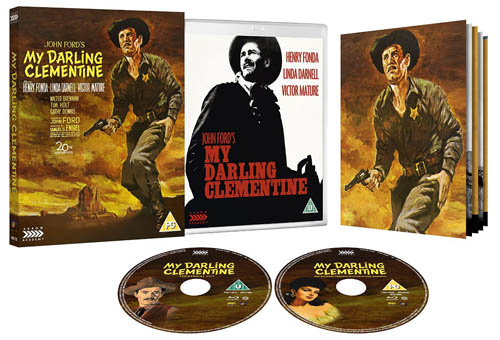
FilmJuice have my review of the high-end Arrow Academy release of John Ford’s classic western My Darling Clementine.

I knew that John Ford was a great director the second I saw ‘that shot‘ in Stagecoach when John Wayne makes his entrance and the camera seems to scamper towards him like an over-eager puppy. Since then, I’ve seen a few more of his films and even written about one of them in less than flattering terms but while I haven’t been all that aggressive about seeking our Ford’s work, he has been sitting at the back of my head with a ‘Genius?’ post-it note stuck on his forehead. Reviewing My Darling Clementine was a great chance to peel off the post-it and remind myself why I instinctively hold Ford in such high esteem. This is a stone cold classic in which every shot is a painting and every line is a poem.

The thing that took me completely by surprise was the depth at which Ford seems to be operating. What depresses me about a lot of the films coming out of contemporary Hollywood is that rather than operating on several different levels at the same time (e.g. telling a story, exploring some characters, elaborating a theme, providing a spectacle) they often struggle to do even a couple of these without collapsing in a heap. The Marvel Cinematic Universe films are an excellent example as while they more or less tell stories, have characters, and provide spectacle, they never do any of these things particularly well. John Ford, on the other hand, does all of these things in a way that allows them to flow into one another in a completely organic fashion. For example, the main plot of My Darling Clementine is this deeply symbolic meditation on moral grace that brings Henry Fonda’s morally up-standing cowboy to the morally decadent town of Tombstone and watches as the goodness seems to seep out of his boots as he wander about the place. This conflict between the grace humans can create and the moral decadence that is native to this world plays out in every image and every character including Victor Mature’s Doc Holliday who arrived in Tombstone as a good man only to wind up getting infected by the animal selfishness of the town:

Ford explores Holliday’s dilemma by positioning him between two women: On the one hand is Linda Darnell’s Chihuahua, a white woman named for a Mexican dog and wearing Mexican clothes despite frequent references to her being some sort of Native American. As in many films of this era, racial otherness combines with moral and sexual otherness to create an image of everything that Holliday is yearning to become. Chihuahua is like the household god of Tombstone; she’s beautiful, treacherous, promiscuous and a ravening Id that is unchecked by anything even approaching a conscience. On the other hand is Cathy Downs’ Clementine, a Boston school teacher who fell in love with the man Holliday used to be and who came out west in order to lure him back to civilisation. Clementine is not exactly successful as her presence shames Holliday into a bender and plans to move to Mexico with Chihuahua by his side. However, Clementine’s journey turns out not to have been wasted as her simple goodness turns out to be a perfect match for that of Wyatt Earp.

Very symbolic and character-focused, this plot strand stands in stark contrast to a secondary strand dealing with the burgeoning relationship between Wyatt and Holliday’s ex-lover Clementine. Ford presents both Earp and Clementine as restrained and upstanding and so, rather than having them talk about their feelings, he allows the relationship to unfold with virtually no dialogue at all. These sections of the film could have been culled from a film by Carl Theodor Dryer, such is the faith that Ford displays in his audience’s capacity to read emotions straight off the actors’ faces.

It’s always nice to encounter a canonical film that doesn’t disappoint and My Darling Clementine is entirely deserving of its canonical status.

REVIEW — Les Combattants (2014)

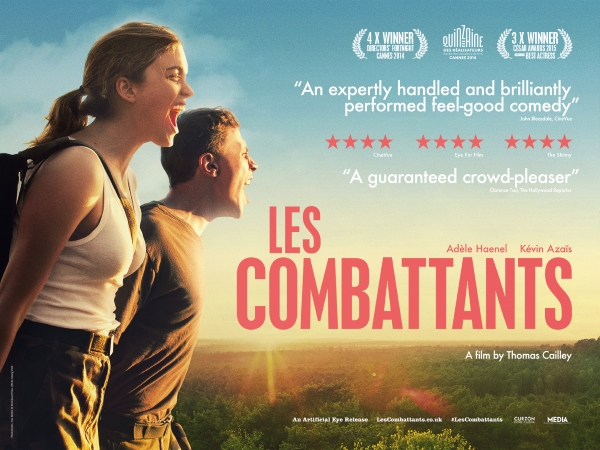
FilmJuice have my review of Thomas Cailley’s hugely engaging teen drama Les Combattants (a.k.a. Love at First Fight). Having received a standing ovation at Cannes, Cailley’s debut film went on to secure nine nominations and three wins at the French equivalent of the Oscars. Celebrated by French critics as nothing less than the future of French cinema, Les Combattants limped onto Anglo-American screens where it was marketed and reviewed as a romantic comedy (hence the stupid English-language title). Given that it is short on jokes and long on the kind of evocative, hands-off storytelling that is common in European drama and absent from the history of romantic comedy, the film received middling reviews from critics who seemed more interested in engaging with the press release than the nature of the film itself. According to Gary Goldstein at the LA Times:

There’s a better movie floating around the edges of the French import “Love at First Fight” than first-time feature director Thomas Cailley has allowed to surface. Though it’s billed as a romantic comedy, this quirky tale takes too many narrative U-turns that seem to dodge the genre’s more traditional (read: satisfying) tropes and dynamics.

There’s misprision and then there’s critical laziness. This is an example of the latter as Les Combattants is actually a fantastic meditation on Young Adult fiction and contemporary gender roles. You just need to make a bit of an effort in order to see it.

Les Combattants is built around two young adult protagonists: Kévin Azaïs‘ Arnaud whose lack of ambition and focus in no way seems to prevent his integration into a French society that is always pleased to see him. Everywhere he goes, Arnaud is offered jobs and opportunities for advancement despite the fact that the French economy is evidently still in tatters. Adèle Haenel plays Mathilde, a fiercely intelligent and incredibly driven young woman whose every attempt to secure an education or job is met with dismissive scorn. The fact that Arnaud’s white male privilege protects him from economic deprivation means that he is far better disposed to people and society than Mathilde, who spends the entire film having doors slammed in her face:

When Mathilde joins Arnaud’s family for dinner, the conversation naturally turns to the lack of jobs for young people and we see how the inequalities in French society have nurtured two very different reactions to the economic crisis: Embittered and unappreciated, Mathilde reaches the conclusion that society has nothing to offer her and so sets about preparing for its imminent demise; Pampered and protected, Arnaud has the luxury to consider a number of different career paths and so admits that he has never really thought about the collapse of Western civilisation.

Arnaud slowly falls in love with Mathilde and so decides to join her at a boot camp designed to help young adults preparing to join a parachute regiment. While Arnaud’s easy charm and happiness going with the flow mean that he fits right into a military environment, Mathilde solitary nature and intense disposition mean that the army falls out of love with Mathilde almost as quickly as Mathilde loses interest in the army. Eventually, things get so bad that Arnaud decides to abandon his shot at a military career and simply wanders off into the wilderness with Mathilde in tow.

As I explain in my review, I think that Cailley was wrong to have Arnaud discover his agency at the end of the film. I think that having Arnaud lead the pair out of danger undermines Mathilde’s character and turns Les Combattants from a film about a couple into a film about a young man. This misstep aside, I think this film has a lot of interesting things to say about gender. Particularly when you realise the similarities between Haenel’s intense survivalist Mathilde and the intensely self-reliant young women who feature in books like Suzanne Collins’ The Hunger Games, Veronica Roth’s Divergent series, and Kristin Cashore’s Graceling.

Les Combattants suggests that women have it considerably harder than men in the current economic climate. What makes Cailley’s analysis interesting is the suggestion that these inequalities might well have a knock-on effect of how the different genders perceive society. For example, Mathilde has grown intensely self-reliant because she no longer trusts society whereas Arnaud is happy to trust society and go with the flow because his experience is of people and institutions falling over themselves to offer him jobs and opportunities for advancement. The film’s ending strikes a false note because allowing Arnaud to save the day sends the message that Arnaud’s vision of society is somehow correct whereas Mathilde’s is paranoid and self-destructive. I disagree… I think Mathilde’s wariness is a rational response to an irrational world and I can’t help but wonder whether the immense popularity of YA among women might not be a direct response to their unequal treatment at the hands of society.

Interesting stuff aside, Les Combattants is one of the better looking films I have reviewed recently, so I thought I would share a few screen grabs:


Continue reading →

REVIEW — Stalag 17 (1953)

FilmJuice have my review of Billy Wilder’s misleading P.O.W. comedy Stalag 17. I say “misleading” as while the film was initially marketed as a tribute to America’s brave prisoners of war, the film’s depiction of life in a World War II prison camp is actually far from flattering.

Originally a hugely-successful Broadway play, Stalag 17 revolves around a group of American POWs who are trying to escape the camp. Using all of their initiative and sneakiness, the men dig tunnels, fashion civilian clothes and scout for weaknesses in German security only to wind up delivering their escapees into the waiting arms of German machine-gun fire. Shocked but reticent to engage in any form of concerted self-criticism, the group’s frustrations wind up being unleashed on William Holden’s Sefton, a cynical individualist who would rather profit from the group’s desires than aid in their fulfilment. What makes this film “misleading” is the fact that, rather than conforming to genre expectations and producing a film all about a bunch of POWs coming together to outwit the Germans, Wilder has produced a film that portrays American POWs as boorish, overbearing idiots. In fact, Sefton’s rugged individualist is quite obviously intended to be the film’s point-of-view character:

Stalag 17 is not exactly the easiest film to get into. In fact, the film is almost completely unwatchable for most of its opening hour. The problem is that the film ostensibly plays lip service to the idea of the Good War by presenting many of the POWs as happy-go-lucky scamps. Stalag 17 is often described as an iconic film as it was one of the first films about the Second World War to present the Germans as figures of fun rather than menace. Just as this vision of the Nazis as effeminate, strutting nincompoops would later inform British comedies like ‘Allo ‘Allo, the idea that prisoners of war could pull off elaborate schemes under the noses of their German captors would later inspire 168 episodes of the American sitcom Hogan’s Heroes. What makes the film very nearly unwatchable is the fact that virtually all of its jokes are embarrassingly unfunny: First we have the incessant torrent of anti-German comments that are really little more than crude xenophobic sniping dressed up as banter. Then we have about a dozen different jokes involving an over-weight man falling over and finally we have a scene in which hundreds of well-fed American POWs scream and gesture lewdly at a bunch of terrified female prisoners. This type of humour might well have passed muster amidst the jingoism and sexism of 1950s America but it actually makes the POWs come across as a bunch of boorish idiots… and therein lays the point.

My review places Stalag 17 in the broader context of Wilder’s career and his tendency to view American society in very cynical terms but it also occurs to me that films like Stalag 17 could very well mark the point at which war-time solidarity left the American cultural bloodstream, taking any and all faith in collective action with it. Sefton’s rugged individualism provides the film with its moral centre precisely because America was entering an age where it became the individual’s moral duty to look to their own advancement whilst questioning any and all conceptions of the public good that were not grounded in material largesse.


REVIEW — 3 Women (1977)

FilmJuice have my review of Robert Altman’s arthouse drama 3 Women. Set in a small desert town, the film tells of a teenage girl who arrives in town and attaches herself to a slightly older woman with a similar background. Initially, the teenage girl behave likes little more than an enraptured child, hanging on the older woman’s every word as she spins lies and revels in her narrow consumerist ideas about the good life. This relationship lasts until the young woman’s naivete and the older woman’s dishonesty run afoul each other resulting in one of them being hospitalise, at which point the film gets weird:

3 Women is divided into three increasingly-short sections that are topped and tailed by these beautifully composed surrealist interludes that linger in the mind and imbue the film with a distinctly dreamlike quality. When Milly and Pinky’s first relationship falls to pieces, a dream sequence triggers a re-ordering of their friendship and a transfer of personality traits: Once childlike and naïve, Pinky now emerges as manipulative and sexually confident while the deluded and selfish Milly is replaced by a more nurturing and principled figure who tries to look after Pinky only to wind up apologising for her failings until their unhealthy relationship intersects with another woman.

The elevator pitch for this film could easily be: A Feminist Lost Highway as the exchange of personality traits and the radical reworkings of reality are very similar to those deployed by Lynch. The film was evidently quite poorly reviewed at the time and Altman himself admitted that he wasn’t entirely clear what message he was trying to get across but I was reminded quite a lot of the work of Joanna Russ in so far as the film builds towards a future without men and many of the weirder shifts are triggered by a need to find a new way to co-exist with men who are either distracted and indifferent or crude stereotypical representations of a masculinity so toxic that it borders on the absurd.

I remembered Robert Altman chiefly from the grown-up satires he produced towards the end of his career, but while The Player, Short Cuts and Pret-a-Porter always struck me as very similar to Altman’s breakthrough film MASH, they did absolutely nothing to endear him to me. 3 Women has completely changed my opinion of Robert Altman and while I suspect that it’s probably not worth my while investigating the rest of his back catalogue in search of films like 3 Women, I do now wonder to what extent I was simply not ready for his sensibility.


REVIEW — A Pigeon Sat on a Branch Reflecting Upon Existence (2014)

FilmJuice have my review of Roy Andersson’s deadpan existentialist comedy A Pigeon Sat on a Branch Reflecting Upon Existence.

I must admit that this film caught me completely by surprise.  Prior to this review, I was only really familiar with Andersson’s first film, the wonderfully moving teenage love story entitled — aptly enough — A Swedish Love Story. Having now seen a couple more of his films and read a few interviews, I now realise that A Swedish Love Story is completely unrepresentative of the talent that emerged after a long depression-linked hiatus. Andersson may have gone to work in advertising as a successful maker of sentimental films but he returned as a bleakly existentialist comic who produces what can only be described as the cinematic equivalent of Chris Morris’s Jam.

A Pigeon Sat on a Branch Reflecting Upon Existence takes place in a darkly surreal version of the Swedish city of Gothenburg where the futility of everyday life is periodically interrupted by eruptions of surrealist energy that allow the residents fleeting moments of happiness or sadness before returning them to their anhedonic stupor:

Characters flirt outrageously in one scene only to wind up being unceremoniously dumped in the background of another while complete strangers lambast each other for having the temerity to suggest that a Wednesday might feel like a Thursday. The only things that seem to keep the utterly defeated population from outright madness are moments when the past unexpectedly erupts into the present and sends Napoleonic armies marching through the streets while bawdy barkeeps sing about exchanging drinks for kisses while their patrons cheer them on.

The release of this film coincides with the release of a box set including not only A Pigeon and A Swedish Love Story but also Songs from the Second Floor and You, The Living. I recommend it to anyone capable of finding humour in the pointlessness of existence.


REVIEW — Drone (2014)

FilmJuice have my review of Tonje Hessen Shei’s Drone, a shortish documentary about the use of drones in the American War on Terror.

As a long-time science fiction fan who once studied war in an academic setting, I must admit that I find the rise of drone warfare to be an endlessly fascinating subject. Much of what we think of as the modern nation state has been shaped not only by the waging of war but also by the administrative requirements associated with the on-going maintenance of a sizeable security apparatus. Now… imagine what governments might become if that security apparatus were to be entirely automated. Suddenly, there would be no need for a standing military aside from a (largely administrative) officer class and a few special forces types for unusual situations. Given that most Western politicians have abandoned the idea of administering their own country’s infrastructures and economies, would they cling on to the idea of national military forces or would they simply cut a cheque to a military contractor who promised to deliver victory for significantly less than their competition? Given that Western governments have abandoned most administrative duties beyond throwing people in jail and waging wars, would there really be a need for national governments if standing armies became a thing of the past? If a government doesn’t provide healthcare, run schools, repair roads or fight wars then what’s the point of having one at all? Drones aren’t just another piece of military tech, they’re the thin end of the wedge we call tomorrow.  Many academics have realised the significance of this technology and thrown themselves into the study of drones, Tonje Hessen Shei’s Drone is a film that tries to join that conversation but winds up trying to cover way too much ground in way too little space:

Schei’s greatest sin is the failure to corral her ideas and feelings into a single coherent train of thought. Rather than presenting us with arguments or linking up data-points in a manner that encourages further reflection, Schei moves almost at random from complex analysis to footage of angry Peshawaris and then onto footage that could just as easily have been defence industry PR as images culled from the latest generation of video games. The frustrating thing about this documentary is that while it says many interesting things about an absolutely fascinating subject, it feels less like a sustained piece of cinematic argument than a load of raw documentary footage cut together at random.

Drone is a documentary that touches on a number of really interesting questions but rather than looking into the question of why the Pakistani airforce don’t shoot down American drones or how America’s criminally loose definitions of ‘terrorist’ came to form the basis of a rolling campaign of mechanised murder, the film merely touches base with a number of different issues before moving on to the next idea. The weirdest thing about Shei’s decision to cover a lot of ground in so little depth is the fact that the film is only a little over an hour long. Even an extra 20 minutes would have made the difference between ‘incoherent mess’ and ‘structured trains of thought’. Frustrating stuff really.

REVIEW — The Strange Case of Dr. Jekyll and Miss Osbourne (1981)

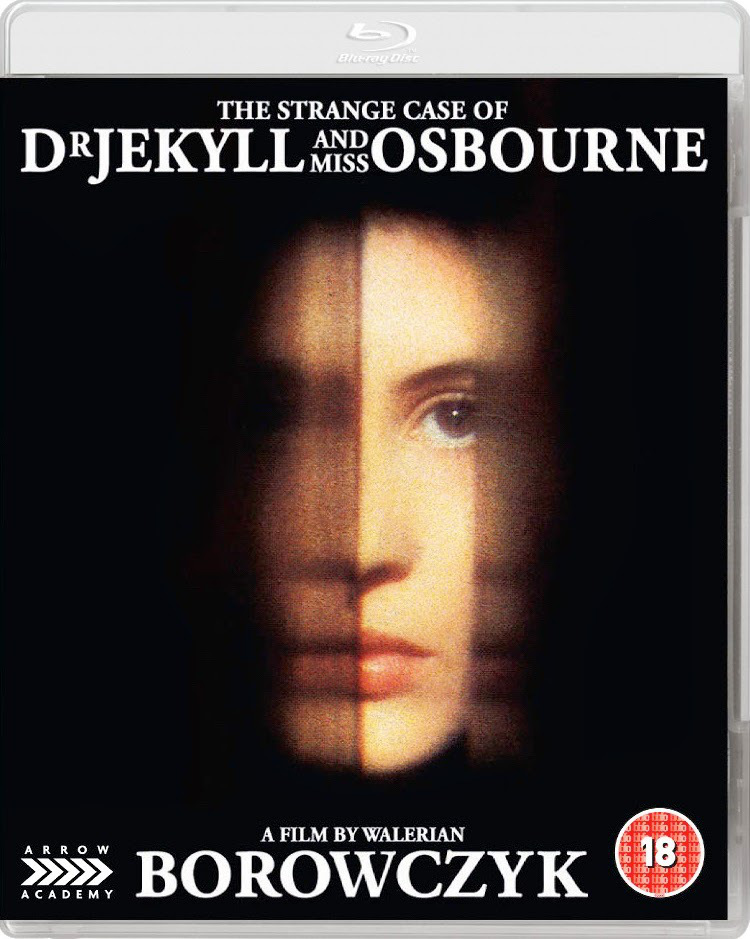
FilmJuice have my review of Walerian Borowczyk’s The Strange Case of Dr. Jekyll and Miss Osbourne, also known as Blood of Doctor Jekyll, Docteur Jekyll et les Femmes and (somewhat generically) Bloodlust. Borowczyk is a director who has grown on me considerably since I reviewed a collection of his films back in September 2014. While I must admit that Borowczyk’s obsession with the transgressive and emancipatory nature of sex leaves me rather cold, I am still drawn to his work by virtue of its sheer uniqueness. These days, art house film is all too often a narrow and generic exercise in pandering to middle-class mores using an ever-shrinking collection of tools inherited from the Golden Age of European art house film. Reminiscent of Pasolini and Von Trier in his more expansive moments, Borowczyk’s work is strange, arresting and completely mental in a way that few contemporary directors even bother trying to emulate.

Less singular but more accessible than Blanche (Borowczyk’s best film), I describe The Strange Case of Dr. Jekyll and Miss Osbourne as:

Gloriously amoral and more than slightly bonkers, this is a film in which parents, society, art, science, and God are all brought low before the terrifying power of the orgasm.

As the title suggests, the film is a re-working of Robert Louis Stevenson’s The Strange Case of Dr. Jekyll and Mr. Hyde that focuses on the journey undertaken by Jekyll’s fiancee Fanny Osbourne (named for Stevenson’s real-life partner). Borowczyk views Stevenson’s novella as a meditation on Victorian sexuality and the tendency of certain men to keep their vices private even from their own wives. In the world of the Borowczyk’s film, Jekyll is a repressed Victorian scientist who assumes the Hyde persona in order to satisfy a variety of transgressive urges which, if known, would completely undermine Jekyll’s social standing. The film finds Jekyll trapped between his two personae as he struggles to choose between a life of violent debauchery as Hyde and a life of privilege and power as Jekyll. Psychologically unstable, Jekyll moves back and forth between the two personae until his fiancee works out what is going on and solves his dilemma by choosing to take the potion herself and join her husband in a state of complete indifference to bourgeois morality.

Arrow films scanned the film themselves (working from an original negative with the help of Borowczyk’s original cinematographer) and it looks fantastic. Also wonderful is Michael Brooke’s discussion of the film in which he talks about seeing it for the first time in one of London’s long-lost and much-missed flea-pit cinemas. I found this discussion particularly evocative as while I grew up in London and got into film at quite a young age, those types of cinemas had completely disappeared by the time I was old enough to visit them. In fact, by the time I started visiting the West End on my own, the ‘re-development’ of Soho and Tottenham Court Road were already well under way and thinking about a Leicester Square filled with cinemas showing soft-core porn and horror is very much like thinking of some mad parallel universe… only with less airships and more films about Swedish au pairs.

I remember once reading a story about someone going to see Stalker in a cinema near Victoria station. The film started but the person sharing the story kept on being distracted by loud slurping noises coming from the row behind him. Hoping to tell whoever it was to pipe down, they turned around in their seat only to find themselves face-to-face with a man who was eating a plum whilst tossing off the bloke sitting next to him. Funny how our patterns of media consumption change… nowadays they bloke with the plum would probably be watching Avengers.


REVIEW — Paper Moon (1973)

FilmJuice have my review of Peter Bogdanovitch’s Paper Moon, a film I did not expect to like but wound up absolutely adoring.

The Coen Brothers’ O Brother, Where Art Thou? left me with what I consider to be a healthy scepticism of American films set during the great depression. Though many a director has set out with a head full of social realism and the urgent need to capture what things can be like for capitalism’s victims, most of them wind up getting distracted by the slang, the hats, the music and the endlessly photogenic poverty. Add a few fast-talking grifters to the mix and what you have is a recipe for self-mythologising nostalgia: Sure the excesses of capitalism can destroy communities and drive people from their homes but these are also moments of opportunity for the kind of lovable rogues who not only benefit from other people’s misery but actively legitimise the capitalist system by proving that America is still a land of opportunity for those who are smart, lucky and charming! I approached Paper Moon expecting another lesson in America’s capacity for economic re-invention but what I found was a beautiful and genuinely funny character study of one fucked up little girl:

Aside from the film’s gritty look, what keeps the film on the right side of sentimentality is its willingness to share Addie’s profound distrust of human relations. Only child of a woman who made her living as a bar room honey, Addie’s skinny frame, ugly clothes and fondness for cigarettes display all the signs of historic neglect. Before Addie even opens her mouth, we are shown the ‘warm-hearted’ Christian neighbours who are so desperate to get rid of her that they literally dump her on the first stranger who passes through town. Addie is desperate for family but rightly wary of people who would proclaim their righteousness only to reveal their hypocrisy in secret, she warms to Moses precisely because his displays of piety are understood to be nothing but an act.

And when I say ‘beautiful’, I mean genuinely jaw-dropping. This Masters of Cinema release is dual-format but the screener I received was DVD-only, which genuinely surprised me as I can’t remember the last time I saw a DVD look this perfect.


Consider, for example, this shot of a factory from early in the film, it’s not just that the buildings themselves look amazing, it’s also the composition and the attention to detail as Ryan O’Neal gestu8res to his daughter while workers toil in the background:


PM1


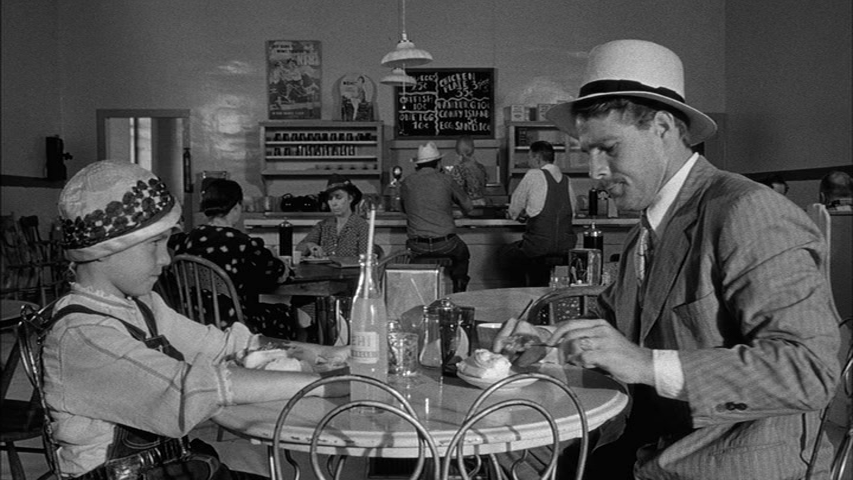
Despite producing three back-to-back hits that made a shit-ton of money and won people armfuls of awards, Bogdanovitch’s place in the canon of American filmmaking is far from guaranteed. It’s not just that the quality of his films seemed to decline as his career progressed, it’s that his ability to produce great films seemed to evaporate the second he parted company with his wife and production designer Polly Platt. Both Peter Biskind and David Thomson float the possibility that Platt was the real talent behind Bogdanovitch’s directorial throne and the complexity of Paper Moon‘s art direction certainly supports this theory. For example, look at how much detail is crammed into this image from a short scene in a diner… It’s not just the composition and how the straw in the bottle of Nehi seems to split the screen, it’s also the positioning of extras so that the men are clustered on one side of the screen while women are mostly clustered on the other:


PM2


The Masters of Cinema release comes with some interesting discussions of the film and one of the point that people make is that Paper Moon is a film in which everything is always in focus and how the positioning of background details not only aid the composition but also help to create the impression of a real world. The extras point to this exquisite combination of shots from when Moses tries to get rid of Addie by sticking her on a train:


PM3a


Note Addie looking sad in the background and compare it to the shot that immediately follows it:


PM3b


Look over the ticket-seller’s shoulder and you’ll see kids playing with a ball.  This not only echoes the shot of Addie looking sad, it also foreshadows the questions posed in the final act about whether Addie is actually in a position to make her own decisions and whether she is right to stick with Moses. In the context of these two shots you have a sad-looking Addie standing next to Moses and a pair of kids playing happily on the other side of the rail road buildings.


Another thing the extras reveal is that Platt not only convinced Bogdanovitch to work on Paper Moon and dressed the sets, she also served as a location scout meaning that all of the film’s evocative scenery was chosen by Platt rather than Bogdanovitch. Bogdanovitch started his career as an actor before falling into film criticism and many people seem to associate him with the rise of auteur theory in American film-writing. The auteur theory would certainly struggle to account for a production designer with the capacity to pick up on locations that are literally idiot-proof:


PM5

PM6

REVIEW — Dreamcatcher (2015)

FilmJuice have my review of Kim Longinotto’s thoroughly excellent documentary Dreamcatcher.

As I say in my review, Kim Longinotto is one of the most criminally under-appreciated documentarians that Britain has ever produced. Her latest film follows the exploits of Brenda Myers-Powell, a former sex-worker who has set up an organisation designed to help people leave the sex trade. The activities of Dreamcatcher Foundation include handing out condoms on street corners and helping people to find beds in drug treatment programmes but also to reach out to people in schools and prisons who are at risk of falling into prostitution.

Aside from being incredibly moving and a really amazing documentary about the lives of America’s urban poor, Dreamcatcher does two really interesting and important things:

Firstly, it takes its cues from Brenda and talks about sex-work as a form of addiction. Brenda’s methods are not those of the politician, religious leader, or social worker but those of the recovering addict who talks about their experiences and encourages others to do the same:

Brenda’s attitude seems to be that she ‘was’ all of the women she encounters and so she can speak to them and help them to do whatever it is that they need to do in order to survive and live free. Brenda’s capacity for understanding is captured in a series of amazing interviews where she will ask a teenage girl or a sex worker whether they have done something and, despite the other person’s denial, she will talk about how it is okay to do what you need to do in order to survive. The power of these scenes lie in the facial expressions of the people Brenda talks to as while they are used to lying through their teeth to parents and authority figures, they cannot lie to Brenda because she knows exactly what they are going through. The most moving scene in the film is undoubtedly the moment in which Brenda gets a bunch of teenaged girls to talk openly about their histories of sexual violence for what seems to have been the first time ever. Longinotti captures not only the moment but also the sense of relief that comes from sharing and knowing that they are not alone.

I think there is probably an important book to be written about the language of addiction and how it has spread beyond the traditional confines of drink and drugs to encompass activities including sex and sex-work as well as food. Scarcely a month goes by without someone writing an article for the Guardian about the addictive nature of processed sugar and junk food.


Secondly, Dreamcatcher does for prostitution what The Wire did for the drugs trade. In other words, just as The Wire showed the drugs trade to be an amazingly complex social phenomenon whose tendrils had worked not only into local politics but also the school system, Dreamcatcher suggests that prostitution has its roots firmly embedded in the American family:

All the women in this film have stories about how they were abused as a child and how this abuse got them used to relationships with older men who would exploit their sexuality in increasingly aggressive and brutal ways. One of Brenda’s helpers is a former pimp named Homer and he explains how childhood abuse served to normalise not only under-age sex and the exchange of sex for money but also the use of violence to keep women under control. This vision of the sex trade as a system of exploitation is made particularly clear when Brenda talks to a young woman who grew up in California and got her start in the sex trade at the age of eight when she was picking up money and taking it back to the pimps.

The extent to which prostitution has perverted these women’s relationships is made particularly clear in a scene where a sex-worker takes a call from her baby’s father. Initially, the call seems a bit weird as she keeps calling him ‘baby-daddy’ but it then becomes clear that while the man is certainly her child’s father, he is also her pimp and so the role of ‘baby-daddy’ is reconfigured by the sex trade to include the sexual exploitation of women. This pattern plays itself out again and again throughout the film as women are never put onto the street by ‘pimps’ or ’employers’, it is always lovers and family members.


I simply cannot recommend this film enough, it’s an absolutely fantastic documentary that touches on many of the themes and ideas visited in David James’ The Interrupters and Werner Herzog’s Into the Abyss but I think it actually manages to do much better than either of those films. This is a great film and a great jumping-on point for anyone interested in discovering the work of one of Britain’s greatest living documentarians. Even the Q&A included on the DVD is amazing!