Leviathan (2014) — Dismay Goes Before Him

We would like to believe that our critical faculties are impartial and that our impressions of the media we consume are a direct result of its inherent quality. We would like to believe that we can sense aesthetic excellence in the same way as we smell burning or taste strawberries but the truth is a good deal more complex. While our culture and neurological make-up certainly train us to expect certain aesthetic benchmarks, much of our reaction comes not from the text but the stuff around it.

At a very basic physiological level, it is quite hard to enjoy a 3D film when you arrive at the cinema with a head-ache only to discover that the cinema’s sound-system is malfunctioning along with its air-conditioning. As we progress past childhood, we learn to make allowances for things likely to affect our moods but it is still incredibly easy to sit through a bad screening of a film and conclude that the film itself is to blame. Conversely, go to see a stupid movie with a bunch of friends who respond to every beat with gales of laughter and you are just as likely to praise the film for that evening’s entertainment as you are your friends.

At a more psychological level, we seldom enter a cinema without baggage. We carry with us a lifetime’s worth of ideas and learned emotional responses that cannot help but influence how we respond to depictions of fictional events. Indeed, the very concept of a Trigger Warning assumes that exposure to images and situations will produce similar emotional responses regardless of whether those situations are real or fictional. We often talk about children becoming ‘desensitised’ to media portrayals of violence and a normal suite of emotional reactions does include the capacity to distinguish between real and fictional contexts but lines are often blurry, slopes are often slippery and the emotions we choose to police are largely a question of cultural norms and individual tastes. For example, while we may learn to endure the unpleasant imagery of horror films in the same way as we learn to endure the sting of spicy food, we are not generally in the habit of distancing ourselves from the emotional payload of comedies or conventional dramas. In fact, some of our most enjoyable artistic experiences happen when an author whose experiences resemble our own manages to connect to the emotional baggage we carry around with us by virtue of being human. Some art is well made, and some just happens to speak directly to us.

It is hardly controversial to suggest that our emotional reaction to a work of art is likely to be coloured by factors external to the text but the same could also be said of more complex critical judgements and the formation of our own interpretations. An excellent (fictional) example of this process can be found in an early episode of The Sopranos when Tony visits his therapist only to accuse her of deliberately planting a picture of a rotting tree. Of course, there is nothing in the painting that would lead us to conclude that the tree is rotten and so we are invited to conclude that it is Tony’s emotional baggage that is encouraging him to ‘see’ a generic painting as somehow inherently bleak. The bleed between our own personal experiences and our interpretation of texts is one of the reasons why I see criticism as a creative rather than a reactive form but the process of interpretation can be ‘gamed’ or deliberately influenced.

The great French director Claude Chabrol began his career as a film critic and so stepped behind the camera with an excellent idea of how critics formed judgements about the films they reviewed. This insight encouraged Chabrol to ‘embellish’ the text of his film by including references to other books and works of art. As Chabrol would later admit, these references were rarely thought-through but Chabrol realised that if he allowed the camera to linger on the cover of a book then some bright critic would invariably take the bait, assume a link between the two texts, and produce a more involved (and flattering) interpretation of his film. This anecdote may paint Chabrol as something of a rogue, but priming audiences for particular interpretations is now absolutely central to the PR process and Hollywood blockbusters will often contain under-developed references to important events (such as 9/11 in the case of J.J. Abrams’ Cloverfield, the Occupy movement in the case of Nolan’s The Dark Knight Rises and Afghanistan in the case of Favreau’s Iron Man) in an effort to create the illusion of thematic depth.

Where you stand on these types of interpretative games will, in part, be a function on where you stand on issues such as a the Death of the Author and whether you see works as the sole responsibility of an auteur or something that artist and audience create together as part of a symbiotic relationship. Personally, I tend to shuffle back and forth between the two extremes but I generally think that if a director and a film are to be credited with a particular set of ideas then considerable effort needs to go into developing those ideas within the text of the film. This brings us to Andrey Zvyagintsev’s Leviathan, a Golden Globe-winning Russian film whose title contains almost the entirety of its thematic substance.
Continue reading →

REVIEW — The Decent One (2014)

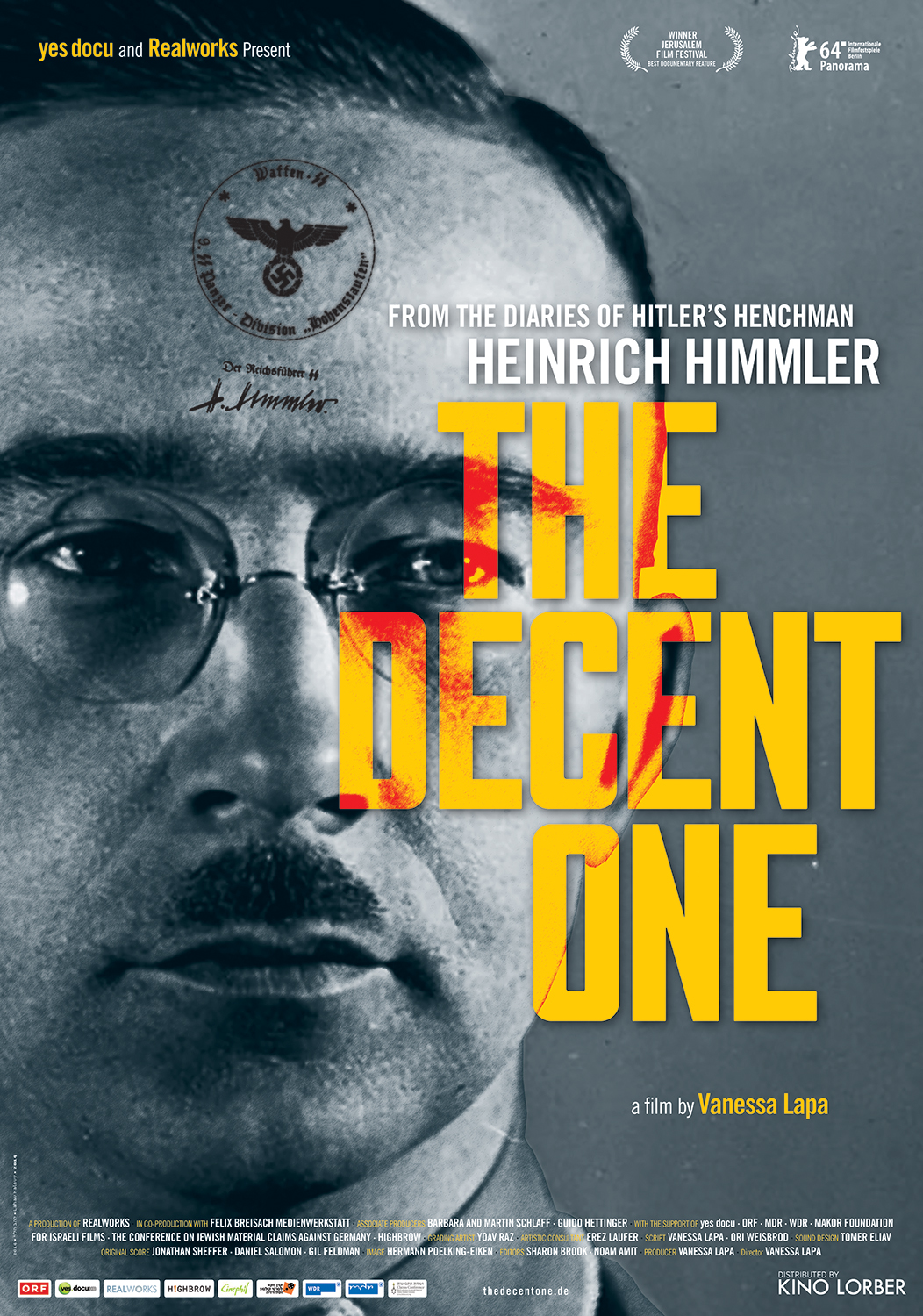
FilmJuice have my review of Vanessa Lapa’s documentary about Heinrich Himmler, The Decent One.

The Decent One draws on some private correspondence that was uncovered in Himmler’s house at the end of the war and sold into private hands by light-fingered American soldiers. Following the scandal surrounding the so-called Hitler diaries, the documents never made that much of a splash and were never made public until Lapa’s parents decided to buy them for her so that she could make a documentary about them. The result is a rather frustrating experience as while the film does give some fascinating glimpses into what life must have been like for the friends and family of prominent Nazis, Lapa chooses to focus most of her attentions on Himmler rather than the people around him.

This evidently put Lapa in something of a sticky situation as how do you produce a biographical documentary about a prominent Nazi without inviting unflattering comparisons to Hannah Arendt’s Eichmann in Jerusalem or more psycho-sociological writing such as Adorno’s The Authoritarian Personality. Lapa tries to overcome this problem by unearthing scandalous biographical details such as Himmler’s penchant for sadomasochistic sex and his habitual drug use but the methods she uses to present these so-called biographical details are so manipulative that you can’t help but raise a sceptical eyebrow:

Lapa makes a great show of putting the documents in the foreground of the film and many shots of Himmler’s angular hand-writing give the impression that the documents are being allowed to speak for themselves. However, take a step back from the images of Himmler’s correspondence and you start to realise that Lapa’s editorialising is so aggressive that it smacks of desperation and frequently borders on the outright manipulative. For example, one of the earliest exchanges of letters between Himmler and his future wife finds Himmler referring to himself as a ‘naughty man’ for spending too much time away from his fiancé, to which the woman playfully responds that she will exact a terrible revenge for his absence. Now… in the context of hundreds of personal letters, this exchange would probably come across as the slightly awkward flirtations of a sexually active couple but Lapa isolates these sentence fragments and instructs her voice actors to deliver readings that encourage the audience to conclude that the future Mr. and Mrs. Himmler has a relationship that was a bit kinky if not actually sadomasochistic. Also suspect is the way that Lapa juxtaposes a document relating to stomach problems caused by prolonged opium use with Himmler’s passing assertion that he had experienced a touch of constipation while on the Eastern front. Again, when seen in the context of an on-going personal correspondence, such an admission might come across as little more than a comment on Himmler’s health but Lapa frames the information in a manner that encourages us to infer that Himmler was a habitual drug user. Aside from being dubious historical practice, such manipulative sensationalism only serves to highlight the extent to which Lapa struggles to find anything new to say about Himmler that hasn’t been said before: There are no private doubts to be found here, only the belief that he was doing the right thing and that history would prove him right.

Surveying some of the film’s other reviews, I notice that I am not the only one to dislike the heavy-handedness of Lapa’s editorialising. Setting aside the fact that films like Shoah set the tone for Holocaust documentaries by allowing people to speak for themselves, I am also struck by the fact that there is now a very fine line between a serious documentary about the Nazis and the type of sensationalist trash you get on cable TV. Massage the primary sources a bit too much and your careful documentary turns into Hitler’s Henchmen by way of Secret Weapons of the Luftwaffe.

REVIEW — The Turning (2013)

FilmJuice have my review of the Australian short film collection The Turning, based on Tim Winton’s short fiction collection of the same name.

Short films as undeniably a good thing: Their reduced run time means that they are not only cheaper to make, they’re also less thematically demanding in that it is easier to come up with an interesting idea that will sustain a ten minute short film than it is to come up with an idea that will support a 90-minute feature film. The fact that short films are considerably shorter than feature films also means that they are a lot cheaper to make and so ambitious filmmakers can experiment with short films in a way that they simply cannot do at feature lengths. The problem with short films is that they are incredibly difficult to sell… indeed, no stable market for short films exists outside of a Horror genre that has somehow managed to maintain its fondness for anthology formats. The Turning is an attempt to rekindle the market for art house short film by getting 18 different directors to make short films based on stories taken from an award-winning short fiction collection in which some of the stories share characters, themes and recurring motifs. As I point out in my review, the idea of using the motifs in a short fiction collection to bind together a set of short film does not really work as:

while Winton’s short stories connect using recurring characters, themes, and motifs, the production’s failure to create a sense of visual continuity means that almost none of the recurring motifs or re-used characters survive the transition from book to film. What this leaves is a series of short films that only inter-connect in so far as they often share a fascination with regret or alcoholism, and frankly those types of themes pop up so often in art house film that they seem accidental.

In fairness, I can see why the producers chose the path they did as making the connections in Winton’s fiction work on film would have required not only the imposition of particular actors for particular parts but also a shared visual palette that would have seriously hampered the vision of the individual directors. This reminded me quite a bit of the Marvel Cinematic Universe as creating a sense of visual continuity between the films has robbed individual directors not only of the power to cast for themselves but also to shape the look of their own films. In the case of the MCU, the need for visual continuity has resulted in films that look depressingly similar but, in the case of The Turning, the lack of visual continuity means that a curated collection of short films comes across as almost completely unconnected. Swings and roundabouts I guess…

Another thing that really struck home when watching The Turning was quite how male-gazey the films directed by men turned out to be compared to those directed by women. One of the recurring saws of this blog is that art house film has ossified around a set of visual shortcuts that contain sexist assumptions but seeing similar characters and themes tackled by both men and women really drives home the extent to which female directors are more willing to question those shortcuts than their male counterparts. Having said that, the single most objectifying film in the entire collection is directed by a woman so it’s evidently not just men who fail to unpack their own cinematic vocabularies.


REVIEW — The Grandmaster (2013)

FilmJuice have my review of Wong Kar-wai’s The Grandmaster, an art house kung fu film based on the life of Bruce Lee’s trainer Ip Man.

I think I like the idea of kung fu films a lot more than I like actual kung fu films… In my early teens, I worked my way through much of Jackie Chan’s back catalogue but I have always struggled with films that did not recreate that particular style. Well… I say ‘style’ when what I actually mean is ‘competence level’ as being able to direct extended scenes of hand-to-hand combat requires a constellation of skills that surprisingly few directors manage to acquire. Every Frame A Painting has a truly excellent video about Chan’s directorial style but what has always drawn me to Chan’s direction are his clarity and his spatial awareness. Chan is first and foremost a performer and he directs in a way that emphasises the grace and skill of the performer rather than trying to compensate for it in post production as has become the norm in Hollywood where it is always much easier to add a bit of CGI or do a bit of extra editing than it is to keep re-shooting the scene in the hope of getting it just right. While action films are generally considered a lot less ‘worthy’ than the films I tend to write about on this blog, a good action director will have just as much skill, vision and sensitivity as the most celebrated Cannes winners. Hollywood may have created a generation of action directors whose logistical expertise outweighs their technical competence but that is a failing of the contemporary Hollywood machine… not the action genre.

I was intrigued to see The Grandmaster as Wong Kar-wai is undoubtedly one of the most highly skilled visual directors in world cinema. David Thomson’s Biographical Dictionary of Film dismisses Wong’s films as cold but this is the result of focusing on the actors rather than everything that Wong chooses to put on the screen. When I think of Wong Kar-wai’s films I think of characters whose muted emotional tones are radically and deliberately at odds with the colourful complexity of the worlds they inhabit. Wong’s foregrounds are always cold, still and immaculately controlled but his backgrounds are rich and almost overwhelmingly evocative. Somewhat unsurprisingly, this means that Wong is an absolute natural when it comes to shooting kung fu as his characters are the cold, controlled centre to a world that is filled with beauty and movement:

Like many of Wong Kar-Wai’s films, The Grandmaster sets up a tension between the stillness of the characters and the churning chaos of the world that surrounds them. Unable or unwilling to acknowledge their own feelings, Wong’s characters feel deliberately out of place as every set and every shot hints at the passions they keep chained up inside them. While the tension between Ip’s physical mastery and emotional backwardness is beautifully realised thanks to a cast and crew at the absolute peak of their respective games, you cannot help but feel a bit frustrated by the shallowness of Wong’s character study. Ip was a fascinating man who lived at a fascinating time and while action directors like Winston Yip and Herman Yau have been content to present the man as little more than a generic action hero, Wong breaks with this tradition only to strip his subject back to the equally simplistic lines of a generic romantic lead who struggles with feelings that would not overly bother a teenager.

In hindsight, this is almost certainly unfair to the romance genre as I suspect most characters in romance novels have a good deal more emotional complexity than Wong’s Ip and Gong. As I point out in the review, this cut of the film is significantly shorter than the version that was released in China and I suspect that much of the film’s connective tissue was left on the cutting room floor by Western distributors with one eye on the action market. This perhaps is the problematic legacy of Crouching Tiger, Hidden Dragon as you can also see it in the Western release of John Woo’s Red Cliff: The Chinese action genre is desperate to grow up and to use bigger budgets and action sequences to draw big audiences to weighty themes but the West has little time or interest in 3 hour action epics that contain 2 hours of mood-setting and characterisation. Not for the first time, our debased palette seems to have prevented us from sampling the dishes served by cultures that have not followed the same reductive cinematic path.

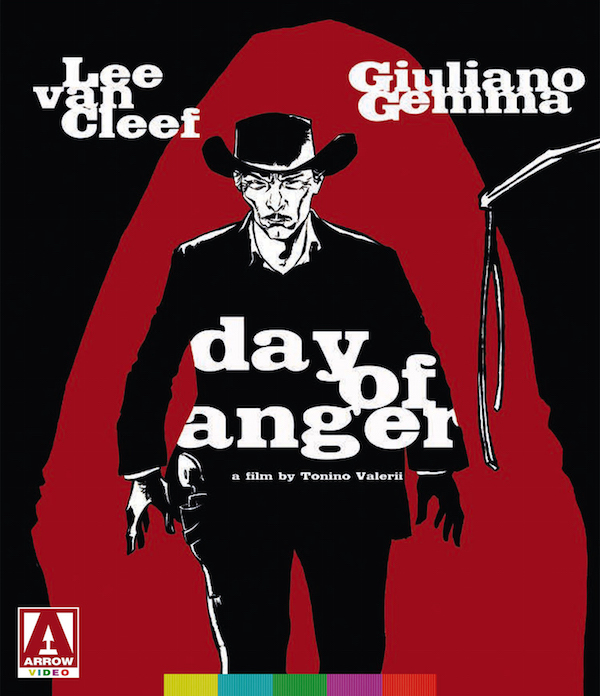
REVIEW — Day of Anger (1967)

FilmJuice have my review of Tonino Valerii’s awesome spaghetti western Day of Anger, also known as Gunlaw and I Giorni Dell’Ira.

The film is set in a prosperous frontier town where the ‘fatherless’ child of one of the local sex workers makes a living emptying chamber pots whilst being systematically beaten and demeaned by the men of the town. However, this situation comes to a sudden end when Lee Van Cleef’s ageing desperado rides into town and decides to take the young man under his wing. As the old gunfighter hatches a plot to take over the town, the young man becomes quite an accomplished gunfighter… so accomplished that he eventually becomes the only man who could possibly take down the old gunfighter. However, the young man’s loyalty towards the old man is compromised when another old man steps in and starts filling his head with paranoid thoughts:

For much of the film, Van Cleef plays Talby as something of an antihero; a man whose violent and manipulative actions are somehow humanised not only by the villainy of his victims but also by the praise he lavishes on Scott. Talby winds up being more of a father to Scott than any of the vicious hypocrites who might actually be his father but the more of an adult Scott becomes, the more he starts to question Talby’s apparent viciousness. Why would a man so cold go out of his way to raise a son when he could just as easily hire a bunch of goons to do his bidding? One potential answer surfaces in a fantastic scene in which Murph explains how older gun-slingers sometimes take an apprentice in an attempt to compensate for their slowing reflexes. However, as Murph points out, there comes a time when the reputation of the henchman begins to surpass that of the master and that is when the father inevitably begins to question the loyalty of the son.

As I explain in my review, the film is often thought of as an ‘Oedipal’ text about a son who is forced to kill his father before he can become an adult. However, a less Freudian reading suggests that Day of Anger might actually be more interested in the practicalities of parenting than in the father’s role as a symbol. Indeed, the film’s final act hinges upon the fact that Van Cleef’s character is so distracted by his awesome plotting and scheming that another man was able to sneak in and raise the son to hate the father.

Upon reflection, it now occurs to me that there is something distinctly Christlike about the figure of Scott Mary in so far as he is the fatherless ‘son of man’ who is forced to suffer for the sins of the community he inhabits. Scott Mary does eventually turn against his morally questionable father but only after the father was distracted and Scott Mary was attacked echoing the themes of abandonment found in Psalm 22’s cries of My God, My God, Why Have You Forsaken Me? In fact, one could almost imagine Day of Anger as an alternative vision of the crucifixion in which Jesus pulls himself off the cross, kills God and positions himself on the throne of Heaven but that might be pushing this interpretation a little bit too far in the direction of awesome.

Another thing that occurred to me while watching Day of Anger is how influential Eastwood’s Unforgiven has been on the Western genre. Indeed, most of the spaghetti westerns were violent to the point of nihilism but their visuals were invariably sunny and colourful. By contrast virtually all of the most notable American Westerns of recent years have taken their cues from Unforgiven and portrayed the old west as a cold, muddy place that was full of ugly farting men and drug-addled sex-workers. Even Tarantino’s Django Unchained paid lip service to that aesthetic in its early scenes before going on to recreate the carnivalesque melange of blood and sunshine that you find in many of the old Italian Westerns. As someone who really quite likes Westerns, I find the genre’s lack of visual innovation really quite frustrating as the Western seems to have emerged as yet another victim of grimdark’s stanglehold on the American psyche. Day of Anger is actually a really interesting counterpoint to the rise of the grimdark aesthetic as while the film is so bright and colourful that you could film an upbeat Western-themes musical using the same sets and costumes, the themes of the film are actually much darker and messed up than anything that has emerged from the later years of the post-revisionist Western.


REVIEW – Rollerball (1975)

FilmJuice have my review of Norman Jewison’s iconic 1970s science fiction film Rollerball, which has just been re-released on Blu-ray. When my editor at FilmJuice approached me to write about Rollerball I was initially a bit reluctant… I first saw Rollerball at the age of six because I was named for the film’s protagonist and my mother couldn’t be bothered to provide me with boundaries. In fact, I actually saw Rollerball a number of years before I first saw Star Wars and I remember being puzzled by the latter’s lack of blood. Where was the scene in which Luke wrenched off a Storm-trooper’s helmet and punched him in the back of the head with a spiked glove? I watched Rollerball so frequently as a child that I wound up committing huge sections of the film to memory at least a decade before acquiring the emotional and conceptual apparatus to understand what the film was actually about. I was reluctant to take this reviewing gig as I have never before written about Rollerball and was a bit concerned that the suck fairy might have gotten to it… Thankfully, while the film turns out to be something of a thematic mess, it more than stands up to critical scrutiny:

The 1970s was a time when science fiction was enjoying a moment of rare literary respectability. The collapse of the pulp magazines had forced the genre’s writers to shift closer to the literary mainstream and the institutions comprising that mainstream had rewarded this cultural obeisance with a market for short fiction that spilled from the pages of glossy magazines and out into the Hollywood hills. Perhaps sensing that science fiction was a genre on the up, [director Norman] Jewison secured the rights to a short story that had appeared in the pages of Esquire magazine and hired the author William Harrison to provide him with a screenplay. Despite Jewison having no experience directing action and Harrison having never before written for film, the pair managed to produce one of the most bewildering and influential works of 1970s science fiction.

The reason I call the film bewildering is that while the action sequences remain viscerally potent and brilliantly conceived, the quiet stuff surrounding them turns out to be more than a little bit confused. The problem is that while the film is based on a short story, Harrison’s story is all about how the unexamined life is not worth living. In the story “Roller Ball Murder”, Jonathan E is an exquisite physical specimen who has been raised to the peak of physical fitness and celebrated for his athletic prowess. However, as time passes and the game becomes more violent, Jonathan begins to wonder whether there might not just be a little bit more to life than victory, accolades, drugs and sex. Doubting his vocation, the big lump tries to educate himself about history and philosophy only to realise that the government has destroyed all the books. Now… while the director of Fiddler on the Roof would have had his pick of new projects, it is unlikely that even 1970s Hollywood would have helped to fund a science fiction sports film about the lack of spiritual sustenance to be had from a hedonistic lifestyle. As a result, Harrison and Jewison ditched the story’s Platonic theme in favour of well… a number of different themes:

Inexperienced as a screen-writer and forced to come up with a new motivation for his character, Harrison threw everything but the kitchen sink at his script in an effort to provide Jonathan with a set of motives that were both primal enough to be relatable and high-minded enough to give the film thematic heft. This resulted in a protagonist whose act of rebellion feels so hopelessly over-determined as to be effectively meaningless: Apparently Jonathan E is angry with the people who broke up his marriage, and looking to avenge the death of his friend, and start a rebellion, and embody the kind of radical individualism that is supposed to pose an existential threat to corporate governance.

Rollerball is a hugely influential film that inspired not only Suzanne Collins’ The Hunger Games but also the flood of YA dystopias that followed in its wake. At first glance, this influence is rather shallow as both Rollerball and The Hunger Games are set in dystopian futures where governments use bloodsports to keep their oppressed populations in line. However, look beyond the surface tropes and you will notice that both Rollerball and The Hunger Games are in the business of presenting small acts of athletic disobedience as the birth of revolutionary subjectivities that pose an existential threat to their respective societies:

  • Jonathan E doesn’t want to retire, this forces his government to change the rules of the game and marks him as a threat.
  • Katniss Everdeen would rather not kill her fellow tribune, this forces her government to change the rules of the game and marks her as a threat.

In order to make this act of thematic inflation stick, both Rollerball and The Hunger Games blur the boundaries between the political and the personal to produce a weird thematic mess that is both a literal description of an athlete who becomes a political rebel and a weirdly metaphorical treatment of both individualism and the similarities between becoming an adult and acquiring political agency. The big difference between Rollerball and The Hunger Games is that while Rollerball ends with that moment of individualistic awakening, The Hunger Games goes on for several more books and films exploring the athlete’s political career.

Another way in which Rollerball influenced The Hunger Games is that while both films rush to adopt revolutionary postures, their critiques of despotism are both completely toothless.

Despite pre-empting the idea of corporate rule that featured so prominently in Sidney Lumet and Paddy Cayefsky’s Network, Rollerball really struggles to imagine what corporate rule might look like and how it might be undone. Consider the memorable speech from Network in which Ned Beatty proclaims that “the world is a business”:

It is easy to imagine Rollerball as a film set in the post-national future that Ned Beatty describes but rather than a vast homeostatic system in which unfettered capital flows from one side of the world to another, Rollerball has a set of neatly-ordered monopolies in which the corporations no longer even bother to compete. In fact, the film even goes so far as to suggest that money is no longer an issue as there is no poverty or talk of wages and Jonathan gets his luxuries with the help of something called a ‘privilege card’. Also deeply weird is the idea that the game of Rollerball was designed to highlight the futility of individual effort and that Jonathan E’s rugged individualism poses some sort of threat to corporate hegemony.

The truth is that while Rollerball may present itself as an anti-corporate film, the system it critiques is actually much closer to Communism with its planned economy, institutional monopolies and rule by elusive grey-faced men. Rugged individualism will always pose a threat to the vision of Communism that existed in American minds for much of the Cold War but as everything from the Premier League to the NBA will tell you; when the people love an athlete and the athlete breaks the law, corporations will always look the other way.

Revisiting Rollerball as a critic did not exactly undermine my childhood love of the film but it did suggest that I wasn’t really missing very much when I failed to connect with the quiet talky bits. Those action sequences are amazing and the film continues to look great but when it comes to political critique, the film is much closer to The Hunger Games than it is to Network or the paranoid Hollywood cinema of the 1970s.


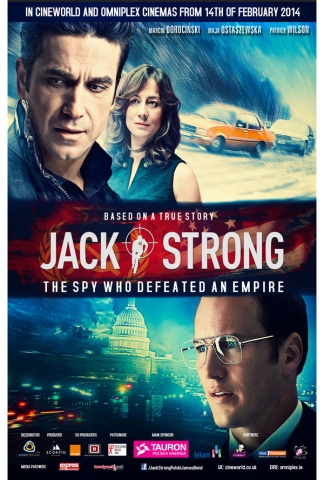
REVIEW – Jack Strong (2014)

FilmJuice have my review of Wladyslaw Pasikowski’s historical espionage thriller Jack Strong, which is out in the UK on Monday. Set during the final decades of the Cold War, the film tells the story of a real-life Polish officer who came to realise that the Soviet Union would quite happily turn Poland into a radioactive wasteland if it meant protecting themselves from a Western invasion. Thus, rather than remaining loyal to his military command and working with the Soviets to defeat the West, he began sharing Polish and Soviet military secrets with the Americans in the hope of averting war. Aside from being a technically-accomplished thriller with bags of tension and some lovely set pieces, the film also goes out of its way to explore not only the historical context that informed the officer’s decision the spy for the Americans, it also spends quite a lot of time building up the characters in order to ensure that every act of betrayal has a personal edge:

The grit in the story also extends to the film’s treatment of Kuklinski’s home life as his teenaged son Bogdan comes to reject his family’s military heritage in order to embrace the kind of dissident political tendencies that would eventually result in the formation of the famous Solidarity movement. Bogdan is trapped between an intense love for his father and an intense hatred for the authoritarianism that his father’s job represents, this eventually leads him first to drink and then to drugs setting up some wonderful scenes in which Kuklinski is forced to confront his son about ideals that he secretly shares. In fact, one could easily read Bogdan as a manifestation of Kuklinski’s tortured conscience as well as the fear and self-disgust that grows within him as the film progresses.

Jack Strong reminded me of why I used to love spy films and why I no longer do. I have two main problems with the espionage genre:

Firstly, the number of spy films coming out of the English-speaking world seems to have increased exponentially since 9/11. Aside from successful franchises such as the Bond, Red and Mission Impossible films, we have ‘historical’ spy films such as Zero Dark Thirty, Fair Game and Argo as well as action-based spy films like Hanna, Haywire and Safe House.The popularity of espionage tropes is even blurring genre boundaries as TV procedurals such as Elementary and Sherlock seem to have gone out of their way to include espionage elements and that’s without mentioning the fact that superhero films and TV series make extensive use of espionage tropes in an effort to make their costumed antics seem more grounded and real. Espionage tropes are now so ubiquitous and over-exploited that their presence in a film or TV series often feels like an admission of intellectual bankruptcy.

Secondly, when espionage elements do turn up in contemporary films and TV series, they usually take the form of power fantasies.  ‘Power fantasy’ is often associated with texts in which a character is imbued with super-human powers giving them a degree of agency to which the audience could only ever aspire. A textbook example of this type of power fantasy is the scene in Sam Raimi’s Spider-Man in which the freshly-empowered Peter Parker beats and humiliates a high-school bully. However, while power fantasies are usually associated with agency-giving powers like flight or super-strength, they can also be associated with characters having the capacity to see the world in much simpler terms than people in the real world. Espionage thrillers often feature these types of knowledge fantasy in that they replace complex political issues with simple moral dichotomies in which it is relatively easy to know ‘right’ from ‘wrong’. In some cases, the knowledge fantasy even extends as far as having the evil-doers be instantly recognisable thanks to their physical characteristics and it is in this shared fantasy of recognition that the espionage and superhero genres meet.

What makes me uncomfortable about a lot of contemporary spy stories is the way that they apply these fantasies of knowledge to real-world political problems in an effort to make the film or TV series seem more ‘realistic’. The reason that real-world political problems prove intractable is that it is often almost completely impossible to determine which is the ‘right’ side of a particular issue. Taking real-world problems and reducing them down to simple moral dichotomies is not only supremely unrealistic, it is also intensely problematic as it means not only demonising the people who happen to be on the receiving end of popular fears, it also encourages the fear by suggesting that audiences are right to be terrified of particular groups. For example, one of the most egregiously right-wing TV series in recent memory is Homeland, a series that suggests Al Qaeda not only have the power to infiltrate the CIA but also to ‘turn’ American soldiers into double agents. Eager to continue feeding on popular fears, later series of Homeland appear to have switched from fantasising about an all-powerful Al Qaeda to fantasising about the supremely competent and ruthless Iranian intelligence services.

Jack Strong is just as much of a knowledge fantasy as any contemporary spy film as it not only assumes that the Soviet Union would have abandoned its satellite nations, it also glosses over the fact that America would almost certainly have proved equally reluctant to defend European cities with nuclear weapons if it meant endangering US cities. However, the fact that the film dealt with ‘historic’ issues rather than contemporary ones served to make its knowledge fantasies seem less grating and Pasikowski further attenuated the political elements of his story by stressing the human dimension not only of the character’s decision to become a traitor but also of his on-going attempts to remain hidden from people within his own government and military hierarchy. Jack Strong appealed to me because, unlike many spy films, it never forgets that complex political problems have their roots in complex political humans. Films that reduce real-world problems to simple moral dichotomies are nothing more than the latest generation of war-time propaganda.


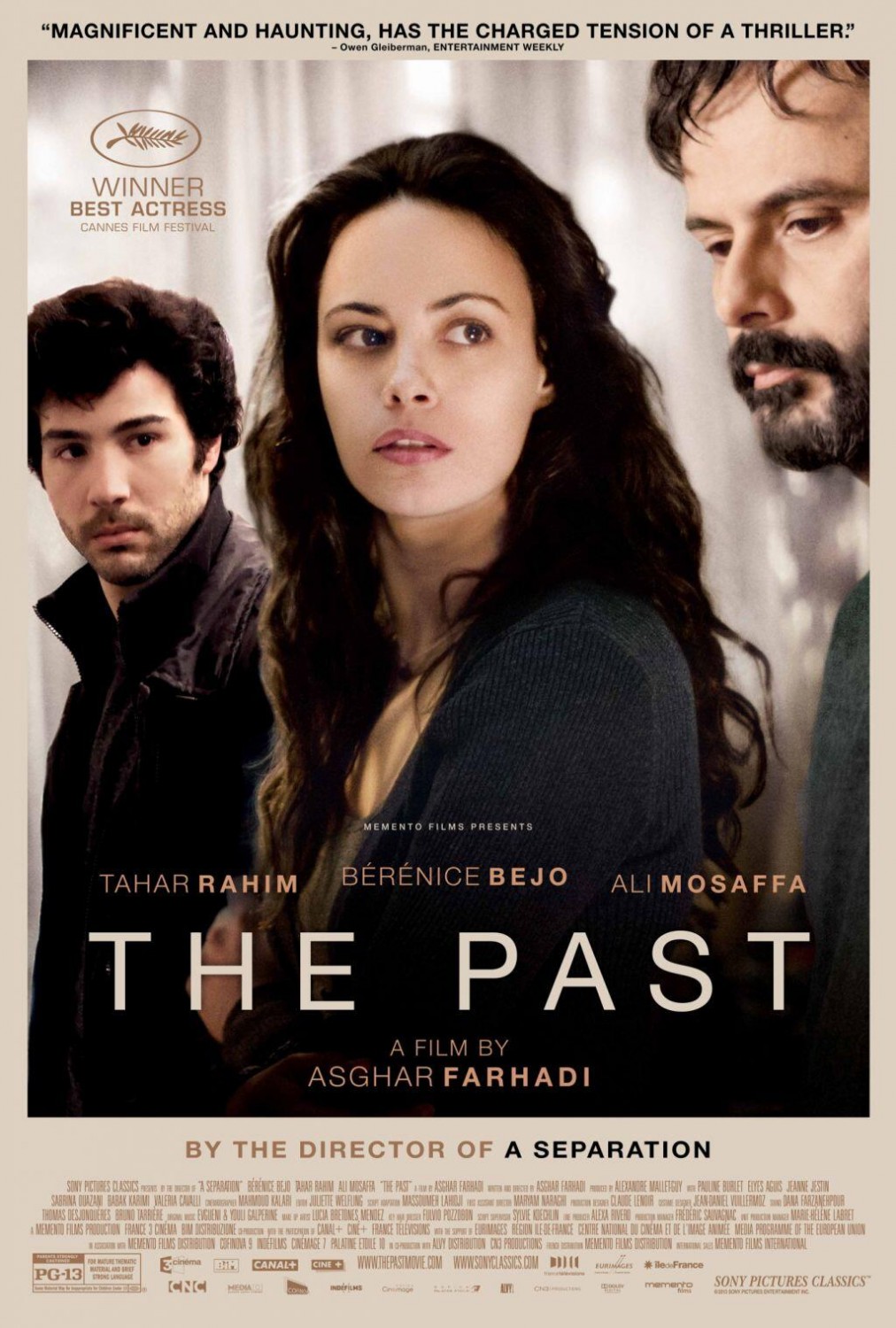
The Past (2013) – No… You Can’t Have Fantasy Dad

The films of Asghar Farhadi form an interesting counterpoint to the films of Joanna Hogg, which I wrote about last week. While both directors are fascinated by the way that group dynamics can impact upon our emotional lives, Hogg’s career has seen her transition from the emotional opacity of formalism to the conceptual opacity of surrealism while Farhadi’s relentless pursuit of emotional truth frequently has him brushing up against melodrama as he did with the magnificent Oscar-winning family drama A Separation.

There can be no greater validation of cinematic art than two directors approaching the same subject matter in radically different ways and yet somehow managing to produce works that feel as natural as they are satisfying. It is easy (and exciting) to imagine Joanna Hogg dancing round the question of who was responsible for the miscarriage in A Separation while Asghar Farhadi would arrive on Archipelago’s Scilly isles and refuse to let go until everyone came clean about what it was that was making them unhappy.

There’s a wonderful moment in the British situation comedy Peep Show when the emotionally constipated Mark Corrigan is confronted by a sister who wants to discuss their traumatic childhood prompting Mark to lament that the people who want to talk always seem to win. Asghar Farhadi’s latest film The Past is sympathetic to both sides of Mark’s observation: Yes… the people wanting to talk usually get their way and No… this isn’t always for the best.

Continue reading →

REVIEW – Effie Gray (2012)

FilmJuice have my review of Richard Laxton’s Effie Gray, a biopic dealing with the disastrous marriage between Euphemia ‘Effie’ Gray and the eminent Victorian art critic John Ruskin. Like many of the books, plays and films that have dealt with doomed marriage, Laxton’s film lays the blame squarely on Ruskin’s refusal to consummate the marriage while an ambitious script by the actress Emma Thompson tries to account for his reluctance in terms of Victorian society’s ambient sexism. This film has something of a troubled history as while it was completed over two years ago, two separate (and ultimately groundless) plagiarism cases prevented the film’s release. When the film did finally limp onto British cinema screens, it did so on the same weekend as Mike Leigh’s Mr. Turner (a film that also featured the couple) and without the support of Thompson who refused to do any publicity for the film despite both writing it and appearing in it. While it may be a bit gauche to speculate as to why Emma Thompson would refuse to do any publicity for a film she once considered an intensely personal project, I think it has something to do with the fact that Laxton really seems to struggle with the film’s feminist themes:

The real tragedy here is that while Thompson’s script may try to tell the story of a feminist icon, the man employed to turn that script into a film took his cues from John Ruskin and contented himself with a sexless doll.

The problem is that the script and the film are pulling in opposite directions. Things start off quite well as Thompson’s script and Laxton’s direction combine quite well to expose the everyday sexism of Victorian society. Unfortunately, when asked to turn this social analysis into a psychological explanation for Ruskin’s refusal to have sex with his wife, the film dithers and slithers and winds up not saying anything at all. The reason for this failure of characterisation is that while Laxton wanted to make a film about Ruskin, the script is actually about Gray and so it is quite content to voice a few ideas about Ruskin before moving onto the meat of the film: Effie’s experiences in a loveless marriage and how she found the agency required to take control of her own life. In fairness to Laxton, Thompson’s script really does not give Dakota Fanning a huge amount to work with but a director who was sensitive to Thompson’s aims would have realised that Effie’s character lay not so much in what she did and did not say but in how she felt while she was saying it. A sympathetic director would have encouraged Fanning to create an Effie Gray who was visibly constrained and ill-at-ease with the society she inhabited but instead we are given an Effie who is almost hypnotically passive… a beautiful china doll in need of nothing more than a good fuck and a house to keep.

As my score of 2 out of 5 would suggest, I did not enjoy Laxton’s Effie Gray but my lack of enjoyment stemmed more from my intense feelings of frustration at what an awesome film this could have been if either the script or the director had been allowed to take precedence:

  • A director sympathetic to Thompson’s script would have kept the focus on Effie and realised that the final act was actually the climax in a series of social confrontations that began on the day that Effie arrived at Ruskin’s family home. The film’s final act feels a lot like a thriller with Effie sneaking around to meet doctors and lawyers under the noses of her family and a sympathetic director might have taken this ending as a cue to turn Thompson’s script into a social thriller comparable to Wilkie Collins’ The Woman in White where an intelligent and ambitious young woman finds herself fighting for freedom against villainous men and matriarchs who are supported by a set of social attitudes that are designed to break women on the wheel and turn them into objects. All of those scenes in which Effie clashes with older women should have been tiny battles of wit rather than acts of one-sided oppression!
  • A screenwriter sympathetic to Laxton’s interest in Ruskin might have connected with the character’s humanity, taken his asexuality at face value and dealt with how it must have felt to be asexual when both your wife and your entire society expect you to be sexually active. If we do assume that Ruskin was asexual then Thompson’s suggestion that he was some kind of incestuous misogynist with a fondness for young girls is nothing short of monstrous. Even if a script didn’t assume that Ruskin was naturally asexual, it could still explore the links between his refusal to consummate his own marriage with his parents’ tendency to treat him as a child. Alternately, one could argue that Ruskin was simply an introverted and cerebral man who was far more comfortable treating love as an abstract concept than as a physical action.

So I guess what I am really saying is that while I found Ruskin and Gray’s marriage to be a really fascinating subject, I was not impressed by Thompson and Laxton’s take on it.

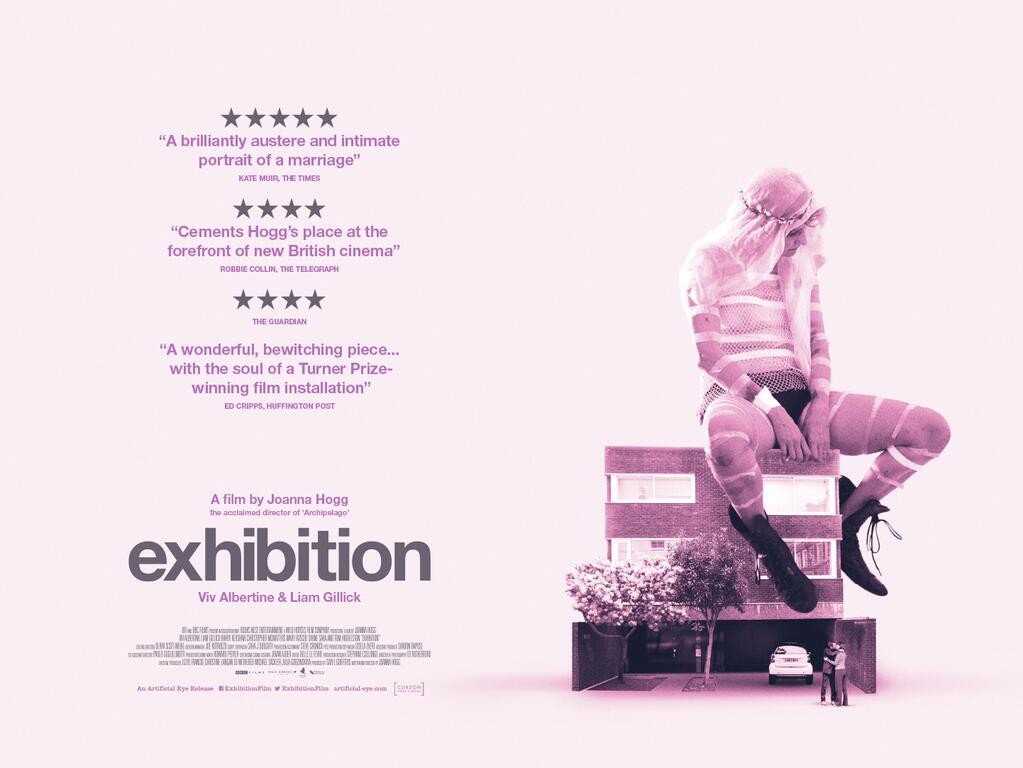
Exhibition (2013) – Little Boxes

Joanna Hogg is one of the most exciting film directors working in Britain today. A graduate of the National Film and Television School, Hogg spent the 1990s working in British television on series such as Casualty, London’s Burning and an Eastenders spin-off exploring the wartime exploits of a young Dot Cotton. While a decade behind the cameras of soap operas and disposable dramas does not usually herald the arrival of a major directing talent, it is worth remembering that British soap operas have a long history of social realism meaning that every year Hogg spent on Casualty and London’s Burning was a year in which she got better at observing people and the worlds they inhabit.

Hogg’s eye for social rituals and group dynamics was evident even in her debut feature Unrelated. The film revolves around a woman who joins her friends on holiday as an excuse to spend some time away from her partner. Upon arriving in Italy, the woman finds herself in a house that is already split down the middle along generational lines and decides to hang out with her friends’ hedonistic teenaged children rather than the people she came to visit. This yields a splendid holiday until a failed attempt at seduction sends the woman scurrying back to the grown-up side of the house and the grown-up life she left in Britain. While Unrelated is a recognisably British film about recognisably British characters who behave in a recognisably British way, the film’s treatment of its subject matter evokes European rather than British cinema. Aside from a southern climate and an interest in middle-aged sexuality that recalls works like Ozon’s Swimming Pool, Unrelated is defined by its emotional ambiguities and a fondness for long dialogue-free scenes and palate-cleansing landscape photography that are common in European cinema but almost entirely absent from British film.

Much like Unrelated, Hogg’s Archipelago is best understood as an attempt to explore the products of British social realism using the language of French art house drama. However, where Hogg’s first film seemed to go out of its way to retain such European topoi as sun-drenched holiday homes and illicit affairs, her second film is far more recognisably British thanks to its focus on wind-blasted landscapes and awkward family holidays. Shot on the isles of Scilly off the South-West coast of Cornwall, Archipelago features a pair of grown-up children who decide to go on holiday with their mother. The family’s unhappiness is manifest right from the start as disagreements escalate into arguments with a speed that suggests the presence of unaddressed problems. However, despite numerous elephants in the room, the family never sit down to discuss their feelings… they simply evade and deflect them by choosing to blow up over ridiculous things such as choice of bathroom and whether or not a piece of food has been properly cooked. Elegantly reserved when it comes to its characters’ actual inner lives, Archipelago is a magnificent study of the British middle-classes and how taboos surrounding direct confrontation and talking about one’s feelings have encouraged people to become emotionally self-contained. The film suggests that while this system of self-containment may be completely unreliable, it is supported by a cultural tolerance of passive-aggressive venting and the kind of extreme emotional projection that would probably be regarded as psychotic in a more emotionally-expansive culture. Like Unrelated, Archipelago explores these ideas in a quintessentially European manner by forcing the audience to observe only to then pull back and provide them with evocative imagery that will encourage them to draw their own conclusions about the things they have just been shown. This willingness to use European cinematic techniques to explore British emotional landscapes not only made for an incredibly fresh cinematic experience, it also served as a timely reminder of how staid, unadventurous and lacking in diversity European art house film can be.

Archipelago is not only a perfect fusion of British social realism and European cinematic vocabulary but also the completion of an experimental journey that began with Unrelated. This posed an interesting question: if Archipelago was everything that Unrelated wanted to be, where would their director go next?

Joanna Hogg’s third film Exhibition is also her most ambitious. Like its predecessors, the film uses a European cinematic vocabulary to explore the emotional dynamics of British middle-class life. However, whereas Unrelated and Archipelago both revolved around relatable characters who were really quite easy to understand, Exhibition concerns itself with a couple whose inner lives are so bizarre and complex that they can only be expressed artistically.

Continue reading →