REVIEW – Alps (2011)

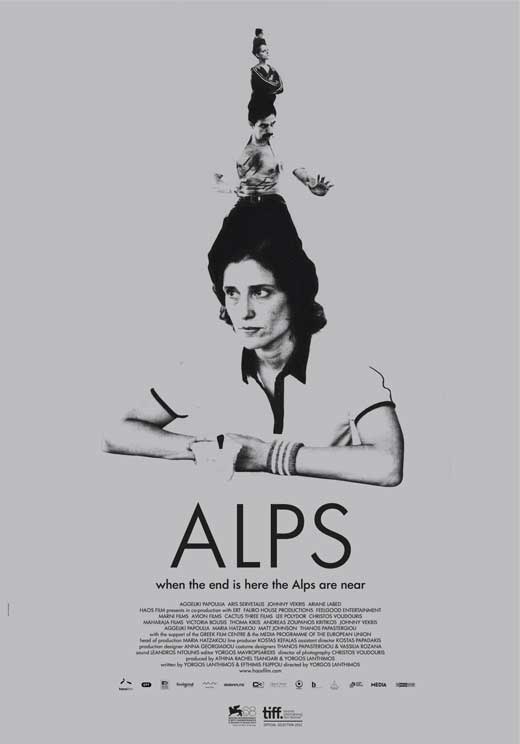
alpsVideoVista have my review of Giorgos Lanthimos’s third films Alps.

Alps is part of a suite of films that began in 2009 when Lanthimos’s second film Dogtooth won the Un Certain Regard prize at the Cannes film festival. Surreal, funny and utterly unlike anything else in contemporary art house film, Dogtooth tells of a pair of siblings who have been raised to believe that the world outside of their family home is a sort of dystopian nightmare. Much like Rolf de Heer’s incandescently brilliant Bad Boy Bubby, Lanthimos uses this set-up to explore not only the weird second-hand beliefs that parents pass onto their children, but also the oddness of contemporary life and how arbitrary our social conventions must feel to people not raised to accept them. This critique of contemporary morality and generational differences then stepped up a gear in Attenberg, a film by Athina Rachel Tsangari who also serves as Lanthimos’ producer on Dogtooth and Alps. Much like Dogtooth, Attenberg uses surrealism to draw our attention to the arbitrary nature of social mores but in a way that suggests considerably more anger towards the older generation. How are young people supposed to cope with a complex world when all their parents ever did was fill their heads with be-bop and David Attenborough documentaries. Alps is very much a part of the Dogtooth cycle but, unlike Dogtooth and Attenberg, it does away with the surreal imagery that made those earlier films so intensely eye-catching and different.

The film tells of a group of people who make a living impersonating the recently deceased. Initially, we are encouraged to look upon the gang as either crooks or amateur grief therapists, but as the film unfolds and we learn more about the characters, the reasons for the impersonations become increasingly strange and difficult to discern:

The root of the problem lies in Lanthimos’ decision to abandon the surrealism of Dogtooth and Attenberg in favour of a more realistic footing. In Dogtooth and Attenberg, the surrealism served not only to exaggerate the foibles of everyday life but also to locate the film within a context that was more symbolic and fantastical than strictly representational. This means that the audience is left stranded in a sort of philosophical ‘uncanny valley’ as the film is both too real to be metaphorical and too weird to be a representation of the real world. Neither a fable nor a drama, Alps is a hugely evocative mess of impenetrable feelings and oblique social observations that could have been a whole lot more.

Clearly, this is a film that is overflowing with ideas and I continue to think that Lanthimos and Tsangari are two of the most important filmmakers working today. However, I question the decision to shift to a more realistic register as I’m not convinced that the cinematic vocabulary of social and psychological realism can cope with the complex and frequently metaphorical nature of Lanthimos’ ideas. Still… a director whose ideas outstrip the visual elements of his film is a refreshing change to the current vogue for incredibly beautiful and well-made films that are completely devoid of new ideas.

REVIEW – Blood Simple: Director’s Cut (1998)

BloodSimpleFilmJuice have my review of Joel and Ethan Coen’s first film Blood Simple. Or rather, the slightly shorter director’s cut that was released about fifteen years after the original film.

I found this review quite difficult to write as while I have seen and enjoyed most of the Coen Brothers’ films, I’m also acutely aware that their work invariably seems less substantial the more you think about it. Though some of their films are easily dismissed as more-or-less enjoyable tosh, some of their films feel like substantial dramas. Indeed, both A Simple Man and The Man Who Wasn’t There seemed intellectually robust when I first saw them but I am now hard pressed to remember anything about them aside from a couple of throwaway gags. Blood Simple felt very similar in that it is a film that does a great job of looking smart even though it is really little more than a pastiche:

Clearly inspired by such hardboiled crime novels as Dashiell Hammett’s Red Harvest and James M. Cain’s Double Indemnity, Blood Simple takes a collection of film noir clichés, drives them out of the city and deposits them in a crummy bar at the tail end of Texas. Stripped of their tilted fedoras and artfully crumpled raincoats, the clichés valiantly attempt to start new lives but eventually find themselves sliding back into old familiar habits.

Watching Blood Simple, I couldn’t help but reflect upon the fact that the dividing line between a ‘smart’ film and a ‘dumb’ film is often a question of viewer charity as a charitable viewer is more likely to detect meaning and symbolism than someone who is bored out of their tiny mind. Indeed, skilled directors know that it is possible to make a film seem smarter by using some of the visual and stylistic cues that people associate with smartness. For example, even though Jon Favreau’s Iron Man and Christopher Nolan’s The Dark Knight Rises do not actually say anything substantial about either the War against Terror or the Occupy movement, visual references to both of those real world events goaded critics into assuming both films had elaborate political messages. Similarly, art house films such as Eugene Green’s The Portuguese Nun and Carlos Reygadas’ Silent Light are so good at looking like serious intellectual films (long takes, lots of silence, beautiful photography, impressions of interiority) that many critics simply assume that they were in fact serious art house films filled with deep and meaningful truths.

Blood Simple is very much like a Batman comic in so far as it looks really dark, twisted and psychological but that look is ultimately all it has to offer. Watching Blood Simple I began to think about whether No Country For Old Men is a smart film or merely a film that looks smart… is there any difference? Does ‘smartness’ actually exist outside of the audience’s heads?

REVIEW – Les Cousins (1959)

LesCousinsFilmJuice have my review of Claude Chabrol’s second film Les Cousins, which has just been re-released by the ever-excellent Masters of Cinema.

Les Cousins tells of a young man who moves to the city in order to study law. Sharing his uncle’s place with his far more sophisticated and extroverted cousin, the young man finds himself being sucked into his cousin’s glamorous lifestyle filled with parties, girls and dubious European noblemen. Initially, this relationship works quite well as the cousin likes to be the centre of attention and the young man’s inexperience makes him feel like an older brother and a community leader. However, when the young man attempts to become romantically involved with a young lady in his cousin’s entourage, the cousin takes umbrage and decides to assert his supremacy. Disgusted both with his cousin’s behaviour and his own loss of focus, the young man throws himself into his studies but this only provokes his cousin into more frequent and louder parties:

Things come to ahead when Charles is trying to study for his finals but Paul keeps having loud parties. Charles pleads with his cousin to do some revision but Paul’s confidence is absolute… he knows what he is doing and revision is an absolute waste of time. As with Le Beau Serge, Chabrol presents the tension between the two boys as being social and psychological in nature but in truth their disagreement is a moral one: Charles writes endless letters home to his mother promising that he will succeed in his studies and suggesting that his desire to work is born of a sense of duty to do right by his parents. By not only refusing to study but also making it harder for Charles to study, Paul is challenging the moral order of Charles’s universe. In Charles’s mind, Paul is doomed to failure because the universe does not reward provocative layabouts. This means that when Paul does pass his exams with flying colours, Charles is forced to examine not only his faith in the moral nature of the universe but also his conviction that his duty to his parents obliged him to study: What if the best way to succeed really was to wear a smart suit and hang-out with dubious Italian aristocrats?

I mention Le Beau Serge as Les Cousins can be read as a response to that earlier film. Where Le Beau Serge is rural, Les Cousins is urban. Where Le Beau Serge is about a town-mouse visiting a familiar countryside, Les Cousins is about a country-mouse visiting an alien city. Where Le Beau Serge is about taking responsibility for the actions of another, Les Cousins is about remaining true to yourself.

Somewhat handily, Masters of Cinema have decided to time their re-release of Les Cousins with a parallel re-release of Le Beau Serge (that I also reviewed for FilmJuice). While both films work beautifully on their own, many of their subtleties only become apparent when viewed one after the other.

REVIEW – Le Beau Serge (1958)

LeBeauSergeFilmJuice have my review of Claude Chabrol’s first film Le Beau Serge, which has just been re-released by Masters of Cinema.

Le Beau Serge tells of a young man who returns to his home town in order to recuperate from an extended period of illness. Upon arriving, he becomes obsessed with a childhood friend who, despite showing real signs of intelligence and potential as a child, has now fallen into drink and bitterness. Puzzled by this unexpected fall from grace, the young man sets about trying to solve the riddle of what happened to the handsome Serge of his youth:

While much of the initial narrative energy comes from François’s attempts to solve the mystery of le beau Serge, the second half of the film increasingly comes to focus upon why it is that François is so obsessed with saving first Serge, then Marie and then the entire village. Though Chabrol offers us no easy answers, the depth of François’s guilt is such that his attempts to protect Serge and his family eventually come to seem insane and messianic. Why doesn’t François leave? Why didn’t Serge leave? Why doesn’t anyone leave a life that is manifestly killing them?

Chabrol is a director with a somewhat misleading reputation for producing thrillers. Though many of his most famous films (including Le Boucher, This Beast Must Die and La Ceremonie) include a bloody murder and a good deal of psychological tension, the truth of the matter is that Chabrol is and always was a moralist. Not in the sense of lecturing people about right and wrong but rather exploring why it is that people make certain decisions and how they come by certain strange beliefs. Unlike Chabrol’s later films, which dressed the morality up in murder and tension, Le Beau Serge strips the core of the Chabrol experience right back to the very core and asks two very salient questions: Why did Serge turn to drink? Why is Francois obsessed with saving him? A truly wonderful film by a truly wonderful director.

Interestingly, Masters of Cinema have chosen to re-release Le Beau Serge on the same day as they re-release his second film Les Cousins. As I explain in my review of that film over at FilmJuice, the two films function as a pair: Complementing each other through their many differences and juxtapositions.

REVIEW – The Master (2012)

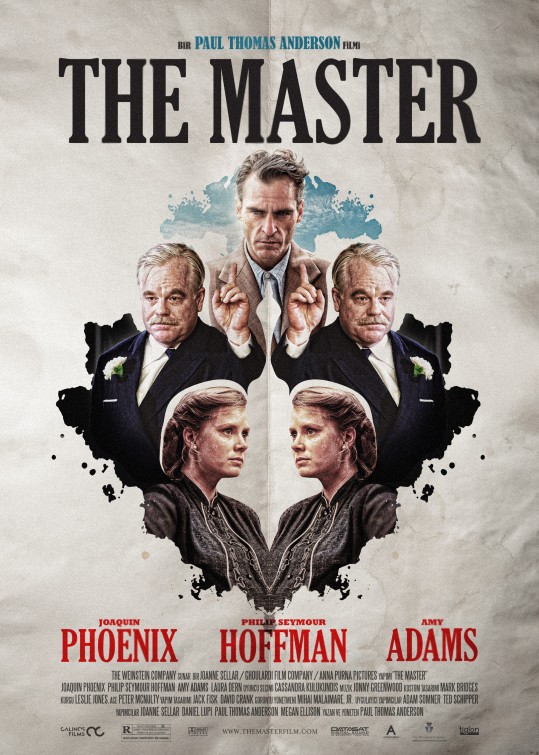
masterMy review of Paul Thomas Anderson’s The Master has just gone live over at VideoVista.

Set in the aftermath of World War II, the film follows a thoroughly disreputable alcoholic and adventurer as he tumbles from steady job, to menial labour and finally into alcohol-sodden destitution. While on a particularly epic bender, the alcoholic (played by Joaquin Phoenix) finds his way onto a ship commanded by an equally disreputable mystic (played by Philip Seymour Hoffman). Clearly modeled on L. Ron Hubbard, this mystic is in the process of founding a cult that borrows as much from traditional mysticism as it does from experimental psychology. Sensing a degree of kinship despite the differences in their fortunes, the two men begin a sort of epic bromance that eventually comes to trouble the mystic’s terrifyingly ambitious and controlling wife. Much like the mystic, she sees the similarities between the two men and so she is worried that the alcoholic’s refusal to mend his ways will wind up dragging down the mystic.

The tension between the two characters reminded me very much of Claude Chabrol’s wonderfully murky Juste Avant La Nuit (1971), in which two characters are bound together by their intense resemblance as well as their intense hatred of what the other person represents. In my review of Juste Avant La Nuit I noted that:

The early British psychoanalyst Ernest Jones once said that we do not want to kill the people we hate most, instead we want to kill the people who evoke in us the most unbearable conflicts.  This is because it is human nature to try to resolve inner conflicts decisively.  To be one thing or another.  Much conciliatory art (such as the films that dominate the Gay Indie film scene), is based upon the idea that conflicts are a result of confusion.  Confusion that can be solved simply by ignoring one part of our nature.  However, the reality is that inner conflicts define us as people and drive us forward.  They are not battles that can be won, they are battles that are forever being fought and the dust cloud that rise from the battlefield is who and what we are.  When Charles met Laura and her need for complex sexual power dynamics, he was reminded of the conflicts that rage within his bourgeois existence : The urge to be free, the urge to be submissive.  By having an affair with Laura, he was forced to confront his own uncertainties and rather than assume the responsibility for ending the relationship, he chose to erase Laura.  To erase the source of his confusion and the reminder of his own conflicted nature.

While I enjoyed the film quite a bit, I am also aware that it felt like a wasted opportunity. As I say in my review:

While there is no denying that The Master is a beautifully made and surprisingly intense film, it is also a film that fails to make full use of its considerable assets. Indeed, despite being inspired by the founder of scientology, Anderson’s film offers no real commentary on cults other than the rather bland observation that the men who lead them are occasionally rogues. This criticism can also be levelled at There Will Be Blood in that Anderson took a complex satirical novel about the Tea Pot Dome scandal and reduced it down to a story about an oil baron being a bit of a prick. That Anderson’s films lack anything approaching a subtext or a message is undeniably a result of his placing characters at the centre of his creative process. There Will Be Blood and The Master suggest that, while this process can produce very intense films with beautifully realised characters, it is not particularly adept at producing smart films and that is a terrible shame.

The Master had the opportunity to explore not only the psychological aftermath of the Second World War but also the complex psychological dependencies that go into establishing a cult. However, rather than exploring these huge meaty issues, Paul Thomas Anderson produced little more than an entertainingly intense two-hander that is all about the performances. Which is a shame really…

REVIEW – Amour (2012)

amour-2FilmJuice have my review of Michael Haneke’s Palme D’Or and Oscar-winning drama Amour.

Set almost entirely within the walls of a well-appointed Parisian apartment, Amour tells the story of a retired couple named Anne and Georges who are forced to adapt to entirely new ways of being and relating when one of the couple suffers a massive stroke. Unlike many of Haneke’s films, which present themselves as being of a certain genre only to then deconstruct the genre and mock audiences for wanting generic plot resolutions, Amour is a film that is almost entirely free of postmodern cleverness. In fact, the only thing distinguishing Amour from an old-fashioned weepy is its thematic content. This thematic content sat very close to my personal metal as I spent a number of years as my mother’s primary carer and so immediately identified with the changes taking place in Georges’ character:

Much of the film’s drama and tension comes from Georges’ troubled attempts to reinvent himself and his relationships in a way that protects both Anne’s dignity and his own humanity. Sometimes the negative emotions prompt Georges to over-react to relatively minor problems because it is much easier to fire and humiliate a nurse than it is to deal with the feeling that your life is now nothing more than medication, nappy changes and the grim inevitability of death. As Anne’s condition continues to deteriorate, we see Georges attempting to cling to any island of psychological stability he can find. For example, when the couple’s children turn up and express concern over Anne’s condition, Georges seems cold and inflexible to the point of outright insanity but in truth this attitude is entirely self-protective. As Georges points out, the tears and concerns of his children are of no practical use to him because, at the end of the say, he is the one who will be left alone to care for Anne. Better that the children keep their mouths shut than for them to offer the type of false hope that would make it so much harder for Georges to go back to his life as a solitary carer. It is in Georges’ interactions with these islands of stability that we see Haneke’s vision imposing itself upon what would otherwise be quite a traditional weepy.

Usually, one finds oneself praising Haneke for his savagery and visual brilliance but Amour is a surprisingly humane and visually simplistic film. At times, the only difference between this and a TV movie is the lack of melodramatic scoring and even this is present if you allow for the fact that the film continues Haneke’s obsession with the emotional lives of neurotic pianists. Rather than praising Haneke for his ability to be Haneke, I find myself praising him for his compassion and attention to detail as many of the details of this film could have been lifted directly from my own life.

Detachment (2011) by Tony Kaye

detachmentBack in the 1990s, Tony Kaye seemed destined for great things. After cutting his teeth on a series of award-winning music videos including “Runaway Train” by Soul Asylum, Kaye took the step up to the big leagues and signed on to direct American History X, a film that humanised a pair of skinheads and blamed American middle-class culture for their descent into violent racism. However, while the film’s power and insight have become only more evident with the passage of time, American History X very nearly ended Kaye’s career as the studio’s indifference to his first cut lead to a very public PR battle in which Kaye bemoaned his treatment in a series of full-page adverts in the Hollywood press. His reputation effectively ruined, Kaye returned to music videos until his 2006 abortion documentary Lake of Fire paved the way for another shot at feature-length cinematic narratives. Like American History X and Kaye himself, Detachment is an unsettling and ambiguous film that assaults contemporary morals with a fury so intense, grandiose and ill-disciplined that it feels less like an argument for or against something than it does a howl of rage at the universe itself.

Much of the critical indifference to Detachment can be explained by its initial similarity to both John N. Smith’s Dangerous Minds and Ramon Menendez’s Stand and Deliver. However, despite telling of a new teacher arriving in a failing inner city school, Detachment is neither a critique of the American school system nor a heart-warming tale of academic triumph over economic adversity. Instead, Detachment picks a fight with the human condition itself.

Continue reading →

REVIEW – Holy Motors (2012)

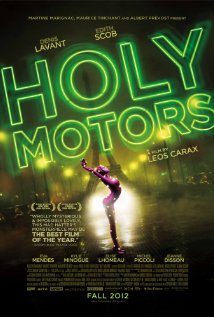
HolyMotorsVideovista have my review of Leos Carax’s beautifully weird Holy Motors.

Holy Motors is a film that took me almost completely by surprise. Going into it, I had seen the widely-circulated ‘Trois! Douze! Merde!’ video in which an intense bald man wanders round a church with an orchestra of accordion players but beyond that I had heard nothing other than the fact that this was a festival of pretty but ultimately insubstantial whimsy. I could not have been more wrong. Holy Motors is a film about the contemporary self and our tendency to not only play different roles at different points in our lives but also our willingness to effectively ‘pull up the ladder’ behind these roles and reinvent ourselves periodically whenever we hit upon a persona we find particularly useful or enjoyable:

20th century counter-culture was obsessed with the idea that, instead of allowing people to ‘be themselves’, society bullied people into conforming to a narrow set of social expectations. However, after 50 years of relentless subversion and deconstruction, the mainstream of our culture is now almost impossible to pin down. Cultures are first and foremost collections of signs and symbols that bind and inform the people who partake of them, identities have meaning and status because people partaking of a particular culture recognise and respond to a particular set of signs, but our culture has replaced a single set of cultural signifiers with a collage of more-or-less overlapping cultures that many people struggle to navigate. What is the backlash against political correctness and multiculturalism if not a demand that old cultural privileges be reinstated? As our cultural spaces become more diffuse and intractable, we begin to yearn for that which horrified the 20th century existentialists.

For Jean-Paul Sartre, to be defined by others was to be confined to hell. His 1944 play No Exit was a howl of protest and repugnance at the idea that our identities might somehow rely upon the judgement of others. However, fast-forward 70 years and we demand the attention and judgement of others! We photograph our lunches and live-tweet our social interactions because we know that our identities exist only as long as they are recognised by the people who matter to us. Holy Motors is not about the tyranny of others but the fear of their absence… if nobody is observing Oscar then why does he play the dying uncle, the punk rock accordion player or the husband to a chimpanzee? Why do anything if nobody is paying attention? And if nobody is out there defining us then how do we even begin to define ourselves?

What makes Holy Motors a brilliant film is that Carax not only engages with these ideas, he does so using a cinematic language that is entirely new and entirely of the moment. This is cinema built with Youtube in mind. Cinema that uses spectacle not as a blunt instrument but as a scalpel that cuts away the conventions of traditional storytelling till nothing but the raw pulsating nerve of The Moment is left. Quite possibly the best and most under-appreciated film of 2012.

Millennium Actress (2001) by Satoshi Kon

millennium_actressKon’s magnificent debut Perfect Blue used animation to project the audience into the troubled psychological hinterlands of a woman who is attempting to reinvent herself as a serious actress. Kon’s second film, Millennium Actress uses a similar set of themes and techniques but rather than focussing on the painful process of becoming an actress, the film looks back over the life and career of a woman who managed to become precisely what the world of film required of her.

Millennium Actress opens on a director and cameraman making their sweaty way up a large hill. At the top of the hill is a house. Inside the house is a reclusive and long-retired actress based upon the legendary Setsuko Hara (who unexpectedly retired in the same year that the director Yasujiro Ozu died). Once the actress begins talking, Kon removes us from reality and positions us alongside the camera crew inside the woman’s memory. However, as the actress speaks, the world of the film shifts from memories of her childhood to memories of her life on set as a child actress and finally to memories of the roles she played on films. “What are we shooting?” asks the cameraman as samurai clash; cities burn and youthful actresses wring their hands in melodramatic lamentations. Good question.

Initially, Millennium Actress feels like a journey into senility. Ronald Reagan reportedly confused the things he had done on film with the things he had done in reality and the film’s movement between memories of making films and memories of film suggests a similar form of confusion. However, as the film progresses and the boundaries between films begin to dissolve, a pattern begins to emerge: each of the actress’s roles drew upon the realities of her life at the time of filming. Thus, by revisiting each of the roles the actress played, the camera crew are witnesses to the emotional beats of the actresses’ life. The further the film progresses, the older the actress becomes, the quicker she ages and the more her life comes to resemble a head long rush towards the grave. While the film’s opening acts sometimes feel like an elaborate but hollow technical exercise, the conclusion weaves all of these disconnected threads into the magnificent tapestry of a life in film.

Much like Paul Schrader’s biopic Mishima: A Life in Four Chapters, Millennium Actress explores not only the importance of the creative process in the lives of creative people, but also the way in which these very public displays of emotion forge a bond between the audience and the artist. Kon brilliantly explores the nature of this relationship by having the director insert himself into the memories of the actress in order to serve as her protector and guardian of the sacred flame. Aside from keeping the actress’s flights of fantasy on track, the director also directs her attention to the areas of her life that he finds most interesting suggesting that, far from being passive, fans can have a good deal of control over the lives of their idols.

Though undeniably a touching tribute to the enduring power of film, Kon’s film suggests that the relationship between performer and audience is actually a good deal more complex and problematic than we might otherwise believe. Indeed, despite being a central figure in the lives of millions of people, the actress never quite got to live her own life on her own terms. Great emotions flowed through her and back towards her but they never really belonged to her… they were never entirely private… never entirely personal.

In a sense, Millennium Actress is the perfect response to Perfect Blue as it answers that film’s un-posed question: Why would someone want to put themselves through the dehumanising and humiliating process of becoming an actor? Because to be is to be perceived and to feel is to be felt.

Five Intelligent Science Fiction Films

children-of-menFilmJuice have just published my latest feature. In honour of the British release of Cloud Atlas, here is my list of five literary science fiction films.

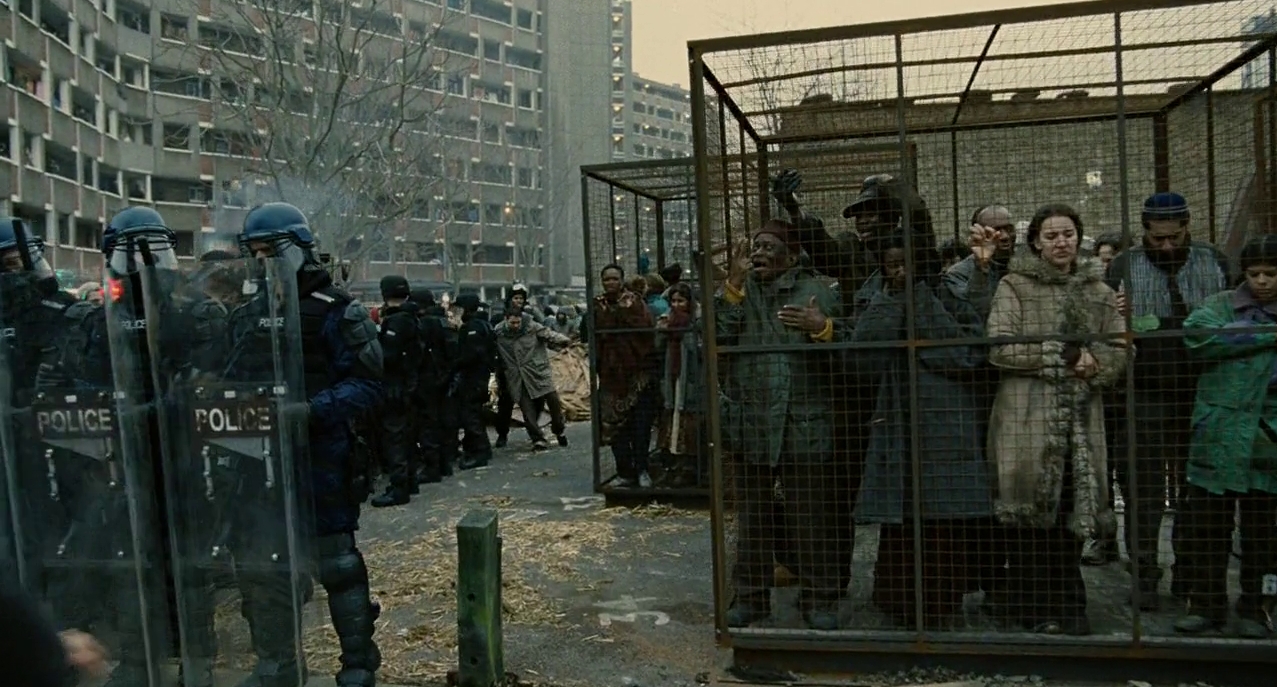
These types of feature are really quite formulaic, the list post is a staple of most major websites and I do little to subvert the format. However, while many such lists seem content to list anything that isn’t a disaster movie or an action film, I’ve attempted to select films on the basis of their vision and relevance. Somewhat unsurprisingly, I end the piece by singing hosannas to the glory of Curaon’s Children of Men:

Cuaron’s Children of Men takes place in a future Britain where the sudden and inexplicable sterility of the population has resulted in an even greater form of cultural blockage than the one we are currently experiencing. Without young people to stir things up and challenge orthodoxies, Britain has retreated into a bitter nostalgic conservatism where branded coffee shops sit beside cages full of foreign refugees and pleasant middle-class people withdraw into artfully decaying farm houses filled with relics of their long-abandoned ‘politicised’ youth. Even when The Revolution finally comes, it feels like a mass-market greatest hits album: Masked Islamic gunmen parading their martyred dead West Bank Style, under-equipped paramilitaries firing through the windows of abandoned schools Sarajevo Style, futuristic soldiers standing around impoverished suburbs Baghdad Style: Now That’s What I Call A Revolution! Volume 666.

People interested in this sense of cultural blockage might also be interested in my piece about the Cowardice, Laziness and Irony of literary science fiction and Mark Fisher’s eternally brilliant book Capitalist Realism.