REVIEW: Rare Exports: A Christmas Tale (2010)

Just in time for Christmas, THE ZONE has my review of Jalmari Helander’s Evil Santa picture Rare Exports: A Christmas Tale.

Much like Dick Maas’s anti-clerical Saint, Rare Exports draws much of its humour and all of its horror from confronting children’s stories with the eyes of an adult. As with Maas’s take on the story of Saint Nicholas, Helander’s take on the more familiar story of Santa Claus finds something distinctly unsettling in the idea of an immortal being who hangs around children. Given the gimmicky nature of the subject matter, it would have been easy for Rare Exports to get away with being cheap and shoddy but instead, the project boasted quite a lavish budget that made it all the way to the screen thanks to some wonderful cinematography and a script that knows when to place tongue in cheek and when to allow the surreal horror of Santa Claus to speak for itself:

Rare Exports [repeatedly] toys with the idea of arrested development. Indeed, the head of the multinational corporation that are trying to unearth Santa is a man who dresses and acts in a manner that suggests that adulthood does not necessarily become him. Aside from spending an absolute fortune trying to meet the real Santa, the man also hands out a set of safety precautions in order to prevent his men from being seen as ‘bad boys’. These precautions include statements such as ‘no swearing’ and ‘no drinking’, precisely the kinds of rules that adults apply to their children. By attempting to ensure that his workmen are seen as ‘good boys’, the foreign businessman is effectively trying to envelop them in the same state of arrested development as him.

Regrettably underused, this character is fiercely reminiscent of both the collector character from Toy Story 2 (1999), and Michael Jackson, in that all three give off an image of adulthood that is just far-enough out of alignment to set people’s teeth on edge. Although Rare Exports never delves into the capitalist’s motivations, it is clear that there is something very wrong with a man who would destroy a mountain, risk dozens and lives and spend a fortune in order to meet Santa. The childlike glee displayed by the capitalist when he first encounters the reindeer herders’ old man is beautifully unclean; the way he strokes the old man’s filthy and matter beard speaks of a profoundly broken form of humanity.

Lovely, wrong and distinctly Finnish.

REVIEW: Stake Land (2010)

THE ZONE has my review of Jim Mickle’s post-apocalyptic vampire movie Stake Land.

Between Richard Matheson’s I Am Legend (1954) and Anne Rice’s Interview with the Vampire (1976) there are no shortage of works that use vampires as a means of engaging with such existentialist themes as loneliness, alienation and self-loathing. Indeed, the rather individualistic idea that people out there are somehow less alive and therefore different to us also features in zombie films like Edgar Wright’s Shaun of the Dead (2004) and Ruben Fleischer’s Zombieland (2009). Beating a critically acclaimed path to this already well-frequented watering hole is Stake Land, a film that combines the post-apocalyptic seriousness of Cormac McCarthy’s The Road (2006) with the post-apocalyptic silliness of Kevin Costner’s The Postman (1997) with all the problems this entails:

Though never all that original or overflowing with important things to say, Stake Land could have been an interesting addition to the tradition that uses elements of art house cinema to revitalise tired old horror tropes. Similarly, it could have been a harmless action movie in which a stone-cold badass leads a group of people through a vampire-infested post-apocalyptic landscape. However, by attempting to be both things at once, Stake Land succeeds at being neither. This is a slow, ponderous, underpowered and ludicrously pompous film that comes nowhere close to adding up to the sum of its parts.

Disappointing to say the least.

Take Shelter (2011) – The Power of Nightmares

The Twentieth Century was kind to the American people. A continent claimed and a nation forged, the Americans dipped their toes into the waters of international politics with a pair of heroically late entries into wars that ultimately destroyed the great European powers of the 19th Century. Generation by generation, the American people became wealthier and wealthier while their language and culture travelled the world breaking boundaries and making friends. By the end of the twentieth century, life was so good for so many Americans that historians proclaimed history to be at an end: America had won and the American people stood at the very pinnacle of human flourishing. Never in the history of human affairs had one society been so wealthy and so powerful. The future was bright, the future was American.

Then something peculiar happened. The economic forces that once promised universal wealth and happiness suddenly began to cough and stutter as skyscrapers collapsed in downtown New York. Shaken and traumatised, the American people demanded that American blood be avenged ten-fold but the wars this sentiment created produced nothing but trouble. There was no revenge or glory, there was only a bottomless sea of moral ambiguity and America was rapidly running out of beach. Denied the cathartic closure of a ‘good war’, the American people retreated into their dream of cosy consumerism but the events of September 11 were nothing but a grim foreshadowing of the economic collapses to come. September 11 messed up a few buildings but the credit crunch destroyed an entire way of life. Suddenly, the long balmy evening of eternal economic growth was cut short and, for the first time in generations, Americans were less well off than their parents. Not only that but working seemed not to help as millions of Americans worked multiple jobs but still struggled to hang on to their homes. To this day, many Americans spend all day working and yet feed themselves and their families from soup kitchens.

After a series of brutal kicks to the abdomen, the American dream lies bleeding and gasping for breath but when people look around for help or guidance they find a political class that is constitutionally incapable of recognising a problem. With millions unemployed and an entire generation of young people being shovelled onto the scrap heap of history, the American media and political elites seem more worried about the president’s religion and nationality while public discourse has devolved to the point where it amounts to nothing more than a pair of cowardly tribes who shout insults across the battlefield without ever ordering a charge. Something is profoundly wrong with the American way of life and yet neither American politicians nor American journalists seem prepared to acknowledge it. To admit fear and worry would be too un-American and so the people of America hunker down and wait with anxieties unaddressed and uneased.

Jeff Nichols’ psychological thriller Take Shelter is a brave attempt at confronting the fears that grip American society. It is a film about the reality of living scared and the problems that come from failing to address these all-pervasive feelings of dread.

Continue reading →

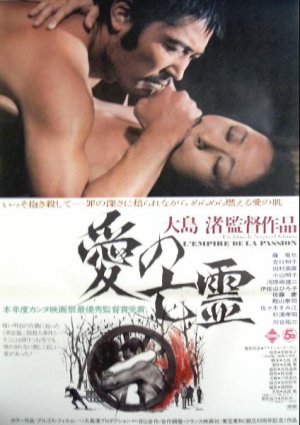
REVIEW: Empire of Passion (1978)

THE ZONE have my review of Nagisa Oshima’s old-fashioned ghost story Empire of Passion.

There is something decidedly odd about the fact that Empire of Passion netted Oshima an award for best director at Cannes. Indeed, while the film is wonderfully atmospheric and elegantly composed, it is ultimately nothing more than a genre piece in which an adulterous couple are hounded into madness by what they perceive to be an avenging spirit.  In my review, I suggest that the award may well have been given out not for Empire of Passion but for In The Realm of The Senses, the hugely controversial and sexually graphic film that Oshima made prior to this one.

Such trifles aside, Empire of Passion remains a hugely compelling exploration of the mechanics of desire, self-censure and social oppression. Indeed, one of the most striking things about this ghost story is that the ghost never actually cries out for vengeance. In fact, all the ghost wants to do is continue to work as a rickshaw driver. Rather than coming from the ghost, the couple’s slide into madness is caused by their refusal to accept what it is that they have done and why it is that they did it:

Empire Of Passion lends itself beautifully to a Freudian interpretation because it articulates not only the individual’s reticence to accept their hidden desires but also the problem of living as a person who does accept that they have certain needs and desires. Indeed, while Seki and Toyoji seem genuinely horrified by the intensity of the desire that their tryst unlocks, the real meat of the film lies in the characters’ refusal to own up to those desires and incorporate them into their personalities.

A thoroughly excellent film

REVIEW – Secret Behind The Door (1947)

THE ZONE have my review of Fritz Lang’s classic psychological thriller Secret Behind the Door starring Joan Bennett and Michael Redgrave.

Based upon Charles Perrault’s fable Bluebeard, Secret Behind the Door explores the process through which a couple get to know each other.  After a whirlwind romance, Bennett’s character marries Redgrave’s secretive and intense architect.  After a rudely interrupted honeymoon, Bennett’s character arrives at the architect’s home and finds him sharing it with two other women and a son from a previous marriage. As in the fable, Bennett’s character begins poking around in her husband’s background until she discovers something sinister.

Bluebeard is perhaps better known in its native France than it is in the Anglo-Saxon world. One reason for this is that it is one of those stories that paints women as a race of incessant and toxic meddlers whose refusal to follow simple male instructions result in the destruction of everything.  Think of Else to Lohengrin. Think of Eve to Adam. Because of the story’s misogynistic roots, generations of feminist authors have been quick to reclaim the role of interfering spouse and cast it in a more positive and transformative light such as the one that bathes Jane Eyre in Charlotte Bronte’s novel. Neither misogynistic nor feminist, Lang’s adaptation of Silvia Richards’ screenplay presents Bennett’s character as a wonderfully ambiguous figure who ‘fixes’ her husband for reasons all of her own. However, while the characters are engaging and the plot is fascinating, what really grabbed me was Lang’s decision to use a voice over as the primary means of communicating inner states:

Watching Secret Beyond The Door and noticing Lang’s tendency to simply pause the action and linger on his actor’s faces while their voiceovers are delivered, I was struck by how little has changed in the way that directors communicate interiority. Indeed, while directors of Lang’s generation paused so that voiceovers can be delivered, contemporary directors simply pause and allow audiences to fill in their own voiceovers. Doubtless many art house films could be transformed by using these little pauses and gazings into the middle distance to deliver short voiceovers in which characters speak directly to the audience. Clearly the basic grammar of cinema has not evolved that much since the days of Lang, it is just that nowadays art house directors tend to outsource exposition to audience speculation.

Secret Behind the Door is a flawed gem and its arrival on region-free DVD is long overdue. This is a must for anyone who enjoys psychological thrillers and an absolute necessity for anyone who loves Fritz Lang’s film noirs.

BG45 – Demon’s Souls and the Meaning and Import of Virtual Death

Futurismic have my forty-fifth Blasphemous Geometries column about From Software’s Demon’s Souls and its place in the history of video game attitudes towards death.

Following on from some of my thoughts on Deus Ex: Human Revolutions, the column argues that rather than trying to downplay virtual death by re-packaging it as with Assassin’s Creed and Prince of Persia‘s talk of death-as-flawed-memory, video game designers ought to follow From Software in embracing the cataclysmic number of deaths that feature in their games. Indeed, what makes Demon’s Souls such a fascinating game is its relentless downbeat tone and its recognition of the fact that characters will die and players will give up in disgust. Clearly, if Demon’s Souls had been a film, it would have been directed by Ingmar Bergman. The column also draws the reader’s attention to Algis Budrys’ Rogue Moon, a book all about the psychological impact of experiencing a futile death over and over again…

Nowhere is the need for unpleasantness greater than in video gaming’s attitude to death.  What was once a means of rationing the time people spent hogging a particular arcade machine has now ossified into a set of linguistic tics that are now completely disconnected from both their real-world and in-game significances. Video games ask us to die over and over again but rather than acknowledging this fact, many game designers seek to minimise the impact of these sacrifices by explaining them away as lapses in memory. By trivialising death, game designers have not only cheapened the lives of our characters, they have also deprived themselves of one of the most powerful thematic motifs in all of art and literature.

Games like Demon’s Souls recognise that they are dealing in death and this recognition is genuinely disconcerting. Like death itself, Demon’s Souls is utterly indifferent to both our presence in the game and our attempts at engaging with it. Demon’s Souls is a game of misery tempered by frustration, and its unapologetic recognition of this fact is what makes it both different and great. While I appreciate Walker’s point, I cannot help but feel that he is looking at the problem in entirely the wrong way: Let us not repackage death, but rather celebrate it as the core of the video game experience.

Having spent a good deal of time playing carefully-packaged AAA-rated titles for this column, one of the continuing joys of Demon’s Souls remains its complete indifference to my presence.  Forty hours in and I’m still not completely clear on how many basic aspects of the game actually work. One of the game’s major mechanics involves shifting between different forms and you begin to pick up magical items helping with that transition a long time before you actually realise what it means. Similarly, it took me about 20 hours to realise that the game had a magic system. In a video game culture full of shallow joys and craven player-pandering, there is something truly wonderful in From Software’s complete indifference to whether or not we ever get the hang of the game.

REVIEW – Don’t Look Now (1973)

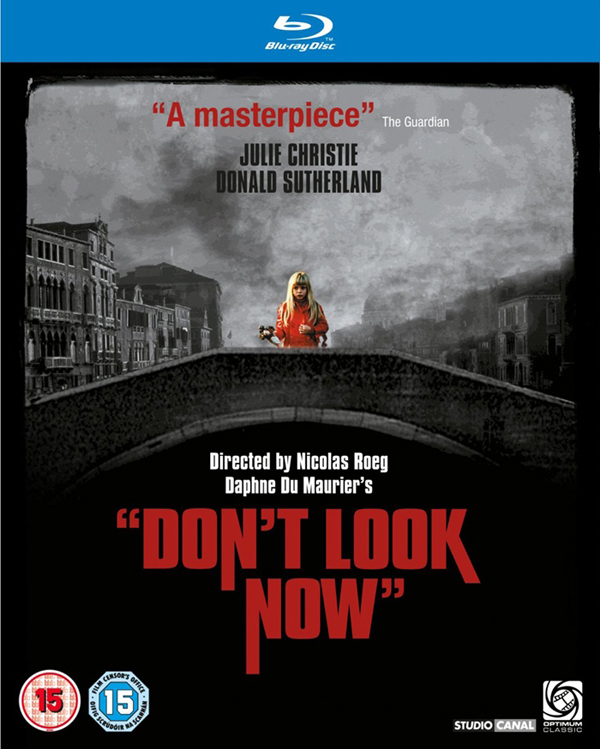
I recently noticed a pattern in my choice of films to write about.  I tend to really enjoy the films I write about but the films I truly love tend to go unprocessed and un-deconstructed.  I did not write about Luca Guadagnino’s I Am Love (2009) and I did not write about Nicolas Winding-Refn’s Drive (2011) despite loving both of these films to pieces. In an bid to force myself out of this unfortunate habit, I decided to take on the recent Blu-ray release of one of my favourite films: Nicolas Roeg’s Don’t Look NowTHE ZONE has my review.

The common thread binding these three films together is their unapologetic devotion to the grammar of film. Indeed, rather than relying upon such theatrical devices as three act structures or novelistic devices such as expositionary dialogue, Don’t Look Now, Driver and I Am Love tell their stories using mostly pictures and sounds. Don’t Look Now is particularly cinematic as Roeg uses cinematic grammar for force us into the head of Donald Sutherland’s reluctant psychic: Sutherland’s character is assailed by images and sounds that he struggles to comprehend and Roeg shares these fragments with us, placing us next to Sutherland’s character. Struggling to comprehend:

The opening scene of Don’t Look Now introduces us to a series of memorable images that Roeg returns to throughout the film. Everywhere the Baxters go, they encounter water, red hoods and shards of light. As people trained in the basic grammar of art house cinema, we know how to recognise recurring motifs and know that we are supposed to treat them as clues to the film’s hidden subtext. However, rather than allowing these clues to sit in the mind of the audience, Roeg uses the possibility of psychic powers to drag these clues into the foreground of the film.

Suddenly, those motifs and images that are normally just hints at hidden artistic meaning become evidence of hidden patterns in the life of John Baxter. Baxter’s hostility to the sisters betrays a deeper hostility to the idea that he too may be psychic and that the recurring images that plague his life might be evidence of future unpleasantness. Baxter foresaw the death of his daughter and now he sees signs that point to his own death. Everywhere he turns, Baxter is haunted by water, shards of light and the colour red. Everywhere he turns, Baxter sees proof that he too will soon be dead.

To suggest that John Baxter may be psychic is, somewhat predictably, to do Roeg a disservice as talk of mediums and psychic powers inevitably conjures up images of third eyes and supernatural powers. However, much of the power of Don’t Look Now resides in the fact that Baxter’s psychic gift is only a slight exaggeration of that very human addiction to pattern recognition, an addiction that forces the audience to hunt for subtexts and clues in Roeg’s repeated use of water, shards of light and the colour red. Indeed, Don’t Look Now is a deeply unsettling film as it forces the audience into the same position as the film’s protagonist: just like John Baxter, we know that something is coming; we know that it is not going to be good but we are powerless to avoid it. The audience are powerless to avoid it because Don’t Look Now is a film. John Baxter is powerless to avoid it because his life is like a film; it is pre-scripted with a beginning, middle and an inevitably grizzly end.

Don’t Look Now is not just a film of towering cinematic brilliance it is also, in its own way, a film about the process of taking a series of disconnected images and forcing them into a cohesive and comprehensible whole.

This review is based upon the Blu-ray special edition that was released in summer 2011.  Billed as a “Special Edition”, this Blu-ray release is pretty much indistinguishable from the 2006 DVD “Special Edition” release.  The extras are exactly the same.  According to the sticker on the cover of the box, the colour restoration was supervised by Roeg himself but, while there is no denying that the colours are crisp and the pictures are clean, I genuinely struggle to tell the difference between this and the DVD special edition. This begs the question as to the purpose and future of Blu-ray releases.

The UK benefits from a growing second hand market for DVDs that has the effect that DVDs lose most of their value within a few weeks of release. In fact, if you are paying full price for a DVD that is more than a week old then you are nothing more than a sucker.  Though Blu-ray has not yet supplanted DVD, the market for Blu-ray disks is pretty much the same as that for DVDs only with Blu-ray discs starting and remaining ever so slightly more expensive. The reason for this is that, UK consumers have largely accepted the idea that Blu-ray is a meaningful step up from DVD. Using this perception, Blu-ray distributors are re-releasing older films hoping that those of us with Blu-ray players (i.e. people who own a PS3) will replace our old DVDs with more expensive and ‘better quality’ Blu-ray editions. However, despite Blu-ray being touted as better quality, it is notable that hardly any Blu-ray releases come with any more extras than their equivalent DVD release. In short, the only difference between Blu-ray and DVD is that Blu-ray discs support HD playback meaning that if you do not possess an HD screen then there is absolutely no reason whatsoever for buying a film on Blu-ray. I bought the special edition DVD of Don’t Look Now when it was originally released and, despite clearly adoring the film, I cannot think why you would choose to replace the DVD with a Blu-ray.

The fate of Blu-ray is made all the more tenuous by changes in the US market.  In the US, the online video streaming service Netflix has not just popularised watching films online it has pretty much killed both DVD and Blu-ray stone dead with the latter-most nails in physical media’s coffin being provided by iTunes and the video-on-demand capacities of cable TV, Xbox Live and the PlayStation Network. Blu-ray was only ever supposed to be a stopgap measure between the latter days of DVD and the early days on online streaming that might allow technology companies to sell one final generation of media players before everyone started watching stuff through their home computer. This gap in the market has now effectively closed in the US and the UK is not that far behind.

Despite chaotically shuffling between business models in a way that has seen its share price plunge, Netflix recently announced that it is planning on bringing its subscription-based video-on-demand service to the UK. In short, Blu-ray is history in the US and the same will soon be true in the UK. If Netflix and Lovefilm do not kill UK DVD sales then Amazon, iTunes and cable TV will.

Of course, physical copies of films will continue to retain some value as people will always to want to ‘own’ the films they love rather than simply retain the capacity to access them online.  Similarly, AV nuts who invested small fortunes in home cinema installations will probably not be the first in line to start watching films on their laptops. I mention this not because I have anything in particular against either Blu-ray or DVD (I own loads myself) but simply as a warning: In a year’s time, Blu-rays and DVDs will be just as worthless as CDs meaning that you will be able to buy films like Don’t Look Now on Blu-ray for next to nothing.  So, instead of splashing out on one great Blu-ray, either save your money and stick with the DVD or wait a year and buy five films for the price of one. And thus the wheel doth turn…

 

Abbas Kiarostami to direct Paranormal Activity 4?

Almost certainly not… but you never know.

Aside from confounding search engines and the countless websites that survive by publishing idle film industry gossip, the title of this post does actually have a point. Namely that I see a number of similarities between the films of Iranian director Abbas Kiarostami and the latest iteration in the Paranormal Activity series directed by Ariel Schulman and Henry Joost.  In short, these cameras are all about forcing us to dwell on that which we do not see.

Continue reading →

REVIEW – Saint (2010)

THE ZONE has my review of Dick Maas’ Evil Santa horror movie Saint (a.k.a. Sint).

Well… I say that this is another addition to the growing sub-genre of Evil Santa movies but in truth, the film works best if you don’t see it as a deconstruction of Santa Claus.  Let me explain what I mean: Saint is an Evil Santa film but rather than deconstructing the American figure of Santa Claus, Maas focuses instead upon the North European figure of Saint Nicholas, a mythological being whose relationship with our Santa is tenuous at best.  As I explain in my review, Saint works best if, instead of seeing it as the story of an evil Santa Claus, you see it as the story of a medieval Bishop who terrorises modern-day Amsterdam. In effect, this interpretation of Saint positions it as a deconstruction of Catholicism rather than Father Christmas:

Who the fuck are these withered old bastards and where do they get off telling us what to do? The idea that the Catholic Church is now nothing more than a morally putrescent corpse imbues Saint with a strong satirical edge. Indeed, the modern Catholic Church behaves very much like the film’s Saint Nicholas, a hideous and antiquated authority figure that ‘hates everyone’ and routinely abducts children in order to force them into servitude. Indeed, the power of Maas’ surreal confrontations between myth and reality owes quite a bit to the absurdity of a medieval institution operating in the modern world. We all know that the world was not created in six days, we all know that there is nothing wrong with homosexuality, and we all know that women should have the absolute right to choose… so why do we listen to a cadre of elderly men in skirts and hats who tell us that we are not only wrong but damned?

Regardless of whether or not you buy into my anti-clerical reading of the film, Saint is one of the most entertaining high-concept horror films out there.

Some Thought On… Last Screening (2011)

Reminiscent of both Michael Powell’s Peeping Tom (1960) and the genre-art house hybridisation of Nicolas Wending Refn’s Drive (2011), Laurent Achard’s Derniere Séance deconstructs the traditional horror film only to reassemble it as a dark and brooding meditation on the delights of cinephilia.

The one thing that unites all members of a cinema audience is the fact that they are members of a cinema audience. Because of this simple tautology, audiences tend to respond well to films that praise them for their decision to go to the cinema.  What do Tornatore’s Cinema Paradiso (1988) and Truffaut’s 400 Blows (1959) have in common? They both pander to their audiences by validating their love of film. Achard’s Last Screening is also about loving the cinema but rather than praising his audience for their good taste, Achard lambasts them for their toxic self-indulgence.

Sylvain (Pascal Cervo) is the manager of a repertory cinema in provincial France. Utterly devoted to the cinema, Sylvain seldom goes out except to kill women and cut off their ears. Much like Powell’s Peeping Tom, Last Screening muses on the voyeuristic nature of cinema and Achard repeatedly assails us with shots of people staring blankly at the camera setting up a similar mirroring effect to that of Kiarostami’s Shirin (2008), where the audience sat watching a cinema audience that could just as easily have been watching them. Achard also litters his film with images of darkened figures staring at illuminated performers, further extending his explicit comparison between the voyeurism of the cinema-goer and the voyeurism of the predatory serial killer. Postmodern cinematography aside, Achard’s critique of cinephilia also extends to the film’s plot as Sylvain’s crimes turn out to be motivated by a desire to recapture the film-viewing moments of his youth. For Achard, cinephilia is clearly a source of genuine joy (he obviously adores Renoir’s French Cancan) but that joy can also turn toxic as a love of old film can result in people becoming stuck in the past or shut off to new forms and experiences. With Sylvain, Achard offers us an image of twisted cinephilia.

Though marketed as a horror film, Last Screening is really more of an art house project. Seldom frightening, seldom tense and only occasionally gory, its murders are not sensationalist ends in themselves but props in Achard’s wider exploration of Sylvain’s twisted mental state.  As you might expect from an art house character study, Last Screening’s pacing in slow, deliberate and filled with languid extended takes in which nothing much happens and nothing is said. Elegantly shot and intelligently conceived, Last Screening is a combative and genuinely thought-provoking film whose absolute lack of sentiment about film itself serves as a timely antidote to a medium that can be altogether too swift to pat itself on the back.