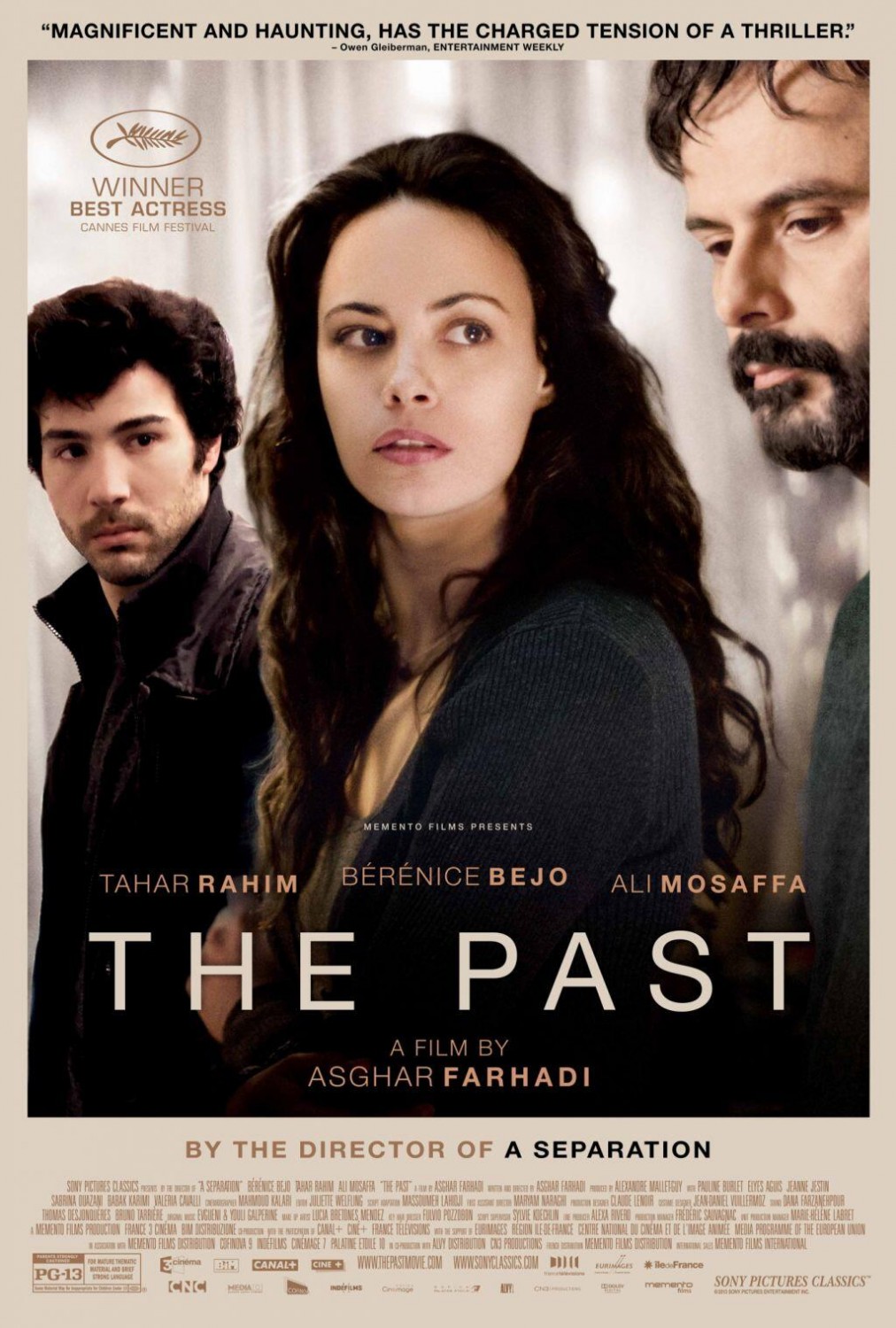
The Past (2013) – No… You Can’t Have Fantasy Dad

The films of Asghar Farhadi form an interesting counterpoint to the films of Joanna Hogg, which I wrote about last week. While both directors are fascinated by the way that group dynamics can impact upon our emotional lives, Hogg’s career has seen her transition from the emotional opacity of formalism to the conceptual opacity of surrealism while Farhadi’s relentless pursuit of emotional truth frequently has him brushing up against melodrama as he did with the magnificent Oscar-winning family drama A Separation.

There can be no greater validation of cinematic art than two directors approaching the same subject matter in radically different ways and yet somehow managing to produce works that feel as natural as they are satisfying. It is easy (and exciting) to imagine Joanna Hogg dancing round the question of who was responsible for the miscarriage in A Separation while Asghar Farhadi would arrive on Archipelago’s Scilly isles and refuse to let go until everyone came clean about what it was that was making them unhappy.

There’s a wonderful moment in the British situation comedy Peep Show when the emotionally constipated Mark Corrigan is confronted by a sister who wants to discuss their traumatic childhood prompting Mark to lament that the people who want to talk always seem to win. Asghar Farhadi’s latest film The Past is sympathetic to both sides of Mark’s observation: Yes… the people wanting to talk usually get their way and No… this isn’t always for the best.

Continue reading →

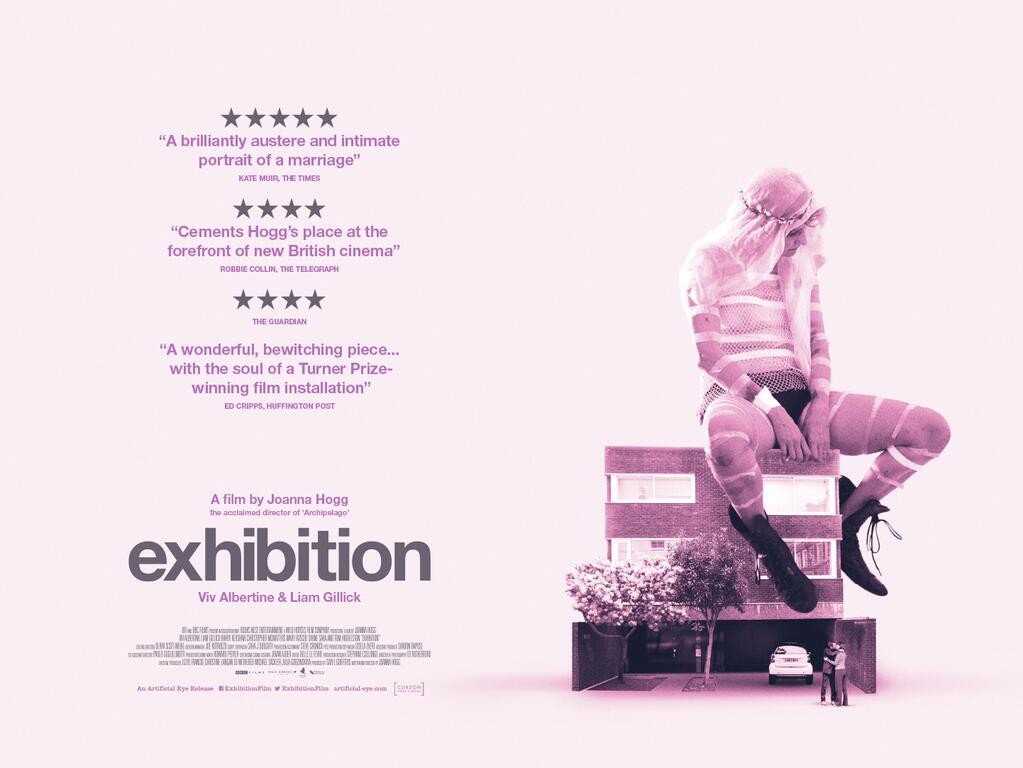
Exhibition (2013) – Little Boxes

Joanna Hogg is one of the most exciting film directors working in Britain today. A graduate of the National Film and Television School, Hogg spent the 1990s working in British television on series such as Casualty, London’s Burning and an Eastenders spin-off exploring the wartime exploits of a young Dot Cotton. While a decade behind the cameras of soap operas and disposable dramas does not usually herald the arrival of a major directing talent, it is worth remembering that British soap operas have a long history of social realism meaning that every year Hogg spent on Casualty and London’s Burning was a year in which she got better at observing people and the worlds they inhabit.

Hogg’s eye for social rituals and group dynamics was evident even in her debut feature Unrelated. The film revolves around a woman who joins her friends on holiday as an excuse to spend some time away from her partner. Upon arriving in Italy, the woman finds herself in a house that is already split down the middle along generational lines and decides to hang out with her friends’ hedonistic teenaged children rather than the people she came to visit. This yields a splendid holiday until a failed attempt at seduction sends the woman scurrying back to the grown-up side of the house and the grown-up life she left in Britain. While Unrelated is a recognisably British film about recognisably British characters who behave in a recognisably British way, the film’s treatment of its subject matter evokes European rather than British cinema. Aside from a southern climate and an interest in middle-aged sexuality that recalls works like Ozon’s Swimming Pool, Unrelated is defined by its emotional ambiguities and a fondness for long dialogue-free scenes and palate-cleansing landscape photography that are common in European cinema but almost entirely absent from British film.

Much like Unrelated, Hogg’s Archipelago is best understood as an attempt to explore the products of British social realism using the language of French art house drama. However, where Hogg’s first film seemed to go out of its way to retain such European topoi as sun-drenched holiday homes and illicit affairs, her second film is far more recognisably British thanks to its focus on wind-blasted landscapes and awkward family holidays. Shot on the isles of Scilly off the South-West coast of Cornwall, Archipelago features a pair of grown-up children who decide to go on holiday with their mother. The family’s unhappiness is manifest right from the start as disagreements escalate into arguments with a speed that suggests the presence of unaddressed problems. However, despite numerous elephants in the room, the family never sit down to discuss their feelings… they simply evade and deflect them by choosing to blow up over ridiculous things such as choice of bathroom and whether or not a piece of food has been properly cooked. Elegantly reserved when it comes to its characters’ actual inner lives, Archipelago is a magnificent study of the British middle-classes and how taboos surrounding direct confrontation and talking about one’s feelings have encouraged people to become emotionally self-contained. The film suggests that while this system of self-containment may be completely unreliable, it is supported by a cultural tolerance of passive-aggressive venting and the kind of extreme emotional projection that would probably be regarded as psychotic in a more emotionally-expansive culture. Like Unrelated, Archipelago explores these ideas in a quintessentially European manner by forcing the audience to observe only to then pull back and provide them with evocative imagery that will encourage them to draw their own conclusions about the things they have just been shown. This willingness to use European cinematic techniques to explore British emotional landscapes not only made for an incredibly fresh cinematic experience, it also served as a timely reminder of how staid, unadventurous and lacking in diversity European art house film can be.

Archipelago is not only a perfect fusion of British social realism and European cinematic vocabulary but also the completion of an experimental journey that began with Unrelated. This posed an interesting question: if Archipelago was everything that Unrelated wanted to be, where would their director go next?

Joanna Hogg’s third film Exhibition is also her most ambitious. Like its predecessors, the film uses a European cinematic vocabulary to explore the emotional dynamics of British middle-class life. However, whereas Unrelated and Archipelago both revolved around relatable characters who were really quite easy to understand, Exhibition concerns itself with a couple whose inner lives are so bizarre and complex that they can only be expressed artistically.

Continue reading →

REVIEW – The Killing (1956) and Killer’s Kiss (1955)

FilmJuice have my twin review of Stanley Kubrick’s second and third films Killer’s Kiss and The Killing, which are getting an all-singing and all-dancing re-release next week at the hands of Arrow Films.

It was interesting to discover these films after reviewing the Masters of Cinema release of Kubrick’s first film Fear and Desire (apologies for nerfed formatting) as, like most people, my memories of Kubrick’s work are shaped by the classics he started churning out from the late-50s onwards. Of Kubrick’s first three films, The Killing is almost certainly the most accomplished and accessible.

However, while the heist is beautifully handled and provides the film with a strong narrative spine, the film’s real beauty lies in the character beats that provide the film’s real sources of tension. Based on a novel by Lionel White but scripted by the legendary crime novelist Jim Thompson, the film benefits from a cast of old B-movie hands who slot effortlessly into their assigned character types and go to town on the dialogue:

Marie Windsor plays Sherry as this wonderfully cynical drunk with a young lover and a hunger for money. Every inch the Femme Fatale dominatrix, she showers her husband with sarcasm and distain only to show him just enough attention to secure his continued loyalty and affection.

As I point out in my review, I felt that the film’s ending failed to live up to the promise of the film’s opening act but I have since learned that the film’s leading man Sterling Hayden was not a popular choice with the film’s studio backers and I wonder if Kubrick might not have left a few of his character beats on the cutting room floor. Either way, the film makes the mistake of driving home the idea that the character is a no-nonsense hard case only to try to elicit sympathy for him in the final scene. You can see how the film might have played out as Kubrick does soften the character in the opening scene but his failure to re-visit that softening and underline that duality results in a film that feels more bleakly nihilistic than it clearly yearns to be. Having said that, I compare the film to pictures like The Big Sleep and The Maltese Falcon and I stand by that comparison as this still a really fucking good film.

As well as some awesome extras (including an interview with a bearded, shirtless and resentful Hayden), the disc also includes Kubrick’s lesser-known second film Killer’s Kiss. Seldom revived during Kubrick’s lifetime, Killer’s Kiss is just as trippy and arty as his first film Fear and Desire but rather than deploying those tricks in the context of a war movie, Kubrick decides to deploy them in the context of an hour-long film about a second-rate boxer who falls in love with a woman in trouble. The narrative isn’t that interesting and the bloke playing the boxer is not what you would call charismatic but the film looks sensational, a bit like Billy Wilder’s The Lost Weekend complete with blurring of boundary between real and imagined:

However, look beyond the simple narrative and the desperately uneven acting and you will see a young director experimenting with a wide array of cinematic techniques. For example, whereas most Hollywood films of the period shot dialogue scenes with fixed cameras, Kubrick has his cameras move in and around the actors while they deliver their lines resulting in an odd, queasy feeling that feels a lot more subjective than realistic. Also interesting is the way that Kubrick makes the walls of the boxer’s kitchen pitch black except for a window looking onto his neighbour’s apartment creating the impression that the window functions almost like a comic book thought bubble in which the boxer visualises sounds overheard through the walls.

It is also quite interesting to see these two films get a release from Arrow films. Arrow have always been a damn fine home-release outfit but I have always associated them with the cult and horror titles they release under the Arrow Video label. I’m not entirely sure how long Arrow Academy has been around as a label but releases like this one and last year’s amazing Walerian Borowczyk box set would certainly position them as the emerging power in Britain’s premium home-video market. Masters of Cinema had better watch themselves!
REVIEW – We Are The Best! (2013)

FilmJuice have my review of Lukas Moodysson’s thoroughly wonderful We Are The Best! Set in 1980s Sweden, the film is a densely-written and realised drama about a group of diffident teenaged girls who spin their feelings of alienation and abandonment into friendship and punk rock. Based on a graphic novel by Coco Moodysson, We Are The Best! is one of those films that renews your trust in the fundamental precepts of world cinema:

The most striking thing about this film is its astonishing density. Not content with providing his audience with a whistle-stop tour of the 1980s punk scene and producing three exquisitely drawn characters, Moodysson unpacks his characters’ motivations and uses them to critique a society that sees little of value in teenaged girls. The film is littered with beautifully quiet scenes in which the girls come up against sexist attitudes and it is in these moments that we are reminded of the central aesthetic principle underlying world cinema: The depth and breadth of human experience is not exhausted by stories about heroic tough guys and mildly depressed middle-class people, so why should cinema limit itself to those types of stories?

Re-watching the film and considering my reaction to it, I was struck by the difference between the vision of Scandinavia presented in this film and the vision of Scandinavia that is presented in the so-called Nordic Noir TV series that are currently proving popular with the British chattering classes. One of the reasons why these TV series are proving so popular is that austerity has pushed British political culture further and further towards the nightmarish individualism of American political culture and the social democracies of Northern Europe are increasingly becoming totemic symbols of what can be achieved when social institutions remain under popular control. Who wouldn’t want to live in a place filled with beautiful people, minimalist interior design and supremely competent police that drive vintage Porsches and wear cooky jumpers? In fact, going by the TV series, Scandinavia is a place entirely devoid of fat or brown people! Despite believing that the state is a more effective and humane means of government than the market, I welcome any film and TV series that critiques the creation of a racially-problematic dreamworld.

We Are The Best! is set in a sports-obsessed Swedish suburb similar to that of Tomas Alfredson’s peerless gothic romance Let The Right One In. In both films, the parents are supremely liberal and the state provides housing and schooling that ensures that no child need ever feel the sting of hunger or the lash of want. 1980s Sweden should have been a paradise on Earth but society’s largesse came an inevitable price tag: Silence. The children in these films are showered with well-meaning attention but a refusal to follow the script and enjoy society’s riches means that they are forced to the margins and denied a vocabulary with which to express their discontent. This is neither Africa nor America… this is socialist Sweden and what could a bunch of middle-class kids possibly have to complain about? While the protagonist of Let The Right One wound up expressing his alienation through an unusual relationship with an intersexual vampire, the protagonists of We Are The Best! reach for a lexicon that is at once more mundane and more universally accessible: Punk rock.

REVIEW – If… (1968)

FilmJuice have my review of Lindsay Anderson’s story of public school rebellion If…

One of the things I most remember from my time attending press screenings is the extent to which a clever PR might ensure the good will of the critical community. At the lower end of the scale, a PR might turn up early and lay on the booze, thereby ensuring that critics went into the screening feeling appropriately jolly. Further up the scale, a PR with a bit of a budget might book a more upscale screening room and lay on proper food and drink. Once you get into the bigger budget films it is not unheard of for PRs to lay on entire meals and special events, particularly if they are trying to ensure that a film is well-reviewed by non-specialised but widely-read press such as women’s magazines. When the last James Bond film Skyfall was released to rapturous applause, I couldn’t help but imagine film critics being dosed up with vodka martinis and champagne. This type of shit shouldn’t impact on how well a film is received but it really, really does.

Another way of ensuring a warm reception by critics is to speak directly to the concerns and lived experience of the kind of people who tend to become critics. Why else would so many critically-praised novels involve middle-age intellectuals feeling a bit sad and having affairs with sexually generous young women? At its worst, this phenomenon can even lead to critics suggesting that the only books worth reading and films worth watching are the ones that speak directly to them; Isn’t it funny how inward looking films about middle-aged men tend to be seen as more serious and worthwhile than romantic comedies? Isn’t it funny that romantic comedies began to lose prestige and standing the instant they began to be marketed at women rather than men? Anderson’s If… is an undoubted beneficiary of this phenomenon as it is a film about intellectuals rebelling against their public school that was released at a time when practically every film critic in the country would have been a public school-educated intellectual.

I have a good deal of affection for If… and I can totally see why it proved so influential but, as someone who didn’t go to public school, I must say that this film simply does not speak to me. In fact, I think this is less a film about revolution than it is about the upper class finally getting fed up of pretending not to be selfish pricks:

It is easy to imagine Travis growing up to be a Richard Branson-type figure, a ruthless businessman who considers himself a rebel and an individualist because he wears his hair long and doesn’t even pretend to take an interest in the welfare of the poor. Far from being a politically progressive film, If… is a reminder that Capital has always been far more revolutionary than the left-wingers and trade unionists who sought to oppose it.

Maybe if Travis had shown some self-awareness about his position and privilege… Maybe if his rejection of the system had been on moral grounds… Maybe if Travis had wanted something more out of life than the ability to get drunk, wear his hair long and seduce women. Maybe then I might have been sympathetic to his rebellion. Maybe then I might have seen him as a revolutionary rather than a spoiled brat.


Top of the Lake (2014) – #NoDads #NoMums #NoDrama

Funded by the BBC and directed by the only woman to win a Cannes Palme D’Or in the modern era, Jane Campion’s miniseries Top of the Lake is a complete dramatic failure. Beautiful to look at thanks to its New Zealand location, the series follows a detective’s attempts to locate a 12-year-old girl who goes missing after it is discovered that she is five months pregnant.

What makes this series a failure is foreground stuff like plot and character; things which we are encouraged to see as being the entire point of film and TV dramas. The plot does not work as it is poorly written and poorly paced. Having introduced us to the figure of a young girl who has manifestly been raped, the series forgets her existence for two or three episodes before suddenly remembering that finding the girl and revealing the identity of her rapist is the over-arching narrative that is supposed to provide this baggy and ill-disciplined mess with the illusion of structure. Having placed their main plot on the back burner, the writers set about weighting down the characters with an overabundance of backstory that serves only to let the writers off the hook when they decide to write themselves out of trouble by having one of their characters behave in an entirely irrational and uncharacteristic fashion: Need a ruthless patriarch and criminal mastermind to get outwitted by a terrified child? Well… it turns out that he has mummy issues and family-related plot point X caused him to have a convenient mental breakdown. Need an incredibly professional police officer to randomly shoot someone? Well… it turns out that she’s not only a rape survivor but also someone dealing with the aftermath of grief and other incest-related problems.

The novelist E.M. Forster distinguished between flat and rounded characters on the basis that rounded characters are intrinsically knowable. They seem real to us because the author shows how one event triggers an internal change that results in different behaviour patterns. According to Forster, we cannot ever really understand real people but we can understand a rounded character and see not only the different aspects of their personality but also how those different aspects interact and propel the character along a particular course of action. The characters in Top of the Lake are like planets in that they are so painstakingly rounded that they appear completely flat. Campion and her co-writer Gerard Lee provide their characters with so much traumatic backstory that they become unknowable; their melodramatic irrationality so pronounced that they are just as likely to save the day, as they are to put guns in their mouths. Unknowable and unaccountable, they are pools of unreasoning expediency that flow wherever the plot demands. Even with the best will in the world, it is impossible to relate to such creations… they are too convenient to be real.

While the main plotline of Top of the Lake may be dull and its main characters completely devoid of interest, the series does take place in an absolutely fascinating world, one that highlights the problematic aspects of gender and our perpetual need for some notional adult to come along and sort out our problems. Though Top of the Lake may not work as a police procedural, it does stumble across some fascinating ideas.

Continue reading →

Swimming Pool (2003) – Touched by The Gods of Indecision

One of the enduring concerns of human culture is how to deal with thoughts and feelings that are not recognisably our own.

Much like the ancients, who associated odd feelings and passing moods with particular deities, Saint Augustine viewed unwelcome thoughts as something external to the self. According to Augustine, our urge to transgress God’s laws stems from a wound inflicted by Original Sin and passed down through the generations by sexual contact. Later churchmen would describe the concept of Original Sin as:

“Privation of the righteousness which every man ought to possess”

Inspired by the Augustinian concept of Concupiscence but intent upon creating a materialistic account of human nature, Sigmund Freud divided the self into different parts and invoked the concept of the unconscious as a place where unspeakable thoughts and desires boil and occasionally rise up, hammering at the walls of the conscious self. Though no longer central to scientific accounts of human nature, Freud’s account of the self remains incredibly influential. Artists and mental health professionals conspire to present the mind as a city under constant pressure from a vast and barely manageable neurochemical hinterland where entire streets pass in and out of the surrounding jungle. The question of how we navigate such a city, where we draw the line between town and country, ours and not-ours not only endures to this day but also accounts for many of the most striking literary and philosophical innovations of the 20th Century.

Like many psychological thrillers, Francois Ozon’s Swimming Pool follows a character’s attempt to repress, confront and ultimately claim ownership of a series of unwelcome and unrecognisable thoughts, but as sophisticated as the film’s distinctions may be, it is never entirely clear where the film’s main protagonist begins and ends.

Continue reading →

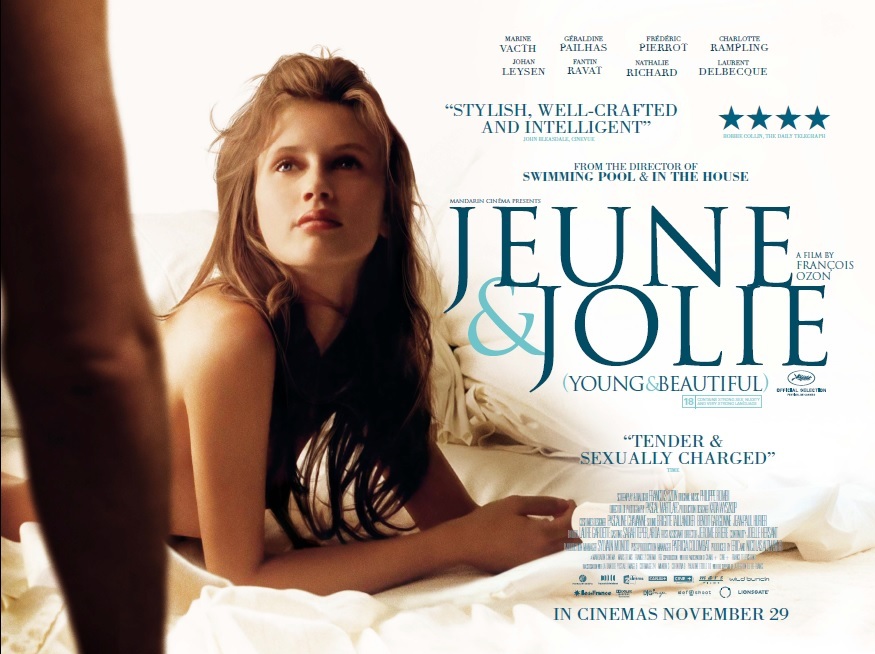
Jeune et Jolie (2013) – Taking Your Sexuality Off-Grid

JJ1Art house film has always had a problematic relationship with female sexuality. Though art house directors are far more likely to construct their films around strong female characters than their Hollywood counterparts, their engagement with these characters’ sexualities is often limited to stripping an actress naked and posing her in a series of titillating tableaux such as those found in Abdellatif Kechiche’s Palme D’Or winning film Blue is the Warmest Colour. The further a female character ventures from the realms of male fantasy, the more likely it is that her sexuality will be turned against her and used as a sign of encroaching madness, alienation or spiritual collapse. In art house film, sad men may become murderers but sad women will always become prostitutes.

The tragedy of problematic narratives is that they frequently outlive the social attitudes that first informed them. For example, while the films of Luis Bunuel may have been informed by the remnants of his Jesuitical education, the phrases and characters he helped to develop in films like Belle de Jour passed into common usage and came to form part of the basic vocabulary of art house film. Used and revisited for decade after decade, the character of the fallen woman is now so familiar to art house audiences that directors no longer feel the need to spell out why promiscuous women are sad women… they just show us a female character having loads of sex and allow us to fill in the blanks. We have been trained through repetition and this training followed us out of the cinema and into our daily lives meaning that, without ever having been subjected to an argument about the evils of promiscuity, our first reaction to promiscuous women is to assume that there is something terribly wrong with them.

The alternative to allowing our culture to train us is to question the values embedded in stock cinematic phrases and champion works that set out to subvert stock phrases and use them to draw our attention to the sexism and racism that is perpetuated by our own intellectual laziness. Thankfully, while the 2013 Cannes jury was content to give the biggest prize in art house film to a work that presented sexually empowered women as hollow vessels and childlike victims, another director in competition set out to pick a fight with the myth of the fallen woman. The director in question is Francois Ozon and his film is Jeune et Jolie.


Continue reading →

REVIEW – Silence (2012)

SilenceFilmJuice have my review of Pat Collins’ art house travelogue Silence. The plot (such as it is) revolves around a sound-recordist who is dumped by his German partner. Depressed and more than a little lost, the sound-recordist reacts to his personal tragedy by returning to the Donegal coast in Ireland in order to make recordings of places completely devoid of human presence. However, whilst engaging in this anti-social dalliance, the sound-recordist realises that the sound of silence might yield something more than an absence of arsehole humans… something deeper and more spiritual. As I explain in my review, Silence is essentially a cinematic reconstruction of the experience of watching an art house film. In an art house film, the director presents you with a collection of beautiful images and invites you to reflect upon the thoughts, feelings and memories these images bring forth. In the case of the sound-recordist, the sound of silence summons memories of a childhood spent in an isolated fishing village on a tiny island off the Irish coast. A little while ago, I wrote something about Andrei Tarkovsky’s Stalker (apologies for the fucked-up formatting) in which I argued that the film was an attempt to use cinematic techniques to induce a sort of spiritual experience in the audience:

While there are many films that use evocative imagery to explore the belief that there is something out there that is bigger than ourselves, Stalker moves beyond the purely representative in order to fundamentally alter the relationship between film and audience. Yes… the hidden systems of the Zone neatly mirror the type of magical thinking that underpins most religions, and yes… the perversely benign Room serves as an elegant symbol for any spiritual end-point you care to name, but the film does not simply represent a spiritual experience, it actually compels the audience to have one by encouraging them to seek meaning in the film in much the same way as the Stalker seeks meaning in the Zone and the spiritual seek meaning in the world. This state of forced sympathy with a man who is either deeply disturbed or deeply religious pays off in an absolutely mesmerising final scene in which the Stalker’s daughter appears to move a glass with her mind as a train roars past in the background: Did the Zone actually exist or was it all a fantasy? Did the daughter move the glass or was it the train? Was the daughter gaining magical powers the Stalker’s reward for reaching the Room in the correct state of mind? Did the Stalker’s visits to the Zone alter the DNA he passed on to his daughter? Tarkovsky’s film is so rich and complex that these questions can be answered in any number of ways but which interpretation you happen to choose invariably comes down to a leap of faith no different to that of the Stalker or that of the spiritually minded.

Silence is clearly an attempt to reproduce this same trick by inviting the audience to identify with the sound-recordist and open themselves up to the possibility of a deeper silence. Unfortunately, Silence is let down by Collins’ failure to follow through and show us what this process of reflection and silent-listening might produce. In Stalker, we have the appearance of a dog and the possibility of the stalker’s daughter Monkey acquiring supernatural powers. In Silence we simply have the possibility that the entire thing might well have been a waste of time:

While Tarkovsky perfectly captures the combination of profound understanding and acute alienation that accompanies life-changing experiences, Collins is rather unclear on what it is that his protagonist actually finds at the end of his journey: Is it a sense of community? Is it the understanding that he should never have left his home? All we see is a wind-swept derelict.

It may seem a little unfair to unfavorably compare Silence to one of the greatest films of all time but I see the comparison as a compliment. Many directors reach for the art house tool kit and produce nothing more than a series of pretty images that signify nothing more than the compositional skill of the cinematographer. Silence is not an entirely successful film but it is an attempt to reconnect with an approach to filmmaking that has lain dormant for far too long. Great cinema should not merely entertain or move, it should transform and films like Stalker and Silence should be celebrated for pursuing that transformative potential, even if it is ultimately unsuccessful.