REVIEW – Purge (2012)

PurgeVideovista have my review of Antti Jokinen’s Purge or Pudhistus in its native Finnish.

Based on a hugely successful novel by the Finnish-Estonian writer Sofi Oksanen, Purge uses two different time frames to explore the links between the rape and brutalisation of women during the Soviet annexation of Estonia and the rape and brutalisation of women at the hands of the contemporary sex trade. Clearly, this is not only a worthy subject for a film but also a potentially fascinating one. Are contemporary sex traffickers just the latest manifestation of a systemic hatred of women? Have different generations of women responded differently to this treatment? Given that this type of thing has been going on all over the world since time immemorial, what is it that is unique to the experience of Estonian women? These are just some of the fascinating questions that Purge could have taken on but rather than raising awareness and probing the darker side of human nature, director Antti Jokinen prefers to sexualise rape and suggest that it’s something you could probably get used to eventually anyway.

Warning – The following passage is triggery for rape as is the rest of the review but it’s not nearly as triggery as the film itself:

While the male gaze may be distracting and insulting in the context of a film like Transformers 2, detecting it in a film about the systematic brutalisation of women is an absolute disgrace: every time Zara is stripped naked by her pimp, Jokinen’s camera lingers on her undergarments. Every time Zara and Aliide are raped and beaten, the camera pans down so as to ensure that the audience gets a good long look at their firm young breasts. In one scene, Zara’s pimp has her get down on all fours to masturbate while he takes photos, and Jokinen places his camera in the same position as the pimp’s, thereby ensuring that the audience is forced to see Zara through the eyes of a murderous rapist. Aside from being exploitative and downright creepy, Jokinen’s systematic sexualisation of rape serves to put his audience in a position of tacit complicity with rapists and torturers, which is precisely the opposite of what this film is supposed to be about!

Purge is a fantastic example of Jean Cocteau’s observation that “style is a simple way of saying complicated things”. The script and subject matter of Purge point to a film that decries the historical mistreatment of women by encouraging the audience to empathise with the victims of historical abuse. A competent director would have read the script and used cinematic technique to place the audience in the position of the abused women thereby encouraging them to not only understand what it would be like to be in that situation but also to get angry about the fact that those situations existed in the first place. Unfortunately, rather than encouraging us to sympathise with the victims of rape, Jokinen uses cinematic technique to place us in the position of the abusers who leer at vulnerable women and enjoy their bodies as they writhe in pain and humiliation. Simple stated, Purge is the most unpleasantly misogynistic film I have ever seen. Even worse, Antti Jokinen has directed two feature films thus far in his career and both of them have been about rape. I would never go so far as to suggest that this forms some sort of ideological pattern but I would urge Jokinen to take a long, hard look at his artistic output and consider how he really feels about women.
REVIEW – Mouchette (1967)

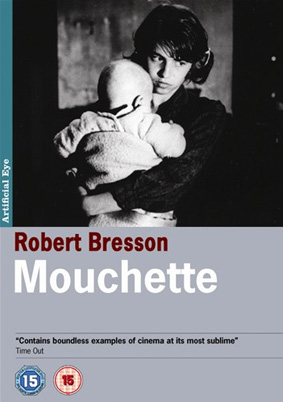
mouchtteFilmJuice have my review of Robert Bresson’s Art House classic Mouchette.

Set in a part of the French countryside that is so poor that modern technology like cars and mopeds seem entirely out of place, Mouchette tells of an impoverished young girl who is born to an alcoholic father and a terminally ill mother. Expected to not only fend for herself but also for her parents, the young girl puts up with an almost impossible amount of teasing and brutality until she eventually snaps, wanders off into a nearby forest and winds up being raped by a local poacher. Trained to accept all the hardship that life has to give and never offer a word of complaint, the girl refuses to press charges against her assailant and instead throws herself into a river.

Bresson made Mouchette in the immediate aftermath of the much better known and more widely admired Au Hasard Balthazar, which I also reviewed. As with Claude Chabrol’s Le Beau Serge and Les Cousins, the extreme proximity of the two films means that Mouchette can be seen almost as a response to au Hasard Balthazar. As I explain in my review, the big difference between Bresson’s two films is that while both films feature a young woman who is beaten down and destroyed by the world, Au Hasard Balthazar seems a lot more human and emotionally vibrant because the donkey serves as a sort of emotional lightening rod allowing us to connect to the suffering of the main character.  Unfortunately, because Mouchette lacks a comparable lightening rod, the film seems bleak to the point of outright nihilism:

It is here that a comparison with Au Hasard Balthazar becomes really useful: Both films are about young women who are born into worlds of unrelenting cruelty that crush their spirits and drive them to suicide. However, while Au Hasard Balthazar uses a combination of donkey and Christian symbolism to make this suffering seem meaningful, the lack of wider context for Mouchette’s suffering makes her travails seem not just pointless but downright exploitative too.  Was there really no other way for Bresson to explore the corruption of the world than to make yet another film in which a young girl is raped by a local thug? And if you are going to make a film in which a fourteen year-old girl covers up her own rape, is it really acceptable to present these events with no social or psychological context whatsoever?

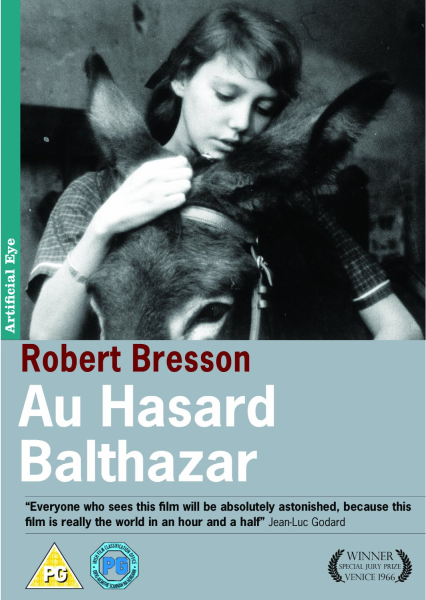
Another useful thing about re-visiting classic films is that it allows you to re-examine their value in light of contemporary values. Indeed, when Bresson made Mouchette and Au Hasard Balthazar, the predominance of male critics and male filmmakers was such that nobody really called into question the idea that rape was simply a part of everyday life and that making two back-to-back films that conclude with the rape of an under-aged protagonist might be considered a little bit creepy. The cover for Au Hasard Balthazar features a quote from Jean-Luc Goddard in which he states that:

This film really is the world in an hour and a half.

Cute line, but I am starting to find it deeply problematic that an entire generation of male filmmakers evidently thought it was okay to use rape as a sort of signifier for the horrible nature of the world. Aside from being deeply exploitative, this effectively serves to reinforce the view that rape is just a normal feature of life rather than a grotesque and intolerable moral transgression. Feminist thinkers even have a name for the vision of the world contained in Mouchette and Au Hasard Balthazar: Rape Culture. It’s one thing to make a film that casually reduces rape to the status of genre trope… it’s quite another to make two films in a row that use precisely this device. Au Hasard Balthazar‘s humanity and experimental use of symbolism are so striking that I believe it will remain a part of the European Art House canon for years to come. Mouchette, on the other hand, is a film that needs to be removed from its pedestal as a matter of urgency.

REVIEW – Au Hasard Balthazar (1966)

BalthazarFilmJuice have my review of Robert Bresson’s art house classic Au Hasard Balthazar.

Over the last year or so, I’ve been lucky enough to review some of the great classics of European Art House film as they’ve been re-issued on DVD and Blu-ray. Aside from introducing me to some genuinely great films and directors, this process has also motivated me to fill some of the gaps in my cinematic expertise and Au Hasard Balthazar was definitely one of those gaps. The reason I never got round to watching it is that, while I had heard great things about the film, I knew it was basically an extended religious metaphor based on a donkey and this struck me as so totally ridiculous that I decided not to bother checking it out. Having now finally gotten round to watching the bloody thing, my view remains that Au Hasard Balthazar is an entirely ridiculous film but the ridiculousness sort of works…

Set in the French countryside, the film tells the story of a sickly young girl who grows up into a confused young woman. Trapped between a distant father and an abusive quasi-boyfriend, the young woman is ground down beneath the heels of the patriarchy until she eventually just gives up and dies. The fascinating thing about this plot is that while neither Bresson’s script nor the amateur actors offer any real insight into why anyone does anything, the presence of a donkey who suffers just as the young woman suffers somehow makes the film incredibly moving. Even more fascinating is the fact that while the donkey effectively suffers ‘for’ the young woman in the same way as Jesus died ‘for’ our sins, the peculiar metaphysics of this relationship seems designed to flush out people’s attitudes towards God:

While the link between Marie and Balthazar works astonishingly well, the link between Balthazar and Christ seems like a metaphor too far. Indeed, while the donkey helps us sympathise with the impassive and often incomprehensibly self-destructive Marie, the religious symbolism only serves to lend this suffering some sort of dignified legitimacy, as though the donkey somehow died for our sins. The beautiful thing about this failure is that a case could be made for seeing it as intentional. After all, what is the point of religious belief if not a palliative sense that all the world’s suffering serves some greater purpose? And what greater signifier of atheism than the feeling that such ontological apologism serves only to distract us from the sufferings of real people?

A few weeks ago, I was lucky enough to review Claude Chabrol’s Le Beau Serge and Les Cousins. These films were originally made almost on top of each other and used not only many of the same actors but also many of the same themes, by reviewing the two films at the same time, I was able to tease out the connections between those two films and see how a director approached a similar question from two very different perspective.  My review of Au Hasard Balthazar is similar to my review of Le Beau Serge in that, as well as reviewing Au Hasard Balthazar, I reviewed Mouchette… which explored many of the same themes as Au Hasard Balthazar but from a rather different perspective.

REVIEW – Bakumatsu Taiyo-Den (1957)

Bakumatsu-Taiyo-DenFilmJuice have my review of Yuzo Kawashima’s Bakumatsu Taiyo-Den also known as Sun in the Last Days of the Shogunate.

Widely considered to be one of the greatest Japanese films of all time, Bakumatsu Taiyo-Den follows Kenji Mizoguchi’s Street of Shame and Shohei Imamura’s The Insect Woman in using the Japanese sex industry as a microcosm for Japanese society as a whole. Indeed, populated by customers from different levels of Japanese society alongside more-or-less successful members of staff, the brothel shows the economic and social forced that twist lives and destroy personalities. However, while both Mizoguchi and Imamura used the miserable lives of their characters to angrily critique and accuse Japanese society, Kawashima takes their travails and plays them for laughs using the character of a charming rogue:

Using the rogue as a foil, Kawashima explores the complex array of social and economic forces that elevate some people but destroy others. This is a world in which people attempt suicide in an effort to escape debtors and fathers sell their daughters into indentured servitude in order to pay off gambling debts and yet, because Kawashima’s rogue stands to one side making snarky comments, the world seems more absurd than it does horrific or depressing. Played by one of the foremost comedians of post-War Japan, the rogue understands the social and economic systems surrounding him and yet he does not feel constrained by either of them. This sense of existential rebellion is particularly evident in the film’s final scene where an old man castigates the rogue for disrespecting the gods only for the rogue to run away laughing and declaring that there’s no such thing as heaven and hell.

Having reviewed this and found it sensational, I am struck by the feeling that there are certain types of film that I could quite happily watch forever and post-War Japanese dramas are definitely one of them. Having said, this is a particularly good one and its lighter tone and engaging characters make it quite refreshingly accessible meaning that it would probably serve as a pretty decent jumping-on point for anyone interested in learning more about post-War Japanese film and given that this has just been re-released by Masters of Cinema, what better opportunity to immerse oneself in one of the 20th Centuries true creative golden ages?

REVIEW – Alps (2011)

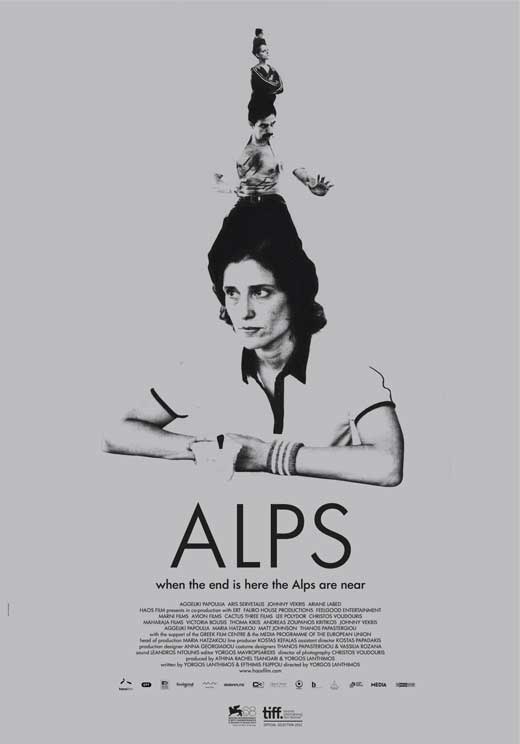
alpsVideoVista have my review of Giorgos Lanthimos’s third films Alps.

Alps is part of a suite of films that began in 2009 when Lanthimos’s second film Dogtooth won the Un Certain Regard prize at the Cannes film festival. Surreal, funny and utterly unlike anything else in contemporary art house film, Dogtooth tells of a pair of siblings who have been raised to believe that the world outside of their family home is a sort of dystopian nightmare. Much like Rolf de Heer’s incandescently brilliant Bad Boy Bubby, Lanthimos uses this set-up to explore not only the weird second-hand beliefs that parents pass onto their children, but also the oddness of contemporary life and how arbitrary our social conventions must feel to people not raised to accept them. This critique of contemporary morality and generational differences then stepped up a gear in Attenberg, a film by Athina Rachel Tsangari who also serves as Lanthimos’ producer on Dogtooth and Alps. Much like Dogtooth, Attenberg uses surrealism to draw our attention to the arbitrary nature of social mores but in a way that suggests considerably more anger towards the older generation. How are young people supposed to cope with a complex world when all their parents ever did was fill their heads with be-bop and David Attenborough documentaries. Alps is very much a part of the Dogtooth cycle but, unlike Dogtooth and Attenberg, it does away with the surreal imagery that made those earlier films so intensely eye-catching and different.

The film tells of a group of people who make a living impersonating the recently deceased. Initially, we are encouraged to look upon the gang as either crooks or amateur grief therapists, but as the film unfolds and we learn more about the characters, the reasons for the impersonations become increasingly strange and difficult to discern:

The root of the problem lies in Lanthimos’ decision to abandon the surrealism of Dogtooth and Attenberg in favour of a more realistic footing. In Dogtooth and Attenberg, the surrealism served not only to exaggerate the foibles of everyday life but also to locate the film within a context that was more symbolic and fantastical than strictly representational. This means that the audience is left stranded in a sort of philosophical ‘uncanny valley’ as the film is both too real to be metaphorical and too weird to be a representation of the real world. Neither a fable nor a drama, Alps is a hugely evocative mess of impenetrable feelings and oblique social observations that could have been a whole lot more.

Clearly, this is a film that is overflowing with ideas and I continue to think that Lanthimos and Tsangari are two of the most important filmmakers working today. However, I question the decision to shift to a more realistic register as I’m not convinced that the cinematic vocabulary of social and psychological realism can cope with the complex and frequently metaphorical nature of Lanthimos’ ideas. Still… a director whose ideas outstrip the visual elements of his film is a refreshing change to the current vogue for incredibly beautiful and well-made films that are completely devoid of new ideas.

REVIEW – Les Cousins (1959)

LesCousinsFilmJuice have my review of Claude Chabrol’s second film Les Cousins, which has just been re-released by the ever-excellent Masters of Cinema.

Les Cousins tells of a young man who moves to the city in order to study law. Sharing his uncle’s place with his far more sophisticated and extroverted cousin, the young man finds himself being sucked into his cousin’s glamorous lifestyle filled with parties, girls and dubious European noblemen. Initially, this relationship works quite well as the cousin likes to be the centre of attention and the young man’s inexperience makes him feel like an older brother and a community leader. However, when the young man attempts to become romantically involved with a young lady in his cousin’s entourage, the cousin takes umbrage and decides to assert his supremacy. Disgusted both with his cousin’s behaviour and his own loss of focus, the young man throws himself into his studies but this only provokes his cousin into more frequent and louder parties:

Things come to ahead when Charles is trying to study for his finals but Paul keeps having loud parties. Charles pleads with his cousin to do some revision but Paul’s confidence is absolute… he knows what he is doing and revision is an absolute waste of time. As with Le Beau Serge, Chabrol presents the tension between the two boys as being social and psychological in nature but in truth their disagreement is a moral one: Charles writes endless letters home to his mother promising that he will succeed in his studies and suggesting that his desire to work is born of a sense of duty to do right by his parents. By not only refusing to study but also making it harder for Charles to study, Paul is challenging the moral order of Charles’s universe. In Charles’s mind, Paul is doomed to failure because the universe does not reward provocative layabouts. This means that when Paul does pass his exams with flying colours, Charles is forced to examine not only his faith in the moral nature of the universe but also his conviction that his duty to his parents obliged him to study: What if the best way to succeed really was to wear a smart suit and hang-out with dubious Italian aristocrats?

I mention Le Beau Serge as Les Cousins can be read as a response to that earlier film. Where Le Beau Serge is rural, Les Cousins is urban. Where Le Beau Serge is about a town-mouse visiting a familiar countryside, Les Cousins is about a country-mouse visiting an alien city. Where Le Beau Serge is about taking responsibility for the actions of another, Les Cousins is about remaining true to yourself.

Somewhat handily, Masters of Cinema have decided to time their re-release of Les Cousins with a parallel re-release of Le Beau Serge (that I also reviewed for FilmJuice). While both films work beautifully on their own, many of their subtleties only become apparent when viewed one after the other.

REVIEW – Le Beau Serge (1958)

LeBeauSergeFilmJuice have my review of Claude Chabrol’s first film Le Beau Serge, which has just been re-released by Masters of Cinema.

Le Beau Serge tells of a young man who returns to his home town in order to recuperate from an extended period of illness. Upon arriving, he becomes obsessed with a childhood friend who, despite showing real signs of intelligence and potential as a child, has now fallen into drink and bitterness. Puzzled by this unexpected fall from grace, the young man sets about trying to solve the riddle of what happened to the handsome Serge of his youth:

While much of the initial narrative energy comes from François’s attempts to solve the mystery of le beau Serge, the second half of the film increasingly comes to focus upon why it is that François is so obsessed with saving first Serge, then Marie and then the entire village. Though Chabrol offers us no easy answers, the depth of François’s guilt is such that his attempts to protect Serge and his family eventually come to seem insane and messianic. Why doesn’t François leave? Why didn’t Serge leave? Why doesn’t anyone leave a life that is manifestly killing them?

Chabrol is a director with a somewhat misleading reputation for producing thrillers. Though many of his most famous films (including Le Boucher, This Beast Must Die and La Ceremonie) include a bloody murder and a good deal of psychological tension, the truth of the matter is that Chabrol is and always was a moralist. Not in the sense of lecturing people about right and wrong but rather exploring why it is that people make certain decisions and how they come by certain strange beliefs. Unlike Chabrol’s later films, which dressed the morality up in murder and tension, Le Beau Serge strips the core of the Chabrol experience right back to the very core and asks two very salient questions: Why did Serge turn to drink? Why is Francois obsessed with saving him? A truly wonderful film by a truly wonderful director.

Interestingly, Masters of Cinema have chosen to re-release Le Beau Serge on the same day as they re-release his second film Les Cousins. As I explain in my review of that film over at FilmJuice, the two films function as a pair: Complementing each other through their many differences and juxtapositions.

REVIEW – The Master (2012)

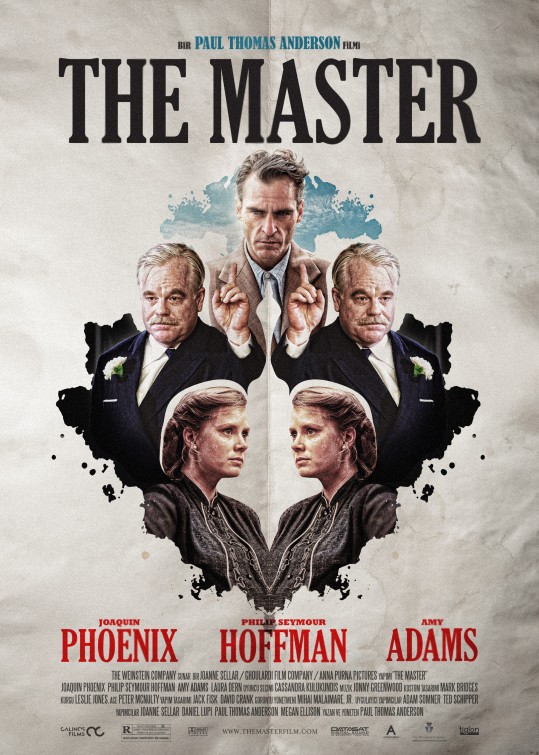
masterMy review of Paul Thomas Anderson’s The Master has just gone live over at VideoVista.

Set in the aftermath of World War II, the film follows a thoroughly disreputable alcoholic and adventurer as he tumbles from steady job, to menial labour and finally into alcohol-sodden destitution. While on a particularly epic bender, the alcoholic (played by Joaquin Phoenix) finds his way onto a ship commanded by an equally disreputable mystic (played by Philip Seymour Hoffman). Clearly modeled on L. Ron Hubbard, this mystic is in the process of founding a cult that borrows as much from traditional mysticism as it does from experimental psychology. Sensing a degree of kinship despite the differences in their fortunes, the two men begin a sort of epic bromance that eventually comes to trouble the mystic’s terrifyingly ambitious and controlling wife. Much like the mystic, she sees the similarities between the two men and so she is worried that the alcoholic’s refusal to mend his ways will wind up dragging down the mystic.

The tension between the two characters reminded me very much of Claude Chabrol’s wonderfully murky Juste Avant La Nuit (1971), in which two characters are bound together by their intense resemblance as well as their intense hatred of what the other person represents. In my review of Juste Avant La Nuit I noted that:

The early British psychoanalyst Ernest Jones once said that we do not want to kill the people we hate most, instead we want to kill the people who evoke in us the most unbearable conflicts.  This is because it is human nature to try to resolve inner conflicts decisively.  To be one thing or another.  Much conciliatory art (such as the films that dominate the Gay Indie film scene), is based upon the idea that conflicts are a result of confusion.  Confusion that can be solved simply by ignoring one part of our nature.  However, the reality is that inner conflicts define us as people and drive us forward.  They are not battles that can be won, they are battles that are forever being fought and the dust cloud that rise from the battlefield is who and what we are.  When Charles met Laura and her need for complex sexual power dynamics, he was reminded of the conflicts that rage within his bourgeois existence : The urge to be free, the urge to be submissive.  By having an affair with Laura, he was forced to confront his own uncertainties and rather than assume the responsibility for ending the relationship, he chose to erase Laura.  To erase the source of his confusion and the reminder of his own conflicted nature.

While I enjoyed the film quite a bit, I am also aware that it felt like a wasted opportunity. As I say in my review:

While there is no denying that The Master is a beautifully made and surprisingly intense film, it is also a film that fails to make full use of its considerable assets. Indeed, despite being inspired by the founder of scientology, Anderson’s film offers no real commentary on cults other than the rather bland observation that the men who lead them are occasionally rogues. This criticism can also be levelled at There Will Be Blood in that Anderson took a complex satirical novel about the Tea Pot Dome scandal and reduced it down to a story about an oil baron being a bit of a prick. That Anderson’s films lack anything approaching a subtext or a message is undeniably a result of his placing characters at the centre of his creative process. There Will Be Blood and The Master suggest that, while this process can produce very intense films with beautifully realised characters, it is not particularly adept at producing smart films and that is a terrible shame.

The Master had the opportunity to explore not only the psychological aftermath of the Second World War but also the complex psychological dependencies that go into establishing a cult. However, rather than exploring these huge meaty issues, Paul Thomas Anderson produced little more than an entertainingly intense two-hander that is all about the performances. Which is a shame really…

REVIEW – Amour (2012)

amour-2FilmJuice have my review of Michael Haneke’s Palme D’Or and Oscar-winning drama Amour.

Set almost entirely within the walls of a well-appointed Parisian apartment, Amour tells the story of a retired couple named Anne and Georges who are forced to adapt to entirely new ways of being and relating when one of the couple suffers a massive stroke. Unlike many of Haneke’s films, which present themselves as being of a certain genre only to then deconstruct the genre and mock audiences for wanting generic plot resolutions, Amour is a film that is almost entirely free of postmodern cleverness. In fact, the only thing distinguishing Amour from an old-fashioned weepy is its thematic content. This thematic content sat very close to my personal metal as I spent a number of years as my mother’s primary carer and so immediately identified with the changes taking place in Georges’ character:

Much of the film’s drama and tension comes from Georges’ troubled attempts to reinvent himself and his relationships in a way that protects both Anne’s dignity and his own humanity. Sometimes the negative emotions prompt Georges to over-react to relatively minor problems because it is much easier to fire and humiliate a nurse than it is to deal with the feeling that your life is now nothing more than medication, nappy changes and the grim inevitability of death. As Anne’s condition continues to deteriorate, we see Georges attempting to cling to any island of psychological stability he can find. For example, when the couple’s children turn up and express concern over Anne’s condition, Georges seems cold and inflexible to the point of outright insanity but in truth this attitude is entirely self-protective. As Georges points out, the tears and concerns of his children are of no practical use to him because, at the end of the say, he is the one who will be left alone to care for Anne. Better that the children keep their mouths shut than for them to offer the type of false hope that would make it so much harder for Georges to go back to his life as a solitary carer. It is in Georges’ interactions with these islands of stability that we see Haneke’s vision imposing itself upon what would otherwise be quite a traditional weepy.

Usually, one finds oneself praising Haneke for his savagery and visual brilliance but Amour is a surprisingly humane and visually simplistic film. At times, the only difference between this and a TV movie is the lack of melodramatic scoring and even this is present if you allow for the fact that the film continues Haneke’s obsession with the emotional lives of neurotic pianists. Rather than praising Haneke for his ability to be Haneke, I find myself praising him for his compassion and attention to detail as many of the details of this film could have been lifted directly from my own life.

Detachment (2011) by Tony Kaye

detachmentBack in the 1990s, Tony Kaye seemed destined for great things. After cutting his teeth on a series of award-winning music videos including “Runaway Train” by Soul Asylum, Kaye took the step up to the big leagues and signed on to direct American History X, a film that humanised a pair of skinheads and blamed American middle-class culture for their descent into violent racism. However, while the film’s power and insight have become only more evident with the passage of time, American History X very nearly ended Kaye’s career as the studio’s indifference to his first cut lead to a very public PR battle in which Kaye bemoaned his treatment in a series of full-page adverts in the Hollywood press. His reputation effectively ruined, Kaye returned to music videos until his 2006 abortion documentary Lake of Fire paved the way for another shot at feature-length cinematic narratives. Like American History X and Kaye himself, Detachment is an unsettling and ambiguous film that assaults contemporary morals with a fury so intense, grandiose and ill-disciplined that it feels less like an argument for or against something than it does a howl of rage at the universe itself.

Much of the critical indifference to Detachment can be explained by its initial similarity to both John N. Smith’s Dangerous Minds and Ramon Menendez’s Stand and Deliver. However, despite telling of a new teacher arriving in a failing inner city school, Detachment is neither a critique of the American school system nor a heart-warming tale of academic triumph over economic adversity. Instead, Detachment picks a fight with the human condition itself.

Continue reading →