REVIEW – Mea Maxima Culpa: Silence in the House of God (2012)

MeaMaximaCulpa1FilmJuice have my review of Alex Gibney’s documentary Mea Maxima Culpa: Silence in the House of God.

One of the most fascinating battlefronts in contemporary culture is the question of how the baby boomers will be remembered once they are gone. Raised amidst talk of their parents having been the greatest of all generations, the boomers have always been intensely aware of their own place in history and the need to impose some sort of narrative on their predictably chaotic lives. For a long time now, the baby boomers have been telling us that theirs was the most liberal and radical of generations: Neither empire-builders nor war-mongers, they came out against the Vietnam War, spawned the summer of love and demanded the right to live life entirely upon their own terms. That generation did it all and when the time came for them to ‘grow up’ they took their longhaired rebel logic with them into the boardroom and created one of the longest periods of sustained economic growth in the history of humanity. Nowhere is the desire to ‘fashion’ the generational narrative more evident than in Hollywood where B-movie Shitlord Roger Corman has been re-imagined as a visionary producer simply because Hollywood boomers need to believe that they rose to the top in a period of unrivalled openness and experimentation.

While inter-generational power differences mean that relatively few people are directly calling out the boomers on their relentless selfishness and toxic self-involvement, we are beginning to see some pushback in the form of prominent institutions falling into scandal and crisis. Indeed, the UK’s Operation Yewtree seems to be quietly re-inventing the swinging 60s as a time when men with jobs in the British media got to rape as many young women as they wanted while police and employers looked the other way. Turns out that ‘free love’ only ever applied to powerful white dudes. Alex Gibney’s documentary Mea Maxima Culpa: Silence in the House of God is very much a part of this cultural battlefield as it is one of many recent documentaries to suggest that the 60s and 70s were a time when Catholic priests were effectively above the law when it came to the sexual abuse of children. Much like Kirby Dick’s Twist of Faith and Amy J. Berg’s Deliver Us From Evil, Mea Maxima Culpa suggests that child abuse was almost systemic as was the Church’s desire to protect the abuser at the expense of the abused.

The science fiction writer William Gibson once stated that while the future is here, it has not been evenly distributed and I think the same can be said of the liberal individualism of the baby boomers: Much like the revelations of Operation Yewtree, films like Mea Maxima Culpa suggest that while some people had a load of fun in the 60s and 70s, this fun came exclusively at the expense of people who have been denied the right to give their own impressions of what life was like at that particular time. Though Mea Maxima Culpa may lack the anger and analytic depth of films like Twist of Faith and Deliver us from Evil, it does do a singularly fantastic job of letting the voiceless speak for themselves, something that is particularly important given that the abused, in this case, were all deaf:

Gibney films his interviews with the survivors using an elegantly subdued form of lighting that beautifully emphasises the expressiveness of their faces. Also important is the fact that, rather than systematically cutting away from the survivors and having their words translated by non-deaf actors, Gibney keeps the audience’s attention firmly on the survivors allowing them to communicate their own feelings in their own words and in their own language. This choice of interview technique is important because Mea Maxima Culpa is not just about the Catholic Church’s attempts to cover-up decades of sexual abuse, it is also about giving a voice to people who had theirs taken away by a Church that claimed to have their best interests at heart.

As someone whose familiarity with sign language is limited to on-screen sign translation of TV programmes, it really was fascinating to see native signers using their own language to deliver incredibly personal and intimate truths. Sign translators are professional translators rather than actors and so they tend to translate what they are hearing in a way that communicates their personal detachment from the material (their facial expressions and body language tend to say ‘this is a sad bit’ rather than ‘I am sad’) and so seeing sign language being used in an emotive manner was really quite the revelation. Even if you are not all that interested in another story about the moral bankruptcy of the Catholic Church I think that Gibney’s interviews with the abuse survivors alone make this a film worth seeking out.

REVIEW – Diaz: Don’t Clean Up This Blood (2012)

diaz-2012FilmJuice have my review of Daniele Vicari’s topical ensemble drama Diaz: Don’t Clean Up This Blood.

Set during the 2001 G8 protests in the Italian city of Genoa, the film tells the real-life story of one of the most outrageous abuses of police power in European history. The action focuses upon a pair of buildings that served as both a media center and a dormitory for people who happened to be in Genoa during the protests. Believing the buildings to be full of black bloc anarchists, the Italian police stormed in, beat everyone to a pulp and then dragged a number of people away to jail where they were humiliated, assaulted and tortured by not just police but also police doctors.

The structure of this film is faintly reminiscent of such ensemble dramas as Steven Soderbergh’s Contagion and Fernando Meirelles’ 360 (Which I recently reviewed for Videovista). However, while these Hollywood productions are very similar to anthology pictures in so far as they are collections of more-or-less self-contained narratives, Diaz: Don’t Clean Up This Blood departs from this model by using the different strands of the the narrative to explore the same event from different perspectives. Rather than resorting to anything as clunking as a time-stamp, Vicari allows history to unfold up to a single moment — someone throwing a bottle — and signals our return to the past by having the bottle re-assemble itself and return to the hand of the person who threw it. Aside from being incredibly elegant, this narrative technique works brilliantly in context as it allows Vicari to explore the extent to which the shared spaces of the protest mean different things to different people: For an elderly man trapped in Genoa overnight, the buildings are a safe place to sleep. For the journalists covering the protests, they are somewhere to file copy and conduct interviews. For the Black Bloc, they are a place to hide and draw up plans. This plurality of experience and perception is both brilliantly handled and intensely refreshing in a medium that all too often either avoids ambiguity like the plague or confuses it with evasiveness. Diaz Don’t Clean Up This Blood is a wonderfully ambiguous film because it presents you with several incompatible and yet entirely consistent viewpoints on the same series of events. Then the ambiguity goes away:

The final third of the film is spent exploring the mistreatment and torture meted out to the victims of the raid by police and police doctors and it is here that the film ultimately stumbles. The problem is that, while the bulk of the film is intensely humanistic and diverse in its exploration of different perspectives on the same events, Vicari’s coverage of the aftermath of the raid abandons nuance in favour of stark moralism: These are not the over-emotional and ill-informed police officers of the opening scene, these are cold and calculating psychopaths who humiliate and torture people because they know that they can do so with complete impunity. While there is no reason to doubt the brutality of the Italian police or the veracity of their victims’ claims, it is jarring when a film about understanding suddenly transforms into a film about condemnation.

One of the interesting things about Diaz that I did not have space to touch on in my review is the fact that while Vicari feels quite comfortable portraying the police as psychopathic Nazis, he is almost flawlessly even-handed when it comes to portraying the actions of the Black Bloc. In Diaz, the Black Bloc are a bunch of kids from all over Europe who descend on protest areas, stir shit up and then promptly retreat before the inevitable government response. Indeed, while the Black Bloc did indeed use the buildings that the police raid, Vicari goes out of his way to show them hiding in a nearby cafe while innocent by-standers get beaten to a pulp.

Why are we allowed to sympathise with the Black Bloc’s cowardice but not with the anger of the police?

One to this question is that while the Black Bloc’s actions contain enough moral ambiguity for there to be differences of opinion about them, nobody in their right mind would consider it acceptable for a police doctor to sexually assault a left-wing activist while the police singing fascist battle anthems. Indeed, one of the problems with liberalism and tolerance is that it’s very difficult to make any kind of moral judgement once you allow for the fact that all humans are fallible products of their environment and most people do what they do because they think it’s the right thing at the time. Diaz is an intensely humane and liberal film and yet its problematic final act shows that there must be limits to even the most pluralistic and tolerant of personal philosophies. I’m not convinced that Vicari handles the movement between ambiguity and certainty all that well but it is nice to see a film that attempts to address those types of moral problems.

REVIEW – Zaytoun (2012)

ZaytounVideovista have my review of Eran Riklis’s Zaytoun, an almost impossibly idealistic film about Arab-Israeli relations.

Set during the 1982 Lebanon war, Zaytoun tells of an Israeli fighter pilot who is shot down over a refugee camp. Locked up in a cell, the fighter pilot only frees himself by agreeing to help a Palestinian teenager to return to his family’s land in what is now Israel. Essentially a road movie, the two travelers make their way through a number of tricky encounters growing closer and closer to each other with each new mile. More symbolic vehicles than actual characters, the boy and the fighter pilot seem to represent the two sides of the conflict suggesting that if two fictional characters can make friends then surely the Israeli and Palestinian leaderships should also be able to make friends… yeah.

The real problem with Zaytoun is that while Riklis clearly made a deliberate choice to sacrifice depth of character in return for increased depth of symbolic representation, the fable he weaves around his generic archetypes is so trite and simple-minded that the audience is left with neither a decent set of characters nor a particularly good idea about the Arab-Israeli conflict. Indeed, strip away the pretty landscape photography, and the broadly comic secondary characters, and you are left with a film that suggests the Palestinian question could be solved if only both sides could be a little bit nicer to each other.

Another issue I raise in my review is the fact that recent years have seen a number of Israeli films that attempt to deal with the current state of Arab-Israeli relations by projecting the writer and director’s ideas back onto a vision of the 1982 Lebanon war. Aside from the obvious questions of historical accuracy and political cowardice raised by this trend, I am also struck by the fact that films like Zaytoun, Waltz with Bashir and Lebanon all treat the Palestinian and Lebanese as symbolic representations of Israel’s moral character: In Waltz with Bashir, the war of 1982 is treated as a sort of psychotic episode, in Lebanon the war was treated as a crucible of psychological hardship and, in Zaytoun, bopth the Palestinian people and the road to Palestine are treated as psychological stepping stones for an Israeli protagonist. The interesting thing about all of these films is that none of them treat the Palestinians as real people with an existence outside of their presence in the minds of Israeli characters. In fact, one is reminded of Chinua Achebe’s incendiary comments about the depiction of African people in Joseph Conrad’s Heart of Darkness:

Africa as setting and backdrop which eliminates the African as human factor. Africa as a metaphysical battlefield devoid of all recognizable humanity, into which the wandering European enters at his peril. Can nobody see the preposterous and perverse arrogance in thus reducing Africa to the role of props for the break-up of one petty European mind?

The most worrying thing about films like Zaytoun is that they suggest that contemporary middle-class Israelis are falling into the same trap as White Victorian novelists. Rather than treating Palestine as a complex place filled with real and complex people, they reduce it to the state of Universal Other… a place that wandering Israeli soldiers enter at their peril. Zaytoun is clearly an idealistic film but I think it is, in the words of Achebe, ‘bloody racist’.

REVIEW – West of Memphis (2012)

west-of-memphis-posterEvidently, I am passing through a documentary phase as FilmJuice have my review of Amy J. Berg’s West of Memphis.

I first became aware of Amy J. Berg through her film about the clerical abuse scandal Deliver Us From Evil. While the subject matter may now be reaching the point of saturation, Berg grabbed my attention by daring to place paedophile priests in the wider social context of a Catholic Church that hates homosexuality almost as much as it hates women. However, while Deliver Us From Evil was nominated for an Oscar, it also saw Berg drop off the map for a number of years and so I was very pleased to see her return to the director’s chair for this high-budget documentary about the West Memphis Three.

Given how impressed I was by Berg’s debut feature, it is slightly dispiriting to find her turning her hand to a film that is unadventurous both in terms of its form and its analysis. Indeed, much of West of Memphis‘s substantial running time is devoted to an extended recap of the ground already covered in the Paradise Lost trilogy of documentaries that have already been made about this particular topic. So while I’m sympathetic to the film’s aims and acknowledge that it’s a perfectly well-made and entertaining piece of documentary filmmaking, I do question the wisdom of making yet another film about this case. Are there really no other injustices in the world? If you are going to make a film about a topic that has already been covered by an entire trilogy of documentaries, I think it is important to do something new with the material and West of Memphis never quite manages to innovate:

There is no denying that West of Memphis is a worthy film and that this worthiness is utterly undiminished by the fact that three very good documentaries have already been made about this case. Nor is there any denying that Peter Jackson, Fran Walsh and all the other people working to free the West Memphis Three did a profoundly good thing by using their money and celebrity to help three unloved and unjustly convicted men from Arkansas. There is no denying any of these things and yet these things cannot entirely compensate for the fact that West of Memphis fails to offer us anything that we have not seen before. Hollywood has a fondness for documentaries designed to overturn miscarriages of justice and though certainly entertaining and occasionally compelling, this film never quite compares to either the exquisite ambiguity of Andrew Jarecki’s Capturing the Friedmans or the campaigning psychological complexity of Errol MorrisThe Thin Blue Line.

It’s hard to be unimpressed about this type of documentary without also seeming unimpressed with the subject matter but I was unimpressed, it felt like a step backwards by a promising director.

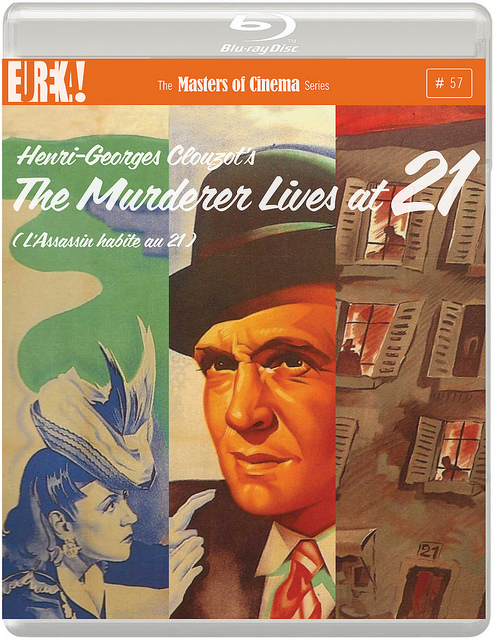
REVIEW – L’Assassin Habite au 21(1942)

21FilmJuice have my review of Henri-Georges Clouzot’s zesty whodunit L’Assassin Habite au 21 (a.k.a. The Murder Lives at 21)

Best known for his misanthropic thrillers Le Corbeau, Les Diaboliques and The Wages of Fear, Clouzot’s first film tells of a dapper and sarcastic detective who is charged with tracking down a mysterious serial killer known only as ‘Monsieur Durand’. Unfortunately for the detective, he is involved with a flighty and foul-mouthed opera singer who insists on going undercover with him in the hope that the ensuing publicity will help her faltering career:

Much like Ernst Lubitsch’s magnificent Trouble in Paradise, Clouzot’s film features a couple whose relationship has nothing to do with love or devotion and everything to do with sex and cynical self-advancement. This misanthropic vision of human relationships pervades every aspect of the film from the way people talk to each other in the boarding house to the way things get done at police headquarters.

L’Assassin Habite au 21 looks and feels like an adaptation of Dashiell Hammett’s The Thin Man filmed by Fritz Lang but aside from being brilliantly written, brilliantly shot and brilliantly acted, the film also reminds us that there was a point in cinematic history when films were not afraid to depict grown-up and unusual relationships in all of their complex glory. Indeed, one of the things that most struck me about J.J. Abram’s recently-released (and incredibly tedious) Star Trek into Darkness is that while all of the characters may technically be adults their concerns are those of much much younger men.

Today’s Hollywood blockbusters are locked in what can only be called a financial death spiral. Lured into competing with each other to produce more and more expensive films, the studios have now reached a point where they have spent the last decade actively alienating anyone who is not a teenaged American boy. Painfully aware that films like Star Trek into Darkness need to make about $1 Billion before they start making money, the studios are now making more of an effort to reach out to foreign markets and they are doing this by making their themes and narratives as broad and accessible as possible. A Hollywood blockbuster needs to be comprehensible to everyone in America but it also needs to be comprehensible to people who grew up in rural China or India. As a result, films like Star Trek into Darkness are about grown men confronting the generic problems of teenaged boys such as getting the right girl to like them and overcoming their love-hate relationship with Daddy. This infantilisation of Hollywood’s primary protagonists is particularly amusing in the case of Star Trek as there’s a scene where Zachary Quinto’s Spock contacts Leonard Nimoy’s Spock in order to get advice. 21st Century heroes are evidently not afraid to call their parents and have them come and pick them up from the party. There’s your crisis of masculinity right there!

The Murderer Lives at 21 is released on Monday by Masters of Cinema and it is worth every penny.

Like Worms in the Belly of Some Great Beast: Family Values and Crusader Kings II

0.  Video Games as Purveyors of Moral Outrage

There are two main ways in which a work can provoke a moral reaction:

The first is by using the power of narrative to encourage feelings of sympathy for a particular moral view. This didactic form of narrative usually signals its presence through a system of winks and nods designed to make a particular worldview seem far more comfortable and welcoming. For example. Evelyn Waugh’s Brideshead Revisited is filled with nostalgic yearning for nobility in an age of encroaching egalitarianism. Waugh’s approval of the past and rejection of the present is evident in the fact that everyone in the past seems to eat, drink, dress and speak far better than anyone in the present.

The second is to embody a set of values so profoundly ugly that audiences feel compelled to react not only against the morality of the work itself but also against real world manifestations of that same more system. For example, Luis Bunuel’s The Exterminating Angel features a group of upper class people who attend a dinner party but find it impossible to leave. As the days go by and people begin to starve and die out of what is effectively politeness and fear of being the first person to leave a party, the audience cannot help but react against not only the absurd characters but also the bourgeois morality they so closely cling to.

Video games tend not to be particularly good at presenting arguments or advancing moral perspectives but they are very good indeed at prompting a moral reaction. Indeed, because virtual worlds must be created entirely from scratch, the beliefs and assumptions of the people who develop those worlds are frequently all too obvious. This phenomenon is being extensively catalogued in a thoroughly excellent on-going series of videos by Anita Sakeesian:

Though often entirely unintentional, the moral reactions provoked by these sorts of games are often incredibly enlightening. Indeed, many of America’s racist and warmongering attitudes towards China, Russia and the Middle East seemed half rational until a series of First-Person Shooters attempted to mine that particular set of popular fears and produced what was effectively a series of interactive neoconservative rants. Similarly, few head-on critiques of the culture surrounding rap music are as effective as the Saints Row series’ decision to slowly transform its gangland protagonists from a group of scrappy up-and-coming underworld entrepreneurs to the soda-shilling heads of a vast merchandising empire.

A couple of years ago, I experienced a similar moral reaction after deciding to play Civilization V and Europa Universalis III back-to-back. What I realised was that the reason liberal people behave like psychopaths when playing 4X strategy games is that those games emulate what it is like to see the world through the eyes of the state. Another moral reaction occurred while playing Paradox Interactive’s latest strategy game Crusader Kings II.

Much like Europa Universalis III, Crusader Kings II can be interpreted as a critique of a social institution in that it exposes not only the moral failings of that institution but also of the players who take control of the institution in the context of the game. However, while the Europa Universalis series demonstrates our willingness to surrender our principles for the sake of bureaucratic expediency, Crusader Kings II targets an institution that is much closer to home: The family.

In this essay I shall discuss not only what Crusader Kings II teaches us about what it means to be part of a family, I shall also consider why even the most wretched of families mean so much to us. In order to explore what the game tells us about family life, I must first discuss what it means to see the world through the eyes of an institution.

Continue reading →

REVIEW – Purge (2012)

PurgeVideovista have my review of Antti Jokinen’s Purge or Pudhistus in its native Finnish.

Based on a hugely successful novel by the Finnish-Estonian writer Sofi Oksanen, Purge uses two different time frames to explore the links between the rape and brutalisation of women during the Soviet annexation of Estonia and the rape and brutalisation of women at the hands of the contemporary sex trade. Clearly, this is not only a worthy subject for a film but also a potentially fascinating one. Are contemporary sex traffickers just the latest manifestation of a systemic hatred of women? Have different generations of women responded differently to this treatment? Given that this type of thing has been going on all over the world since time immemorial, what is it that is unique to the experience of Estonian women? These are just some of the fascinating questions that Purge could have taken on but rather than raising awareness and probing the darker side of human nature, director Antti Jokinen prefers to sexualise rape and suggest that it’s something you could probably get used to eventually anyway.

Warning – The following passage is triggery for rape as is the rest of the review but it’s not nearly as triggery as the film itself:

While the male gaze may be distracting and insulting in the context of a film like Transformers 2, detecting it in a film about the systematic brutalisation of women is an absolute disgrace: every time Zara is stripped naked by her pimp, Jokinen’s camera lingers on her undergarments. Every time Zara and Aliide are raped and beaten, the camera pans down so as to ensure that the audience gets a good long look at their firm young breasts. In one scene, Zara’s pimp has her get down on all fours to masturbate while he takes photos, and Jokinen places his camera in the same position as the pimp’s, thereby ensuring that the audience is forced to see Zara through the eyes of a murderous rapist. Aside from being exploitative and downright creepy, Jokinen’s systematic sexualisation of rape serves to put his audience in a position of tacit complicity with rapists and torturers, which is precisely the opposite of what this film is supposed to be about!

Purge is a fantastic example of Jean Cocteau’s observation that “style is a simple way of saying complicated things”. The script and subject matter of Purge point to a film that decries the historical mistreatment of women by encouraging the audience to empathise with the victims of historical abuse. A competent director would have read the script and used cinematic technique to place the audience in the position of the abused women thereby encouraging them to not only understand what it would be like to be in that situation but also to get angry about the fact that those situations existed in the first place. Unfortunately, rather than encouraging us to sympathise with the victims of rape, Jokinen uses cinematic technique to place us in the position of the abusers who leer at vulnerable women and enjoy their bodies as they writhe in pain and humiliation. Simple stated, Purge is the most unpleasantly misogynistic film I have ever seen. Even worse, Antti Jokinen has directed two feature films thus far in his career and both of them have been about rape. I would never go so far as to suggest that this forms some sort of ideological pattern but I would urge Jokinen to take a long, hard look at his artistic output and consider how he really feels about women.

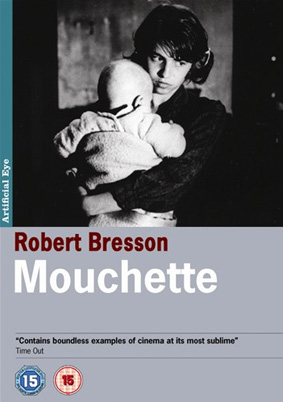
REVIEW – Mouchette (1967)

mouchtteFilmJuice have my review of Robert Bresson’s Art House classic Mouchette.

Set in a part of the French countryside that is so poor that modern technology like cars and mopeds seem entirely out of place, Mouchette tells of an impoverished young girl who is born to an alcoholic father and a terminally ill mother. Expected to not only fend for herself but also for her parents, the young girl puts up with an almost impossible amount of teasing and brutality until she eventually snaps, wanders off into a nearby forest and winds up being raped by a local poacher. Trained to accept all the hardship that life has to give and never offer a word of complaint, the girl refuses to press charges against her assailant and instead throws herself into a river.

Bresson made Mouchette in the immediate aftermath of the much better known and more widely admired Au Hasard Balthazar, which I also reviewed. As with Claude Chabrol’s Le Beau Serge and Les Cousins, the extreme proximity of the two films means that Mouchette can be seen almost as a response to au Hasard Balthazar. As I explain in my review, the big difference between Bresson’s two films is that while both films feature a young woman who is beaten down and destroyed by the world, Au Hasard Balthazar seems a lot more human and emotionally vibrant because the donkey serves as a sort of emotional lightening rod allowing us to connect to the suffering of the main character.  Unfortunately, because Mouchette lacks a comparable lightening rod, the film seems bleak to the point of outright nihilism:

It is here that a comparison with Au Hasard Balthazar becomes really useful: Both films are about young women who are born into worlds of unrelenting cruelty that crush their spirits and drive them to suicide. However, while Au Hasard Balthazar uses a combination of donkey and Christian symbolism to make this suffering seem meaningful, the lack of wider context for Mouchette’s suffering makes her travails seem not just pointless but downright exploitative too.  Was there really no other way for Bresson to explore the corruption of the world than to make yet another film in which a young girl is raped by a local thug? And if you are going to make a film in which a fourteen year-old girl covers up her own rape, is it really acceptable to present these events with no social or psychological context whatsoever?

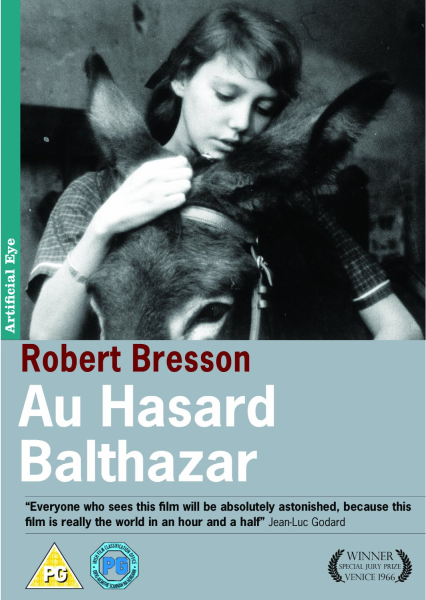
Another useful thing about re-visiting classic films is that it allows you to re-examine their value in light of contemporary values. Indeed, when Bresson made Mouchette and Au Hasard Balthazar, the predominance of male critics and male filmmakers was such that nobody really called into question the idea that rape was simply a part of everyday life and that making two back-to-back films that conclude with the rape of an under-aged protagonist might be considered a little bit creepy. The cover for Au Hasard Balthazar features a quote from Jean-Luc Goddard in which he states that:

This film really is the world in an hour and a half.

Cute line, but I am starting to find it deeply problematic that an entire generation of male filmmakers evidently thought it was okay to use rape as a sort of signifier for the horrible nature of the world. Aside from being deeply exploitative, this effectively serves to reinforce the view that rape is just a normal feature of life rather than a grotesque and intolerable moral transgression. Feminist thinkers even have a name for the vision of the world contained in Mouchette and Au Hasard Balthazar: Rape Culture. It’s one thing to make a film that casually reduces rape to the status of genre trope… it’s quite another to make two films in a row that use precisely this device. Au Hasard Balthazar‘s humanity and experimental use of symbolism are so striking that I believe it will remain a part of the European Art House canon for years to come. Mouchette, on the other hand, is a film that needs to be removed from its pedestal as a matter of urgency.

REVIEW – Au Hasard Balthazar (1966)

BalthazarFilmJuice have my review of Robert Bresson’s art house classic Au Hasard Balthazar.

Over the last year or so, I’ve been lucky enough to review some of the great classics of European Art House film as they’ve been re-issued on DVD and Blu-ray. Aside from introducing me to some genuinely great films and directors, this process has also motivated me to fill some of the gaps in my cinematic expertise and Au Hasard Balthazar was definitely one of those gaps. The reason I never got round to watching it is that, while I had heard great things about the film, I knew it was basically an extended religious metaphor based on a donkey and this struck me as so totally ridiculous that I decided not to bother checking it out. Having now finally gotten round to watching the bloody thing, my view remains that Au Hasard Balthazar is an entirely ridiculous film but the ridiculousness sort of works…

Set in the French countryside, the film tells the story of a sickly young girl who grows up into a confused young woman. Trapped between a distant father and an abusive quasi-boyfriend, the young woman is ground down beneath the heels of the patriarchy until she eventually just gives up and dies. The fascinating thing about this plot is that while neither Bresson’s script nor the amateur actors offer any real insight into why anyone does anything, the presence of a donkey who suffers just as the young woman suffers somehow makes the film incredibly moving. Even more fascinating is the fact that while the donkey effectively suffers ‘for’ the young woman in the same way as Jesus died ‘for’ our sins, the peculiar metaphysics of this relationship seems designed to flush out people’s attitudes towards God:

While the link between Marie and Balthazar works astonishingly well, the link between Balthazar and Christ seems like a metaphor too far. Indeed, while the donkey helps us sympathise with the impassive and often incomprehensibly self-destructive Marie, the religious symbolism only serves to lend this suffering some sort of dignified legitimacy, as though the donkey somehow died for our sins. The beautiful thing about this failure is that a case could be made for seeing it as intentional. After all, what is the point of religious belief if not a palliative sense that all the world’s suffering serves some greater purpose? And what greater signifier of atheism than the feeling that such ontological apologism serves only to distract us from the sufferings of real people?

A few weeks ago, I was lucky enough to review Claude Chabrol’s Le Beau Serge and Les Cousins. These films were originally made almost on top of each other and used not only many of the same actors but also many of the same themes, by reviewing the two films at the same time, I was able to tease out the connections between those two films and see how a director approached a similar question from two very different perspective.  My review of Au Hasard Balthazar is similar to my review of Le Beau Serge in that, as well as reviewing Au Hasard Balthazar, I reviewed Mouchette… which explored many of the same themes as Au Hasard Balthazar but from a rather different perspective.

REVIEW – Bakumatsu Taiyo-Den (1957)

Bakumatsu-Taiyo-DenFilmJuice have my review of Yuzo Kawashima’s Bakumatsu Taiyo-Den also known as Sun in the Last Days of the Shogunate.

Widely considered to be one of the greatest Japanese films of all time, Bakumatsu Taiyo-Den follows Kenji Mizoguchi’s Street of Shame and Shohei Imamura’s The Insect Woman in using the Japanese sex industry as a microcosm for Japanese society as a whole. Indeed, populated by customers from different levels of Japanese society alongside more-or-less successful members of staff, the brothel shows the economic and social forced that twist lives and destroy personalities. However, while both Mizoguchi and Imamura used the miserable lives of their characters to angrily critique and accuse Japanese society, Kawashima takes their travails and plays them for laughs using the character of a charming rogue:

Using the rogue as a foil, Kawashima explores the complex array of social and economic forces that elevate some people but destroy others. This is a world in which people attempt suicide in an effort to escape debtors and fathers sell their daughters into indentured servitude in order to pay off gambling debts and yet, because Kawashima’s rogue stands to one side making snarky comments, the world seems more absurd than it does horrific or depressing. Played by one of the foremost comedians of post-War Japan, the rogue understands the social and economic systems surrounding him and yet he does not feel constrained by either of them. This sense of existential rebellion is particularly evident in the film’s final scene where an old man castigates the rogue for disrespecting the gods only for the rogue to run away laughing and declaring that there’s no such thing as heaven and hell.

Having reviewed this and found it sensational, I am struck by the feeling that there are certain types of film that I could quite happily watch forever and post-War Japanese dramas are definitely one of them. Having said, this is a particularly good one and its lighter tone and engaging characters make it quite refreshingly accessible meaning that it would probably serve as a pretty decent jumping-on point for anyone interested in learning more about post-War Japanese film and given that this has just been re-released by Masters of Cinema, what better opportunity to immerse oneself in one of the 20th Centuries true creative golden ages?