REVIEW – Rebellion (2011)

rebellion-quadFilmJuice have my review of Mathieu Kassovitz’s political thriller Rebellion (a.k.a. L’Ordre et La Morale – which is a much better title).

Based not only on historical events but historical events involving French politicians who have only recently left the stage, the film tells of how a group of political activists protested the continued French political control of New Caledonia. Hoping to catch the attention of the media by occupying a French gendarmerie in the run-up to the 1988 French general election, the Kanak protesters accidentally killed a policeman resulting in the French army being sent to reassert ‘order and morality’ on what is still considered French soil. Kassovitz himself plays a French gendarme who is sent to negotiate a settlement only to discover that both the French military and their political masters are dead set on violence resulting in what has become known as the Ouvea cave massacre.

As with La Haine, Kassovitz jumps into the political elements of his narrative with real zeal and understanding. Using Legorjus as a viewpoint, Kassovitz crawls around inside the Ouvea massacre and shows not only the cowardice of the separatist politicians who failed to support their own activists but the complete moral bankruptcy of a French political class who used a real-life hostage situation as an opportunity to grandstand on the eve of a national election. However, unlike many political films that are content to bewail the system and blame impersonal forces for the ills of the world, Rebellion goes out of its way to name real-life politicians and speculate about their motives. Why did Jacques Chirac close the door on negotiations? Because he wanted to attract the votes of the French National Front and he knew that brown bodies meant votes. Why did the separatist politicians fail to support their own activists? Because they were afraid of being associated with dead police even though the plan to occupy police stations was theirs to begin with. Rebellion is a blisteringly angry film and watching it will make you angry too; if Western governments behaved this badly in 1988, what do you think it says about the people in power today?

As I say in my review, I think that Rebellion is a real return to form for Kassovitz. While I’ve enjoyed almost all the films he has directed, I remain of the opinion that La Haine will be the film for which he is remembered and Rebellion shows a real desire to return to the same levels of anger and political engagement. Possibly one of the best-made and more courageous political thrillers of recent times, this film really puts all of those terrible Iraq War films in perspective. All too often, political stories stress the cultural dimensions of their analyses resulting in a snapshot of a particular moment in time that blames nobody by exaggerating the inevitability of it all. This type of analysis that focuses on systemic forces rather than individual personalities is alarmingly common in American politics where perpetual warfare, the brutalisation of the poor and the rich getting richer are all seen as just shit that happens. By naming names and placing the blame not just on ‘the political class’ but on particular people within that political class, Kassovitz is reminding us that politicians are responsible for the offices they are elected to fill and who is in office at a particular time really does matter. Had Jacques Chirac not been eager to secure the votes of Jean-Marie Le Pen’s followers then chances are that the hostage takers would have walked away unharmed and ready to face justice.

REVIEW – Mea Maxima Culpa: Silence in the House of God (2012)

MeaMaximaCulpa1FilmJuice have my review of Alex Gibney’s documentary Mea Maxima Culpa: Silence in the House of God.

One of the most fascinating battlefronts in contemporary culture is the question of how the baby boomers will be remembered once they are gone. Raised amidst talk of their parents having been the greatest of all generations, the boomers have always been intensely aware of their own place in history and the need to impose some sort of narrative on their predictably chaotic lives. For a long time now, the baby boomers have been telling us that theirs was the most liberal and radical of generations: Neither empire-builders nor war-mongers, they came out against the Vietnam War, spawned the summer of love and demanded the right to live life entirely upon their own terms. That generation did it all and when the time came for them to ‘grow up’ they took their longhaired rebel logic with them into the boardroom and created one of the longest periods of sustained economic growth in the history of humanity. Nowhere is the desire to ‘fashion’ the generational narrative more evident than in Hollywood where B-movie Shitlord Roger Corman has been re-imagined as a visionary producer simply because Hollywood boomers need to believe that they rose to the top in a period of unrivalled openness and experimentation.

While inter-generational power differences mean that relatively few people are directly calling out the boomers on their relentless selfishness and toxic self-involvement, we are beginning to see some pushback in the form of prominent institutions falling into scandal and crisis. Indeed, the UK’s Operation Yewtree seems to be quietly re-inventing the swinging 60s as a time when men with jobs in the British media got to rape as many young women as they wanted while police and employers looked the other way. Turns out that ‘free love’ only ever applied to powerful white dudes. Alex Gibney’s documentary Mea Maxima Culpa: Silence in the House of God is very much a part of this cultural battlefield as it is one of many recent documentaries to suggest that the 60s and 70s were a time when Catholic priests were effectively above the law when it came to the sexual abuse of children. Much like Kirby Dick’s Twist of Faith and Amy J. Berg’s Deliver Us From Evil, Mea Maxima Culpa suggests that child abuse was almost systemic as was the Church’s desire to protect the abuser at the expense of the abused.

The science fiction writer William Gibson once stated that while the future is here, it has not been evenly distributed and I think the same can be said of the liberal individualism of the baby boomers: Much like the revelations of Operation Yewtree, films like Mea Maxima Culpa suggest that while some people had a load of fun in the 60s and 70s, this fun came exclusively at the expense of people who have been denied the right to give their own impressions of what life was like at that particular time. Though Mea Maxima Culpa may lack the anger and analytic depth of films like Twist of Faith and Deliver us from Evil, it does do a singularly fantastic job of letting the voiceless speak for themselves, something that is particularly important given that the abused, in this case, were all deaf:

Gibney films his interviews with the survivors using an elegantly subdued form of lighting that beautifully emphasises the expressiveness of their faces. Also important is the fact that, rather than systematically cutting away from the survivors and having their words translated by non-deaf actors, Gibney keeps the audience’s attention firmly on the survivors allowing them to communicate their own feelings in their own words and in their own language. This choice of interview technique is important because Mea Maxima Culpa is not just about the Catholic Church’s attempts to cover-up decades of sexual abuse, it is also about giving a voice to people who had theirs taken away by a Church that claimed to have their best interests at heart.

As someone whose familiarity with sign language is limited to on-screen sign translation of TV programmes, it really was fascinating to see native signers using their own language to deliver incredibly personal and intimate truths. Sign translators are professional translators rather than actors and so they tend to translate what they are hearing in a way that communicates their personal detachment from the material (their facial expressions and body language tend to say ‘this is a sad bit’ rather than ‘I am sad’) and so seeing sign language being used in an emotive manner was really quite the revelation. Even if you are not all that interested in another story about the moral bankruptcy of the Catholic Church I think that Gibney’s interviews with the abuse survivors alone make this a film worth seeking out.

REVIEW – Diaz: Don’t Clean Up This Blood (2012)

diaz-2012FilmJuice have my review of Daniele Vicari’s topical ensemble drama Diaz: Don’t Clean Up This Blood.

Set during the 2001 G8 protests in the Italian city of Genoa, the film tells the real-life story of one of the most outrageous abuses of police power in European history. The action focuses upon a pair of buildings that served as both a media center and a dormitory for people who happened to be in Genoa during the protests. Believing the buildings to be full of black bloc anarchists, the Italian police stormed in, beat everyone to a pulp and then dragged a number of people away to jail where they were humiliated, assaulted and tortured by not just police but also police doctors.

The structure of this film is faintly reminiscent of such ensemble dramas as Steven Soderbergh’s Contagion and Fernando Meirelles’ 360 (Which I recently reviewed for Videovista). However, while these Hollywood productions are very similar to anthology pictures in so far as they are collections of more-or-less self-contained narratives, Diaz: Don’t Clean Up This Blood departs from this model by using the different strands of the the narrative to explore the same event from different perspectives. Rather than resorting to anything as clunking as a time-stamp, Vicari allows history to unfold up to a single moment — someone throwing a bottle — and signals our return to the past by having the bottle re-assemble itself and return to the hand of the person who threw it. Aside from being incredibly elegant, this narrative technique works brilliantly in context as it allows Vicari to explore the extent to which the shared spaces of the protest mean different things to different people: For an elderly man trapped in Genoa overnight, the buildings are a safe place to sleep. For the journalists covering the protests, they are somewhere to file copy and conduct interviews. For the Black Bloc, they are a place to hide and draw up plans. This plurality of experience and perception is both brilliantly handled and intensely refreshing in a medium that all too often either avoids ambiguity like the plague or confuses it with evasiveness. Diaz Don’t Clean Up This Blood is a wonderfully ambiguous film because it presents you with several incompatible and yet entirely consistent viewpoints on the same series of events. Then the ambiguity goes away:

The final third of the film is spent exploring the mistreatment and torture meted out to the victims of the raid by police and police doctors and it is here that the film ultimately stumbles. The problem is that, while the bulk of the film is intensely humanistic and diverse in its exploration of different perspectives on the same events, Vicari’s coverage of the aftermath of the raid abandons nuance in favour of stark moralism: These are not the over-emotional and ill-informed police officers of the opening scene, these are cold and calculating psychopaths who humiliate and torture people because they know that they can do so with complete impunity. While there is no reason to doubt the brutality of the Italian police or the veracity of their victims’ claims, it is jarring when a film about understanding suddenly transforms into a film about condemnation.

One of the interesting things about Diaz that I did not have space to touch on in my review is the fact that while Vicari feels quite comfortable portraying the police as psychopathic Nazis, he is almost flawlessly even-handed when it comes to portraying the actions of the Black Bloc. In Diaz, the Black Bloc are a bunch of kids from all over Europe who descend on protest areas, stir shit up and then promptly retreat before the inevitable government response. Indeed, while the Black Bloc did indeed use the buildings that the police raid, Vicari goes out of his way to show them hiding in a nearby cafe while innocent by-standers get beaten to a pulp.

Why are we allowed to sympathise with the Black Bloc’s cowardice but not with the anger of the police?

One to this question is that while the Black Bloc’s actions contain enough moral ambiguity for there to be differences of opinion about them, nobody in their right mind would consider it acceptable for a police doctor to sexually assault a left-wing activist while the police singing fascist battle anthems. Indeed, one of the problems with liberalism and tolerance is that it’s very difficult to make any kind of moral judgement once you allow for the fact that all humans are fallible products of their environment and most people do what they do because they think it’s the right thing at the time. Diaz is an intensely humane and liberal film and yet its problematic final act shows that there must be limits to even the most pluralistic and tolerant of personal philosophies. I’m not convinced that Vicari handles the movement between ambiguity and certainty all that well but it is nice to see a film that attempts to address those types of moral problems.

REVIEW – West of Memphis (2012)

west-of-memphis-posterEvidently, I am passing through a documentary phase as FilmJuice have my review of Amy J. Berg’s West of Memphis.

I first became aware of Amy J. Berg through her film about the clerical abuse scandal Deliver Us From Evil. While the subject matter may now be reaching the point of saturation, Berg grabbed my attention by daring to place paedophile priests in the wider social context of a Catholic Church that hates homosexuality almost as much as it hates women. However, while Deliver Us From Evil was nominated for an Oscar, it also saw Berg drop off the map for a number of years and so I was very pleased to see her return to the director’s chair for this high-budget documentary about the West Memphis Three.

Given how impressed I was by Berg’s debut feature, it is slightly dispiriting to find her turning her hand to a film that is unadventurous both in terms of its form and its analysis. Indeed, much of West of Memphis‘s substantial running time is devoted to an extended recap of the ground already covered in the Paradise Lost trilogy of documentaries that have already been made about this particular topic. So while I’m sympathetic to the film’s aims and acknowledge that it’s a perfectly well-made and entertaining piece of documentary filmmaking, I do question the wisdom of making yet another film about this case. Are there really no other injustices in the world? If you are going to make a film about a topic that has already been covered by an entire trilogy of documentaries, I think it is important to do something new with the material and West of Memphis never quite manages to innovate:

There is no denying that West of Memphis is a worthy film and that this worthiness is utterly undiminished by the fact that three very good documentaries have already been made about this case. Nor is there any denying that Peter Jackson, Fran Walsh and all the other people working to free the West Memphis Three did a profoundly good thing by using their money and celebrity to help three unloved and unjustly convicted men from Arkansas. There is no denying any of these things and yet these things cannot entirely compensate for the fact that West of Memphis fails to offer us anything that we have not seen before. Hollywood has a fondness for documentaries designed to overturn miscarriages of justice and though certainly entertaining and occasionally compelling, this film never quite compares to either the exquisite ambiguity of Andrew Jarecki’s Capturing the Friedmans or the campaigning psychological complexity of Errol MorrisThe Thin Blue Line.

It’s hard to be unimpressed about this type of documentary without also seeming unimpressed with the subject matter but I was unimpressed, it felt like a step backwards by a promising director.

Don’t Let Pop Culture Tell You Who You Are

Frequent visitors to this blog will by now have realised that both the form and frequency of my posting is subject to a good deal of fluctuation. Sometimes I crank out sizeable pieces on a regular basis, sometimes I provide only links and other times I post links to short reviews and publish larger essays. The reason for these variations is that my motivations sometimes change and when my motivations change, so to does the nature of my output.  These changes in motivation were particularly obvious when, earlier this year, I ceased to write very much at all.

At the time, I found this sudden lack of motivation rather distressing as I have always been able to re-motivate myself by shaking things up and writing about different things in different ways. In fact, this lack of motivation was so traumatic that I soon came to believe that my time as a critic might have come to an end. Needless to say, this did not actually happen but the reasons for this creative impasse strike me as interesting enough to warrant a proper post, if only for the sake of other people who may be experiencing similar motivational problems.

The problem was that I was going through the process of selling my childhood home and moving to an entirely new town. On a purely practical level, this made sitting down to write rather difficult. On a psychological level, this made it almost impossible to think about anything that was not directly related to the move. Unclear as to why I was finding it so difficult to sit down and write, I managed to convince myself that my motivation for writing has been completely destroyed by the realisation that there was really no point in sharing my views with anyone about anything. The reason I reached this particular creative impasse was that I encountered a number of works that encouraged me to think of myself purely as an introverted outsider and introverted outsiders tend not to be all that interested in sharing their opinions with other people. This is a post about the dangers of labelling oneself and then coming to believe that those labels exhaust your entire identity.

Continue reading →

Calvinball Mythology: The Inevitable Follow-up Post

A couple of weeks ago, I wrote a piece about Ridley Scott’s Prometheus that allowed me to voice some ideas about the role of escapist media in contemporary spiritual life.  Evidently this post struck a chord with a good deal of people as I have been receiving a lot of traffic from people kind enough to link to me. While I cannot address all of the points raised by people, I can address a few of the comments that caught my eye.  Thank you all for your attention and I am delighted that you enjoyed the read!

Continue reading →

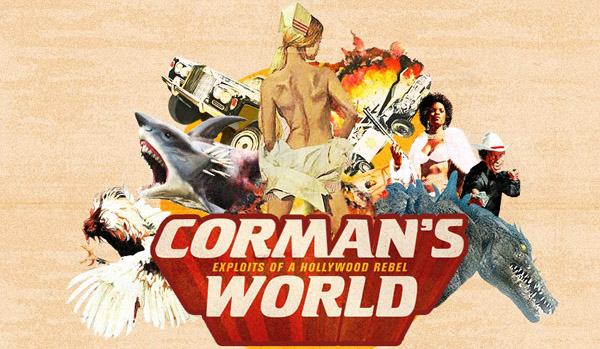
REVIEW – Corman’s World: Exploits of a Hollywood Rebel (2011)

The good folk at FilmJuice have my review of Alex Stapleton’s documentary Corman’s World.

Corman is an interesting figure in the history of American film as he appeared at a time when the American film industry was very slow to react to the cultural needs of the post-War generation. By remaining attuned to the desires of the babyboom generation, Corman managed to bootstrap himself first into commercial success and then into a certain degree of artistic respectability:

One of the most poignant moments in Corman’s World sees Martin Scorsese and Peter Fonda reminiscing about Corman’s willingness to fund films such as The Trip and The Wild Angels. Filled with psychotropic imagery and language lifted from Vietnam War demonstrations, these films not only gave younger people a voice, they also laid the foundations for such ground-breaking films as Easy Rider. As people who rose to prominence on the back of the 1960s, both Fonda and Scorsese seem perplexed as to why Corman never followed them out of the drive-in and into the academy but this is because both men seem to have mistaken Corman for an idealistic filmmaker. Despite trying his arm at politically engaged filmmaking, Corman was never an idealist… he was a democrat and a capitalist who gave his audience idealism because that is what they wanted to pay for. The unease we feel about Corman’s willingness to pander to his audience is the same unease we feel about Hollywood as a whole: are they making art or are they making money? The answer suggested by Stapleton is that they are doing both because both activities involve telling people what it is that they want and need to hear.

Stapleton’s documentary is probably best understood as a companion piece to Peter Biskind’s book about the post-War movie brat generation Easy Rider, Raging Bulls: How the Sex-Drugs-and-Rock-‘n’-Roll Generation Saved Hollywood (2008). I say companion piece as Stapleton’s documentary leans quite heavily upon Biskind’s vision of a generation that stormed the barricades of Hollywood and launched successful careers before either collapsing into narcissistic self-indulgence or devoting themselves to selling toys. However, while Biskind’s book provides a deliciously unflattering portrait of that ‘golden’ generation of post-War filmmakers, Stapleton provides a far more enthusiastic picture of one of that generation’s most noted losers. Indeed, as I suggest in the above quote, Corman stood poised to become a ‘serious filmmaker’ but he somehow never made that transition and by the time he was in a position to capitalise on his success the likes of Lucas and Spielberg had pipped him to the post and convinced Hollywood that the future lay in pandering to audiences with multimillion-dollar B movies like Jaws and Star Wars.

REVIEW – Angels of Evil (2009)

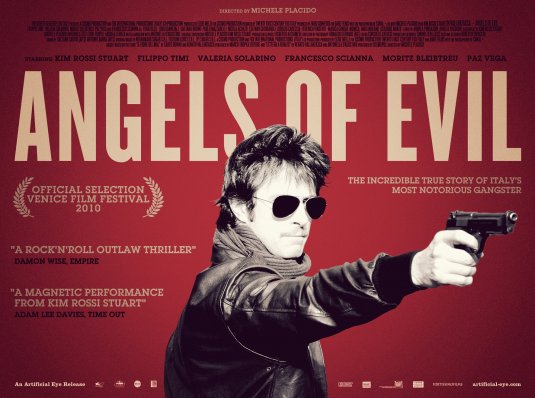
Videovista have changed their format.  Rather than spewing a torrent of reviews at you once a month, the site has moved towards a more selective approach to publishing in which they devote attention solely to a few note-worthy films.  My first shot at the DVD of the month is a piece about Michele Placido’s Angels of Evil (a.k.a. Valanzasca – Gli Angeli del Male), the follow-up to Placido’s 2005 crime bio-pic Romanzo Criminale. While I ultimately found the film a good deal less engaging than the politically thoughtful Romanzo Criminale, Angels of Evil remains a beautifully shot and stylishly produced crime thriller that sheds an intriguing light on the challenges facing the crime bio-pic genre. My review is HERE.

Though undeniably well made, Angels Of Evil suffers terribly from an overabundance of familiar elements: it is a film entirely composed of stock characters. Vallanzasca’s first wife Consuelo (Valeria Solerino) is a beautiful woman who doesn’t take any shit from anyone right up until the moment she meets Vallanzasca and promptly transforms into a long-suffering doormat with a sensible haircut. Similarly, the members of Vallanzasca’s gang are differentiated solely through their facial hair and their professional characteristics including the capacity to ride a motorcycle at 125 mph, and make good use of a sub-machinegun. Even Turatello is something of a cliché as his charismatic public persona masks a psychopathic fondness for violence and a rather predictable obsession with his hair that has him visiting women’s salons and sleeping in a hair-net. Anyone who has seen Goodfellas will recognise these sorts of characters and Goodfellas’ influence means that they have spent the last 20 years appearing and re-appearing in every crime thriller you care to mention. Aside from being faintly depressing, Placido’s refusal to depart from traditional genre stereotypes also serves to weaken his treatment of Vallanzasca himself.

Having damned the film for its generic nature, I then ponder whether the generic nature of the film’s characters might not be the result of deeper sociological forces. Indeed, if you watch The Sopranos, it is obvious that the characters have all partly modelled themselves on figures from the Godfather. This begs the following question: does the film’s depiction of Vallanzasca and his gang seem generic because of lazy script-writing or does the script capture the basic truths about a group of characters who modelled themselves on figures out of crime fiction and film?

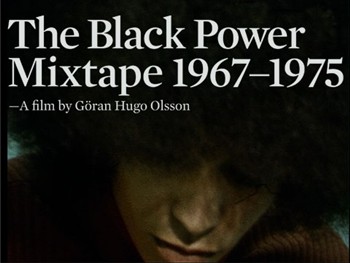
REVIEW – The Black Power Mixtape 1967-1975 (2011)

FilmJuice have my review of Goran Olsson’s archival documentary The Black Power Mixtape 1967-1975.

Back in the 60s, a group of Swedish journalists traveled to California in the hopes of understanding the American mindset. Once there, the filmmakers slowly found themselves gravitating away from ‘mainstream’ America and towards the burgeoning Black Power movement centered upon the Black Panther party. Nothing much was done with this footage at the time and so it sat in a vault for several decades until researchers uncovered it and turned it into a film. At its best, Black Power Mixtape is shining a fascinating and historically important light on a radical political movement whose reputation has long been unfairly tarnished. Unfortunately, once the film moves beyond the footage of the Black Panthers, the problems start to stack up:

Sadly, once the Black Power Mixtape shifts its emphasis from the Black Panthers to the Nation of Islam and the War on Drugs, the documentary begins to lose both its precision and its power.  An interview with Louis Farrakhan is eerie in its fantastical delusions and the documentary’s uncritical attitude towards the idea that the Nation of Islam offers a disciplined lifestyle heralds the arrival of a number of bizarre conspiracy theories including the somewhat inconsistent view that the authorities both turned a blind-eye to the drug trade in Black areas and cracked down on the drug trade in Black areas in a way that damaged the community and undermined the pursuit of civil rights.

Equally unconvincing are the documentary’s attempts to articulate the Swedish perspective on the civil rights movement.  While the amusing footage of Swedish tourists travelling round Harlem in a bus suggests that there is something vaguely inauthentic about Swedish concern for American civil rights, the documentary never manages to articulate what it is that is particularly Swedish about any of the footage or the interviews. Frankly, these could have come from the vaults of any European television station.

There’s no denying that this is an important film and I can completely understand why Sight and Sound magazine made it their film of the month. However, in an effort to expand the film to feature length and widen the scope of its observations, the film puts out a number of thematic feelers (war on drugs, Swedish opinions of 60s America) that not only fail to pay off but actually muddy the waters sufficiently that they distract from the power and importance of the film’s opening third.

REVIEW – Level Five (1997)

THE ZONE have my review of Chris Marker’s Level Five.

Level Five is an example of what I consider to be one of the most under-rated of cinematic genres: the visual essay.  Much like Patrick Keiller’s Robinson films, Adam Curtis’ documentary series, Iain Sinclair’s London Circular (2002) and Terence Davies’ Of Time and the City (2008), Level Five presents an intensely personal and formally innovative take on its subject matter.  Addressing both historical and personal forms of memory, Marker muses on the process through which we assemble and disassemble ourselves in light of both new evidence and the fading of memory. Marker attempts to link these two forms of memory together by using video games and the internet as a form of thematic connective tissue but his obvious lack of insight into either the internet or the process of games design makes the film feel both hand-wavy and almost comically dated. And don’t get me started on the human elements of the film…

Laura was intended as a character filled with both wisdom and sadness, but the weakness of Belkhodja’s performance and the artificial nature of Marker’s script combine to produce a character who is seldom more than a smug and incoherent directorial mouthpiece. By failing to ground Laura’s sections in genuine human emotion, Marker not only unbalances the film but also wastes what could have been a powerful structuring narrative: Laura is cooped up in a small, windowless room endlessly picking over discarded memories and lines of code until, eventually, the memories begin to fade and so does she. When Marker arrives at Laura’s flat to find her gone, the message is clear: Laura has reconceived herself as another person, a person free from grief and free from the memory of relationships past.

An ambitious and visually striking attempt at addressing the role of memory in personal identity, Level Five is a frustrating watch as its failures simply cannot mask the depth and breadth of Marker’s talent.  For those interested in Marker’s perspective, I’d suggest picking up the recent Optimum combined re-release of La Jetee and Sans Soleil (reviewed expertly by Max Cairnduff at Videovista)