I Saw the Devil and His Name Was Kim Jong-un – Vengeance and South Korean Cinema

Kim Ji-woon’s I Saw the Devil tells of a South Korean intelligence agent who responds to the death of his wife by tracking down the man who murdered her. However, instead of simply killing the man, the agent decides to install surveillance equipment that will allow him to continue punishing the murderer over an extended period of time. Initially, the killer is taken aback by the agent’s hatred but he soon comes to enjoy the confrontations and so lures the agent into an increasingly brutal contest of wills. Hideously violent, unflinchingly brutal and yet beguiling to watch, Kim’s film offers a traditionally Nietzschean warning to those who would consider embarking on a quest for revenge:

Battle not with monsters, lest ye become a monster, and if you gaze into the abyss, the abyss gazes also into you.

While Kim’s film is beautifully made and eminently entertaining, I cannot help but wonder why it is that he felt inspired to make a film with this particular message. Back in 2005, Kim directed the wonderful A Bittersweet Life in which the protagonist exacts a bloody revenge on his employers for the way in which they deprived him of a personal life and yet responded with furious anger the second he stepped out of line in an effort to grab some happiness for himself. Given that A Bittersweet Life convincingly communicates the idea that revenge is a necessary but ultimately self-defeating course of action, it is strange to see Kim making yet another film with this precise message. Especially when the message in question is so blindingly obvious that it scarcely merits a passing thought at all let alone enough thought to fill two entire films. Even more puzzling is the fact that Kim is not alone in his desire to brood over the morality of vengeance. In fact, South Korean cinema has produced so many revenge films in recent years that one can comfortably talk about them constituting a sub-genre in their own right.

Continue reading →

REVIEW – The Rafi Pitts Collection (2012)

Back in April 2011, I reviewed Rafi Pitts’ The Hunter, a superb insertion of 1970s American paranoid cinema tropes into a depiction of contemporary Iranian society. Evidently quite successful, the cinematic release of The Hunter has prompted the good folks at Artificial Eye to put out a box set of Pitts’ films including The Hunter but also the exquisitely moving It’s Winter (2006) and Pitts’ far more conventional early feature Sanam (2000). FilmJuice have my review of The Rafi Pitts Collection.

One of the pleasures of this box sex is that it allows you to survey the development of a creative talent. Though beautiful to look at and entirely decent, Pitts’ Sanam is a highly generic exercise in wrangling world cinema tropes. Indeed, the colourful photography and plot featuring a young boy struggling to get over the death of his father could have been made by any world cinema director in any country in the world. Having mastered the world cinema genre, Pitts then begins to process of developing his own sensibility. Intensely poetic and filled with chilly urban alienation, It’s Winter is demonstrably a far better film than Sanam and a far better film than we have come to expect from most world cinema directors who seem mostly content with toeing the line and giving western art house audiences exactly what they expect of a particular country. This cold and urban sensibility finds its ultimate fruition in the paranoia and repressed violence of The Hunter, which is easily Pitts’ best film to date:

The Hunter tells of a reformed criminal struggling to find salvation in the role of husband and father. The problem is that, while the film’s protagonist is quite content to go straight as long as he can spend time with his family, his employers use his criminal past as an excuse to make him work nights thereby ensuring that he rarely gets to see his family. When something terrible happens and the man’s family disappears, the man understandably goes nuts and begins hunting Iranian policemen. At this point, the film transitions from being an account of social injustice to being a tense paranoid thriller in the style of Taxi Driver and The Parallax View. Just as beautifully shot as Pitts’ earlier films, The Hunter juxtaposes the cold urban landscapes of It’s Winter with the warm naturalism of Sanam only to find that the Iranian police will chase you down through both sets of landscapes. Intriguingly, the film’s ending obliquely hints at the possibility of future uprisings. How much mistreatment will the Iranian people endure before, much like the hunter, they snap?

Also fantastic is the interview with Pitts that is included on the second disk in the collection. Many creatives, though clearly intelligent, lack either the self-awareness or the personal openness required to shed much light on their working processes, Pitts is clearly not one of those types of creatives. Witty, insightful and astonishingly candid about the choices he made during the shooting of It’s Winter, the interview is a timely reminder of quite how much a good DVD extra can add to the experience of watching a film.

Five Great Films by Billy Wilder

After years of somewhat patchy DVD coverage, the films of Billy Wilder are finally getting the DVD releases they deserve. In celebration of this fact, I have written a piece for FilmJuice listing my five favourite Wilder movies. The list includes — in no particular order — The Lost Weekend, Sunset Boulevard, Double Indemnity, Some Like it Hot and Murder Mills.

My take on Wilder is that many of his films feature a tension between brutal cynicism and crowd-pleasing optimism that sometimes cuts very close to the winds of mushy sentiment. Had Wilder been anything less than a great director, this tension would most likely have resulted in some spectacularly dishonest filmmaking. However, each of the films I explore in the article work because they are all heart-felt journeys out of cynicism and into the light. In each case, you can follow the path and see Wilder talking himself down off the edge:

Billy Wilder is the most sentimental filmmaker to ever acquire a reputation for cynicism.

As I worked my way back through Wilder’s films (including some of the decidedly less interesting works produced late in his career) I couldn’t help but wonder about the tension between cynicism and romanticism. Indeed, if Wilder’s films are to be understood as the product of a mind endlessly seeking reasons to be cheerful, what does this say about the wider relationship between cynicism and romanticism? Are all cynics disappointed romantics? Are all romantics naive cynics? Wilder’s films certainly suggest some form of connection between the two dispositions.

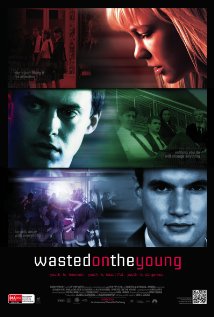
REVIEW – Wasted on the Young (2010)

THE ZONE has my review of an interesting Australian film by first-time director Ben C. Lucas. Wasted on the Young is stylishly shot high school mystery in very much the same tradition as Rian Johnson’s Brick. Aside from the intriguing plot and the deliciously chilly cinematography, what really grabbed me about this film was its attempt to get inside the head of contemporary teenagers whose every move is recorded by CCTV cameras and whose every thought is captured by social media:

 As William Gibson’s recent writings have suggested, there was a point when society changed and certain ideas ceased to be science fictional. Yesterday’s cyberpunk futurism is today’s kitchen sink realism. Similarly, many old realist touchstones appear to be little more than genre affectations tainted by reactionary nostalgia. We no longer live in a world where women can afford to be bored doctor’s wives. Virginia Wolfe once described George Elliott’s Middlemarch as one of the few British novels written for adults but when read today, the book appears about as realistic as a quest to destroy a magical ring. By borrowing elements from the hard-boiled and cyberpunk genres while simultaneously downplaying the fictional character of these elements, Lucas is attempting to capture what it feels like to grow up in a world with its own set of realist touchstones and its own set of worries and concerns.

Watching it I was reminded not only of the more recent works by William Gibson but also the short stories of Tim Maughan (some of which I reviewed a little while back). What unites these works is a realisation that, rather than simply adding to an already existing world, the internet and social media are changing the world by sculpting how young people learn to see and react to the world. Literary theorists have spent the last 100 years bemoaning the fact that we are now modern and as such have severed our ties to the gods of our forefathers. Similarly, transhumanists spend much of their time banging a drum for the change that will come with the arrival of the Singularity. The more I read and the more I think about today’s youth, the more I realise that there is no great Death of Pan or Birth of the Singularity… there’s just some old fucks dying and some young fucks taking their place. Society is in constant evolution and social media is one particular area of genetic drift. In 10 years (let alone 100), people will wander what it was like to live without the internet and so any work of art that does not engage with the social changes created by the internet must be seen as little more than a side-show.

Gibson’s decision to re-position himself as a mainstream writer rather than a genre writer is the product of two forms of change: Firstly, society has changed to the point where science-fictional ideas are now realistic ideas. Secondly, Gibson needed to leave genre because genre has no interest in writing about the world that we are currently making for ourselves. Wasted on the Young is yet more evidence that science fiction has run its course as both a literary tradition and a sub-culture as it is easily as cyberpunky as any of Gibson’s recent novels and yet it presents these scientific and social ideas as nothing more than grindingly mundane realism.

REVIEW – Manhunter (1986)

THE ZONE has my review of Michael Mann’s recently re-issued psychological thriller Manhunter.

To put it simply, I adore this film. I adore the moody electronic score, I adore Dante Spinotti’s ridiculously colourful cinematography and I adore the way that Michael Mann lines up his shots. However, what I particularly love about this film is the way that it treats the character of Hannibal Lecter as a painstakingly-repressed dark side rather than a scenery-chewing panto dame:

 When Graham visits Lecktor in the hospital, we are told it is because he is hoping to rekindle the creative fires that allow him to project himself into the mind of a killer. However, rather than simply visiting Lecktor in the hospital, Graham reaches out to the disgraced psychiatrist in the hope that his superior understanding of human nature might shed some new light on the case. This act of deference to Lecktor’s superior expertise is deeply troubling when considered alongside Mann’s cinematic blurring of the line between psychologist and psychopath. Indeed, by having Graham turn to Lecktor as part of his own creative process, Mann seems to be suggesting the existence of a symbiotic relationship between the two men. In fact, one could interpret the scene as a sort of vision quest in which the creatively frustrated Graham turns to his painstakingly repressed dark side in order to unblock the empathic powers that will allow him to solve the case.

Mann’s take on Lecter is particularly fascinating as this film was adapted from Thomas Harris’s novel Red Dragon (1981) before Harris even wrote The Silence of the Lambs. In other words, this is a vision of Red Dragon that is completely untainted by the decision to reinvent Lecter as some kind of brain-eating antihero. Released on an absolutely flawless Bluray that makes it look like a brand new film, this re-issue offers an excellent opportunity to rediscover one of the best and most under-rated psychological thrillers of all time.

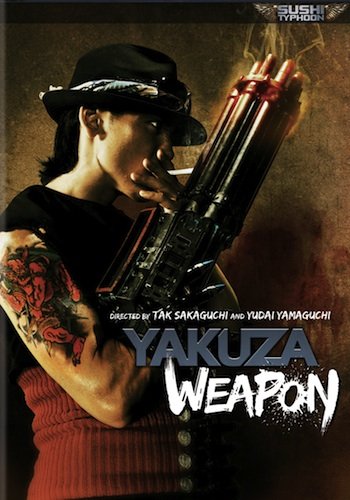
REVIEW – Yakuza Weapon (2011)

THE ZONE has my review of Tak Sakaguchi and Yudai Yamaguchi’s muddled and disappointing Yakuza Weapon.

The film presents itself partly as a genre spoof and partly as an earnest exercise in splatterpunk excess.  Unfortunately, like many recent American attempts at producing a high-budget exploitation film, the film winds up feeling forced and spread too thinly.  In my review I explain why this should be:

Back in the late 1950s, filmmakers like Roger Corman realised that there was good money to be made in pandering to youthful audiences. This insight spawned a business model whereby young directors were given small pots of money and instructed to go off and produce something sensational and titillating that might appeal to people from their age group. This business model proved remarkably effective and fueled not just the craze for drive-in movies but also the kinds of exploitation film that played in grind-house cinemas all over America. Given that these filmmakers frequently operated with very little guidance beyond the need to ramp up the sex and violence whilst remaining under budget, exploitation filmmaking rapidly became a sort of Darwinian swamp in which ambitious directors experimented with new techniques in the hope that their films would out-compete those of their contemporaries. However, as with all evolutionary processes, exploitation film produced far more failures than it did successes meaning that for every John Carpenter and Dario Argento there were dozens of Uwe Bolls.

Fast-forward 30 years and the kids who grew up watching exploitation films became the cigar-chomping producers who handed out pots of money. Mindful of the market for nostalgia, these producers green-lit a series of high profile projects designed to tap into the market for exploitation-style filmmaking. Cue the emergence of films such as Quentin Tarantino’s Deathproof (2007), Robert Rodriguez’s Planet Terror (2007), Sam Raimi’s Drag Me To Hell (2009), Patrick Lussier’s Drive Angry (2011), and the entire back catalogue of Neveldine/ Taylor. Though not without its artistic and commercial successes, this grind-house revival suffers for the fact that most of its excesses come not a desperate need to do something radically different in order to stretch a budget and capture an audience but from a deliberate attempt to parody or recapture the insane experiments of the past.


Part of the joy of watching exploitation films lies in their sheer unpredictability. Exploitation filmmakers are so desperate to find an audience that they will do anything to capture our attention and this can produce some really memorable cinematic moments. However, when the director is provided with a lavish budget in order to intentionally recapture that feeling of desperate experimentation, the results invariably feel forced and stage-managed like some grim party where everyone is so desperate to have a good and crazy time that the excess of good will completely smothers all spontaneity and freedom. Technically flawed and way, way, way too long for what is essentially a two joke film, Yakuza Weapon is disappointingly dull.

REVIEW – The Doom Generation (1995)

FilmJuice have my review of Gregg Araki’s fifth film, the surreal and nihilistic teenage road movie The Doom Generation.

Revisiting this film was an interesting experience for me as I can remember both seeing it and reacting to it as a part of the vogue for nihilistic films that gripped 1990s American cinema. The set up is as simple as it is classic: A pair of fucked-up teenagers take to the road after accidentally killing a convenience store clerk. Moving from town to town, they rub up against the weirder elements of the American condition and try to come to terms with their place in the grand scheme of things. Each character voices a different attitude towards the sense of disillusionment and alienation that all generations feel upon coming of age. Indeed, this is a film that is as much a response to films like Easy Rider and Badlands as it is to True Romance and Natural Born Killers:

According to postmodern nihilism, nothing matters other than the mundane details of our lives. As might be expected from a broad cultural pattern, American film engaged with the idea of postmodern nihilism in a number of different ways. For example, at one end of the spectrum Quentin Tarantino’s patented blend of operatic violence and trivial chitchat spawned films such as Oliver Stone’s Natural Born Killers (1994) and Tony Scott’s True Romance (1993) in which nothing seemed to matter other than love. Meanwhile, at the other end of the spectrum, Larry Clark’s Kids (1995) reversed the polarity and argued that Generation X actively avoided answering the bigger questions by filling their heads with talk of relationships and old TV shows. Trapped between the romanticism of Tarantino and the outrage of Clark lies Greg Araki’s The Doom Generation a film about costs and benefits of cynical detachment.

All things considered, I think that The Doom Generation is perhaps a little bit too ‘meta’ to be anything more than an interesting rejoinder to a more worthwhile set of films, but then perhaps that was always the point of the exercise? What better way to lend voice to the angst of Generation X than to suggest that everything has been said and that all we can ever hope for is just enough sex and violence to pass the time?

REVIEW – Rampart (2011)

FilmJuice have my review of Oren Moverman’s Rampart.

Written by the crime novelist James Ellrot and set against a backdrop of police corruption and political wrangling, Rampart tells the story of a cop on the wrong side of history. Played by Woody Harrelson, Dave “Date Rape” Brown knows all the angles and all the dirty secrets meaning that even when he fucks up and gets caught, the brass can’t touch him. All Brown needs to do is claim to have received a job offer from Fox News and his problems simply melt away. However, as the film progresses and the political climate shifts further and further from yesterday’s old pals and backroom deals, Brown finds himself struggling to keep his head above water:

The idea that there is no place for a person like Dave in a civilised society provides Rampart with much of its thematic power. Dave, we are told, is the son of an old school cop and his status as the son of an old school cop gives him access to a network of contacts embodied by the nameless retired detective played by Ned Beattie. At the beginning of the film, Dave has a place in the LAPD because the department is still in thrall to the old and brutal ways of doing business. Most of Dave’s problems stem from the fact that he simply cannot adapt to the new LAPD being built by ambitious politicians like those played by Sigourney Weaver and Steve Buscemi. Thus Dave’s fall from grace is not just about his own stupidity but also about power leaching away from the brutal white men who police the city.

Though Rampart‘s wonderful cinematography, engaging characterisation and some hugely entertaining and recognisably Ellrovian dialogue are more than enough to make for an entertaining film, one cannot help but feel that there is something increasingly generic about the existential art house crime film. Back in 1967, John Boorman’s Point Blank used the tools of the art house to delve into the police house and since then a steady stream of art house directors including Abel Ferrara, Werner Herzog and Nicolas Winding Refn have happily used brilliant cinematography to tell and re-tell the same stories of crime, madness and existential alienation. Indeed, Rampart‘s real problem is that it is ultimately nothing more than a well realised genre film. Great cinematography? Check! Enigmatic protagonist? Check! Long drawn out pauses? Check? Descent into madness? Check! Ambiguous ending? Check! Though entertaining, the art house crime film really has lost its power to shock or provoke… in its own way it is just as predictable and safe as the country house mysteries of yesteryear.

Red Hill (2010) – The Old West, The Outback and the Awesome Power of Whitey

History is one of the key battlegrounds in the war for social progress. When used correctly, history confers not just a sense of tradition and legitimacy but also a sense of inevitability: Why bother fighting to change society when things have always been the way they are? Why bother fighting to overthrow the status quo when history tells us that there are no viable alternatives to the existing model? To control history is to control the narratives that govern society and to control the narratives that govern society is to govern society’s moral compass.

Once a group controls all the narratives and sets the moral tone of the discussion, all they need to do in order to win an argument is to present themselves as being history’s natural endpoint. Indeed, it is one thing to criticise the morals of the ruling elite and the moral righteousness of the status quo but it is quite another to pick a fight with the implacable Darwinian logic of human history. By staking out the historical high ground and claiming to be the culmination of long-standing historical processes, defenders of the status quo can make their critics appear not merely wrong but ignorant and downright delusional. One spectacular example of this type of thing is Francis Fukuyama’s infamous decision to celebrate the end of the Cold War by asking whether America’s victory over the Soviet Union marked the end of history. By attempting to claim American liberal democracy as history’s logical end point, Fukuyama was making a bold political claim namely that in the grand scheme of things, All Paths Lead to Us. Thus, the Soviets were not merely wrong; they were fighting against history’s oceanic tide. Another example of the battle to control a society’s historical narratives can be found in the evolution of the cinematic Western.

Continue reading →

REVIEW – Drive (2011)

Videovista have my review of Nicolas Winding Refn’s critically acclaimed California Noir action movie Drive.

As someone whose first instinct is invariably to distrust received opinions and critical consensuses, I was somewhat disappointed to find myself in the position of absolutely adoring Drive. I adore the way it looks, I adore the way it is paced, I adore the characters and I adore the film’s wider themes.  While there are a number of different ways of approaching the film, I see it as effectively a retelling of Pinocchio… the story of how a puppet became a real boy:

The reason the driver operates by a very simple set of rules is because he is effectively a simpleton who possesses no desires or dreams of his own. As the driver’s shambling employer and best friend Shannon explains, he suddenly appeared out of nowhere and does whatever is asked of him without complaining or asking questions. The driver’s lack of interior life is also reflected in his general demeanour as most questions asked of him result in little response beyond an impassive smile and an evasive answer. As blissful as it may seem, this state of perfect psychological simplicity is interrupted when the driver offers to help his next-door neighbour with her shopping.

Another question I explore in my review is the issue of narratives that effectively use female characters as catalysts for the emotional transformation of their male protagonists. Indeed, one of the strangest things about Drive is our willingness to accept on faith that a character such as the Driver might exist. The reason we accept the idea of an emotionally stunted driving-machine is because we are already familiar with the idea that all men are stunted children who only ever grow up (i.e. stop chronically masturbating, doing bong hits and getting into fights at sporting events) once the calming hand of a female presence is laid on their arm. In the second half of my review I explore the issue of whether this view is actually sexist:

Conrad’s Heart Of Darkness tells the story of a white man who goes mad in the jungle while the Africans quietly get on with their lives. In other words, it is the supposedly superior white man who loses his mind in the jungle and not the supposedly inferior Africans. Similarly, while it seems fair to observe that Irene is a simplistic character, her two character traits easily outdistance the subhuman imbecility of the white man at the centre of the film. Drive is the story of a character becoming human while the woman who prompts this transition remains noble, human and complete throughout. In fact, Drive could almost be read as the story of an innocent woman who becomes embroiled in a tug-of-love between the criminal she married and the handsome weirdo who lives next door.

Regardless of how you interpret it, I consider Drive to be one of the best films of 2011 and one of my ten favourite films of all time.